How to Find Pet-Friendly Apartments and Parks in the Heart of New York City
Welcome to nyattitude.com, your definitive digital guide for mastering high-intensity urban living without ever compromising on lifestyle—or leaving your furry best friend behind. Whether you are relocating your career to the fast-paced concrete canyons of Manhattan, setting up a trendy apartment in Brooklyn, navigating the tech and lifestyle corridors of San Francisco and California, or settling into bustling urban centers across Texas and Washington, one undeniable truth unites city pet owners: bringing a dog or cat along for the urban journey changes everything.
When most people picture New York City, they imagine cramped elevator shafts, strict landlords, towering skyscrapers, and miles of uninterrupted concrete asphalt. The common misconception is that NYC is no place for a pet. In reality, New York is one of the most fiercely passionate dog- and cat-loving cities on the planet. From canine-friendly brunch spots and artisanal pet bakeries to sprawling off-leash park runs against the backdrop of the Manhattan skyline, thriving as a pet owner in the Big Apple is entirely possible—if you know the rules of the game.
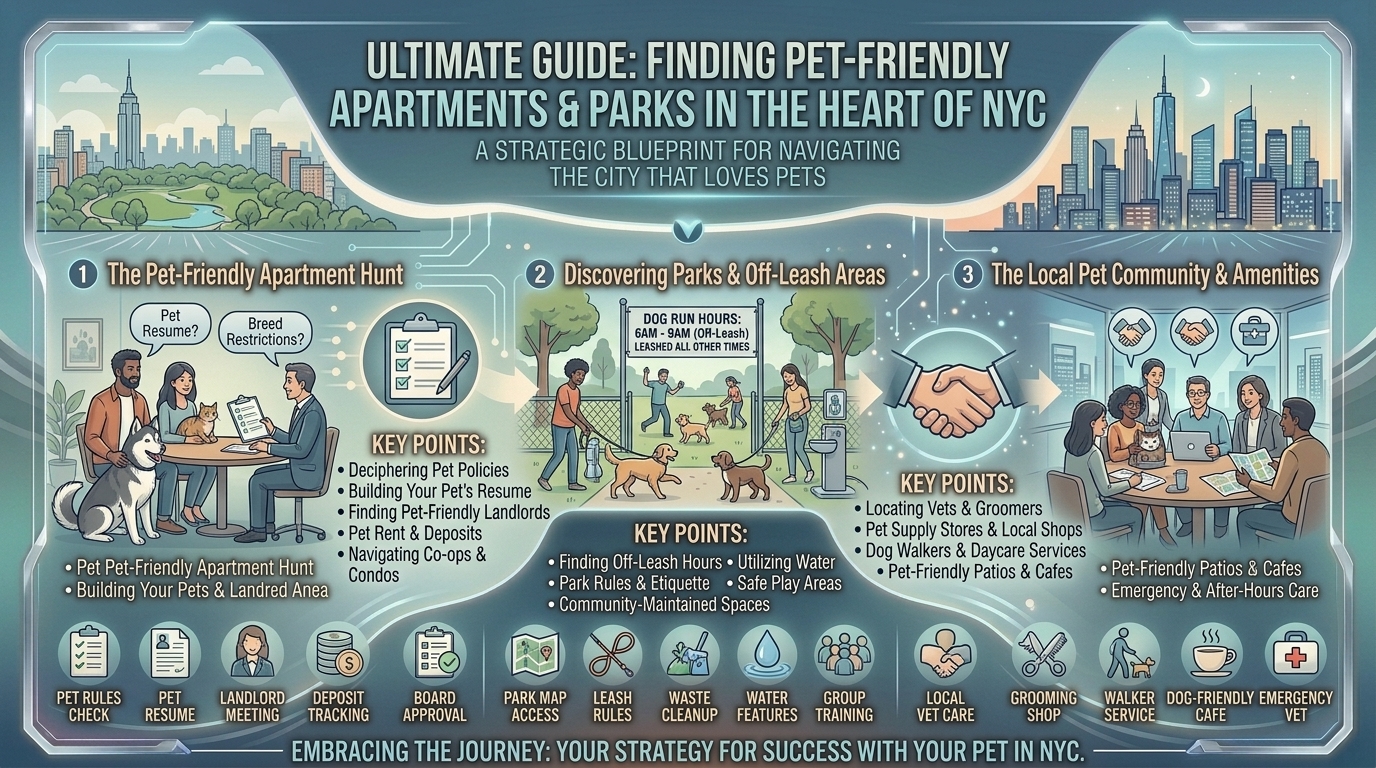
This comprehensive, highly informative guide explores the complexities of finding pet-friendly housing in NYC, decoding landlord pet policies, negotiating pet fees, discovering the absolute best parks and neighborhood green spaces, and utilizing practical survival tips for urban pet parenting.
Part 1: Decoding the NYC Pet-Friendly Rental Market
Finding an apartment in New York City is already an extreme sport. Adding a dog or cat to the application turns it into a masterclass in negotiation, preparation, and tactical documentation.
1. Understanding NYC Pet Terminology
Before you begin browsing listings on StreetEasy or Zillow, you need to understand how New York landlords classify pets:
- “Pets Allowed on Approval”: This is the most common phrase you will encounter. It means the building does not have a blanket ban, but the landlord, management company, or condo board wants to review your pet’s breed, weight, age, and temperament before giving a final green light.
- “Dogs Case-by-Case”: Usually implies smaller dogs are welcomed, while large breeds face uphill battles.
- “No Pets”: In non-rent-stabilized corporate buildings, this is often a hard rule. However, in co-ops and condos, even “no pet” buildings frequently make exceptions for registered emotional support animals (ESAs) or service animals (backed by official federal ADA and NYC Human Rights Law guidelines).
2. The Dreaded Pet Deposit vs. Pet Rent
Unlike many other states, New York State law places strict caps on security deposits (maximum one month’s rent for a standard lease). However, landlords are legally allowed to charge separate pet fees or monthly “pet rent” (typically ranging from $30 to $100 per month per pet) unless your animal is a certified service animal. Always factor pet rent into your monthly budget calculations before falling in love with a listing.
3. Assembling a “Pet Resume”
Yes, you read that right. In a competitive market like New York, making your pet stand out on paper is a game-changer. Create a one-page “Pet Resume” and attach it to your rental application. Include:
- A high-resolution, adorable photograph of your pet.
- Proof of up-to-date vaccinations, spay/neuter certificates, and microchip numbers.
- A brief letter of recommendation from your previous landlord confirming your pet never caused property damage or noise complaints.
- A “good citizen” certificate (such as AKC Canine Good Citizen) if your dog has completed obedience training.
Part 2: Best Neighborhoods for Pet Owners in NYC
Not all New York neighborhoods are created equal when it comes to raising a pet. Some areas offer narrow sidewalks and zero grass, while others feature expansive parks and vibrant pet communities. Here are the top NYC neighborhoods for pet owners:
1. Park Slope & Prospect Heights, Brooklyn
- The Vibe: Leafy brownstones, community-oriented, and undeniably dog-centric.
- Why It’s Great: Situated right on the doorstep of Prospect Park, which features vast rolling meadows, historic woodlands, and some of the best off-leash dog hours in the entire city (Dog Beach during morning and evening hours is legendary).
2. The Upper West Side, Manhattan
- The Vibe: Sophisticated, residential, and flanked by two world-class parks.
- Why It’s Great: Residents have direct access to Riverside Park (which features multiple dedicated fenced-in dog runs overlooking the Hudson River) on the west, and Central Park (with its iconic dirt bridle paths and open lawns) on the east.
3. Long Island City (LIC), Queens
- The Vibe: Modern waterfront high-rises, expansive dog parks, and rapid urban growth.
- Why It’s Great: LIC is packed with modern luxury rental buildings featuring built-in pet spas, rooftop dog runs, and elevator access directly to the stunning Gantry Plaza State Park waterfront esplanade.
4. Williamsburg, Brooklyn
- The Vibe: Artistic, trendy, industrial-chic, and remarkably social.
- Why It’s Great: Dominated by pet-friendly warehouse conversions, artisanal pet boutiques, outdoor cafes that welcome dogs at every table, and direct access to East River State Park (Marsha P. Johnson State Park).
Part 3: Navigating NYC Parks, Green Spaces, and Etiquette
New York City boasts hundreds of acres of designated park space, but navigating urban park culture requires knowing the unwritten rules of city dog parks (known locally as “dog runs”).
1. The Golden Rules of NYC Dog Runs
- Never Bring an Intact (Unfixed) Dog: Most city dog runs strictly prohibit unspayed or unneutered dogs over a certain age due to hormonal behavioral triggers.
- Leave Toys and Food Outside the Gate: Bringing high-value chew toys, balls, or treats inside a crowded, fenced dog run is a recipe for resource guarding and accidental dog fights. Save the fetch games for open park lawns outside the gated run.
- Always Carry Waste Bags (And Use Them): New York City has strict stoop-and-scoop laws. Leaving dog waste on sidewalks or park turf carries hefty municipal fines. Always carry twice as many poop bags as you think you will need.
2. Top Dog Parks and Green Spaces in NYC
- Tompkins Square Park Dog Run (East Village): The oldest official dog run in New York City. It is high-energy, vibrant, community-run, and features a dedicated kiddie pool for hot summer days.
- Madison Square Park Dog Run (Flatiron District): Beautifully landscaped with double-gated entryways, professional woodchip footing, and a dedicated separation area for small and large dogs.
- Central Park Ramble and Great Lawn: While dogs must remain on-leash in most areas of Central Park during peak hours, early morning off-leash hours (before 9:00 AM and after 9:00 PM) allow well-behaved dogs to run free across iconic meadows.
Part 4: Step-by-Step Guide to Transitioning Your Pet to City Life
Moving a pet from a quiet suburban home or a spacious house into a vertical NYC apartment can cause anxiety. Use this transition framework to help them adjust:
1. Master Elevator and Hallway Desensitization
City apartment living means shared elevators, tight hallways, narrow stairwells, and sudden encounters with strangers, delivery workers, and other dogs. Spend your first week practicing calm elevator entries, rewarding quiet behavior, and teaching your pet not to lunge at closing doors.
2. Establish a Routine for Potty Breaks
Without a private backyard, your pet depends entirely on your schedule. Map out at least three distinct walking routes near your building, and stick to consistent morning, afternoon, and late-night routines so your pet understands when relief is coming.
3. Combat Urban Noise Desensitization
Sirens, construction jackhammers, honking horns, and roaring subways can terrify pets initially. Keep windows closed during high-stress hours, play soothing white noise or classical music inside your apartment, and use positive reinforcement (treats and calm reassurance) when loud street noises occur.
Part 5: Frequently Asked Questions (FAQ)
1. Are landlords legally allowed to ban cats in NYC apartments?
In non-rent-regulated buildings, landlords have the right to enforce strict “no pet” policies. However, under New York City’s “Tenant-Landlord Pet Law” (commonly known as the anti-harassment pet clause), if you harbor a pet openly and notoriously in a building for three months or more without the landlord taking legal action to evict you or enforce the lease, the landlord is deemed to have waived their right to object. (Note: This does not apply to co-ops or condos with strict internal bylaws).
2. How much extra does it typically cost to rent a pet-friendly apartment in NYC?
Expect to pay either a one-time non-refundable pet fee ranging from $250 to $500, or monthly pet rent of $30 to $100 per pet. Luxury buildings with built-in pet spas and indoor dog runs may charge higher amenity fees.
3. Can I bring my dog on the NYC Subway or buses?
According to official MTA rules, dogs and cats are only permitted on the subway or buses if they are enclosed in a container (a carrier, backpack, or specialized bag) and do not annoy other passengers. Clever New Yorkers have famously pushed this rule to its comedic limits by carrying large dogs in IKEA bags or specialized duffel bags with leg holes!
4. What are the laws regarding emotional support animals (ESAs) in NYC housing?
Under the federal Fair Housing Act (FHA) and NYC Human Rights Law, landlords of traditional rental buildings must provide reasonable accommodations for tenants with documented disabilities who require an Emotional Support Animal or Service Animal, waiving standard pet restrictions and monthly pet rent. However, legitimate medical documentation from a licensed mental health professional is legally required.
5. Where can I find 24-hour emergency vet care in New York City?
NYC is home to several world-class 24/7 veterinary emergency hospitals, including the BluePearl Pet Hospital (with multiple locations in Manhattan and Brooklyn) and the Schwarzman Animal Medical Center (AMC) on the Upper East Side.
6. Do NYC apartments allow large dogs?
Yes, but they are harder to find. Many buildings enforce weight limits (e.g., “dogs under 25 lbs only”). Finding a landlord or luxury building that welcomes large breeds (like Golden Retrievers or German Shepherds) requires targeting newer construction buildings or individual condo/co-op owners who are flexible.
7. How do I manage pet hair and dander in a small apartment?
Invest in a high-efficiency particulate air (HEPA) air purifier, use robot vacuums designed for pet hair daily, avoid wall-to-wall carpeting if possible, and groom your pet regularly outside or in your building’s pet washing station.
8. Are dogs allowed in New York City restaurants and cafes?
By New York City Department of Health regulations, live animals are generally prohibited inside food service establishments (restaurants and cafes). However, outdoor sidewalk seating areas frequently welcome well-behaved dogs, and many Brooklyn and Queens spots are exceptionally dog-welcoming outdoors.
9. What should I do if my dog suffers from separation anxiety in a high-rise?
City apartments amplify sounds from neighboring units, which can trigger barking and howling when you leave. Combat this by leaving a radio or white noise machine on, utilizing puzzle toys filled with frozen peanut butter, and working with a professional positive-reinforcement trainer.
10. Are there pet-sitting or dog-walking apps popular in NYC?
Yes! Services like Rover, Wag!, and local boutique urban dog-walking agencies operate extensively across every borough, providing reliable midday walks when you are stuck late at the office.
Conclusion
Finding a pet-friendly apartment and discovering the best parks in the heart of New York City takes patience, preparation, and urban savvy. By mastering pet resumes, understanding lease clauses, targeting pet-friendly neighborhoods like Park Slope or the Upper West Side, and respecting park etiquette, you can build an incredible, vibrant life alongside your furry companion. Own your urban journey, protect your pet, and conquer the concrete jungle together.
Top Pet-Friendly Neighborhoods and Parks in New York City
Watch this insightful video walkthrough exploring the best parks, pet-friendly apartment buildings, and urban survival tips for dog and cat owners living in New York City.