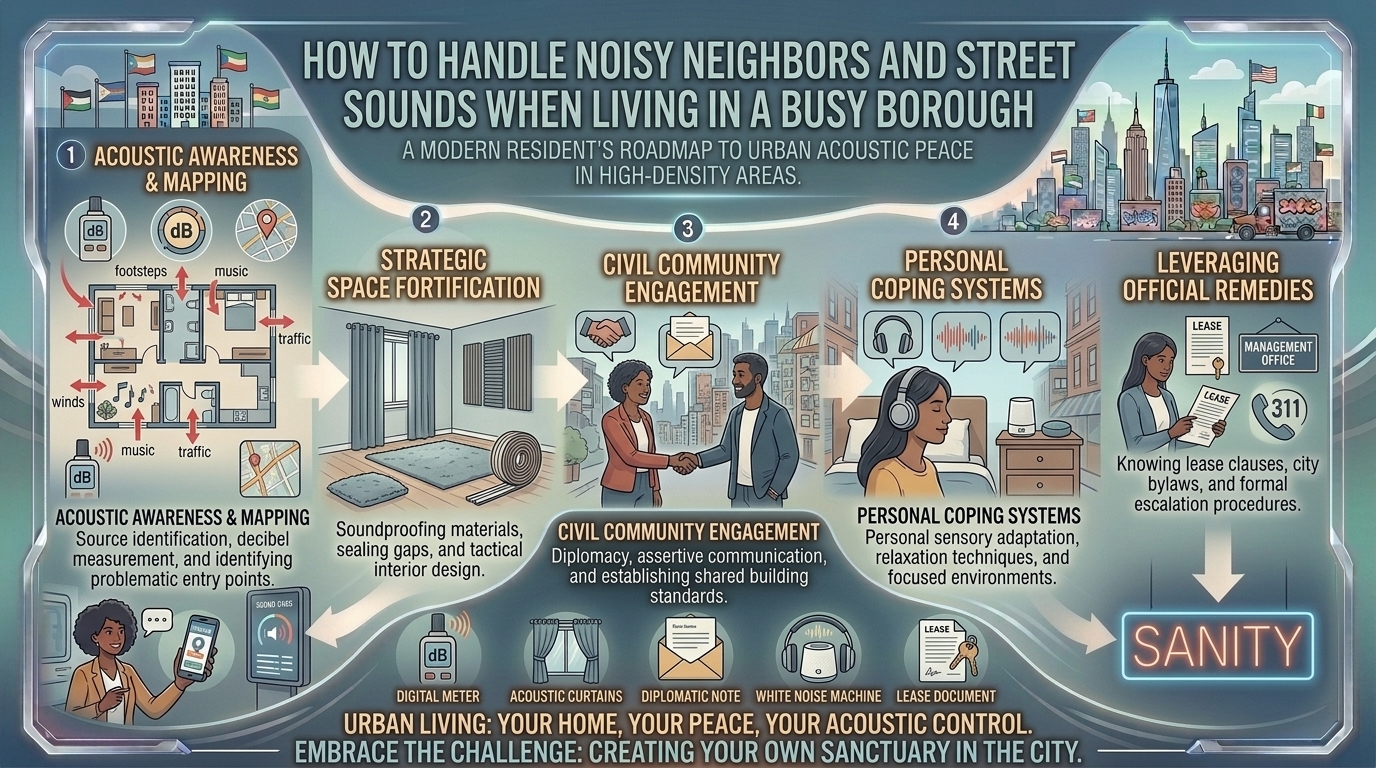
How to Handle Noisy Neighbors and Street Sounds When Living in a Busy Borough
Welcome back to nyattitude.com, your definitive digital sanctuary for mastering high-intensity urban living, fast-lane careers, and the unapologetic resilience required to thrive in America’s most demanding metropolitan hubs. Whether you are sleeping above a bustling avenue in Manhattan, managing a late-night residential shift in a dense Brooklyn brownstone, navigating high-density apartment life in San Francisco or Seattle, or managing urban noise across sprawling metropolitan corridors in Texas and California, one brutal reality unites every city dweller: urban noise is relentless.
When your environment is a 24/7 symphony of screaming police sirens, rumbling subway lines underneath your floorboards, car alarms echoing off brick canyons, and heavy-footed upstairs neighbors who seem to practice indoor furniture rearranging at 2:00 AM, your nervous system takes a heavy toll. Chronic noise pollution isn’t just an annoyance; it is a direct assault on your sleep quality, cognitive performance, and emotional well-being.
Can you escape it? No. Can you conquer it? Absolutely.
This comprehensive, highly informative guide explores the physics of urban acoustics, practical DIY soundproofing strategies, legal avenues for dealing with disruptive neighbors, a 10-point FAQ section, and a master blueprint to transform your loud urban apartment into an oasis of peace.
Part 1: The Physics of Urban Noise (Why Your Borough Sounds So Loud)
To effectively silence your apartment, you first need to understand how sound travels through dense multi-family urban architecture.
1. Airborne Sound vs. Impact Sound
- Airborne Sound: Includes street traffic, honking horns, loud voices, music, and sirens. These sound waves travel through the air and enter your apartment primarily through gaps around windows, doors, and thin walls.
- Impact Sound (Structure-Borne Noise): Includes heavy footfalls, dropped objects, rattling pipes, and slamming doors from neighbors living above or beside you. These vibrations travel directly through the concrete, wooden joists, and structural skeleton of the building. Standard earplugs often fail against structural impact noise because the vibration travels through the physical structure into your bed frame and skull.
2. The Pre-War Building Paradox
Historic pre-war apartment buildings across New York and older urban cores feature charming architectural details like exposed brick, high ceilings, and hardwood floors. Unfortunately, those gorgeous hardwood floors are often laid directly over thin wooden subfloors with zero acoustic insulation, making every step from an upstairs neighbor sound like a bowling alley.
Part 2: Tactical DIY Soundproofing for Urban Apartments
You do not need to spend thousands of dollars on professional architectural soundproofing to drastically reduce ambient noise. Implement these high-impact tactical upgrades:
1. Seal the Gaps (The Path of Least Resistance)
Sound travels like water—it will pour through the tiniest microscopic cracks in your apartment envelope.
- Door Sweeps & Weatherstripping: If you can see light under your apartment entrance door, sound is pouring freely from the hallway. Install a heavy-duty rubber door sweep and adhesive foam weatherstripping around the frame.
- Acoustic Caulk: Check the baseboards and window frames. Sealing hairline gaps with flexible acoustic sealant blocks massive amounts of street noise.
2. Upgrade Your Window Armor
Windows are the weakest acoustic link in any urban apartment.
- Heavy Thermal and Acoustic Curtains: Hang multi-layered heavy velvet or mass-loaded vinyl acoustic curtains on a heavy-duty rod mounted several inches outside the window frame, extending down past the sill. This creates a dense sound-trapping barrier.
- Secondary Window Inserts: If you own your apartment or have a flexible landlord, investing in clear acrylic interior storm windows (such as Soundproof Windows or Indows) creates an airtight secondary pane that can block up to 70% to 80% of street noise.
3. Soften the Hard Surfaces
Hardwood floors, bare concrete walls, and minimalist glass furniture bounce sound waves around your room, creating an echoing acoustic chamber.
- Thick Area Rugs with Dense Felt Pads: Cover at least 80% of your hardwood floors with thick wool area rugs paired with heavy rubberized or felt rug pads to absorb airborne noise and footfall reverberations.
- Wall Tapestries and Bookshelves: Line shared party-walls with tall, heavily packed bookshelves filled with books. Books act as irregular, dense sound diffusers that break up traveling noise waves.
Part 3: Navigating Noisy Neighbors (Diplomacy vs. Action)
Dealing with a loud upstairs neighbor requires a delicate balance of emotional intelligence and firm boundary-setting.
1. The Power of Friendly Diplomacy
In 90% of cases, your neighbor has no idea that their hardwood floors transmit sound directly into your bedroom, or that their late-night music routine carries through thin walls.
- Approach them during daylight hours with a polite, friendly demeanor. Avoid angry banging on the ceiling or aggressive notes stuck to their door, which immediately triggers defensiveness.
- Say something like: “Hey! Just wanted to introduce myself—I live directly below you in apartment 3B. The building’s old floors seem to amplify footsteps and bass quite a bit, especially late at night. Would you mind tossing down a couple of area rugs or keeping TV volume lower after midnight? Really appreciate it!”
2. Documenting the Disturbance
If friendly diplomacy fails and noise violations persist, start keeping a strict Noise Log. Document dates, exact times, the decibel level (measured via a smartphone decibel meter app), and the specific nature of the disturbance. This documentation is essential if you need to escalate the issue to building management, your landlord, or local municipal authorities.
Part 4: Step-by-Step Blueprint for Restoring Your Sleep Sanity
When noise disrupts your sleep, your entire life unravels. Execute this protocol to guarantee restful nights:
- Step 1: Layered White Noise Generation: Do not rely on a single smartphone app. Invest in a dedicated mechanical fan or a high-end white noise machine (like a LectroFan) placed strategically between your bed and the noise source to mask irregular sharp sounds.
- Step 2: Invest in Advanced Earplugs: Transition from cheap foam earplugs to high-fidelity silicone or memory-foam earplugs designed for sleeping (such as Loop Quiet or Mack’s Ultra Soft). They reduce decibel levels comfortably without causing inner-ear pressure.
- Step 3: Create a Vibration Buffer: If structural impact noise rattles your bed, place heavy rubber anti-vibration isolation pads underneath your bed frame legs to absorb physical vibrations before they reach your mattress.
Part 5: Frequently Asked Questions (FAQ)
1. What is the single most effective way to block street traffic noise?
Installing secondary interior acoustic window inserts or heavy multi-layered mass-loaded vinyl acoustic curtains is the single most effective modification for blocking street traffic and sirens.
2. Can my landlord legally evict or penalize a noisy neighbor?
Yes. Most standard lease agreements include a “Covenant of Quiet Enjoyment,” which legally obligates landlords to ensure that tenants are not unreasonably disturbed by other residents. Persistent noise violations give landlords grounds to issue warnings, fines, or lease termination notices.
3. Why does bass music travel so easily through apartment walls?
Low-frequency bass waves possess long wavelengths that carry immense physical energy. They pass right through standard drywall, concrete slabs, and studs, causing walls and furniture to vibrate physically.
4. Are acoustic foam panels on walls effective for blocking outside noise?
Acoustic foam panels sold online are designed to absorb internal echoes in recording studios; they are not effective at blocking external noise from entering your apartment through walls. You need mass, density, and airtight seals to block sound.
5. What should I do if calling the police for noise complaints doesn’t work?
In many major cities like New York and San Francisco, non-emergency police lines (like 311) handle noise complaints, but response times vary. If management and municipal reporting fail, consider consulting a tenant rights attorney or documenting the noise for formal lease-breach arbitration.
6. Do heavy curtains actually work for soundproofing?
Yes, provided they are true acoustic or blackout thermal curtains made of dense, heavy materials (such as triple-weave polyester or velvet) and hung properly to cover the entire window frame down to the floor.
7. How can I soundproof a shared apartment wall without construction?
Building a secondary bookshelf wall packed tightly with books, hanging heavy tapestries, or placing freestanding acoustic room divider panels against the shared wall will dramatically reduce conversational sound transmission.
8. Why do upstairs neighbors always seem so loud in older buildings?
Older buildings utilize lightweight wood-joist framing without resilient sound-isolation channels. Every footstep, dropped object, or pet claw creates a direct impact vibration that drops down into your ceiling like a drum skin.
9. What is a decibel (dB) level that causes sleep disturbance?
Research shows that ambient noise levels exceeding 45 decibels regularly trigger micro-awakenings, elevate stress hormones, and disrupt REM sleep cycles, even if you don’t fully wake up.
10. Is it worth buying white noise machines if I already use a ceiling fan?
A high-quality mechanical white noise machine generates a broader spectrum of sound frequencies specifically calibrated to mask erratic urban spikes (like car horns and yelling) better than a standard airflow fan alone.
Conclusion
Living in a busy urban borough doesn’t mean you have to sacrifice your peace of mind or your sleep quality. By sealing gaps, upgrading window treatments, softening hard interior surfaces, mastering diplomatic neighbor communication, and utilizing advanced white noise systems, you can transform your apartment into a silent sanctuary. Own your space, protect your rest, and conquer the city on your own terms.
How to Soundproof Your Apartment Against Urban Noise
Watch this insightful video tutorial breaking down practical DIY soundproofing techniques, window treatments, and acoustic hacks to block street noise and noisy neighbors in busy metropolitan apartments.