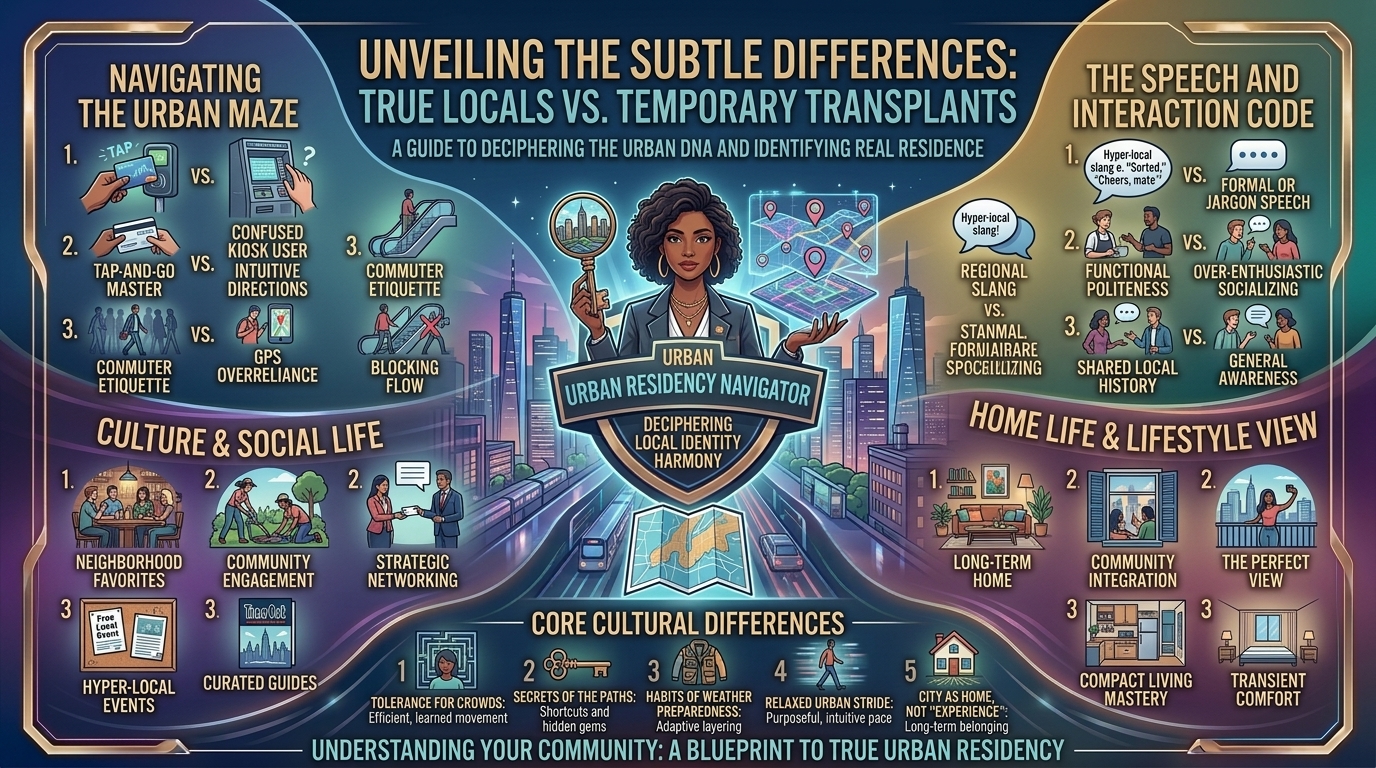
Whether you are strolling down the vibrant streets of Manhattan, navigating the tech-driven avenues of San Francisco, soaking up the diverse sprawl of Los Angeles and California, enduring the rain-kissed corners of Washington, or navigating the booming expanse of Texas, one social dynamic remains universally constant. Every major cultural hub features a sharp, enduring divide between two distinct types of people: the true local and the temporary transplant.
Spotting the difference has become something of an urban sport. Temporary transplants—often defined as professionals, students, or dreamers who move to a city for a few years before heading elsewhere—bring unique energy to these regions. However, true locals possess an innate rhythm, a localized vocabulary, and a behavioral psychology that cannot be faked.
If you want to master the art of urban anthropology across the nation’s most dynamic regions, here is your ultimate guide to telling true locals apart from temporary transplants.
1. Linguistic Dead Giveaways: The Shboleth of Speech
Language is almost always the first indicator. A person’s vocabulary and pronunciation can instantly betray how long they have lived in a specific zip code.
- Geographic Nicknames: In California, a true local will physically wince if you say “Cali,” “Frisco,” or “San Fran.” Locals simply say California, San Francisco, or SF. Similarly, in New York, nobody who grew up there calls it “The Big Apple” in casual conversation; it is just “the city,” and Manhattanites refer to anything outside their borough by its specific name.
- The Article Rule in California: In Southern California, true locals use specific freeway nomenclature. They do not just take I-405; they take “The 405”. Transplants often drop the definite article or use regional phrasing from back home.
- Texas Parlance: In Texas, a transplant might overuse “y’all” mechanically or incorrectly, while a local uses it naturally as a plural pronoun. Furthermore, locals know that “the city” could mean Dallas, Houston, Austin, or San Antonio depending on context, and they pronounce hyper-local street names (like Guadalupe in Austin) with native phonetic accuracy rather than textbook Spanish or standard English.
2. Navigational Instincts and Weather Reactions
How people interact with their physical environment—the weather, traffic, and terrain—separates those who endure a climate year-round from those who are visiting temporarily.
- Weather Drama: In Washington and Northern California, a true local walks through a drizzle without an umbrella, treating it like ambient moisture. A temporary transplant is easily spotted clutching an oversized tourist umbrella or complaining openly about the gray skies. Conversely, when it actually snows in parts of Texas or the Pacific Northwest, locals treat it like a historic event, whereas transplants from the Midwest or Northeast laugh at the panic.
- Natural Disasters: Locals have built-in muscle memory for regional events. In California, minor earthquakes barely interrupt a local’s conversation or coffee sip, whereas transplants often look terrified and check their phones immediately after a tiny tremor.
3. Pacing and Spatial Awareness
Urban centers operate at specific tempos. Temporary transplants frequently stand out because their internal clock or spatial etiquette is out of sync with the local current.
- Sidewalk Etiquette: In New York or downtown Seattle, true locals walk with a brisk, purposeful stride, weaving through crowds without breaking momentum. Transplants often stop dead in the middle of a busy sidewalk to look up at a building or check a map, blocking the pedestrian artery and earning immediate, silent resentment from everyone behind them.
- The Waiting Game: True locals have mastered the art of patience in lines. Whether it is waiting for a legendary food truck in Austin, a trendy brunch spot in Brooklyn, or a coffee shop in San Francisco, locals know which places are tourist traps versus hidden neighborhood gems. Transplants are far more likely to chase viral social media hype rather than neighborhood legacy.
4. Social Circles and Networking Behavior
The way people build relationships reveals their long-term investment in the community.
- Transactional vs. Rooted Networking: In hyper-professional hubs like San Francisco, Seattle, or New York, temporary transplants often approach social interactions like a LinkedIn networking event, asking “What do you do?” within the first thirty seconds. True locals are more likely to focus on hobbies, neighborhood ties, or creative outlets independent of corporate titles.
- Attachment to Back Home: Transplants frequently begin sentences with, “Well, back in [Home State], we used to do it this way.” Locals rarely compare their city to anywhere else because, in their minds, there is no alternative standard of living.
10 Frequently Asked Questions (FAQs)
1. Why do locals care if someone is a temporary transplant?
It usually stems from economic pressures, housing market shifts, and a desire to preserve local culture and unique neighborhood histories against rapid gentrification.
2. Is being a “transplant” a bad thing?
Not at all. Major economic and cultural powerhouses like New York, San Francisco, Los Angeles, Seattle, and Austin thrive on the innovation, diversity, and energy that newcomers bring.
3. How long does it take to officially become a “local”?
There is no fixed timeline, but it generally correlates with living through multiple economic, seasonal, and social cycles in the region—typically five to ten years minimum.
4. Do locals actually hate newcomers?
Not universally. Most metropolitan residents are welcoming, but they experience “transplant fatigue” when newcomers try to change local cultural norms, complain about regional weather, or drive up living costs without respecting local history.
5. What is the biggest giveaway of a New York City transplant?
Standing on the left side of an escalator, stopping on a subway stairwell, or paying full retail price at a neighborhood bodega without building a rapport with the clerk.
6. How do Texas locals spot out-of-state transplants instantly?
Aside from clothing choices during seasonal shifts, it often comes down to barbecue preferences, driving etiquette on major interstate loops, and how they handle summer humidity.
7. Why do San Francisco locals avoid the term “San Fran”?
It is an unwritten rule of regional linguistics. Locals find shorthand abbreviations like “San Fran” or “‘Frisco” inauthentic and immediately indicative of tourism.
8. Do temporary transplants adopt local habits eventually?
Many do! Over time, transplants often absorb regional slang, adapt to local traffic patterns, and adopt neighborhood loyalties, eventually transitioning into permanent locals.
9. How does Washington state differ in its local-transplant divide?
Washington features a distinct divide between Western Washington (urban, tech-heavy, rain-adapted) and Eastern Washington (agricultural, desert climate). Transplants often struggle to understand this micro-cultural split.
10. Where can I find more insights on regional American subcultures?
Explore our dedicated city guides right here on nyattitude.com for deep dives into urban lifestyles across the country.
Conclusion
Spotting the difference between true locals and temporary transplants is more than just a game of regional bingo—it is a window into how American cities evolve. Transplants bring fresh perspectives, ambition, and dynamic economic growth, while true locals provide the cultural anchor, institutional memory, and authentic heartbeat that makes each city unique. Whether you have lived in your neighborhood for three decades or three months, embracing the local rhythm with humility and curiosity is the ultimate key to fitting in.
How geography and community culture shape our cities
This video is relevant because it explores how geographic movement and population shifts impact regional communities and identities.