Welcome to nyattitude.com, your ultimate cross-country resource hub connecting urban dreamers from Texas, California, Washington, San Francisco, and New York.
Moving to or living in New York City is a rite of passage. It is the city that never sleeps, but it’s also the city that never stops charging. For anyone coming from more spacious, cost-effective regions—whether you are trading Austin’s sprawling heat, Seattle’s misty calm, or San Francisco’s tech-heavy hills for the concrete jungle—the sheer financial shock of NYC can be staggering.
Can you survive living in New York City on a tight budget? Yes, absolutely. Thousands of creative, resilient people do it every single day. Surviving—and thriving—in NYC on a budget isn’t about deprivation; it is about adopting an urban survivalist mindset, mastering local hacks, and rewriting how you spend your time and money.
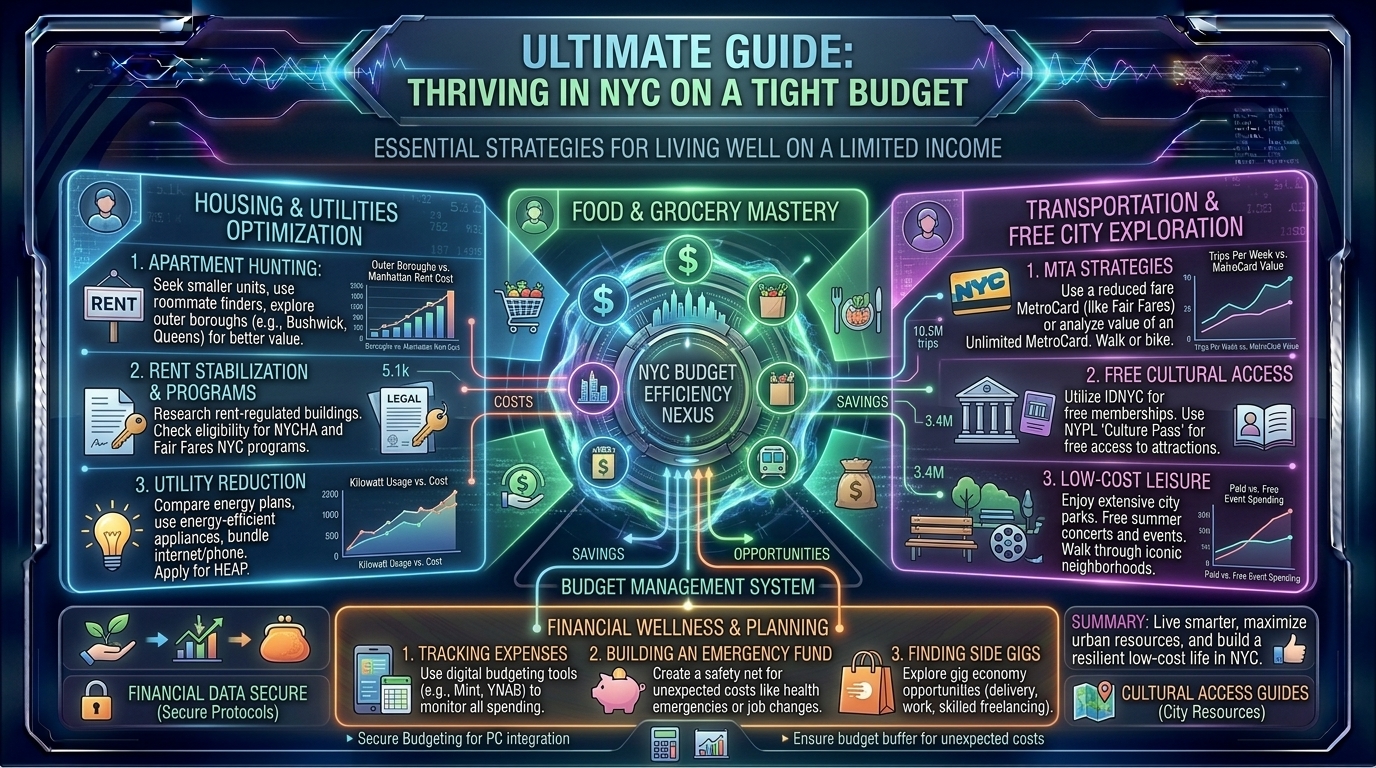
1. Mastering the Art of NYC Housing Without Going Broke
Housing will always be your single largest monthly expenditure. Coming from states like Texas or Washington, where square footage is abundant, the reality of New York apartments can induce mild panic.
Target the Outer Boroughs or Seek Roommates
If you insist on living alone in a one-bedroom in Manhattan or prime Brooklyn, your tight budget will vanish in thirty days. Instead, look toward upper Manhattan, vibrant pockets of Queens, or central Brooklyn.
- Get Roommates: Splitting a multi-bedroom apartment drastically reduces rent and utility costs. Websites like StreetEasy, SpareRoom, and local neighborhood groups are goldmines for finding compatible roommates.
- Hunt for No-Fee Apartments: Broker fees in NYC can cost up to 15% of the annual rent. Always filter your apartment searches explicitly for “No-Fee” listings to save thousands upfront.
- Understand Rent Stabilization: Look into rent-stabilized units. These apartments have legal limits on how much landlords can raise rent year-over-year, protecting you from sudden market spikes.
2. Transportation: Ditch the Taxis and Embrace the Concrete
If you grew up driving everywhere in Texas or Southern California, relying entirely on public transit will require an adjustment. However, it is your greatest financial safeguard.
The Transit Hierarchy for Budget Survival
- Walk Everywhere Within Reason: Walking is 100% free, keeps you healthy, and lets you discover hidden neighborhood gems you would otherwise miss from the back of a cab.
- Master the MTA: The subway and bus network is your lifeline. Get a MetroCard or use OMNY (tap-to-pay with your phone). Invest in the unlimited weekly or monthly pass only if you use transit frequently enough to justify the math.
- Say No to Taxis and Ride-Shares: Yellow cabs and Uber/Lyft rides accumulate fast. A handful of spontaneous rides can easily cost you the equivalent of a utility bill. Save ride-shares strictly for late-night emergencies.
- Consider Citi Bike: For an annual membership, bike-sharing is an affordable, fast alternative for crosstown or waterfront commuting when the weather permits.
3. Eating Well Without Emptying Your Wallet
Food expenses in New York can silently drain your bank account through delivery apps, overpriced corner store snacks, and trendy brunch spots.
+--------------------------------------------------------------------------+
|                     THE NYC FOOD BUDGET STRATEGY                         |
+--------------------------------------------------------------------------+
|  AVOID: Daily Starbucks, seamless delivery fees, Whole Foods shopping.   |
|  EMBRACE: Trader Joe's, local ethnic markets, meal prepping, BYOB spots. |
+--------------------------------------------------------------------------+
- Smart Grocery Shopping: Skip high-priced grocers and make Trader Joe’s, ethnic markets in Chinatown or Flushing, and local greenmarkets your primary stops.
- Cut the Delivery Apps: Using delivery apps adds service fees, delivery charges, and tip inflation that can double the cost of a simple meal. Walk to pick up your takeout (“pickup option”) or cook at home.
- Master the Pre-Game and Happy Hour: When socializing, adopt the NYC tradition of having a drink at home before heading out. Take full advantage of local happy hours for food and drink specials, and seek out BYOB (Bring Your Own Bottle) restaurants.
4. Free and Cheap Culture: Enjoying NYC on Zero Dollars
Many newcomers assume that experiencing New York requires a massive entertainment budget. In reality, some of the best cultural experiences in the world right here are entirely free.
- Parks and Public Spaces: Central Park, Prospect Park, The High Line, and Little Island cost nothing to explore. They serve as the communal backyards for millions of residents.
- Museum Free Days: Many world-class museums offer free admission hours, Pay-What-You-Wish windows for residents, or corporate partner days. Keep track of schedules for institutions like the Met, MoMA, and Brooklyn Museum.
- Independent Resources: Bookmark local culture and event guides like The Skint or Club Free Time to find daily roundups of free concerts, comedy shows, art gallery openings, and outdoor movie screenings across all five boroughs.
5. Thrifting, Stoop Culture, and Smart Shopping
Living cheaply in New York means redefining how you acquire goods. Space is limited, which means New Yorkers constantly purge high-quality items.
- Embrace “Stoop Culture”: In warmer months, leaving gently used furniture, books, and decor on apartment stoops for neighbors to take for free is a cherished NYC tradition.
- Thrift Like a Pro: Thrift stores and vintage shops in Brooklyn and Manhattan offer incredible fashion and home goods finds at a fraction of retail cost. Check out spots like Housing Works and local neighborhood thrift hubs.
- Curb Lifestyle Creep: It is easy to feel pressured to match the spending habits of higher-earning peers. Learn to say a confident “no” to expensive outings and suggest budget-friendly alternatives like a picnic in the park or a cooking night at home.
10 Frequently Asked Questions (FAQ)
1. How much money do I need saved before moving to NYC on a budget?
Ideally, you should have at least 3 to 6 months of living expenses saved up, plus enough cash to cover upfront apartment costs (first month’s rent and security deposit). Moving blindly without a safety net on a tight budget is a recipe for high stress.
2. Is it possible to live in Manhattan on a tight budget?
It is exceptionally difficult, but possible if you secure a tiny rent-stabilized room, live with multiple roommates, cook all your meals, and heavily restrict discretionary spending. Most budget-conscious residents look to Queens, Brooklyn, or upper Manhattan.
3. How do I find trustworthy roommates in New York?
Use dedicated platforms like Roomi, SpareRoom, or verified university and alumni housing boards. Always video-chat or meet in person, tour the apartment thoroughly, and verify lease terms before transferring any money.
4. Are groceries really that much more expensive in NYC?
Yes, convenience store and supermarket markups can be brutal. You can mitigate this by shopping at budget-friendly chains like Trader Joe’s, buying bulk pantry staples online, and shopping fresh produce at local street carts or open-air greenmarkets.
5. Do I need a car to live in New York City?
No. Owning a car in NYC is a massive financial liability due to exorbitant parking fees, insurance rates, garage costs, and alternate-side parking regulations. Public transit and walking are faster and vastly cheaper.
6. How can I find free things to do on weekends?
Utilize local newsletters like The Skint, explore the extensive NYC parks system, visit public libraries for free event passes, and attend community gallery openings or outdoor summer festivals.
7. What is the cheapest way to handle utilities and internet?
Choose a mobile plan that fits your data needs without unnecessary extras, skip cable television in favor of shared streaming services, and look for bundled or promotional internet provider rates when moving into a new building.
8. How do I avoid hidden apartment leasing fees?
Always ask upfront about application fees, credit check costs, building move-in fees, and broker commissions. Stick strictly to listings marketed as “no-fee” by landlords or direct owners to keep initial moving costs manageable.
9. How do locals handle health and fitness on a budget?
Skip expensive boutique fitness clubs and luxury gyms. Instead, run along the Hudson River or through Central Park, take advantage of NYC Parks recreation centers with low annual membership fees, or practice yoga and bodyweight exercises at home.
10. How do I keep from feeling overwhelmed by financial stress in the city?
Budgeting ruthlessly is empowering. Track every dollar using digital finance apps, establish clear boundaries for social spending, and remember that thousands of people navigate these exact financial waters successfully every single day.
Conclusion
Surviving living in New York City on a tight budget is ultimately an exercise in creativity, discipline, and community. While cities like Austin, Seattle, or San Francisco offer their own unique economic landscapes, the grit required to conquer NYC teaches you resourcefulness that stays with you for a lifetime. By securing smart housing, bypassing unnecessary luxuries, utilizing public infrastructure, and leaning into free cultural offerings, you can claim your place in this legendary metropolis without emptying your bank account. Welcome to the journey—your New York story starts now.
Are you planning a cross-country move to New York from Texas, California, Washington, or San Francisco, and what is your biggest financial concern about the transition?