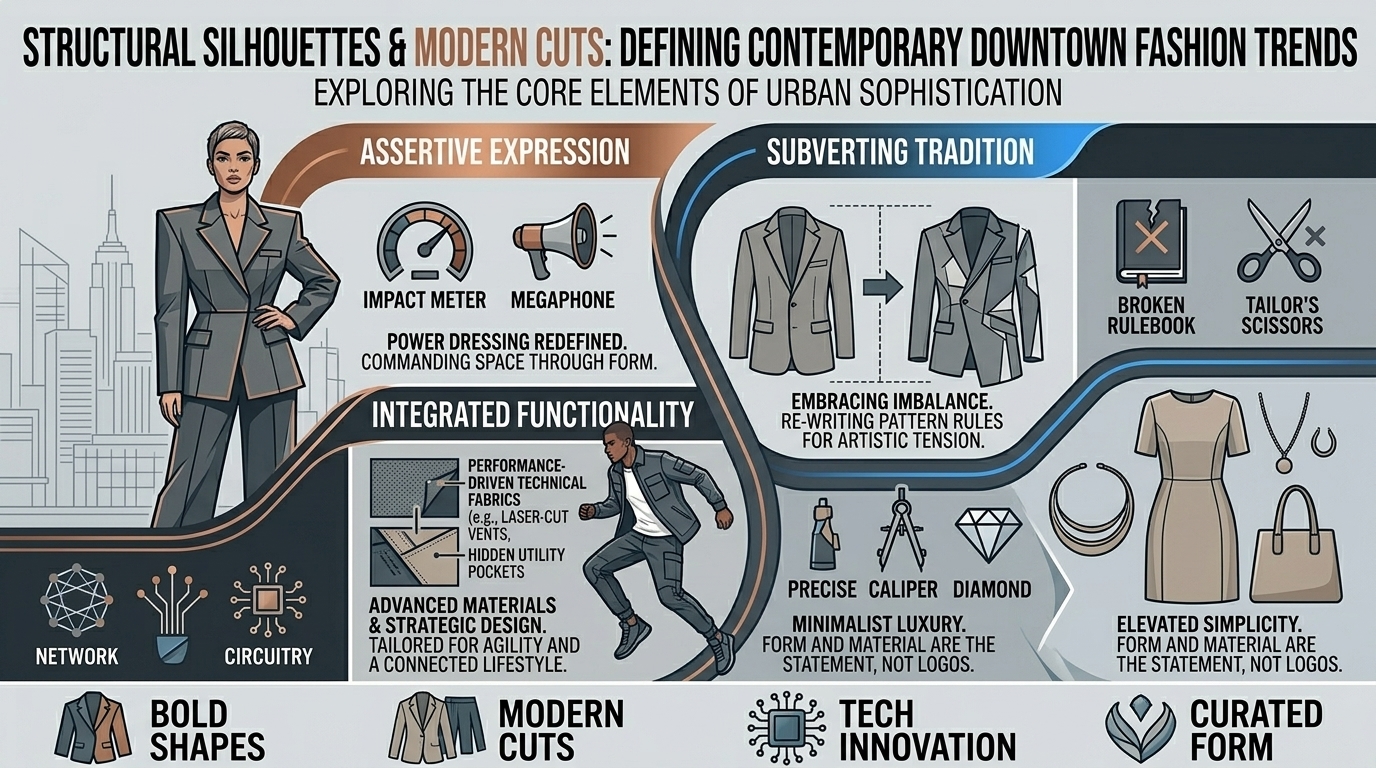
In the fast-moving fashion epicenters across the United States—from the industrial avenues of Soho and Tribeca in New York to the design corridors of San Francisco, Los Angeles, Seattle, and Austin—urban fashion has undergone a massive architectural shift.
The era of hyper-tight, restrictive silhouettes and uninspired loungewear has ceded ground to structural silhouettes and modern, architectural cuts. Today’s downtown aesthetic is defined by boxy menswear-inspired blazers, high-waisted wide-leg trousers, sculptural outerwear, and asymmetrical hemlines that create a commanding presence on city streets.
Structural fashion is not merely a passing seasonal trend; it is a functional movement. For creative professionals, urban commuters, and style leaders navigating dynamic days across Texas, New York, California, Washington, and San Francisco, structural garments deliver an unmatched combination: high-impact aesthetic authority paired with physical comfort and movement.
At NY Attitude, we break down real-world wardrobe architectures, urban style blueprints, and street-tested fashion mechanics. This comprehensive guide details why structural silhouettes and modern cuts define contemporary downtown fashion, how to style architectural proportions, and how to build a high-impact wardrobe tailored to modern city life.
1. The Architectural Silhouette Matrix: Proportions & Spatial Balance
Downtown style relies heavily on proportional tension. Rather than conforming tightly to the body’s natural contours, structural silhouettes manipulate volume, leverage heavy fabric weights, and establish strong geometric lines.
+--------------------------------------------------------------------------+
|                 ARCHITECTURAL SILHOUETTE DESIGN MATRIX                   |
+------------------------------------+-------------------------------------+
| 1. STRUCTURAL ANCHOR LAYER         | Extended padded shoulders, boxy     |
|    50% Visual Weight               | chest, dense wool/canvas drape      |
+------------------------------------+-------------------------------------+
| 2. FLUID PROPORTIONAL BASE         | High-waisted wide-leg trousers or   |
|    40% Spatial Movement            | architectural pleats with crisp drop|
+------------------------------------+-------------------------------------+
| 3. HARDWARE & TENSION ACCENTS      | Full-grain leather belts, chiseled  |
|    10% Focal Contrast              | boot toes, geometric metal cuffs    |
+------------------------------------+-------------------------------------+
Key Elements of Modern Downtown Cuts
- Padded Shoulders & Boxy Torso Architecture: Exaggerated shoulder padding on blazers, coats, and leather jackets broadens the frame, establishing an immediate visual anchor that projects authority.
- High-Waisted Wide-Leg Trousers: Deep front pleats and wide leg openings extend from a high waistline, creating a long, fluid vertical line that moves gracefully with every step on city pavement.
- Asymmetrical & Sculptural Hemlines: Uneven hems, wrap fronts, and diagonal seams break traditional symmetry, introducing a dynamic, gallery-inspired aesthetic to simple outfits.
- Heavyweight Textile Integrity: Structural cuts depend on dense natural textiles—such as 14oz rigid denim, heavy wool twill, bonded trench canvas, and crisp poplin—to hold their shape independently without collapsing against the body.
| Structural Cut Component | Traditional Equivalent | Key Downtown Visual Advantage | Ideal Regional Environment |
| Oversized Boxy Blazer | Slim-fit tailored blazer | Commands visual space; layers easily over chunky knits | New York City, San Francisco |
| Pleated Wide-Leg Trouser | Skinny / Straight chino | Creates an elongated silhouette with optimal leg airflow | Los Angeles, Austin |
| Architectural Trench Coat | Standard fitted raincoat | Shielding outer drape with dramatic waist belt tension | Seattle, Washington |
| Asymmetrical Midi Skirt | A-line pencil skirt | Kinetic movement that breaks static geometric lines | San Francisco, SoCal |
2. 3-Step Strategy to Style Structural Silhouettes
1.Step 1: Choose Heavy-Weight Fabrics That Maintain Form:Select heavy-density natural textiles that retain rigid architectural lines.
- Prioritize Textile Density: Look for garments crafted from heavy wool twill, 100% rigid cotton denim, structured poplin, or thick calfskin leather. Lightweight fabrics collapse, losing their structural integrity.
- Inspect Internal Canvas: High-grade structural blazers feature chest canvas and shoulder padding that maintain sharp angles even when unbuttoned.
2.Step 2: Apply the Rule of Proportional Balance:Balance dramatic volume with fitted anchoring points to keep proportions clean.
- Volume Counterbalance: If wearing an oversized, wide-shoulder top layer, anchor the look with a fitted base (like a ribbed turtleneck or tank) or secure the waist with a structured leather belt.
- Define Waist and Ankle Focal Points: Ensure trousers break cleanly over structured footwear (such as pointed-toe boots or lug-sole loafers) to keep wide cuts from dragging or looking sloppy.
3.Step 3: Complete the Outfit with Chiseled Hardware and Footwear:Anchor bold silhouettes with clean leather footwear and architectural accessories.
- Chiseled Footwear: Pair wide-leg trousers or boxy outerwear with square-toe boots, lug-sole leather loafers, or architectural mules to ground the volume.
- Minimalist Hardware: Add structured geometry through solid brass belts, rectangular acetate sunglasses, or sculptural cuffs that echo the garment’s clean lines.
3. Five Go-To Structural Outfit Formulas for Downtown Dressing
- The Downtown Executive: Oversized black wool boxy blazer + fitted white ribbed tank + high-waisted pleated charcoal wide-leg trousers + leather lug-sole loafers + structured crossbody bag.
- The Architectural Trench Look: Double-breasted heavy canvas trench coat (belted tightly) + raw indigo straight-leg jeans + pointed leather ankle boots + rectangular acetate optical frames.
- The High-Low Sculptural Gallery Commuter: Asymmetrical grey wool midi skirt + boxy heavyweight cotton t-shirt (french-tucked) + cropped leather utility jacket + architectural block-heel mules.
- The Pacific Northwest Scholar: Oversized dark green wool overcoat + cream heavyweight ribbed crewneck knit + wide-leg pleated chino pants + waterproof leather Chelsea boots.
- The Coastal Minimalist: Cream boxy linen-blend blazer + high-waisted wide-leg off-white trousers + black silk camisole base + sleek white leather sneakers.
10 Frequently Asked Questions (FAQ)
1. What defines a “structural silhouette” in modern fashion?
A structural silhouette relies on heavy fabric weight, precise tailoring (such as shoulder pads, pleats, and darting), and rigid cuts that hold a defined geometric shape independently, rather than clinging to the natural body form.
2. How do I wear oversized structural clothes without looking swallowed by fabric?
Use strategic anchor points. Balance volume by defining your waist with a high-waisted cut or belt, showing a glimpse of skin at the neckline or wrists, and grounding the look with structured leather footwear.
3. Are structural silhouettes suitable for professional office environments?
Yes, absolutely. Oversized blazers, wide-leg trousers, and architectural coats project authority, modern sophistication, and intentionality—making them prime staples for creative, corporate, and executive workplaces.
4. What fabrics are best for maintaining an architectural shape?
High-density natural fibers—including heavy wool twill, rigid 100% cotton denim, structured leather, thick poplin, and heavy linen-canvas blends—are best because they retain their form throughout long days of wear.
5. Can shorter or petite individuals wear wide-leg structural trousers?
Yes. Petite individuals can wear wide-leg trousers by choosing high-waisted cuts that sit at the natural waistline, pairing them with pointed-toe boots or heels, and keeping hem lengths tailored so they drop just above the floor without pooling.
6. What shoe styles pair best with boxy, oversized blazers?
Chiseled square-toe boots, heavy lug-sole loafers, architectural mules, and minimalist leather low-top sneakers work exceptionally well by balancing the strong visual weight of the shoulders.
7. How do regional climates in states like Texas or California impact structural dressing?
In warmer climates (like Texas or SoCal), achieve structural looks using breathable, open-weave heavy linens, crisp lightweight cotton poplin, and unstructured blazers in lighter color palettes (such as cream, tan, or sage).
8. What is the difference between an “oversized” garment and a “structural” garment?
An oversized garment is simply scaled up in size (which can look slouchy if un-tailored). A structural garment is intentionally designed with specific proportions—such as widened shoulders, tapered waists, or reinforced seams—to create a distinct shape regardless of body size.
9. How do I clean and maintain structured outerwear to preserve its shape?
Always follow care tags closely; heavy structural wool coats and lined blazers should be dry-cleaned sparingly. Store garments on wide, contoured wooden hangers (never thin wire hangers) to preserve shoulder pads and collar structure.
10. How can I transition a structural daytime outfit into an evening look?
Remove bulky daytime layers or unbutton your blazer to expose a silk camisole base, swap casual loafers for pointed heels or mules, apply a bold lipstick, and add sculptural gold or silver jewelry.
Conclusion
Structural silhouettes and modern cuts define contemporary downtown fashion because they combine high visual authority with physical comfort and movement. By embracing boxy blazers, pleated wide-leg trousers, sculptural hemlines, and heavy-density textiles, you create a timeless, commanding wardrobe built to navigate city streets across Texas, New York, California, Washington, and San Francisco with complete style confidence.
For more urban wardrobe blueprints, street-tested style frameworks, and architectural fashion mechanics, stay tuned to NY Attitude.