Welcome back to nyattitude.com, your definitive digital guide for metropolitan living, functional style, and urban wellness. If you live or work in major transit-heavy metropolitan hubs—whether you are speed-walking across Manhattan crosswalks, conquering the steep hills of San Francisco, navigating downtown Seattle or Austin, or pounding the pavement in Los Angeles—your daily life is defined by movement.
For the average urban commuter, a “simple walk to the train” or a stroll from the parking garage to the office easily accumulates into two to five miles of walking every single day. Yet, every season, thousands of professionals make the same critical mistake: sacrificing foot health and ergonomic support at the altar of fleeting fashion trends.
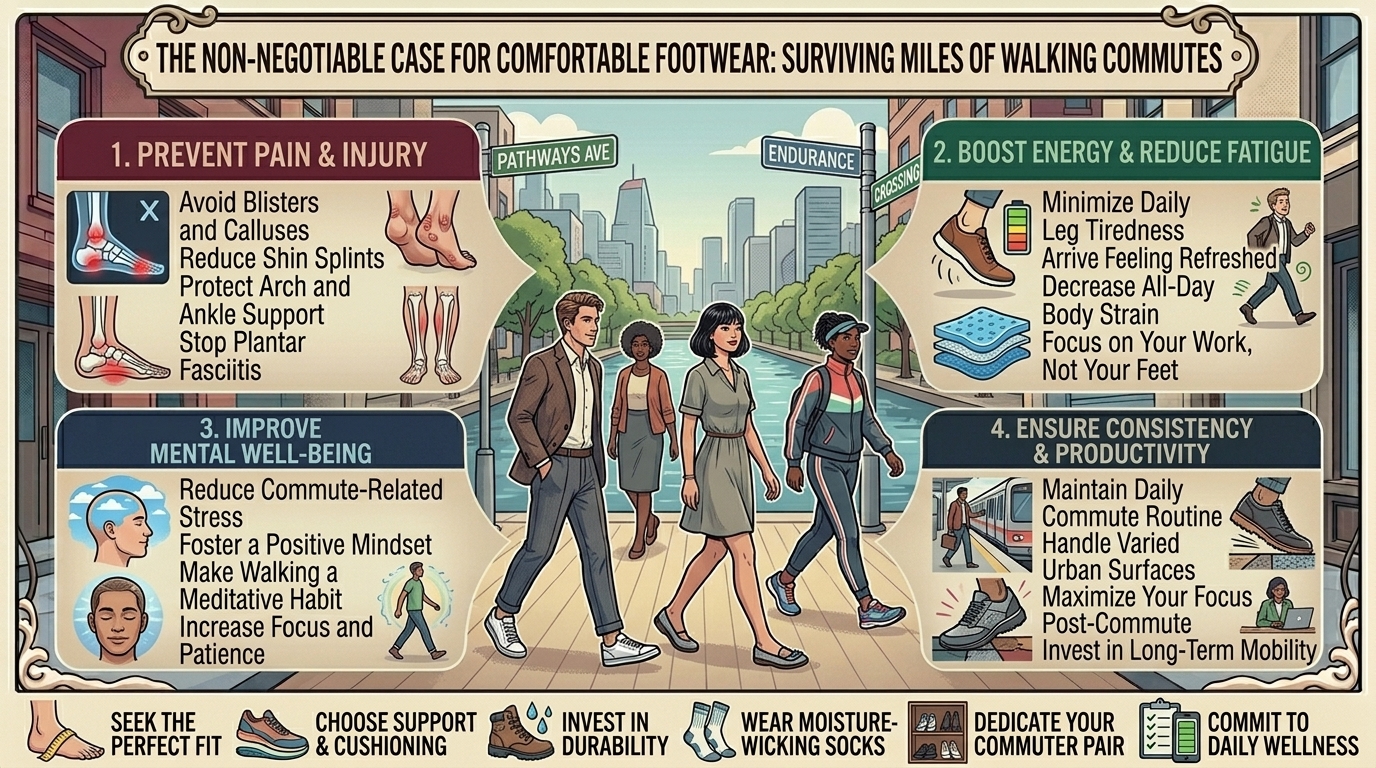
If you think stiff dress shoes, unyielding heels, or cheap, unpadded fashion sneakers are a harmless daily compromise, think again. Comfortable, supportive footwear is entirely non-negotiable when your daily commute involves miles of walking. This comprehensive master guide explores the biomechanics of urban walking, the hidden costs of bad shoes, and how to merge high-performance comfort with sharp metropolitan style.
Phase 1: The Harsh Biomechanics of Concrete Jungles
Why does city walking take such a heavy toll on the human body? It comes down to physics and urban infrastructure.
1. The Concrete Impact Force
Unlike natural dirt trails, grassy parks, or wood-floored offices, modern city sidewalks and subway platforms are made of unforgiving concrete and asphalt. Every time your foot strikes the pavement, a shockwave travels up through your heels, ankles, shins, knees, and lower spine. Without a high-grade shock-absorbing midsole or proper arch support, your joints absorb 100% of that kinetic impact.
2. The Multi-Mile Fatigue Accumulation
Walking three miles a day means your feet strike the ground roughly 6,000 to 7,000 times daily. Multiply that across a five-day work week, and your lower extremities endure tens of thousands of impact cycles. If your footwear lacks structural integrity, minor structural stresses quickly compound into chronic conditions like plantar fasciitis, Achilles tendinitis, shin splints, and lower back pain.
Phase 2: The Hidden Costs of Compromising on Commuter Footwear
Choosing aesthetics over ergonomics during a heavy walking commute triggers a domino effect that impacts far more than just your feet:
- Postural Breakdown: When your feet hurt, your body instinctively alters its gait to minimize pain. This subconscious shift throws your hips, spine, and shoulders out of alignment, leading to tension headaches, neck stiffness, and chronic back fatigue.
- Skin and Nail Trauma: Tight dress shoes or unyielding leather loafers cause friction, resulting in painful blisters, corns, ingrown toenails, and bruised toenails that can sideline your mobility for weeks.
- Mental Exhaustion: Physical discomfort drains your cognitive energy. Chronic low-grade foot pain elevates cortisol levels, making you feel irritable, fatigued, and distracted long before you even sit down at your desk.
Comparative Matrix: Fashion-First Compromise vs. Ergonomic Commuter Footwear
| Metric | Rigid Dress Shoes / Flat Fashion Sneakers | High-Performance Commuter Footwear |
| Shock Absorption | None; paper-thin soles transmit impact directly to joints | Advanced foam cushioning (e.g., EVA, Fresh Foam) that absorbs impact |
| Arch Support | Flat or nonexistent; causes foot fatigue and collapse | Ergonomic engineering supporting the plantar fascia and stabilizing the heel |
| Traction & Grip | Slick leather or smooth rubber prone to slipping on wet subway stairs | Deep tread patterns designed for rain, metal grates, and slick pavement |
| All-Day Endurance | Causes severe pain, blisters, and joint strain within hours | Engineered for multi-mile durability without physical degradation |
| Aesthetic Integration | Often looks polished initially but ruins your posture and stride | Blends sleek urban styling with athletic-grade comfort technology |
Phase 3: What to Look for in the Ultimate City Walking Shoe
Finding a shoe that can survive a rigorous urban commute while keeping you looking chic requires evaluating three technical features:
1. Superior Cushioning and Energy Return
Look for midsoles built with high-resilience foam (such as Brooks’ DNA amortization, New Balance Fresh Foam, or HOKA rocker geometries). These materials cushion your heel strike while providing a springy toe-off that propels you forward efficiently.
2. A Roomy Toe Box
Your feet naturally swell and spread out over the course of a long walk. Shoes with a narrow, pinching toe box compress your metatarsals, cutting off circulation and causing numbness. Ensure your shoes leave enough room to wiggle your toes freely.
3. Breathability and Weather Resistance
Urban commutes expose you to unpredictable elements—from stifling subway tunnels to sudden downpours. Breathable mesh uppers prevent overheating and sweat accumulation, while water-resistant or waterproof membrane options (like GORE-TEX linings) keep your feet bone-dry during rainy morning walks.
Pro-Tips for Managing Your Commute Like a Pro
- The Commuter Shoe Swap: If your corporate office enforces a strict dress code, don’t walk your miles in stiff heels or leather oxfords. Wear high-performance walking sneakers during your commute, and pack your professional shoes in a sleek backpack or tote bag to swap at your desk.
- Invest in Merino Wool Socks: Ditch cheap cotton socks that trap moisture and cause blisters. Premium merino wool socks wick sweat away instantly, regulate temperature, and provide a soft secondary cushion inside your commuter shoes.
- Rotate Your Footwear: Never wear the exact same pair of walking shoes two days in a row. Foam midsoles need at least 24 to 48 hours to decompress and regain their original cushioning properties after a multi-mile trek.
Frequently Asked Questions (FAQ)
1. Why is comfortable footwear considered non-negotiable for city commuting?
Because walking miles on unyielding concrete day after day places immense stress on your joints, tendons, and spine. Without proper ergonomic support and shock absorption, chronic pain and injury are virtually guaranteed.
2. Can I wear fashionable flat sneakers for long-distance city walking?
Many basic fashion sneakers feature completely flat, unpadded rubber soles with zero arch support. While they look minimalist and stylish, they offer terrible shock absorption for multi-mile walks. Look for hybrid sneakers that combine casual aesthetics with athletic-grade comfort.
3. How often should I replace my city commuter walking shoes?
Even if the upper material looks fine, the internal foam cushioning and tread on walking shoes typically compress and degrade after roughly 300 to 500 miles of use—equalling about 6 to 12 months of heavy urban commuting.
4. What are the best features for a shoe walking on wet city pavement?
Look for durable rubber outsoles with multi-directional traction lugs or slip-resistant treads to prevent slipping on wet subway tiles, metal grates, and slick concrete.
5. How do I prevent blisters when breaking in new commuter shoes?
Wear moisture-wicking merino wool socks, apply anti-friction balm to known hotspot areas before heading out, and break new shoes in gradually on short weekend errands before wearing them on a full multi-mile commute.
6. Are memory foam insoles good for long-distance city walking?
While memory foam feels wonderfully plush the first time you step into a shoe, it compresses permanently under continuous body weight within a short time, offering zero long-term structural arch support. High-density supportive foams are much better for long walks.
7. Why do my feet swell during a long walking commute?
Walking increases blood circulation and body temperature, causing blood vessels in your feet to dilate. This natural physiological response makes your feet expand by the afternoon, highlighting why a roomy toe box is essential.
8. Is it worth carrying my work shoes separately to avoid walking in them?
Absolutely! Many urban professionals swear by the “commuter sneaker swap” method, protecting their feet during transit and sliding into pristine professional footwear once they arrive at the office.
9. What medical issues can arise from wearing bad shoes on long commutes?
Common ailments include plantar fasciitis (sharp heel pain), Achilles tendinitis, shin splints, bunions, hammer toes, and chronic lower back strain caused by poor postural alignment.
10. Where can I find more urban lifestyle and commuting tips?
Keep your browser bookmarked right here at nyattitude.com for ongoing dispatches on metropolitan wellness, style guides, and smart city living!
Conclusion
Your daily commute should be an empowering start to your day, not an endurance test of physical pain. Treating comfortable, supportive footwear as a strict non-negotiable protects your joints, preserves your posture, and ensures you arrive at your destination feeling energized rather than exhausted. Prioritize ergonomic engineering, invest in high-performance comfort, and step out onto the city streets with absolute confidence and ease.
What urban lifestyle or commuting guide should nyattitude.com explore next? Drop your thoughts in the comments below!