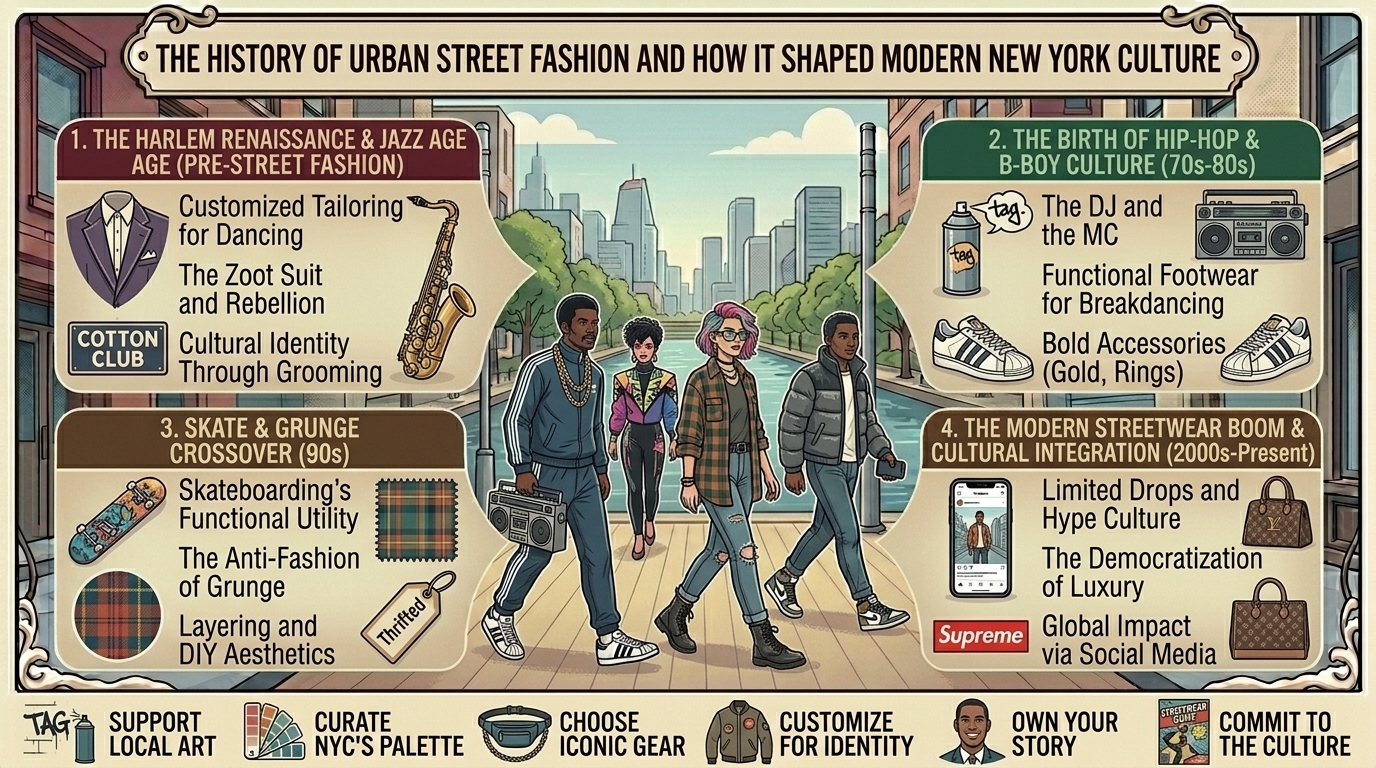
The foundation of urban streetwear was laid in the 1970s. In the South Bronx, block parties hosted by pioneers like DJ Kool Herc sparked the hip-hop movement—a culture defined by music, b-boying, graffiti, and style.
[ 1970s Bronx Block Parties ] ──► [ 1980s Harlem Couture (Dapper Dan) ] ──► [ 1990s Skate & Downtown Supreme ] ──► [ Modern Luxury Streetwear ]
During this era, sportswear was adapted for everyday life. Tracksuits, Puma Suedes, and Kangol hats provided the movement and durability needed for breakdancing while creating a distinct visual uniform.
By the 1980s, Harlem couturier Dapper Dan (Daniel Day) revolutionized high-fashion logic. Day printed bootleg luxury logos (Gucci, Louis Vuitton, Fendi) onto custom leather jackets and tracksuits for hip-hop icons and local hustlers. He brought luxury aesthetics to the street long before high-fashion houses acknowledged urban culture.
The Core Timeline of Urban Streetwear Evolution
| Era | Primary Influences | Key Fashion Staples | Cultural Impact |
| 1970s | Early Hip-Hop, B-Boy Culture | Puma Suedes, adidas Shell-Tops, Tracksuits | Functional athletic wear redefined as urban expression. |
| 1980s | Harlem Hustle, Grafitti, Golden Age Rap | Dapper Dan Customs, Cazal Glasses, Heavy Gold Chains | Luxury logomania hijacked by urban youth culture. |
| 1990s | East Coast Hip-Hop, NYC Skate Culture | Baggy Denim, Timberland Boots, Starter Jackets, Supreme | Rise of brand identity, scarcity drops, and Black-owned labels (FUBU, Karl Kani). |
| 2000s | Ghetto Fabulous, Y2K Aesthetics | Velour Tracksuits, Oversized Apparel, Japanese Denim | Mainstream corporate adoption and global expansion. |
| 2010s–Present | High-Fashion Crossovers, Hype Culture | Luxury Hoodies, Sneaker Raffles, Off-White, Kith | Complete unification of street style and haute couture runways. |
Key Eras That Defined New York City Culture
1. The 1990s Black-Owned Fashion Explosion
The 1990s marked a structural shift as urban youth took control of their market share. Brands like FUBU (“For Us, By Us”), Karl Kani, and Walker Wear proved that streetwear created by the community held unmatched cultural authority. Baggy silhouettes, double-down jackets, and yellow Timberland boots became the undisputed uniform of New York winters.
2. Downtown Skate Culture & The Scarcity Model
While hip-hop shaped uptown style, downtown Manhattan saw the rise of skate culture. The opening of Supreme on Lafayette Street in 1994 introduced a new business model: limited-quantity drops. Buying clothing became an event, generating lines around city blocks and establishing “hype culture”.
3. The Runway Hijack: Streetwear Meets Luxury
In the 2010s, the barrier between high fashion and the street vanished. New York-influenced designers like Virgil Abloh (Off-White) and Louis Vuitton’s collaboration with Supreme confirmed that street culture now dictated global luxury trends, rather than the other way around.
5 Practical Tips to Incorporate NYC Street Style Today
1.Build Around an Iconic Anchor Piece:
Ground your outfit with a historical streetwear staple: a heavy leather bomber, structured trench, classic shearling, or pristine pair of retro high-tops.
2.Master High-Low Proportional Contrast:
Pair oversized urban cuts (like relaxed trousers or heavy fleece hoodies) with structured, tailored outerwear to balance streetwear comfort with sharp refinement.
3.Focus on Sneaker Storytelling:
Sneakers are the core foundation of street fashion. Choose classic silhouettes (Air Force 1s, Jordan 1s, or vintage runners) that pay homage to traditional urban aesthetics.
4.Incorporate Subdued Logomania & Textures:
Instead of loud, modern logos, opt for raw denim, heavy fleece, tumbled leathers, or subtle vintage insignia that highlight material quality.
5.Keep Accessories Intentional:
Utilize functional urban accessories—beanie headwear, leather crossbody bags, or classic gold/silver accents—to complete your look without over-accessorizing.
Frequently Asked Questions (FAQ)
1. Where did urban street fashion officially begin?
Street fashion originated in late 1970s New York City—specifically the Bronx and Harlem—where youth subcultures tied to hip-hop, breakdancing, and graffiti created their own visual aesthetics.
2. Who is Dapper Dan, and why is he vital to street fashion history?
Dapper Dan is a Harlem designer who pioneered luxury streetwear in the 1980s by re-engineering high-fashion designer logos onto custom urban silhouettes for musicians, athletes, and local figures.
3. How did Timberland boots become a New York streetwear icon?
Originally designed as heavy-duty work boots for New England construction workers, Timberland’s classic 6-inch yellow boot was adopted by NYC hip-hop artists and inner-city youth in the early 1990s for its durability and bold aesthetic during harsh winters.
4. What is the difference between streetwear and standard casualwear?
Casualwear prioritizes basic utility and comfort. Streetwear integrates subcultural history, music references, scarcity, brand identity, and artistic self-expression into everyday casual garments.
5. Why is sneaker culture so closely tied to New York street fashion?
Sneakers served as an immediate status symbol and canvas for self-expression on city streets. Keeping crisp, clean kicks became a hallmark of urban respect and personal pride.
6. How did West Coast skate culture influence NYC street style?
Southern California skate brands like Stüssy laid early graphic T-shirt foundations. When brought to NYC in the 1990s, the aesthetic merged with urban hip-hop elements, creating a tougher, winter-ready hybrid style.
7. What was the role of Black-owned brands in 1990s street fashion?
Brands such as FUBU, Karl Kani, and Cross Colours revolutionized the industry by creating clothes explicitly designed for and by the urban community, shifting power away from traditional fashion houses.
8. How did luxury brands come to adopt streetwear aesthetics?
As street culture dominated youth global culture, luxury fashion houses hired streetwear pioneers and adopted drop schedules, casual silhouettes, and graphic branding to stay culturally relevant.
9. Can street style be minimalist or tailored?
Yes. Modern street style frequently blends high-end tailoring, minimalist color palettes, and elevated fabrics with classic urban silhouettes like hoodies and luxury sneakers.
10. Where can I read more fashion culture guides and style breakdowns?
Explore comprehensive urban style audits, heritage breakdowns, and modern streetwear insights at NYAttitude!
Conclusion
The history of urban street fashion is a testament to the power of community, music, and self-expression. What began as a local movement across New York’s outer boroughs transformed how the entire world dresses. By blending historic classics with modern tailored pieces, you can honor this rich heritage while establishing an authentic style identity. Discover more street-style breakdowns, urban culture guides, and fashion audits directly on NYAttitude!