Why Dark Muted Color Palettes Dominate the Wardrobes of Everyday Commuters in Winter
Step onto a subway platform in New York, board a light rail in San Francisco, cross a misty intersection in Seattle, or walk through a transit hub in downtown Dallas on a cold January morning. A striking visual consensus immediately emerges: a sea of charcoal, deep navy, slate gray, espresso, and jet black. Bright neons and vivid pastels seem to vanish the moment temperatures drop.
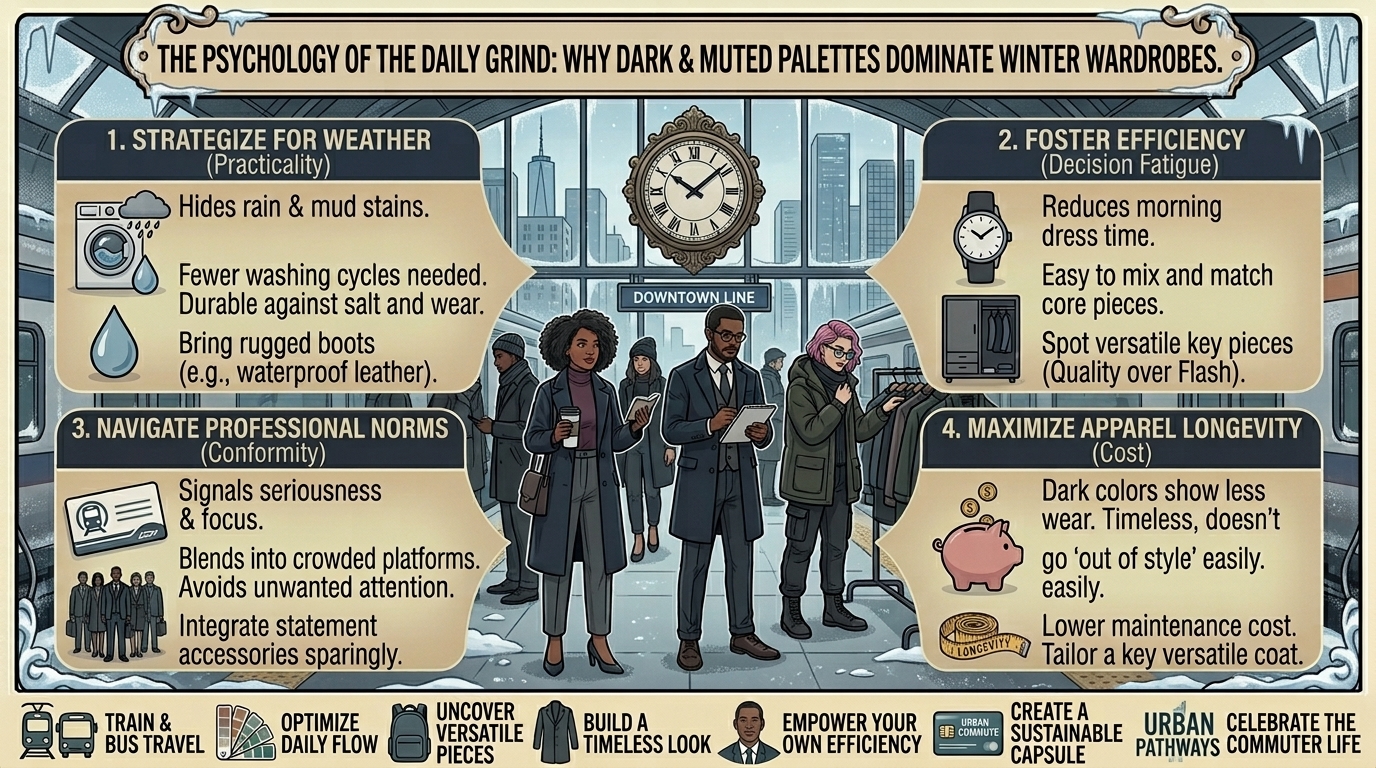
This dominance of dark, muted tones among urban commuters is not a fashion accident, nor is it merely a dull tradition. It is a calculated intersection of practical urban survival, psychological utility, thermal physics, and wardrobe efficiency.
At NY Attitude, we analyze modern street style, wardrobe functionality, and urban culture. Whether navigating public transit in New York and San Francisco, managing wet coastal weather in Washington and California, or braving unpredictable winter snaps in Texas, this comprehensive guide breaks down why dark, muted color palettes dominate the winter commute.
1. The Core Drivers of Winter Commuter Color Choices
+--------------------------------------------------------------------------+
|                  THE COMMUTER COLOR SELECTION MATRIX                     |
+------------------------------------+-------------------------------------+
| 1. PRACTICAL URBAN DURABILITY      | Hides road splash, slush, grease,   |
|    Low-maintenance survival        | and public transit grime            |
+------------------------------------+-------------------------------------+
| 2. THERMAL & MATERIAL UTILITY      | Darker dyes hold up on heavyweight  |
|    Physics of winter wear          | wool, tech-shells, & treated leather|
+------------------------------------+-------------------------------------+
| 3. CAPSULE SYSTEM COMPATIBILITY    | Seamless mixing/matching for fast   |
|    Frictionless morning routines   | 5-minute cold-weather layering      |
+------------------------------------+-------------------------------------+
| 4. PSYCHOLOGICAL SUBWAY SHIELD     | Visual anonymity and professional   |
|    Urban transit defense           | gravitas in crowded spaces          |
+------------------------------------+-------------------------------------+
Strategic Breakdown of Commuter Neutrals
- Charcoal & Slate Gray: The ultimate camouflage for city dust and dry salt residue; softer than pure black while maintaining formal versatility.
- Midnight Navy: Offers executive sophistication, masking rain spots while pairing effortlessly with both black and brown footwear.
- Espresso & Dark Chocolate: A rich, warm dark neutral that provides contrast without breaking the muted winter palette rules.
- Matte Jet Black: The classic urban standard for outerwear—hides grease, scuffs, and transit wear while maximizing visual slimming.
| Color Shade | Soil/Stain Resistance | Versatility Rating | Maintenance Level | Primary Commuter Application |
| Matte Black | Maximum (Oil/Grease) | 10/10 | Minimal | Heavy parkas, leather boots, commuter backpacks |
| Charcoal Gray | High (Salt/Dust) | 9/10 | Low | Tailored wool coats, suiting, knit beanies |
| Midnight Navy | High (Rain Marks) | 9/10 | Low-Medium | Trench coats, denim, technical shell jackets |
| Forest/Olive | Medium-High (Mud) | 7/10 | Medium | Waxed canvas jackets, field coats, utility totes |
| Camel/Beige | Low (Water/Dirt) | 6/10 | High (Frequent cleaning) | Accent scarves, mid-layers (rarely outerwear) |
2. The Functional Mechanics of Winter Wardrobes
1.Step 1: Environmental Stain Camouflage:Why dark colors survive the harsh realities of public transit.
- Winter streets present an aggressive cocktail of slush, melted de-icing salt, brake dust, and oily puddle splashes.
- Light-colored outerwear (cream, beige, white) acts as a canvas for stains, requiring constant dry cleaning.
- Dark, muted outerwear masks ambient city grime, allowing garments to go an entire winter season looking immaculate despite daily transit exposure.
2.Step 2: Frictionless Capsule Layering:How dark shades streamline high-density layering systems.
- Winter commuting demands heavy layering (base thermal, mid-knit, outerwear shell, accessories).
- Muted tones (charcoal, graphite, dark plum) share harmonious undertones. This allows commuters to throw on 4-5 layers in the dark without worrying about clashing patterns or dissonant color temperatures.
- Accessories like gloves, scarves, and bags can be swapped between any outfit setup without re-evaluating the color wheel.
3.Step 3: Visual Anonymity & Professional Flexibility:The transit psychology behind dark outerwear.
- In crowded commuter corridors like San Francisco BART trains or New York subways, dark clothing provides a sense of psychological privacy and personal boundary.
- Dark, muted colors transition seamlessly from a blustery morning street walk to a formal corporate boardroom, an casual office space, or an evening dinner without needing a wardrobe change.
3. How to Style Muted Winter Tones Without Looking Dull
While dark colors dominate out of necessity, dressing in muted shades does not mean sacrificing individual style. Professional urban stylists rely on three core techniques to keep dark outfits visually compelling:
- Play with High-Contrast Textures: When color is limited, texture becomes the primary focal point. Combine a smooth matte technical shell jacket with a ribbed cashmere sweater, raw denim trousers, and tumbled leather boots. The varied surfaces catch light differently, creating depth within a monochromatic black or charcoal outfit.
- Introduce Strategic Metallic Hardware: Elevate dark outerwear with high-shine zipper pulls, silver or gunmetal belt buckles, and structured hardware. Brushed pewter and hematite metals add an intentional finish to dark navy or slate ensembles.
- Utilize Micro-Accents near the Face: Break up dark outerwear using deep jewel-toned accessories. A muted burgundy, forest green, or smoky lavender scarf adds a subtle hint of color against a dark coat without compromising the practicality of your outerwear.
10 Frequently Asked Questions (FAQ)
1. Do dark clothes actually absorb more heat to keep commuters warmer in winter?
Yes. Dark fabrics absorb a broader spectrum of light energy, converting it into heat. While heavy insulation remains the primary driver of warmth, dark outerwear exposed to winter sunlight offers a slight thermal advantage over light-colored fabrics.
2. How do I remove salt stains from dark winter wool coats?
Mix equal parts cold water and white vinegar. Dip a clean microfiber cloth into the solution, gently dab (do not rub) the salt ring on your coat, and let it air-dry. The acid neutralizes the alkaline salt without fading dark dyes.
3. Is all-black clothing considered too formal for everyday commuting?
No. All-black outfits have evolved into the quintessential urban casual uniform. Incorporating relaxed silhouettes (such as an oversized wool coat or streetwear-inspired boots) keeps an all-black outfit stylishly casual.
4. What is the best alternative to black for a winter commuter coat?
Charcoal gray and midnight navy are the top alternatives. They offer the same stain resistance and professional versatility as black while adding subtle tonal depth.
5. How can I keep dark winter clothes from fading over time?
Wash dark garments inside out in cold water using a detergent specifically formulated for dark fabrics. Always air-dry dark winter knits and trousers away from direct sunlight.
6. Are lighter color coats impractical for public transit commuters?
While stylish, light coats (like cream or soft camel) require significantly higher maintenance. Seat grime, rain splashes, and dirty turnstiles leave noticeable marks after just a few wears.
7. How do I choose between cool darks (charcoal/navy) and warm darks (espresso/olive)?
Look at your footwear and leather accessories. If your boots, belts, and commuter bags are primarily black or silver-toned, stick with cool darks. If your leather goods lean toward cognac, chocolate, or gold hardware, warm darks will integrate better.
8. What is the “70/30 Rule” in dark winter dressing?
Keep 70% of your visible outfit in deep neutral anchors (jacket, pants, boots), and dedicate the remaining 30% to textured mid-layers or muted accent accessories (scarves, hats, inner knits).
9. Why do commuter bags almost always come in dark colors?
Commuter bags endure high-friction environments—they get placed on subway floors, squeezed into overhead bins, and exposed to rain. Dark nylon, canvas, or leather conceals scuffs and keeps the bag looking clean longer.
10. Can I wear dark muted colors during spring transitions?
Yes. Swap heavy winter textures like wool and shearling for lightweight, breathable dark fabrics like crisp cotton, linen-blends, or thin tech-shells to maintain a sharp look during seasonal shifts.
Conclusion
The overwhelming preference for dark, muted color palettes among winter commuters is a logical response to urban winter environments. By prioritizing stain camouflage, effortless layering compatibility, and long-term garment durability, commuters build functional wardrobes designed to handle harsh weather and crowded transit systems.
By understanding how to manipulate textures, structural silhouettes, and subtle hardware, you can master the winter commute with a wardrobe that is both practical and effortlessly stylish.
For more style breakdowns, transit-ready wardrobe guides, and seasonal fashion insights across New York, California, San Francisco, Texas, and Washington, stay tuned to NY Attitude.