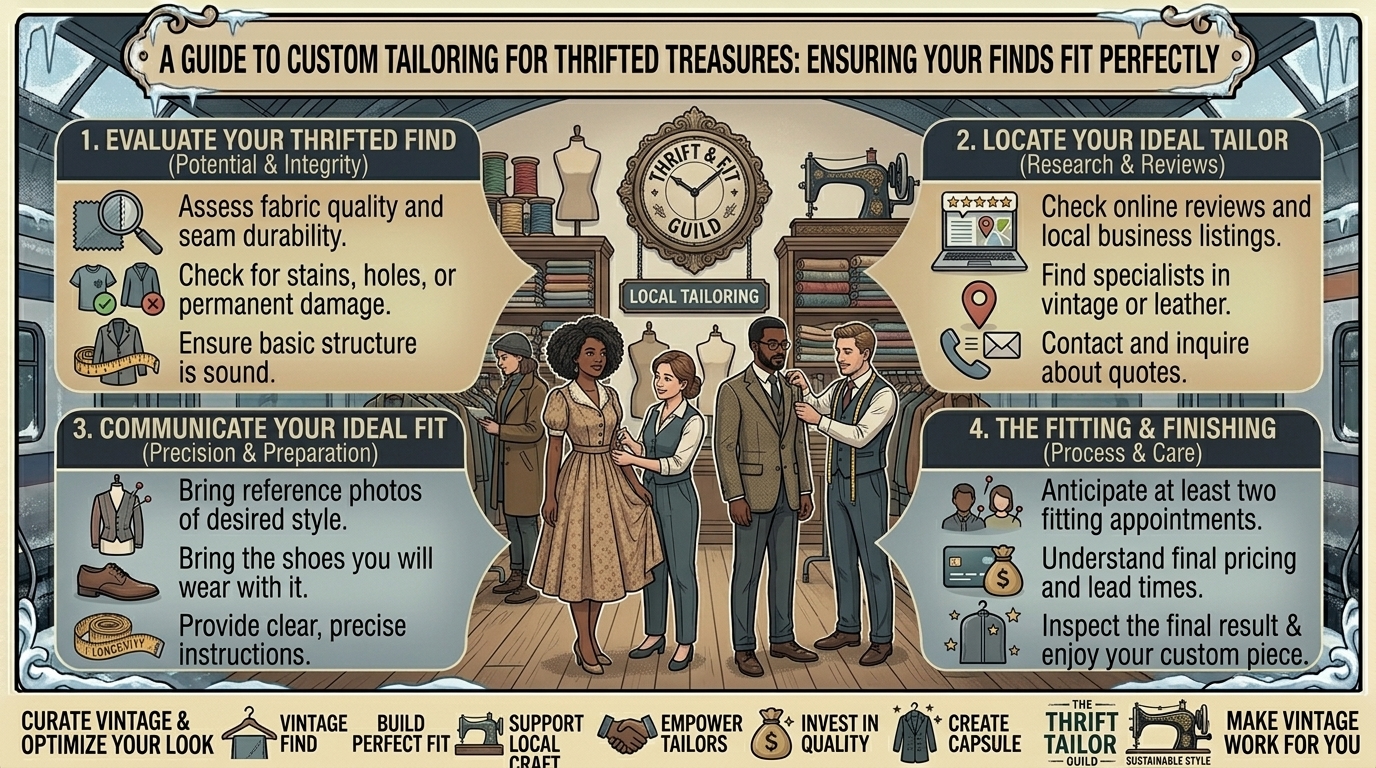
The secret weapon used by high-fashion stylists, vintage archivists, and sartorial experts to make thrifted clothes look like luxury bespoke garments is simple: professional custom tailoring.
At NY Attitude, we cover modern urban style, sustainable fashion, and wardrobe optimization. Whether sourcing vintage leather in New York and San Francisco, discovering denim in California and Texas, or hunting for classic coats in Washington, this guide provides the ultimate blueprint for finding, evaluating, and working with custom tailors to ensure your secondhand clothing fits impeccably.
1. The Financial & Style Math of Tailoring Thrifted Clothes
+--------------------------------------------------------------------------+
|                     THRIFTED TAILORING VALUE MATRIX                      |
+------------------------------------+-------------------------------------+
| 1. HIGH-END MATERIAL ACQUISITION   | Thrift 100% Wool, Silk, Leather, or |
|    Low initial baseline cost       | Selvedge Denim for $15 - $40        |
+------------------------------------+-------------------------------------+
| 2. CUSTOM ALTERATION INVESTMENT    | Invest $20 - $60 in precise custom  |
|    Targeted structural adjustments | tailoring (hems, waist, tapering)   |
+------------------------------------+-------------------------------------+
| 3. LUXURY BESPOKE EQUIVALENT       | Result: A $500 - $1,200 custom-fit  |
|    Flawless silhouette & drape     | garment for a total outlay of ~$75  |
+------------------------------------+-------------------------------------+
Strategic Alteration Priorities
- Trousers & Jeans: Focus on waist adjustments, crotch rise alignment, tapering from the knee down, and resetting hems (asking for an original hem on denim).
- Jackets & Blazers: Always ensure the shoulders fit first; alter sleeve lengths, suppress the waist, and adjust the center-back seam.
- Dresses & Skirts: Add structural waist darts, adjust hem lengths, shorten straps, or alter side seams for a sculpted silhouette.
| Garment Type | Feasible Alterations | High-Difficulty / Expensive | Nearly Impossible |
| Suit Blazers / Jackets | Sleeves, waist suppression, lining repair | Recutting shoulder width, changing jacket length | Rebuilding collar stance |
| Denim & Trousers | Hemming, waist taking-in, tapering legs | Adjusting the rise, expanding waist without allowance | Fixing severe fabric dry rot |
| Button-Down Shirts | Adding back darts, shortening sleeves/hems | Narrowing neck collar size | Rebuilding armhole depth |
| Silk & Wool Dresses | Taking in side seams, shortening hems, darts | Reshaping intricate necklines | Expanding sizes with zero seam allowance |
2. Step-by-Step Guide to Finding and Working with a Master Tailor
1.Step 1: Inspect Seam Allowances & Garment Architecture:Audit your thrifted finds before taking them to the shop.
- Check Seam Allowances: Turn garments inside out to check internal fabric folds. Older vintage pieces (pre-1980s) often feature 0.5 to 1-inch seam allowances, allowing tailors to let the garment out. Modern fast-fashion items have almost zero extra fabric.
- Prioritize Shoulder Fit: The shoulder structure of blazers, coats, and shirts is expensive and complex to alter. Ensure the shoulder seam lands right at your natural shoulder bone before buying.
2.Step 2: Source and Evaluate Custom Tailoring Services:How to vet local alteration shops and specialty tailors.
- Distinguish Between Dry Cleaners and Master Tailors: Basic hemming can be done at a local dry cleaner. For structural adjustments (like taking in a suit chest or lining a coat), seek out dedicated alteration artisans or bespoke tailors.
- Test with a “Trial Garment”: Bring a single, inexpensive pair of pants or simple shirt for a hem test before handing over a rare vintage leather trench or wool coat.
- Ask for Portfolio Examples: Inspect sample work in their shop to verify straight hems, clean topstitching, and properly finished interior edges.
3.Step 3: Master the Fitting Session:Communicate your vision clearly during the fitting session.
- Bring the Right Footwear and Undergarments: Wear the exact shoes, boots, or foundational garments you plan to style with the piece. Pant hems vary dramatically depending on whether you wear flat sneakers, heavy boots, or heels.
- Pinning & Movement Testing: While the tailor pins the fabric, walk around, sit down, and raise your arms. Ensure the garment moves comfortably with your body.
- Specify Your Preferred Pant Break: Clearly state if you prefer a no-break (cropped look), quarter-break (modern standard), or full-break (relaxed vintage drape).
3. High-Impact Alterations That Transform Thrifted Finds
Understanding basic tailoring terminology allows you to communicate effectively with your tailor:
- Adding Back Darts (Shirts & Dresses): Inserting two vertical folds (darts) along the lower back of a boxy shirt or dress pulls in excess fabric around the waist. This creates a fitted silhouette without cutting away original material.
- Original Hemming on Denim: When shortening thrifted jeans, instruct your tailor to perform an “original hem” (or euro hem). This cuts off the factory hem and reattaches it to the newly shortened leg, preserving the authentic wash, distressing, and stitching.
- Waist Suppression on Outerwear: Taking in the side or center-back seams of an oversized wool coat or blazer creates a modern, tapered hourglass or V-shaped drape.
- Tapering Sleeves and Pant Legs: Wide 1990s sleeve openings or boxy pant legs can be tapered from the elbow/knee down to create a refined, contemporary line.
10 Frequently Asked Questions (FAQ)
1. How much should I expect to pay to tailor thrifted clothes?
Basic alterations (hemming pants or adding shirt darts) typically cost $15 to $30. Complex adjustments (taking in a blazer waist, shortening suit sleeves, or tapering pants) range from $35 to $80+, depending on your location and garment complexity.
2. Can you make a thrifted item larger if it’s too small?
Only if the garment has sufficient seam allowance inside. Turn the garment inside out to check if there is extra fabric tucked along the seams. If no extra fabric exists, a tailor cannot expand the garment without adding contrast fabric panels.
3. What is the most critical area to fit when buying a thrifted jacket?
The shoulders. Adjusting shoulder width requires completely deconstructing the jacket chest, collar, and sleeve caps, which is often cost-prohibitive. Always ensure shoulders fit well right off the rack.
4. Should I wash thrifted clothes before taking them to a tailor?
Yes, absolutely. Washing or dry-cleaning garments eliminates odors, removes dirt, and allows natural fabric shrinkage to occur before the tailor pins and cuts the material.
5. What is an “original hem” on vintage jeans?
An original hem involves removing the original factory-finished bottom edge of the jeans, trimming the excess leg length, and reattaching the original hem. This preserves the authentic distressing, color fading, and heavy topstitching.
6. Can leather jackets from thrift stores be tailored?
Yes, but only by tailors equipped with heavy-duty leather sewing machines and specialized needles. Note that sewing leather leaves permanent needle holes, meaning adjustments cannot be undone.
7. How far can a garment be downsized (e.g., sizing down from XL to M)?
As a rule of thumb, garments can generally be downsized by up to two sizes without distorting proportions or pocket placements. Sizing down more than two sizes requires recutting the whole pattern, which changes the design and increases alteration costs.
8. What thrift store fabrics are easiest to alter?
Natural woven fabrics like 100% Cotton, Wool, Linen, and Silk hold press lines cleanly and respond well to alterations. Stretchy synthetics, thin rayon, or heavily beaded fabrics require specialized handling.
9. How do I find the best tailors in my city?
Look for local independent shops with high ratings, check reviews mentioning complex alterations (like suits or formalwear), ask high-end vintage store clerks where they send their inventory for repairs, or test prospective tailors with a simple hem job first.
10. Is tailoring vintage clothing worth the investment?
Yes. Investing $30 in alterations on a $20 high-quality vintage wool coat or selvedge denim pair gives you a custom-fitted piece comparable in quality and fit to luxury garments costing hundreds of dollars.
Conclusion
Combining secondhand shopping with professional tailoring is the most effective strategy for building a custom, high-end wardrobe on a practical budget. By understanding garment construction, identifying unalterable fit barriers like shoulder width, and collaborating with a skilled tailor, you can transform thrifted finds into tailored statement pieces.
For more style frameworks, wardrobe care guides, and urban fashion insights across New York, California, San Francisco, Texas, and Washington, stay tuned to NY Attitude.