The Evolution of Urban Winter Outerwear Fashion: From Heavy Coats to Sleek Puffers
The winter streets of major metropolitan centers serve as dynamic runways where practical necessity meets cutting-edge personal style. Across dense urban corridors—from the wind-swept avenues of New York and the foggy microclimates of San Francisco to the rainy transit lines of Seattle and Washington, the breezy coasts of California, and the sudden cold fronts of Texas—urban winter outerwear has undergone a radical transformation over the past century.
What once began as heavy, rigid, natural-fiber overcoats designed to shield commuters through sheer bulk has evolved into high-performance, lightweight, and sleek puffer jackets engineered with advanced technical textiles and modern insulation. This evolution reflects broader shifts in urban mobility, textile chemistry, climate adaptability, and street-style aesthetics.
At NY Attitude, we break down modern urban fashion, outerwear performance, and city-ready wardrobe architecture. Whether navigating cold commutes in New York and San Francisco, managing wet winter weather in Washington and California, or braving unpredictable seasonal shifts in Texas, this comprehensive guide explores the rich history, functional mechanics, and styling strategies behind urban winter outerwear.
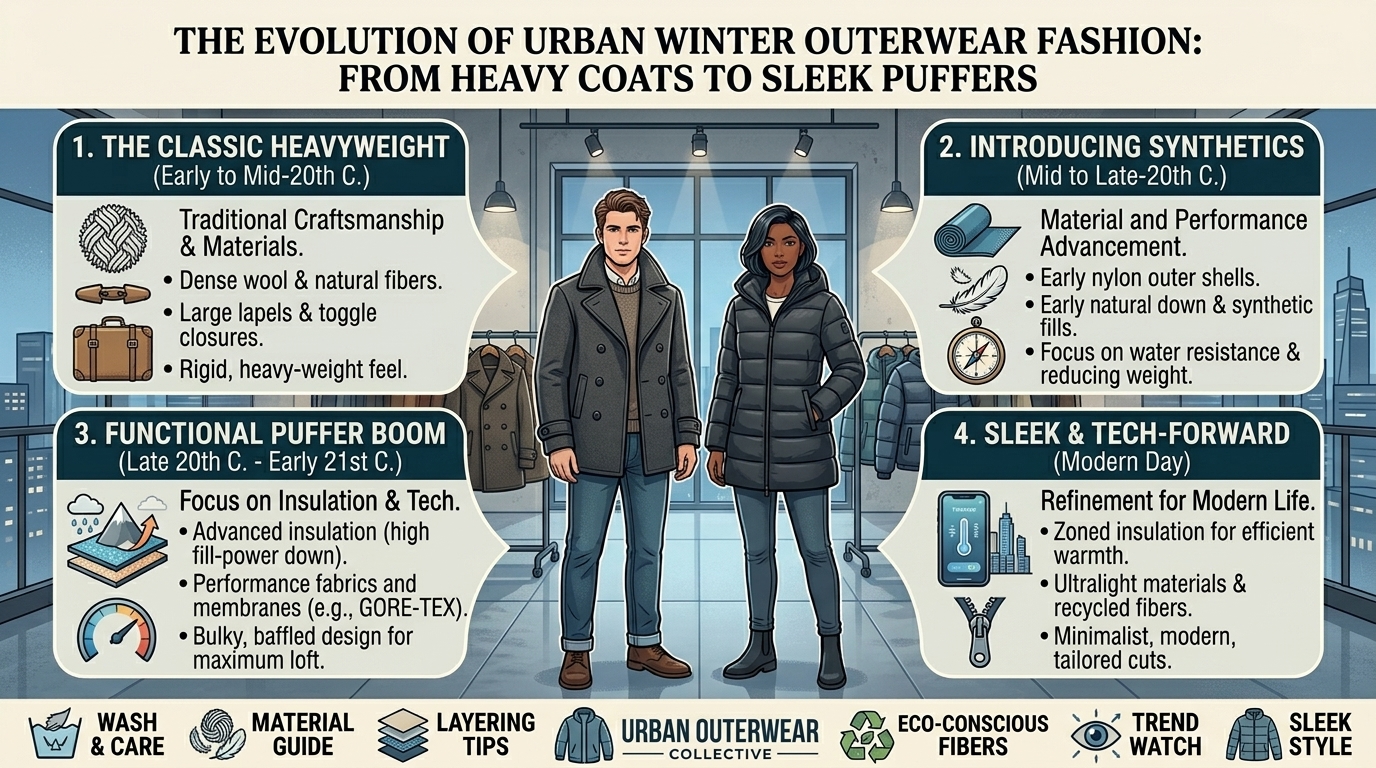
1. Timeline: The Century-Long Outerwear Transformation
+--------------------------------------------------------------------------+
|                  URBAN OUTERWEAR EVOLUTION TIMELINE                      |
+------------------------------------+-------------------------------------+
| 1. EARLY-TO-MID 20TH CENTURY       | Heavyweight Wool Overcoats,         |
|    Natural Fiber & Structural Bulk | Trench Coats, & Shearling Jackets   |
+------------------------------------+-------------------------------------+
| 2. MID-TO-LATE 20TH CENTURY        | Down Filling, Quilted Baffling,     |
|    Synthetic Revolution & Alpine   | & High-Altitude Exploration Gear    |
+------------------------------------+-------------------------------------+
| 3. 1990S TO EARLY 2000S            | Oversized Parkas, Puffer Jackets,   |
|    Hip-Hop & Streetwear Integration| & Brand-Centric Outerwear Icons     |
+------------------------------------+-------------------------------------+
| 4. MODERN MODERNIST ERA            | Sleek Technical Puffers, Bonded     |
|    Minimalist High-Performance     | Membranes, & Weatherproof Coatings  |
+------------------------------------+-------------------------------------+
Era-by-Era Design Mechanics
- The Heavyweight Tailored Era (1900s–1950s): Outerwear relied entirely on heavy-density wool melton, thick shearling, and treated cotton canvas. Warmth was achieved through fabric weight and dense weaves. While exceptionally durable and elegant, these coats were heavy, restricted arm mobility, and absorbed moisture when exposed to heavy rain or melting snow.
- The Alpine-to-Street Shift (1960s–1980s): The invention of quilted down baffles and synthetic nylon shells revolutionized cold-weather gear. Originally engineered for mountain climbing and high-altitude expeditions, down jackets trapped air to create superior thermal insulation without adding physical weight.
- The Streetwear & Culture Explosion (1990s): Outerwear transformed into a primary status symbol within hip-hop culture and urban youth movements. Brightly colored, oversized puffers became central to street uniforms in New York and Chicago, cementing the puffer jacket as a permanent fixture of urban fashion.
- The Sleek Technical Era (2010s–Present): Modern puffers have shed their bulky silhouettes in favor of minimalist, tailored cuts. Advanced bonded seams, matte water-repellent coatings, micro-channel baffles, and synthetic insulation alternatives allow commuters to maintain a clean, sleek profile while staying protected from harsh winter elements.
| Historical Era | Dominant Outerwear Style | Key Material / Tech | Commuter Advantage | Stylist Drawback |
| 1920s–1940s | Double-Breasted Wool Greatcoat | 100% Heavy Melton Wool | Maximum wind blocking, regal structure | Extremely heavy, absorbs rain |
| 1950s–1970s | Expedition Parka & Trench | Waxed Cotton, Natural Down | High thermal retention, long length | Bulky silhouette, difficult to pack |
| 1990s | Voluminous Oversized Puffer | Ripstop Nylon, 600-Fill Down | Ultra-warm, street credibility | Excessive volume, can overwhelm small frames |
| Present Era | Sleek Bonded Technical Puffer | Matte Shells, 800-Fill / Recycled Synthetic | Ultralight, rain/snow-proof, packable | Requires specialized technical wash care |
2. Comparative Analysis: Heavy Wool Coats vs. Modern Sleek Puffers
Choosing between classic tailored coats and contemporary puffers comes down to balancing formal aesthetic requirements against performance utility:
1.Step 1: Evaluate Heavy Wool Overcoats:Understanding the thermal and structural performance of traditional wool.
- Pros: Delivers unmatched executive polish, tailored lines, and timeless formality. Heavy wool drapes cleanly over formal business suits and structured dresses.
- Cons: Heavy weight leads to shoulder fatigue during long walking commutes. Wool absorbs water during heavy downpours and requires dry cleaning.
2.Step 2: Evaluate Technical Sleek Puffers:Analyzing the advantages of modern high-fill sleek puffers.
- Pros: Exceptionally lightweight with high warmth-to-weight ratios. DWR (Durable Water Repellent) coatings shed rain and slush, while compressed baffles allow easy packability.
- Cons: Highly casual or technical appearance can conflict with strict formal dress codes if not styled intentionally.
3.Step 3: Master the Hybrid Urban Outfit:Combining tailored bases with sleek technical outer layers.
- The Modern Commuter Solution: Pair sleek, matte-black micro-baffle puffers with clean tailored trousers and leather footwear to bridge the gap between technical functionality and refined urban style.
3. Styling Framework: How to Wear Sleek Puffers for a Polished City Look
Modern technical puffers no longer look like sleeping bags. By following these three structural styling principles, you can incorporate sleek puffers into a refined wardrobe:
- Select Matte and Textured Finishes Over High-Gloss: Bright shiny nylon shells lean heavily casual and sporty. To project an elevated, high-fashion appearance, choose puffers crafted from matte-finish technical fabrics, bonded stretch wool, or subtle cross-hatch textures in dark neutral tones (charcoal, midnight navy, espresso, jet black).
- Maintain Clean Proportional Ratios: Balance the volume of a jacket with streamlined lower layers. Pair cropped or mid-length puffers with slim-straight trousers, tailored denim, or structured midi skirts. Avoid pairing wide, boxy puffers with excessively loose, un-tailored bottoms to prevent losing silhouette definition.
- Upgrade Footwear and Accessories: Elevate your overall look by pairing sleek technical puffers with premium leather footwear—such as leather lug-sole boots, clean minimalist sneakers, or sharp chelsea boots—alongside high-end knit accessories in cashmere or merino wool.
10 Frequently Asked Questions (FAQ)
1. What is fill power, and how does it impact puffer jacket warmth?
Fill power measures the loftiness and insulating efficiency of down. Higher fill power ratings (e.g., 700 to 800+ fill) trap more warm air relative to their weight, allowing designers to construct warm jackets that remain thin, sleek, and lightweight.
2. Can you wear a sleek puffer jacket over a suit or formal blazer?
Yes, provided the puffer is long enough to cover the bottom hem of the blazer (mid-thigh length is ideal) and features a tailored, matte-finish exterior without excessive puffiness or large brand logos.
3. Are synthetic insulations as warm as natural down?
Modern high-performance synthetic insulations (such as PrimaLoft or recycled microfiber clusters) closely mimic down’s thermal performance. Synthetic insulation has a key advantage in wet climates (like Washington or Northern California) because it retains heat even when exposed to moisture, whereas wet down loses its loft.
4. How do I clean and dry a puffer jacket without clumping the insulation?
Wash the puffer on a gentle cycle using a specialized down/technical detergent. Dry the garment in a tumble dryer on low heat with 3–4 clean tennis balls or wool dryer balls. The balls agitate the baffles during the drying process, restoring full loft and breaking up insulation clumps.
5. What makes a puffer jacket “sleek” compared to a traditional puffer?
Sleek puffers utilize high-density micro-baffling, stitchless thermal bonding, narrower insulation channels, and streamlined pocket integration. This design reduces overall bulk while maintaining core warmth.
6. Why did high-gloss puffer jackets become so popular in urban street style?
High-gloss “lacquer” finish puffers emerged in late-1990s street fashion and early-2000s hip-hop music videos as a striking visual statement. The reflective surface highlighted vibrant colorways and brought high-visibility contrast to grey winter cityscapes.
7. How do I prevent a long puffer jacket from making me look shorter?
Choose a mid-thigh or knee-length model with vertical seam detailing or an internal waist drawcord. Pair it with high-waisted trousers and footwear matching your pant color to extend your visual leg line.
8. What outerwear features are best for unpredictable winter climates like Texas or Southern California?
Look for 3-in-1 modular systems or lightweight packable puffers featuring removable insulated liners and pit-zip ventilation. These allow you to adjust insulation levels as temperatures fluctuate throughout the day.
9. How do DWR coatings work on modern winter outerwear?
Durable Water Repellent (DWR) coatings are hydrophobic chemical treatments applied to the exterior fabric shell. They prevent water from soaking into the fabric by causing water droplets to bead up and roll off the surface.
10. Are heavy wool coats obsolete for modern winter commuting?
Not at all. While technical puffers lead in lightweight mobility and weather resistance, heavy wool overcoats remain unmatched for formal black-tie events, corporate boardrooms, and classic menswear aesthetics.
Conclusion
The evolution of urban winter outerwear from heavy wool overcoats to sleek technical puffers reflects a shift toward practical mobility, lightweight comfort, and versatile design. By understanding the historical progression of outerwear, selecting high-performance materials, and styling sleek puffers alongside elevated tailored layers, modern commuters can stay warm while maintaining a sharp urban aesthetic.
For more street-style analyses, technical garment breakdowns, and city living frameworks across New York, California, San Francisco, Texas, and Washington, stay tuned to NY Attitude.