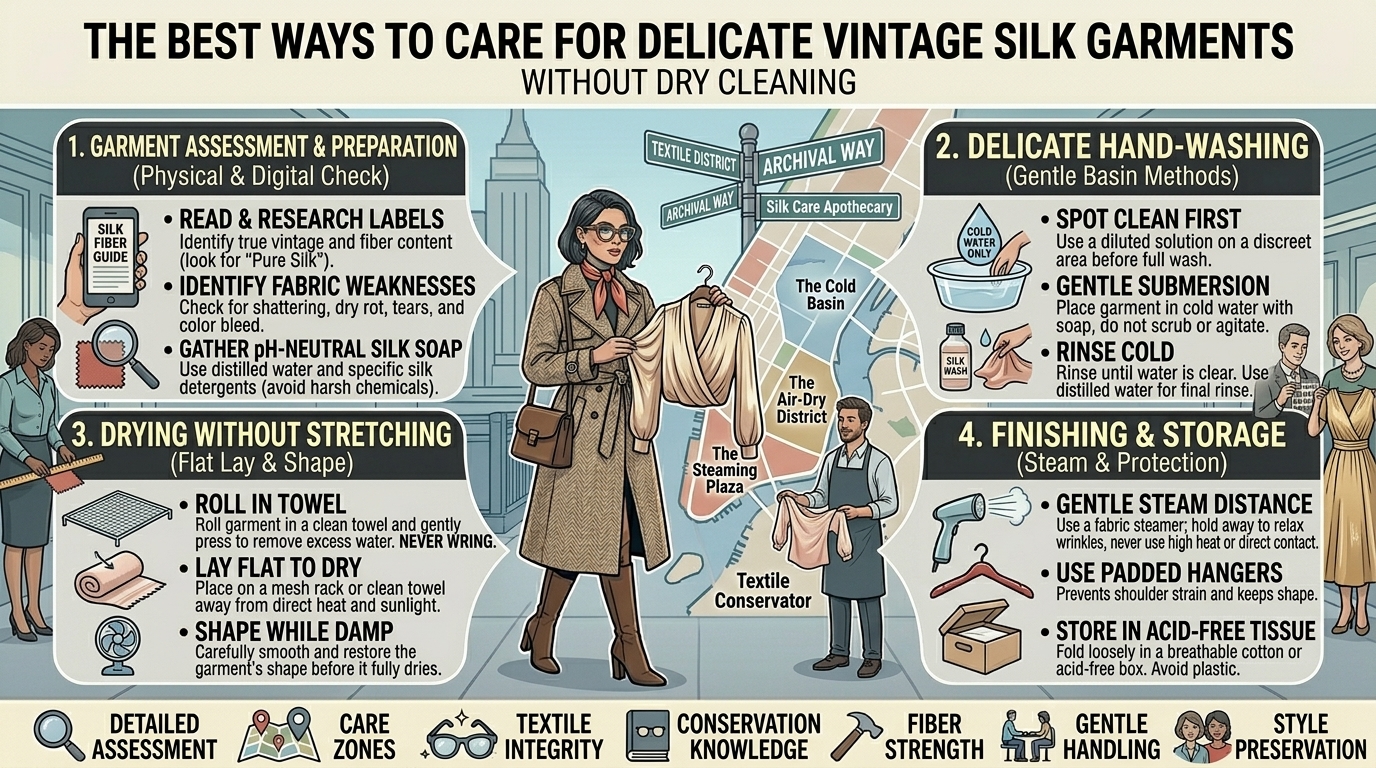
Vintage silk garments represent some of the most exquisite creations in fashion history. From bias-cut 1930s nightgowns and 1950s silk taffeta party dresses to liquid 1970s silk crepe blouses and 1990s minimal slip dresses, silk has long been the gold standard of luxury textiles. However, vintage silk comes with a unique set of care requirements. Over time, silk fibers can become dry, brittle, or sensitive to modern harsh chemicals—making standard commercial dry cleaning a risky proposition.
Commercial dry cleaning frequently uses harsh synthetic solvents (such as perchloroethylene or “perc”) and heavy industrial heat presses. For aging silk fibers, these processes can cause fabric stiffness, color bleed, fiber degradation, or irreversible water spotting. Caring for delicate vintage silk at home using gentle, natural methods is often the safest and most effective way to preserve its luster, drape, and structural integrity.
At NY Attitude, we deliver authentic street style blueprints, vintage textile care frameworks, and urban wardrobe maintenance guides. Whether sourcing vintage silk in New York and San Francisco, preserving luxury layers in California and Washington, or styling delicate silk pieces in Texas, this comprehensive guide provides everything you need to clean, restore, and maintain vintage silk without relying on dry cleaners.
1. Understanding Vintage Silk Mechanics & Fiber Integrity
Before applying water or natural cleaners to vintage silk, it is critical to understand the specific type of silk weave and dye process used in your garment.
+--------------------------------------------------------------------------+
|                      VINTAGE SILK FABRIC CARE MATRIX                     |
+------------------------------------+-------------------------------------+
| 1. RAW FIBER INTEGRITY             | Natural protein fiber produced by   |
|    Sensitive to heat & alkaline    | Bombyx mori silkworms               |
+------------------------------------+-------------------------------------+
| 2. WEAVE DENSITY & STRUCTURE       | Crepe de Chine, Charmeuse, Habotai, |
|    Determines wash vulnerability   | Taffeta, Organza, or Silk Velvet    |
+------------------------------------+-------------------------------------+
| 3. DYE RETENTION & COLORFASTNESS   | Natural vegetable dyes or early     |
|    Requires cold-water spot testing| synthetic dyes prone to bleeding    |
+------------------------------------+-------------------------------------+
Silk Weave Profiles & Washability
- Silk Crepe de Chine & Habotai: Highly resilient, soft, and fluid. These weaves handle hand-washing exceptionally well when proper pH-neutral soaps are used.
- Silk Charmeuse & Satin: Features a glossy front face and matte back. Requires low-friction hand-washing to prevent surface snagging or dulling of the sheen.
- Silk Taffeta & Organza: Crisp, stiff weaves often treated with sizing agents. Water can strip these sizing agents, softening the crisp texture. Spot clean only; avoid full immersion.
- Weighted Silk (Pre-1930s): Historically treated with metallic salts to add weight and drape. Metal salts cause silk fibers to crack over time (known as “shattering”). Do not submerge weighted or shattering silk in water.
| Silk Type | Texture / Finish | Hand-Washable? | Key Risk Factor | Recommended Care |
| Crepe de Chine | Matte, slightly pebbled | Yes (Very Safe) | Color bleeding | Cold hand-wash + vinegar rinse |
| Charmeuse / Satin | Ultra-glossy, smooth | Yes (With Care) | Surface abrasion / dulling | Reverse wash + towel press |
| Silk Taffeta | Crisp, structured, rustling | No (Avoid Immersion) | Loss of crispness / water marks | Steam & spot clean only |
| Silk Velvet | Soft pile, silk base | No | Pile flattening | Hanging steam only |
2. 3-Step Strategy for Hand-Washing Vintage Silk at Home
1.Step 1: Perform the Cold Water Spot Test:Always verify colorfastness before submerging the garment.
- Find an Interior Seam: Apply a single drop of cold water to a hidden interior seam or hem using a white cotton swab.
- Press Gently: Press a clean white cloth or swab against the dampened area.
- Evaluate Dye Transfer: If color transfers to the swab, the dye is fugitive and non-colorfast. Do not submerge. If the swab remains clean, proceed to hand-washing.
2.Step 2: Execute a Low-Friction Cold Water Wash:Use cold water and a specialized pH-neutral liquid cleanser.
- Fill a Clean Basin: Fill a clean sink or basin with cold water (never warm or hot, as heat breaks down protein fibers).
- Add Gentle Soap: Mix in a few drops of a pH-neutral liquid silk wash, delicate wool wash, or organic baby shampoo. Avoid standard laundry detergents, which contain harsh enzymes or alkaline brighteners.
- Submerge and Swish: Submerge the garment and gently swish it through the soapy water for 2 to 3 minutes. Never scrub, wring, twist, or rub the fabric against itself.
3.Step 3: Neutralize with White Vinegar and Towel Press:Neutralize soap residue and restore silk’s natural sheen.
- The Vinegar Rinse: Drain the soapy water, refill with cold water, and add 1 tablespoon of distilled white vinegar. Swish the silk briefly. The acid neutralizes alkaline soap residue, restores natural fiber shine, and preserves color vibrancy.
- Rinse and Towel Roll: Rinse once more with clean cold water. Lay the silk flat on a clean, dry white bath towel. Roll the towel up with the silk inside like a jelly roll, pressing gently to absorb excess moisture.
- Air-Dry Flat: Unroll and lay the garment flat on a drying rack or hang it over a padded hanger away from direct sunlight and heat sources.
3. How to Remove Odors, Wrinkles, and Stains Without Water Immersion
- Eliminating Vintage Odors (Mustiness & Perfume): Hang your silk garment in a well-ventilated room with gentle breeze access, or place it inside a garment bag alongside a bowl of activated charcoal or baking soda (without touching the fabric directly) for 48 hours to absorb trapped odors.
- Removing Wrinkles Safely: Avoid hot dry irons, which can scorch silk protein. Instead, use a garment steamer on low power, keeping the steam nozzle at least 4 to 6 inches away from the fabric. Alternatively, hang the garment in a bathroom while taking a hot shower to let gentle steam relax creases.
- Spot-Treating Non-Greasy Stains: Dilute a tiny drop of pH-neutral soap in cold water. Dab (do not rub) the stain using a soft microfiber cloth, moving from the outer edge of the spot inward to prevent water rings.
10 Frequently Asked Questions (FAQ)
1. Why does dry cleaning sometimes damage vintage silk garments?
Dry cleaning uses industrial chemical solvents and high heat pressing. Older silk fibers, which have lost moisture over decades, can dry out, turn brittle, lose their natural sheen, or suffer seam stress under harsh chemical processing.
2. Can I use baking soda directly on vintage silk to remove grease stains?
No. Baking soda is alkaline, and alkaline substances can weaken or break down silk’s natural protein fibers. Use cornstarch or arrowroot powder instead—dust it onto fresh oil stains, let it sit for 4 hours to absorb grease, then gently brush it off with a soft feather or brush.
3. What should I do if my silk garment develops water spots?
Water spots occur when minerals in tap water dry unevenly on the silk surface. To fix this, submerge the entire garment in a cold water bath mixed with a tablespoon of white vinegar, then towel-roll and air-dry flat.
4. Is distilled white vinegar safe for all colors of vintage silk?
Yes, diluted white vinegar (1 tablespoon per gallon of cold water) is safe for colorfast silks. Its mild acidity restores the natural pH balance of protein fibers, locks in dye color, and strips away dulling soap scum.
5. Can I dry vintage silk in a tumble dryer on low heat?
Never place vintage silk in a machine dryer. Tumble dryers subject fragile garments to high heat and severe friction, which can cause permanent shrinkage, fiber tears, and fabric distortion.
6. How do I store delicate vintage silk long-term to prevent yellowing?
Store vintage silk garments in breathable, acid-free tissue paper inside cotton garment bags or acid-free storage boxes. Avoid plastic dry-cleaning bags, which trap humidity, off-gas harmful chemicals, and cause silk yellowing.
7. What is “weighted silk,” and why can’t it be washed?
Pre-1930s textile makers frequently soaked silk threads in metallic salts (such as tin or lead) to add weight and drape. Over time, these metal salts cause the fabric to split and tear (known as “shattering”). Weighted silk should never be submerged in water or dry cleaned.
8. How do I prevent silk colors from bleeding during washing?
Always use ice-cold water, complete your wash cycle quickly (under 5 minutes), and add white vinegar to your final rinse step. Never leave damp silk resting against itself or other fabrics.
9. Can I iron vintage silk if a steamer is unavailable?
Yes, but only on the lowest “Silk” iron setting. Turn the garment inside out, place a clean cotton press cloth between the iron and the silk, and iron while the garment is still slightly damp. Never use steam settings on a dry iron directly on silk.
10. How can I protect vintage silk garments from closet moths?
Use natural repellents like dried lavender sachets, cedar blocks, or sweet woodruff inside your storage space. Never place mothballs or direct cedar oil in contact with silk fabric.
Conclusion
Caring for delicate vintage silk garments without dry cleaning comes down to gentle handling, cold-water techniques, and pH-neutral solutions. By understanding your garment’s weave, performing colorfast spot tests, neutralizing soap with white vinegar, and storing silk in breathable cotton covers, you can preserve the beauty, softness, and historic value of your vintage wardrobe for years to come.
For more vintage preservation blueprints, street style guides, and urban wardrobe care strategies across New York, California, San Francisco, Texas, and Washington, stay tuned to NY Attitude.