High fashion and personal expression have officially decoupled from high price tags. Walk down the streets of any major cultural epicenter—from Williamsburg in New York and the Mission District in San Francisco to the creative pockets of Austin, Seattle, and Los Angeles—and you will find that the most compelling, head-turning style is rarely pulled straight off a luxury boutique rack. Instead, the modern style icon builds their aesthetic around singular, high-impact thrift store finds.
Thrifting is no longer just a budget-conscious alternative to fast fashion; it is the ultimate playground for personal style. Shopping secondhand gives you access to decades of unique design, vintage fabrications, high-grade tailoring, and discontinued silhouettes that stand out against mass-produced commercial trends.
At NY Attitude, we break down contemporary street style, vintage archivism, and urban wardrobe frameworks. Whether hunting for vintage leather across Texas, curating tailored layering systems in New York and San Francisco, or styling rain-ready urban looks in Washington and California, this comprehensive guide delivers professional strategies to turn affordable secondhand scores into bold statement looks.
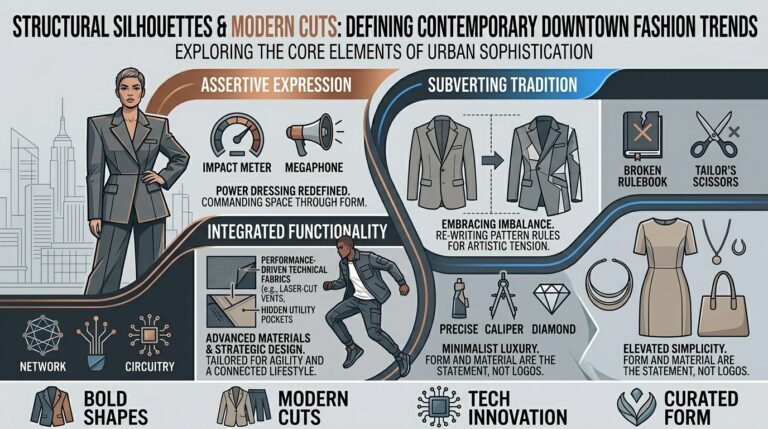
1. The Statement Architecture: What Makes a Thrift Find “Bold”?
Creating a bold statement look does not mean wearing every bright, eccentric item you discover in a thrift bin simultaneously. True sartorial impact comes from curated contrast—anchoring one or two extraordinary secondhand pieces with clean, intentional base layers.
+--------------------------------------------------------------------------+
|                  THE THRIFTED STATEMENT BALANCE MATRIX                   |
+------------------------------------+-------------------------------------+
| 1. HERO PIECE (THE ANCHOR)         | Oversized vintage leather trench,   |
|    70% Visual Weight               | 80s power blazer, or structured coat|
+------------------------------------+-------------------------------------+
| 2. CLEAN BASE LAYER                | High-neck black ribbed top, fitted  |
|    20% Visual Weight               | bodysuit, or tailored straight denim|
+------------------------------------+-------------------------------------+
| 3. ARCHITECTURAL HARDWARE           | Chunky vintage belt, brass jewelry, |
|    10% Visual Weight               | or pointed lug-sole boots           |
+------------------------------------+-------------------------------------+
High-Potential Thrift Categories for Bold Outfits
- Tailored Outerwear & Power Blazers: Look for 1980s and 1990s oversized wool coats, pinstripe blazers with heavy shoulder pads, and genuine leather jackets. Outerwear provides immediate structural impact.
- Rich Textural Fabrics: Prioritize heavy silk blouses, genuine suede skirts, heavy wool knits, and raw denim. High-grade natural fabrics elevate an outfit’s perceived value instantly.
- Vintage Hardware & Accessories: Look for heavy brass-buckle belts, silk neck scarves, geometric acetate sunglasses, and structured top-handle leather bags.
| Thrift Category | Era Goldmine | Key Feature to Hunt For | Bold Outfit Impact |
| Oversized Outerwear | 1980s–1990s | Strong shoulders, heavy wool/leather | High (Instant silhouette anchor) |
| Graphic / Band Tees | 1990s–2000s | Faded cotton, cracked print patina | Moderate (Downtown casual edge) |
| Tailored Trousers | 1970s–1990s | High rise, deep pleats, wide leg | High (Architectural drape) |
| Statement Belts | 1970s–1980s | Solid brass hardware, thick full-grain leather | Moderate (Waist definition point) |
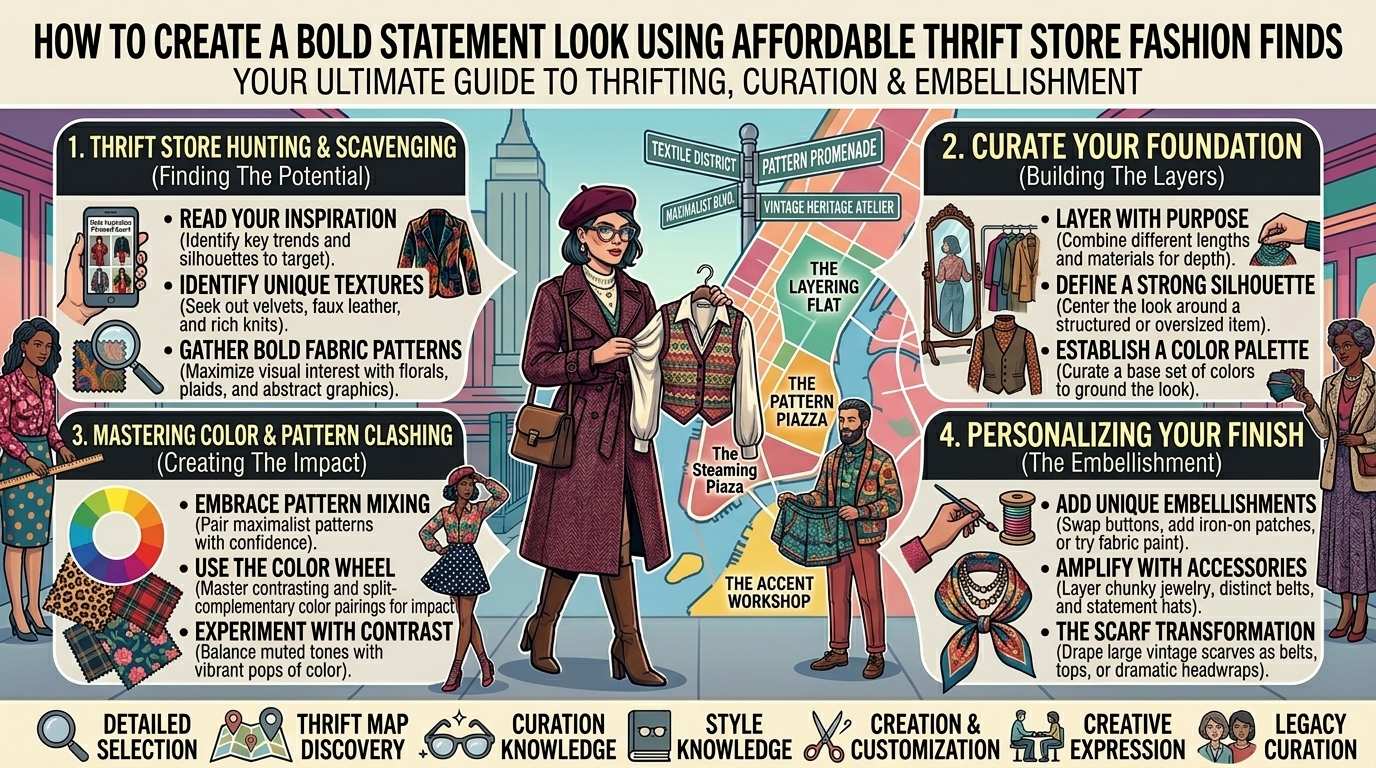
2. 3-Step Strategy to Hunt, Fit, and Style Thrifted Finds
1.Step 1: Execute a Precision Thrift Sourcing Run:Ignore modern sizes and focus on material quality and structural bones.
- Shop Across Departments: Do not limit yourself to a single section. Look through menswear for oversized blazers and boxy button-downs, and inspect the outer rack sections for vintage coats.
- Inspect Fabric Content Labels: Search for 100% wool, 100% silk, genuine leather, linen, and 100% heavy cotton. Avoid pilled or overly worn polyester synthetics.
2.Step 2: Restore and Tailor the Garment:Clean, alter, and adjust secondhand garments for a custom aesthetic.
- Sanitize and Refresh: Hand-wash silks, steam wools, and condition dry leathers to bring vintage fibers back to life.
- Invest in Tailoring: A $10 thrifted blazer paired with $20 worth of sleeve shortening or waist darting looks like a $500 custom designer garment.
3.Step 3: Build High-Contrast Outfits:Juxtapose bold thrift pieces against sleek, modern base layers.
- The 70/30 Rule: Let your thrifted statement piece carry 70% of the outfit’s visual interest, while keeping the remaining 30% clean, minimal, and modern (e.g., sleek boots, black turtlenecks, or clean denim).
3. Five Go-To Outfit Formulas Using Thrifted Hero Pieces
- The Executive Street Uniform: Thrifted 1980s oversized wool blazer + modern black ribbed bodysuit + straight-leg raw denim + thrifted leather belt + pointed ankle boots.
- The Downtown Leather Statement: Thrifted floor-length leather trench coat + crisp white crewneck tee + tailored wide-leg trousers + clean white leather sneakers.
- The Silk & Texture Contrast: Thrifted vintage silk patterned blouse (unbuttoned low) + fitted high-waisted leather skirt + chunky lug-sole loafers + vintage gold chain necklace.
- The Off-Duty Creative: Vintage oversized graphic tee + high-waisted 1980s pleated wool trousers + thrifted structured shoulder bag + bold acetate sunglasses.
- The Layered Winter Commuter: Thrifted plaid wool coat + neutral turtleneck + vintage denim jacket underneath + chunky leather boots.
10 Frequently Asked Questions (FAQ)
1. How do I avoid looking outdated or costume-like when wearing thrifted vintage clothing?
The key is modern balance. Never wear a full head-to-toe outfit from a single past decade. Pair a single vintage hero piece (like an 80s blazer or 70s shirt) with modern, clean basics like fitted tops, contemporary denim, and sleek, polished footwear.
2. What are the best items to buy secondhand versus buying new?
Buy Secondhand: Heavy wool coats, blazers, leather jackets, denim, statement belts, structured handbags, and scarves.
Buy New: Base-layer t-shirts, underwear, bodysuits, socks, and high-performance technical activewear.
3. How do I find my true size when vintage sizing is so inconsistent?
Carry a small fabric tape measure when thrifting. Measure garments flat across the waist, bust, hip, and inseam, and compare those numbers to a pair of well-fitting pants or tops you already own at home.
4. How can I remove persistent secondhand or vintage odors from thrifted clothes?
Hanging garments in a well-ventilated area, steaming them with a mixture of water and a splash of distilled white vinegar, or placing them in a sealed container with activated charcoal sachets will neutralize trapped odors without damaging fragile fibers.
5. Is it worth buying thrifted items that need minor repairs or tailoring?
Yes, absolutely. Garments with minor issues like missing buttons, dropped hems, or slightly long sleeves are often heavily discounted. Fixing these small details or having a tailor adjust the waist creates a bespoke fit at a fraction of retail prices.
6. Where are the best places to thrift for bold statement pieces in major cities?
Look beyond standard chain thrift stores. Explore estate sales, church rummage sales in historic neighborhoods, curated vintage resale boutiques, and flea markets (such as those in Austin, Brooklyn, or Los Angeles).
7. How do I inspect leather jackets for damage before buying at a thrift store?
Check the underarms, elbows, and collar for severe cracking or dry rot. Sniff the leather to ensure there is no mildew, verify that all hardware zips smoothly, and check that the interior satin lining is intact.
8. What fabrics should I prioritize for a long-lasting thrifted wardrobe?
Focus on natural, high-density fibers: 100% wool, 100% silk, genuine leather, linen, heavy cotton twill, and raw selvedge denim. These materials age gracefully and hold structural shape far better than synthetic blends.
9. How do I clean thrifted vintage silk or delicate items safely at home?
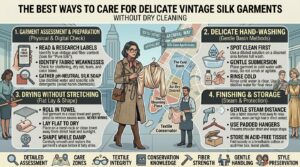
Perform a spot test for colorfastness on an interior seam using cold water. If the dye stays stable, gently hand-wash the item in cold water using a pH-neutral delicate soap, rinse with a drop of white vinegar, and lay it flat on a clean towel to dry.
10. How can I make a simple thrifted outfit look instantly high-end?
Focus on structure and details: iron or steam out all wrinkles, polish leather boots and belts, layer simple jewelry (such as thick hoop earrings or a chain necklace), and ensure your hair and grooming look deliberate.
Conclusion
Creating a bold statement look using affordable thrift store fashion finds comes down to selecting high-quality fabrics, understanding proportional contrast, and investing in simple alterations. By anchoring vintage outerwear, leather, and tailoring with sleek modern basics, you can build a distinctive, sustainable, and head-turning wardrobe without spending a fortune.
For more street-style blueprints, vintage curation frameworks, and urban wardrobe guides across Texas, New York, California, Washington, and San Francisco, stay tuned to NY Attitude.