When winter cold sets in across major urban hubs—whether facing biting winds on New York avenues, navigating damp coastal fog in San Francisco, handling rain along Washington transit routes, dressing for breezy California evenings, or managing sudden cold snaps in Texas— outer layers become the central focal point of personal style.
While mass-retail racks offer predictable, uniform outerwear, neighborhood thrift shops remain the ultimate destination for discovering high-grade, unique winter coats and jackets. From 1980s heavy wool power coats and 1970s shearling jackets to rare vintage leather trenches and rugged workwear parkas, thrift sourcing delivers historic craftsmanship and distinct character at a fraction of retail prices.
At NY Attitude, we deliver street-smart fashion blueprints, urban lifestyle advice, and vintage sourcing frameworks. This comprehensive guide details the best neighborhood thrift formats, sourcing methodologies, and restoration strategies to find extraordinary winter outerwear across key metropolitan regions.
1. Outerwear Hunt Matrix: Architectural Styles & Thrift Goldmines
+--------------------------------------------------------------------------+
|                     OUTERWEAR THRIFT SELECTION MATRIX                    |
+------------------------------------+-------------------------------------+
| 1. HEAVY WOOL OVERCOATS            | High-density melton wool, double-   |
|    Tailored formal structure       | breasted closures, strong shoulder  |
+------------------------------------+-------------------------------------+
| 2. VINTAGE LEATHER & SHEARLING     | Full-grain aged leather, heavy fleece|
|    High-friction durability        | lining, authentic brass hardware    |
+------------------------------------+-------------------------------------+
| 3. TECHNICAL PARKAS & WORKWEAR     | Ripstop shells, down baffles,       |
|    Utilitarian weather protection  | canvas construction, utility pockets|
+------------------------------------+-------------------------------------+
Key Outerwear Categories to Target
- Tailored Wool Overcoats (1970s–1990s): Look for vintage union-made labels and heavy wool melton weaves. These coats provide structural polish over formal business wear or casual street layers.
- Leather Trenches & Flight Jackets: Prioritize thick, full-grain cowhide or lambskin with intact brass zippers and original button closures. Leather holds historical patina that synthetic materials cannot match.
- Insulated Utility & Heritage Workwear: Hunt for vintage canvas coats, down-filled puffer jackets, and field parkas engineered for high durability and thermal efficiency.
| Coat Category | Era Goldmine | Key Material Marker | Ideal Regional Climate Match |
| Heavy Melton Wool Greatcoat | 1970s–1980s | 100% Wool / Heavy Weight | New York winters, cold dry spells |
| Full-Grain Leather Trench | 1980s–1990s | Supple leather, intact lining | San Francisco, California coast, Texas |
| Waxed Canvas & Down Parka | 1980s–Y2K | Water-resistant shell / Down fill | Washington rain, damp northern weather |
| Shearling-Lined Bomber | 1970s | Real fleece interior / Brass zip | Cold breezy commutes, high-wind zones |
2. 3-Step Strategy to Sourcing High-Quality Thrifted Coats
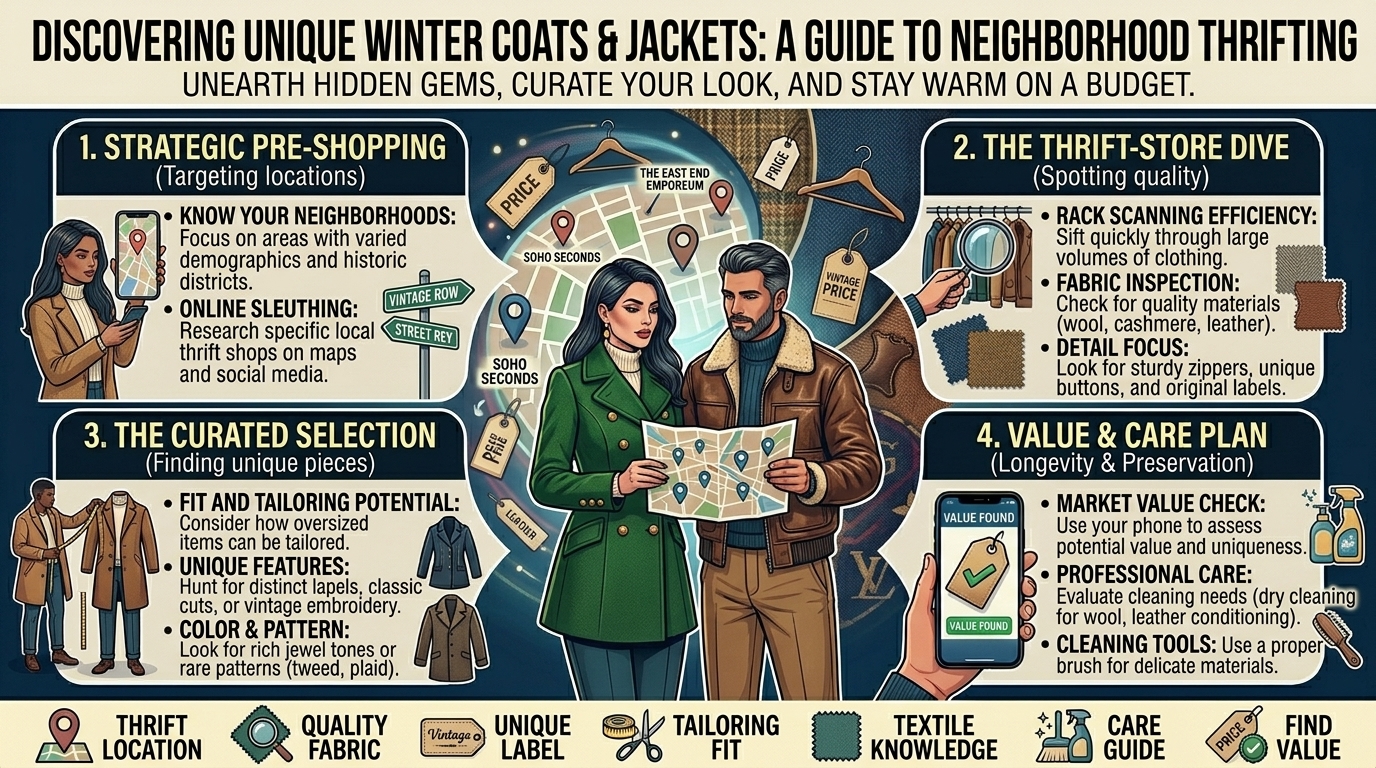
1.Step 1: Target the Right Neighborhood Thrift Hubs:Identify high-potential neighborhood shop formats and estate sales.
- Explore Residential Neighborhood Shops: Community thrift stores located in older, established residential neighborhoods often receive donations featuring high-grade vintage wool and leather pieces.
- Check Independent Charity Shops: Non-profit and charity-driven shops frequently stock items directly from local households, yielding well-preserved vintage coats.
2.Step 2: Execute the Garment Integrity Inspection:Inspect seams, linings, closures, and fabric health thoroughly.
- Check High-Stress Wear Points: Inspect underarms, elbows, neck collars, and pocket edges for fabric thinning, tears, or dry rot.
- Test Hardware & Closures: Pull zippers up and down to verify teeth alignment. Check that coat buttons, snaps, and belt buckles are securely attached.
- Check Fabric Content Tags: Prioritize natural fibers (100% wool, cashmere, real leather, down) over high-polyester synthetic blends.
3.Step 3: Execute Post-Thrift Restoration and Tailoring:Clean, alter, and restore thrifted outerwear for maximum performance.
- Sanitize & Deodorize: Dry clean heavy wool coats, steam technical shells with a splash of vinegar water, and condition dry leathers using specialized leather balm.
- Tailor for a Custom Fit: Have a tailor shorten overly long sleeves, adjust waist button placement, or re-stitch loose interior linings.
3. Five Go-To Winter Coat Styling Formulas
- The Tailored Street Minimalist: Thrifted double-breasted 1980s wool overcoat + black ribbed turtleneck + raw straight-leg denim + lug-sole leather boots.
- The Downtown Leather Statement: Vintage floor-length leather trench + crisp white crewneck tee + tailored wide-leg trousers + sleek leather sneakers.
- The Urban Utility Commuter: Vintage down-filled canvas parka + heavy knit sweater + pleated chinos + waterproof chelsea boots.
- The Textural Heritage Look: Thrifted shearling-lined bomber jacket + dark flannel button-down + high-waisted wool trousers + leather Oxford shoes.
- The Layered Rain Specialist: Vintage waxed trench coat + mid-layer technical fleece + straight denim + weather-resistant leather boots.
10 Frequently Asked Questions (FAQ)
1. What is the best time of year to hunt for winter coats in thrift stores?
Early autumn (September through November) is ideal as stores put out seasonal inventory, though late winter (February through March) yields great clearance markdowns as shops clear space for spring garments.
2. How can I tell if a vintage leather coat has dry rot?
Gently bend and pull a small section of leather. If the surface cracks, flaking occurs easily, or the material feels brittle and dry despite conditioning, the leather suffers from dry rot and should be avoided.
3. Can oversized thrifted winter coats be tailored smaller?
Yes. Tailors can shorten sleeve lengths, adjust button placements, repair interior linings, and take in side seams slightly. However, altering natural shoulder width is difficult and expensive, so ensure shoulders fit reasonably well off the rack.
4. How do I remove persistent secondhand smells from heavy wool coats?
Hang the garment outdoors in a dry, shaded area with good airflow for 48 hours, steam it thoroughly with water mixed with a splash of distilled white vinegar, or have it professionally dry cleaned.
5. Are synthetic fill coats worth buying secondhand?
Yes, provided the insulation remains evenly distributed without heavy clumping or thin spots, and the exterior shell features no rips or damaged seams.
6. What fabrics offer the best warmth-to-weight ratio in vintage coats?
High-density melton wool, cashmere-wool blends, real shearling, and high-fill down insulation deliver superior warmth without excessive physical bulk.
7. How do I inspect a down jacket for insulation quality in a thrift store?
Squeeze the baffles tightly and release them. High-quality down should quickly bounce back and expand with loft. If the insulation remains flat or feels clumpy, the down may be damaged from improper washing.
8. Is it safe to hand-wash vintage wool coats at home?
Heavy structured wool overcoats should generally not be hand-washed, as water can distort internal shoulder padding and chest canvas. Professional dry cleaning or gentle surface steaming is recommended.
9. What should I do if a thrifted coat is missing its original belt or buttons?
Replace missing buttons with a fresh set of horn, wood, or brass buttons, and pair the coat with an independent full-grain leather belt or matching fabric belt.
10. How can I verify if a vintage coat was made with high-quality construction?
Look for bound interior seams, heavy copper or brass hardware, real pocket linings, union-made labels, and neatly stitched buttonholes.
Conclusion
Sourcing unique winter coats and jackets from neighborhood thrift shops allows you to build a weather-ready wardrobe rich in history, structural character, and quality materials. By targeting well-stocked neighborhood shops, inspecting garment integrity, and investing in simple post-thrift restoration and tailoring, you can navigate winter weather across New York, California, San Francisco, Washington, and Texas in distinct, elevated style.
For more urban sourcing blueprints, street-style guides, and wardrobe maintenance strategies, stay tuned to NY Attitude.