How to Find Hidden Consignment Shops Selling Luxury Accessories at Discounted Rates
Finding high-end designer accessories—from iconic French leather handbags and Swiss timepieces to vintage Italian silk scarves and architectural jewelry—at deep discounts requires stepping past commercial retail hubs. The most exceptional deals rarely live in high-density shopping districts or paid search ads. Instead, they sit inside high-end consignment boutiques tucked away in historic residential enclaves across top resale markets like New York, San Francisco, Los Angeles, Seattle, and Austin.
For savvy fashion collectors and budget-conscious luxury enthusiasts navigating major metro areas in California, New York, Texas, and Washington, discovering these hidden shops is a mix of tradecraft, neighborhood knowledge, and visual inspection.
At NY Attitude, we break down urban shopping strategy, luxury resale mechanics, and fashion curation blueprints. This comprehensive guide covers how to locate covert consignment shops, verify luxury accessories, negotiate deals, and build an enviable vintage collection at 40% to 70% off retail prices.
1. Top Resale Markets: Neighborhood Mapping & Access Strategies
High-end luxury consignment shops thrive where private wealth, historic housing stock, and dense creative populations overlap. High-net-worth residents regularly rotate their personal wardrobes through hyper-local consignment stores rather than dealing with peer-to-peer online shipping.
+-------------------------------------------------------------------------+
|                    LUXURY RESALE SCOUTING MAP                           |
+-----------------------------------+-------------------------------------+
| 1. NEIGHBORHOOD TARGETING         | Focus on affluent residential       |
|    50% Sourcing Yield             | corridors rather than commercial    |
|                                   | tourist hubs.                       |
+-----------------------------------+-------------------------------------+
| 2. INVENTORY ROTATION CYCLE       | Visit during estate intake windows |
|    35% Discount Advantage         | (Tues–Thurs mornings) before public |
|                                   | weekend rushes.                     |
+-----------------------------------+-------------------------------------+
| 3. AUTHENTICATION & CONDITION     | Inspect stitch density, hardware    |
|    15% Risk Mitigation            | weight, and date codes in-hand.     |
+-----------------------------------+-------------------------------------+
Regional Scouting Hotspots
- New York (NYC Metro): Skip midtown department stores. Target upper residential enclaves along the Upper East Side (Madision & Lexington Avenues between 72nd and 86th St), Cobble Hill/Brooklyn Heights in Brooklyn, and quiet side streets in Soho and Nolita.
- San Francisco & Bay Area: Focus on Pacific Heights (Fillmore Street), Presidio Heights, and South of Market (SoMa) design districts where tech executives and long-time estate owners consign vintage pieces.
- Southern California (LA Hubs): Scout West Hollywood, Larchmont Village, Montana Avenue in Santa Monica, and Pasadena. Look for shops handling wardrobe liquidations from film, television, and celebrity stylists.
- Texas (Austin & Dallas): Target historic neighborhoods like Old West Austin and Dallas’s Highland Park. These areas yield pristine Western-luxury accessories, exotic skin belts, and vintage gold jewelry.
- Washington (Seattle Hub): Focus on Capitol Hill, Madison Park, and Bellevue. The Pacific Northwest yields exceptionally high-quality luxury leather goods, weather-resistant luxury outerwear accessories, and mid-century estate jewelry.
2. Digital Scouting & Field Inspection Framework
Locating brick-and-mortar consignment shops hidden away on second floors or residential side streets requires a hybrid digital-and-physical search process.
| Target Accessory Category | Primary Sourcing Region | Expected Discount Off Retail | Key Scouting Indicator |
| Heritage Leather Handbags | New York, San Francisco | 40% – 60% Off | Independent shops offering in-house Entrupy or third-party authenticity guarantees. |
| Fine Jewelry & Gold | Texas (Dallas/Austin), NYC | 35% – 50% Off | Estate-focused boutiques displaying hallmarked, unpolished vintage pieces. |
| Designer Silk & Scarves | Washington (Seattle), LA | 50% – 70% Off | Shops keeping silk goods in temperature-controlled glass cases rather than open racks. |
| Swiss Timepieces | San Francisco, Texas | 30% – 50% Off | Retailers providing original box, papers, and service history logs. |
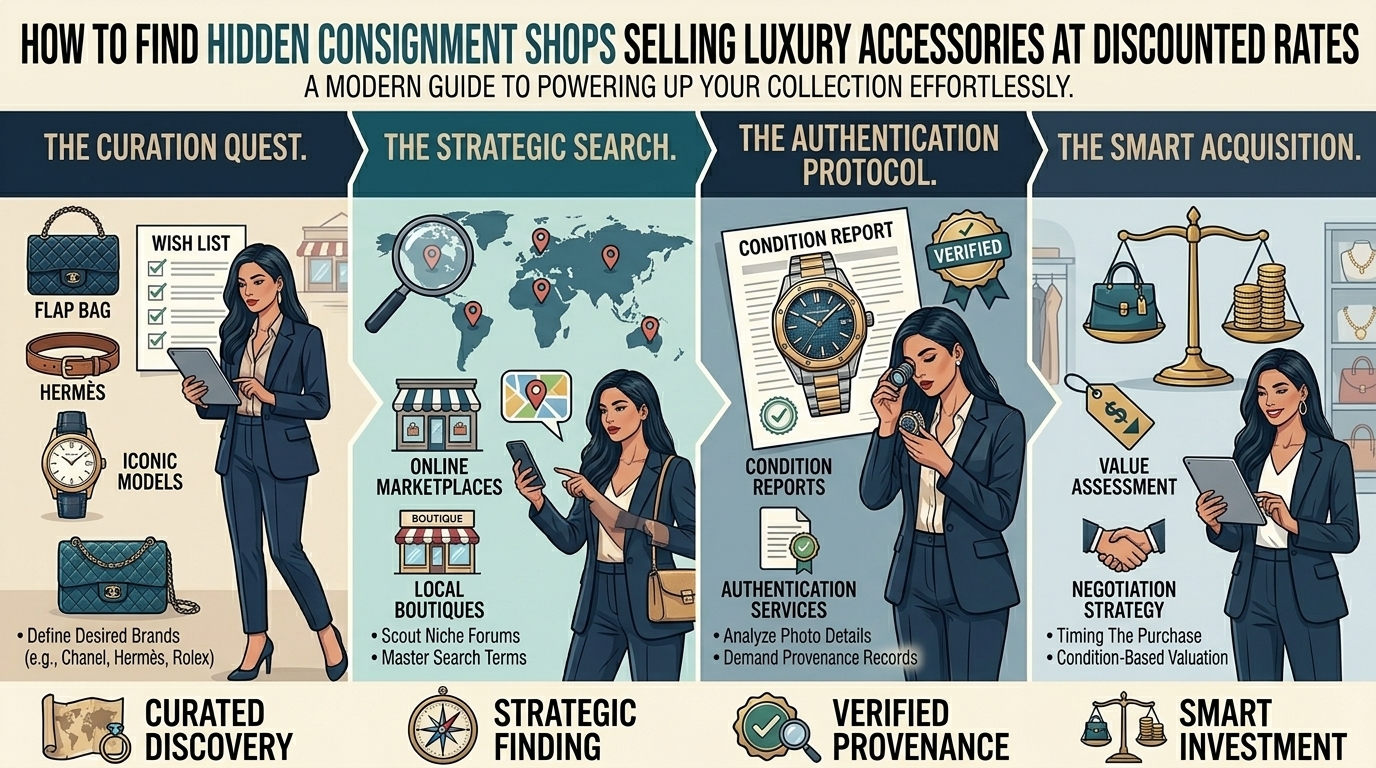
3. Step-by-Step Guide: How to Uncover and Shop Hidden Consignment Gems
1.Step 1: Execute Hyper-Local Digital Reconnaissance:Use targeted local search terms to reveal independent shops missed by major directories.
- Search Beyond ‘Consignment’: Query terms like “estate wardrobe liquidation,” “estate jewelry vault,” “vintage closet resale,” or “stylist archive sale” alongside specific affluent zip codes (e.g., 10021 in NYC, 94115 in SF, or 78703 in Austin).
- Audit Google Maps Street View: Look for second-floor signage, basement-level entrances, or unmarked doors along high-end residential streets.
- Track Local Estate Liquidators: Follow boutique estate auctioneers and local personal shoppers who announce pop-up resale warehouse sales on social media.
2.Step 2: Time Your Visits Around Inventory Intake Cycles:Time your store visits to catch fresh luxury inventory before it hits the floor.
- Shop Mid-Week Mornings: Most high-end consignors drop off inventory early in the week. Visit Tuesday through Thursday mornings to inspect freshly cataloged items before weekend crowds arrive.
- Target Seasonal Transition Months: Late March (spring cleaning) and early October (fall wardrobe shifts) see the highest volume of luxury accessory intake.
3.Step 3: Conduct a 4-Point In-Hand Authentication Audit:Inspect structural markers to verify item authenticity in-person.
- Hardware Weight & Markings: Authentic luxury accessories use solid brass, palladium, or gold-plated hardware. Check for crisp, deep engravings rather than shallow laser-etched logos.
- Stitching & Edge Paint: Examine stitch alignment along handbag corners and strap anchors. True luxury leathercraft features uniform, slightly angled saddle stitching without frayed ends or messy edge paint.
- Date Codes & Serial Numbers: Check interior pocket linings, leather tabs, or inner rims for blind stamps, heat stamps, and serial codes matching brand-specific formats.
- Material Smell & Texture: Premium calfskin, lambskin, and exotic leathers carry a rich leather aroma and soft tactile feel—never a sharp chemical or plastic smell.
4.Step 4: Negotiate and Secure Additional Markdowns:Use professional courtesy to secure additional discounts at checkout.
- Ask for Cash Discounts: Independent shop owners often offer a 5% to 10% discount to avoid credit card processing fees.
- Track Markdown Tag Dates: Most consignment stores use color-coded or dated price tags that auto-discount 20% to 50% every 30 days. Politely ask the store manager if an item approaching its date threshold can receive the next tier’s discount today.
4. 5 Essential Rules for Buying Pre-Owned Luxury Accessories
- Prioritize Structural Integrity Over Surface Smudges: Dirt, tarnish, and dry leather can be cleaned or conditioned easily; cracked canvas, torn lining, broken zipper teeth, and bent jewelry frames cannot be repaired without high cost.
- Verify the Store’s Return Policy on Authenticity: Ensure the receipt explicitly states that you are guaranteed a 100% full refund if a certified third-party authenticator deems the item non-genuine within 7 to 14 days.
- Inspect Items Under Natural Light: Store lighting—especially warm overhead halogen bulb setups—can hide color fading, leather redyeing, surface scuffs, and metal tarnish. Request to hold the item near a street-facing window before paying.
- Inquire About Unprocessed Backroom Stock: Independent owners frequently have boxes of unpriced intake sitting in their backrooms. Build a friendly rapport with the store owner and share your specific search list to see uncataloged inventory first.
- Focus on Hard-to-Counterfeit Categories: Vintage silk scarves, solid gold estate rings, structured leather belts, and sterling silver accessories offer exceptional value-to-cost ratios with far lower replica risk than modern trending micro-bags.
10 Frequently Asked Questions (FAQ)
1. What is the difference between a thrift store, a resale shop, and a luxury consignment boutique?
Thrift stores rely on unvetted donations with minimal quality control. Resale shops buy inventory outright from sellers at lower rates. Luxury consignment boutiques partner with private consignors, curated select designer inventory, authenticate each item, and split the final sale price with the owner.
2. How much cheaper are luxury accessories at hidden consignment stores compared to retail?
Typically, shoppers save between 40% and 70% off original retail prices. Seasonally current or extremely rare collector pieces may carry smaller discounts (10% to 20%), while classic designer accessories from past seasons offer deep savings.
3. Are independent consignment stores safe for buying luxury handbags like Chanel or Hermès?
Yes, provided you shop at established boutiques that provide written authenticity guarantees, utilize digital verification tools (like Entrupy or Real Authentication), or allow independent third-party authentication within a specified window post-purchase.
4. What are the best luxury accessories to buy secondhand?
Leather totes, top-handle bags, silk scarves, fine estate jewelry, solid brass belts, structured sunglasses, and luxury wool or cashmere wraps offer the best longevity, utility, and resale value retention.
5. Why do affluent neighborhoods yield better consignment finds?
Residents in affluent neighborhoods often consign pristine items from recent seasons to free up closet space rather than selling online. This creates high inventory turnover and keeps prices competitive locally.
6. Can you negotiate prices at luxury consignment shops?
Yes. While chain stores have fixed pricing, independent boutique owners usually have room to negotiate—especially if an item has been on the display floor longer than 30 days, or if you offer to pay via cash or bank wire.
7. What red flags indicate a consignment store might be selling counterfeit goods?
Warning signs include overly crowded racks of brand-new trending items without original proof of purchase, inconsistent store policies regarding returns, refusal to allow close inspection under bright lighting, and pricing that seems suspiciously low (e.g., a current-season $3,000 handbag priced at $150).
8. How do I clean and restore pre-owned leather accessories after purchasing?
Wipe smooth leather clean with a damp microfiber cloth, apply a high-quality leather conditioner (such as Bick 4 or Cadillac Leather Lotion) in thin layers, and polish hardware using a soft jeweler’s polishing cloth. Avoid harsh household cleaners or alcohol-based wipes.
9. Do luxury consignment shops carry men’s luxury accessories?
Yes. Many high-end consignment boutiques in tech and media markets like San Francisco, Seattle, Austin, and New York carry extensive selections of men’s leather briefcases, designer backpacks, Swiss watches, cufflinks, and leather belts.
10. How can I keep up with new arrivals at hidden consignment shops without visiting daily?
Follow local shop accounts on social media, join their VIP email lists, and establish a direct contact relationship with store managers. Many owners send preview photos of fresh intake directly to repeat clients via text or messaging apps.
Conclusion
Finding hidden consignment shops selling authentic luxury accessories at discounted rates requires moving past main commercial shopping strips and exploring historic residential neighborhoods across top markets like New York, San Francisco, Los Angeles, Seattle, and Austin. By mastering digital search techniques, inspecting construction quality, and establishing direct relationships with independent boutique owners, you can build a collection of timeless luxury accessories while saving thousands of dollars off retail prices.
For more strategic urban shopping guides, vintage sourcing frameworks, and fashion blueprints, stay tuned to NY Attitude.