How to Balance Work and Personal Wellness in an Environment Driven by Hustle Culture
Welcome back to nyattitude.com, your definitive digital authority on fast-lane urban living, high-performance career ambition, and the relentless grit required to succeed across America’s most dynamic metropolitan hubs. Whether you are climbing the corporate ladder in Manhattan or San Francisco, managing high-pressure legal and political loads in Washington D.C., building tech enterprises across California, or scaling business ventures throughout booming Texas metros, one cultural current touches every ambitious professional: hustle culture.
The “rise and grind” mindset treats overwork as a moral badge of honor. In environments driven by hustle culture, professional output is frequently equated with personal worth. Taking a break is whispered about like a secret sin, and answering emails at midnight is viewed as a standard demonstration of dedication.
While ambition and hard work are necessary catalysts for extraordinary success, an unmitigated hustle mindset inevitably leads down a straight path to chronic stress, physical exhaustion, and total professional burnout.
How do you maintain high professional performance, chase ambitious goals, and still protect your mental, emotional, and physical wellness? This comprehensive, highly informative guide explores the anatomy of hustle culture, actionable strategies to safeguard your health, a 10-point FAQ section, and a master blueprint to help you thrive sustainably.
Part 1: The Psychology of Hustle Culture (Why We Can’t Switch Off)
To protect your wellness, you must first recognize the systemic forces that normalize constant overwork.
1. The Validation Trap and Digital Tethering
In modern metropolitan centers, professional identity often consumes personal identity. When people ask, “What do you do?” they are really asking, “What is your societal value?”
Furthermore, the advent of smartphones and cloud collaboration tools has turned our pockets into tethered offices. You are no longer leaving work at 6:00 PM; work follows you home to the dinner table, the subway ride, and your bedside table at night, keeping your nervous system trapped in a chronic “fight-or-flight” state.
2. The Myth of Infinite Output
Machines operate efficiently at maximum capacity until they overheat and break down. Humans are biological organisms, not machines. When you treat your body like a machine that can run on caffeine, short sleep cycles, and endless grit, your cognitive focus, emotional regulation, and immune function eventually collapse. Sustainable success requires recognizing that rest is a biological prerequisite for peak performance, not a reward you earn only after you are exhausted.
Part 2: Tactical Strategies for Protecting Personal Wellness
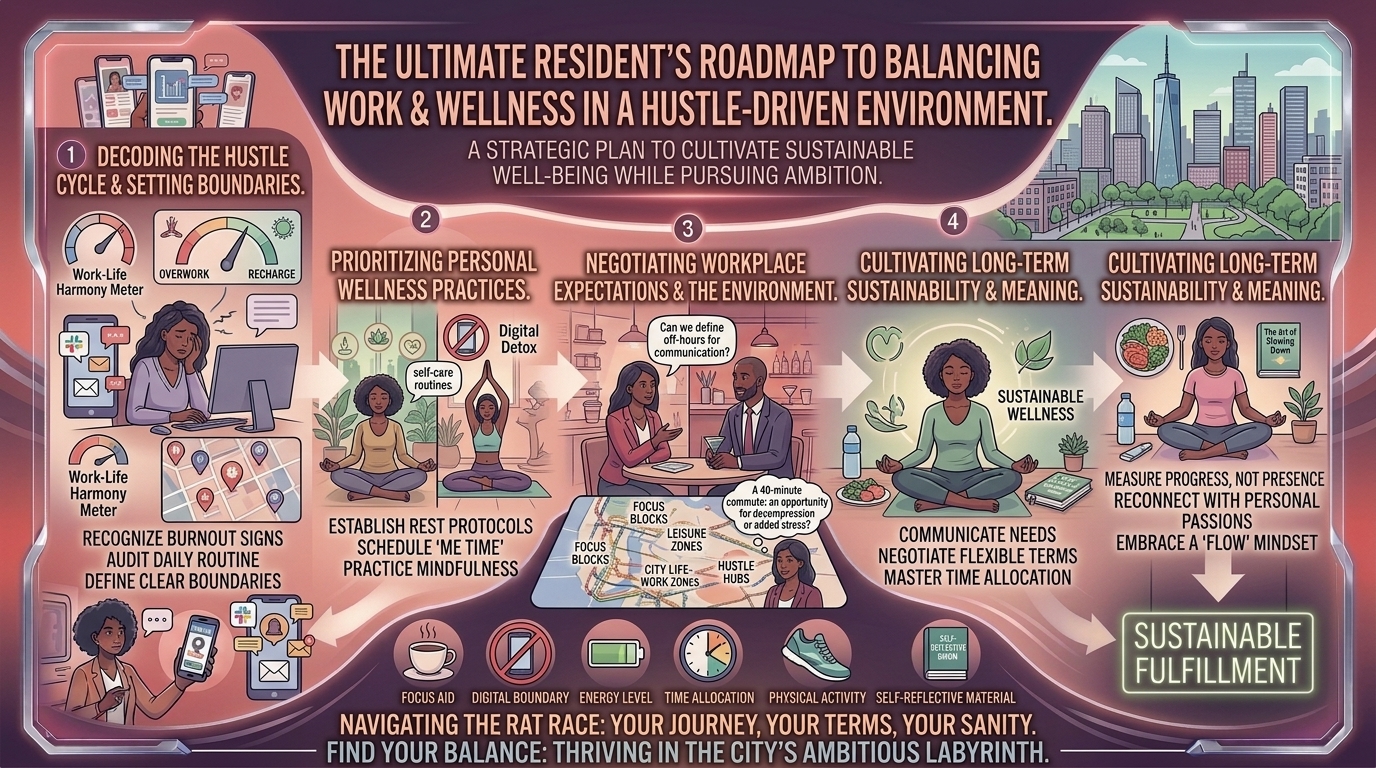
Balancing ambition and wellness does not mean quitting your job or lowering your career standards. It means engineering intentional boundaries.
1. Establish Ironclad Digital Boundaries
The easiest way for work to consume your life is through uncontrolled digital access.
- The Hard Cutoff: Set a specific time in the evening (e.g., 8:00 PM) when work notifications, Slack alerts, and professional email syncs are turned off entirely on your personal devices.
- Dedicated Workspaces: If you work remotely or manage side businesses from home, keep your laptop out of your bedroom. Your sleeping quarters should signal rest to your brain, not lingering task anxiety.
2. Shift from Time-Based Hustle to Outcome-Based Efficiency
Hustle culture glorifies the number of hours you spend chained to a desk. Shift your philosophy toward high-leverage output.
- Identify the 20% of daily tasks that drive 80% of your actual professional results.
- Ruthlessly eliminate administrative busywork, master time-blocking techniques, and protect your deep-focus hours so you can finish your core work efficiently and reclaim your evenings.
3. Prioritize “Active Rest” and Physical Maintenance
Rest is not just lying on the couch scrolling social media while feeling guilty about not working. True personal wellness requires active physical and mental disengagement:
- Maintain consistent sleep schedules (7 to 8 hours nightly).
- Incorporate cardiovascular exercise or strength training to burn off stress hormones like cortisol.
- Protect social connections with friends and family outside of your professional network.
Part 3: Step-by-Step Daily Routine for Sustainable Ambition
Use this structured daily framework to keep your career moving forward without sacrificing your well-being:
- Morning Anchor (First 30 Minutes): Avoid opening email or social media the moment you wake up. Spend the first half-hour hydrating, moving your body, or practicing mindfulness to ground your nervous system before entering the digital noise.
- Deep Work Sprints (Late Morning): Tackle your most challenging professional projects during your peak cognitive hours using structured focus blocks (e.g., 90 minutes of uninterrupted work followed by a 15-minute break).
- The Evening Transition Ritual: Create a physical boundary that mimics a commute—such as a 20-minute evening walk or changing out of work clothes—to signal to your brain that the workday is officially over.
Part 4: Frequently Asked Questions (FAQ)
1. Is it possible to be successful in high-pressure cities without participating in hustle culture?
Yes. Many of the most effective professionals succeed by focusing on high-impact results, strategic networking, and elite execution rather than burning the midnight oil on low-value tasks. Quality and consistency consistently outperform chronic exhaustion.
2. What are the early warning signs of professional burnout?
Early signs include persistent sleep disturbances, waking up tired despite a full night’s rest, cynicism toward your work, chronic irritability, loss of interest in hobbies, and frequent physical tension headaches or digestive issues.
3. How do I set boundaries with a demanding boss or corporate culture?
Set boundaries by managing expectations around deliverables rather than pushing back on hours. Communicate clearly: “If you need project B prioritized by tomorrow morning, project A will need to be pushed to Thursday.” Frame boundaries around maximizing quality and reliability.
4. Does taking time off actually make you more productive?
Decidedly yes. Research consistently shows that taking regular vacations, micro-breaks, and proper weekends restores cognitive stamina, boosts creative problem-solving, and prevents the costly productivity drops associated with burnout.
5. How do I deal with the guilt of resting when I feel like I should be working?
Reframe rest as an essential maintenance requirement for your career. Just as an elite athlete cannot train every single day without resting muscle tissue to grow stronger, your brain requires recovery time to generate innovative ideas.
6. What is the difference between healthy ambition and toxic hustle culture?
Healthy ambition is driven by a genuine passion for creation, growth, and mastery, leaving room for health and relationships. Toxic hustle culture is driven by anxiety, fear of inadequacy, and the belief that you are only valuable when you are producing.
7. How can freelancers and entrepreneurs maintain work-life balance?
By treating their business like a structured entity with fixed operating hours. Set strict closing times, separate business bank accounts from personal accounts, and schedule mandatory offline days just as you would client meetings.
8. Are white-collar industries in places like New York and San Francisco changing their view on hustle culture?
Yes. Driven by younger workforce cohorts and broader cultural shifts, modern companies are increasingly emphasizing mental health days, flexible work arrangements, and output-focused performance metrics over archaic face-time requirements.
9. What physical habits help reset the nervous system after a stressful workday?
Deep diaphragmatic breathing exercises, cold water immersion (or cold face splashes), restorative yoga, and going for a walk without headphones are clinically proven methods to transition your body out of fight-or-flight mode.
10. Can side hustles coexist with personal wellness?
They can, provided you pace yourself realistically. If a side hustle consumes every waking hour of your weekend, it ceases to be a creative outlet and becomes a second uncompensated job that accelerates burnout.
Conclusion
Balancing work and personal wellness in an environment driven by hustle culture is the ultimate modern competitive advantage. By rejecting the myth of endless output, setting hard digital boundaries, prioritizing active rest, and focusing on high-leverage results, you can achieve elite professional goals without sacrificing your health, sanity, or happiness. Own your ambition, protect your peace, and build a successful life that you actually enjoy living.
How to Beat Burnout and Master Work-Life Balance in Fast-Paced Cities
Watch this insightful video exploration breaking down practical strategies to dismantle hustle culture toxicity, protect your mental health, and achieve sustainable success in high-pressure urban environments.