How to Find Budget-Friendly Grocery Stores and Fresh Markets in Manhattan
Welcome to nyattitude.com, your definitive digital guide for mastering high-intensity urban living without letting cost-of-living pressures break the bank. Whether you are managing corporate life in Manhattan, settling into tech hubs across San Francisco and California, exploring Pacific Northwest opportunities in Washington, or expanding career footprints across bustling Texas metros, one reality unites every urban professional: Manhattan grocery prices can easily shock your system.
When newcomers first move to New York City, stepping into a neighborhood bodega or corporate-adjacent supermarket often results in sticker shock. Paying nine dollars for a pint of organic strawberries, six dollars for a gallon of milk, or fifteen dollars for a basic salad greens container makes grocery shopping feel like an elite luxury sport.
The common myth is that budget-friendly grocery shopping does not exist in Manhattan. In reality, thrifty locals, culinary professionals, and smart urbanites know that affordable, fresh food does exist—you just have to know where to look.
This comprehensive, highly informative guide explores the best budget-friendly grocery stores, historic open-air green markets, immigrant-owned fresh produce hubs, neighborhood co-ops, and actionable money-saving strategies to help you feed yourself well in the heart of Manhattan.
Part 1: The Manhattan Grocery Landscape (Why Prices Vary So Wildly)
To shop smart in Manhattan, you first need to understand how the grocery ecosystem operates across different neighborhoods.
1. The Real Estate Tax on Food
In Manhattan, retail rent is among the highest on the planet. Supermarkets operating in prime commercial zones pass those astronomical square-footage lease costs directly onto consumers through inflated price tags. Chain convenience stores and corporate corner bodegas charge premium rates for the sheer luxury of proximity.
2. The Neighborhood Disconnect
Prices fluctuate drastically depending on the zip code:
- Uptown vs. Downtown: Specialty organic markets in Greenwich Village or Tribeca cater to high-net-worth residents with luxury budgets.
- Ethnic Enclaves: Conversely, historic immigrant corridors (such as Manhattan’s Chinatown or Spanish Harlem / East Harlem) operate on high-volume, community-driven economic models where fresh produce remains astonishingly affordable.
Part 3: The Top Budget-Friendly Grocery Stores in Manhattan
If you want the reliability of traditional supermarkets combined with discount pricing, these are the essential retail chains and independent stores you need to know.
1. Trader Joe’s (Union Square, Lower East Side, Chelsea, Upper West Side)
- The Vibe: Energetic, crowded, and fiercely loyal.
- Why It’s a Budget Haven: Trader Joe’s keeps prices low by selling nearly 80% private-label products, cutting out middleman distributor markups. Their frozen meals, fresh produce, eggs, and specialty cheeses are legendary for their value.
- Pro-Tip: Go during off-peak hours (right when doors open at 8:00 AM or late weekday evenings) to dodge the notorious line wraps.
2. Chinatown Supermarkets (Mott Street, Grand Street, East Broadway)
- The Vibe: Bustling, sensory-rich, and radically inexpensive.
- Why It’s a Budget Haven: Independent produce markets scattered throughout Manhattan’s Chinatown (such as Sun Fat Market or open-air stalls along Grand Street) sell fresh herbs, leafy greens, root vegetables, mushrooms, and tropical fruits for a fraction of corporate supermarket prices.
- Pro-Tip: Bring cash for street-level outdoor produce vendors, as many have minimum purchase limits for credit cards.
3. Aldi (East Harlem – 117th Street & FDR Drive)
- The Vibe: No-frills, highly efficient, and deeply discounted.
- Why It’s a Budget Haven: Aldi is the gold standard for ultra-low-cost grocery staples. Because products are displayed in their original shipping boxes and customers bring their own bags (or insert a quarter for shopping carts), operational overhead is minimized—savings that pass directly to you.
4. Target Grocery Sections (Herald Square, East Village, Upper West Side)
- The Vibe: Clean, modern, and deceptively well-stocked.
- Why It’s a Budget Haven: Urban Target locations feature robust grocery departments offering pantry staples, dairy, frozen foods, and fresh produce at competitive corporate-discount pricing.
Part 3: Open-Air Fresh Markets and Greenmarkets
If you want ultra-fresh, locally sourced seasonal produce without paying boutique grocery markups, farmer-direct markets are your best option.
1. GrowNYC Greenmarkets (Union Square, Tompkins Square, Morningside Heights)
- The Vibe: Vibrant, farm-to-table community commerce.
- Why It’s a Budget Haven: The Union Square Greenmarket is one of the largest open-air farmers markets in the country. While specialty artisanal cheeses and pasture-raised meats can be pricey, standard seasonal vegetables (root veggies, apples, squash, corn, and greens) sold directly by regional New York farmers are frequently priced lower than supermarket organic sections at peak harvest times.
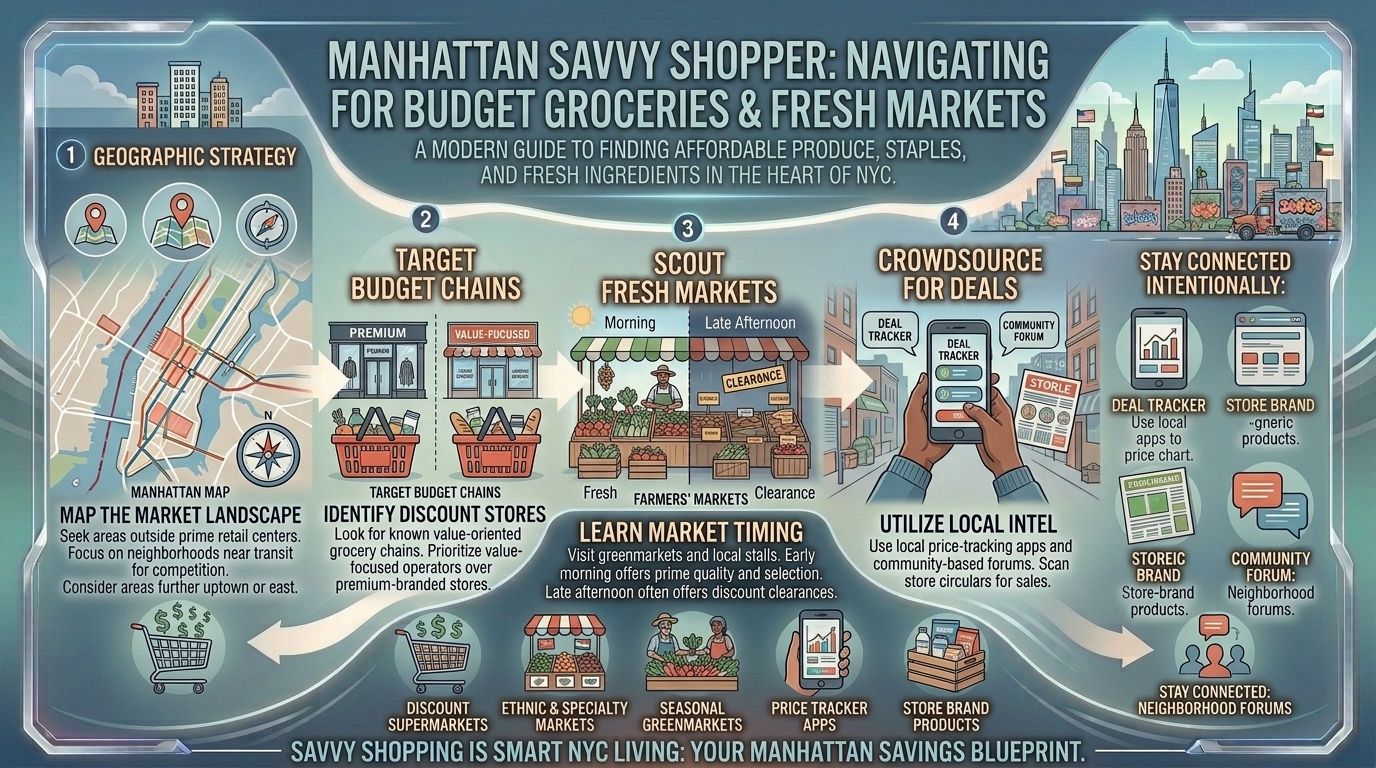
- Pro-Tip: Arrive near the end of market hours (around 3:00 PM to 4:00 PM) when farmers are eager to clear inventory and often offer bundle discounts or lower prices on perishable produce.
2. La Marqueta (East Harlem)
- The Vibe: Historic, cultural, and community-centric.
- Why It’s a Budget Haven: Located under the Metro-North viaduct on Park Avenue at 116th Street, La Marqueta has deep roots as a traditional marketplace celebrating Latin American, Caribbean, and global culinary goods, featuring fresh produce stalls, butchers, and local food vendors.
Part 4: Step-by-Step Blueprint for Saving Money on Manhattan Groceries
Smart grocery shopping in NYC is an engineered system. Implement these practical tactics to cut your weekly food budget in half:
1. Master the Multi-Store Route
Never buy everything at one store. Separate your shopping list by category:
- Buy pantry staples, canned goods, and dairy at Trader Joe’s or Aldi.
- Buy fresh fruits and vegetables at Chinatown street stalls or local open-air greenmarkets.
- Buy specialty proteins or imported goods at ethnic grocers or discount wholesalers.
2. Prioritize Seasonal Eating
In Manhattan supermarkets, out-of-season berries and imported winter tomatoes carry massive price markups. Align your cooking with New York agricultural seasons: root vegetables and apples in autumn/winter; berries, corn, and stone fruits in summer.
3. Utilize Food Rescue and Discount Apps
Download apps like Too Good To Go or Misfits Market. Too Good To Go allows you to rescue surplus fresh bakery goods, produce boxes, and prepared meals from Manhattan cafes and grocery stores at a third of retail cost at the end of the business day.
Part 5: Frequently Asked Questions (FAQ)
1. What is the absolute cheapest grocery store chain in Manhattan?
Aldi (located in East Harlem) and Trader Joe’s tie for the lowest overall prices on pantry staples, dairy, and packaged goods, while open-air street markets in Chinatown offer the lowest prices on fresh produce.
2. How do I avoid high delivery fees when grocery shopping in Manhattan?
Instead of paying high delivery service fees and tips on apps like Instacart, pack a sturdy rolling cart or heavy-duty canvas tote bags and shop in person during your weekly commute or weekend morning routines.
3. Are Manhattan farmers markets actually cheaper than supermarkets?
For seasonal local produce (like apples, zucchini, potatoes, and corn), GrowNYC greenmarket prices are often comparable to—or cheaper than—organic supermarket aisles, while supporting regional farmers. Specialty artisanal items, however, command premium prices.
4. Why are corner bodegas so expensive for groceries?
Bodegas operate on tiny physical footprints with high urban lease overhead. They make their profit margins on convenience items (sodas, snacks, cigarettes, paper towels) rather than high-volume fresh food. Use bodegas for emergencies only, not weekly bulk shopping.
5. How can I find affordable fresh seafood and meat in Manhattan?
Skip upscale corporate butcher counters and visit specialty fish markets and butchers in Chinatown (Mott Street) or Spanish Harlem, where turnover is high, prices are competitive, and cuts are freshly butchered daily.
6. Do Manhattan grocery stores accept food assistance programs like SNAP/EBT?
Yes. Major chains, discount grocers like Aldi and Trader Joe’s, and many GrowNYC greenmarket stands widely accept SNAP/EBT cards. In fact, GrowNYC offers the “Health Bucks” program, which provides bonus fruit and vegetable coupons for EBT users.
7. What is the best time of day to shop at Manhattan grocery stores to avoid crowds?
The optimal shopping windows are right when doors open (typically 8:00 AM) on weekday mornings or during late evening hours (after 8:30 PM) when foot traffic drops significantly.
8. How do I prevent fresh produce from spoiling quickly in a small apartment kitchen?
Store greens properly by wrapping them in damp paper towels inside airtight containers, keep ethylene-producing fruits (like bananas and tomatoes) away from leafy greens, and freeze surplus vegetables for future soups and stir-fries.
9. Is buying in bulk practical in a small Manhattan apartment?
Generally, no. Most Manhattan apartments feature compact kitchens with minimal pantry and refrigerator storage space. Stick to buying weekly quantities rather than bulk warehouse club quantities unless you share storage space with roommates.
10. Are discount grocery stores like Aldi clean and reliable?
Yes. Despite their low prices and minimalist warehouse layouts, discount stores maintain strict health and safety inspection standards. Their private-label goods are frequently manufactured by the same major brands found in luxury supermarkets.
Conclusion
Finding budget-friendly grocery stores and fresh markets in Manhattan requires ditching convenience habits, exploring ethnic enclaves, shopping seasonally, and utilizing discount chains like Trader Joe’s and Aldi. By diversifying where you source your food and embracing city-tested shopping strategies, you can eat fresh, healthy meals in the heart of the city without draining your bank account. Own your budget, master your shopping routes, and conquer the concrete jungle smartly.
How to Save Money on Groceries in New York City
Watch this informative video guide exploring top budget grocery stores, hidden fresh markets, and smart shopping hacks for living affordably in Manhattan.