How to Find Vintage Furniture Stores to Decorate Your Apartment on a Strict Budget
There is a distinct, soulful magic to decorating an apartment with vintage and thrifted furniture. In a world saturated with mass-produced, flat-pack particle board, bringing home a mid-century modern credenza with rich teak grain, a wrought-iron baker’s rack with history, or a solid wood armchair instantly injects character, warmth, and individuality into your living space.
Whether you are styling a compact studio apartment in Manhattan, a spacious loft in San Francisco, an eclectic rental in Brooklyn, a sunny bungalow in California, or vibrant urban spaces across Seattle and Texas, furnishing a home from scratch is notoriously expensive. Brand-new furniture often comes with staggering price tags and disappointing build quality.
Fortunately, vintage shopping is the ultimate hack for budget-conscious decorators who refuse to sacrifice style. Brought to you by nyattitude.com, this comprehensive, expert-led masterclass explores how to track down the absolute best hidden-gem vintage furniture stores, navigate thrift markets like a pro, and furnish your apartment on a strict budget without looking cheap.
Part I: Why Vintage Furniture Beats Big-Box Retail Every Time
Before diving into where to shop, let’s look at why buying vintage is a game-changer for apartment dwellers:
- Unmatched Craftsmanship and Solid Wood: Older furniture was built to last. While modern budget furniture is constructed from pressed cardboard and wood veneers that warp and break within a year, vintage pieces from the mid-20th century and earlier feature solid oak, walnut, mahogany, and sturdy joinery.
- Scale and Apartment-Friendly Proportions: Older urban apartments in New York and San Francisco often feature quirky floor plans, tight entryways, and narrow stairwells. Vintage and antique furniture was frequently built on a human, compact scale that fits perfectly into small-space layouts.
- The Sustainability Factor: Buying pre-owned furniture is the ultimate form of sustainable interior design, keeping solid materials out of landfills and reducing the carbon footprint of manufacturing new goods.
Part II: The Ultimate Hunter’s Guide – Where to Find the Best Vintage Stores
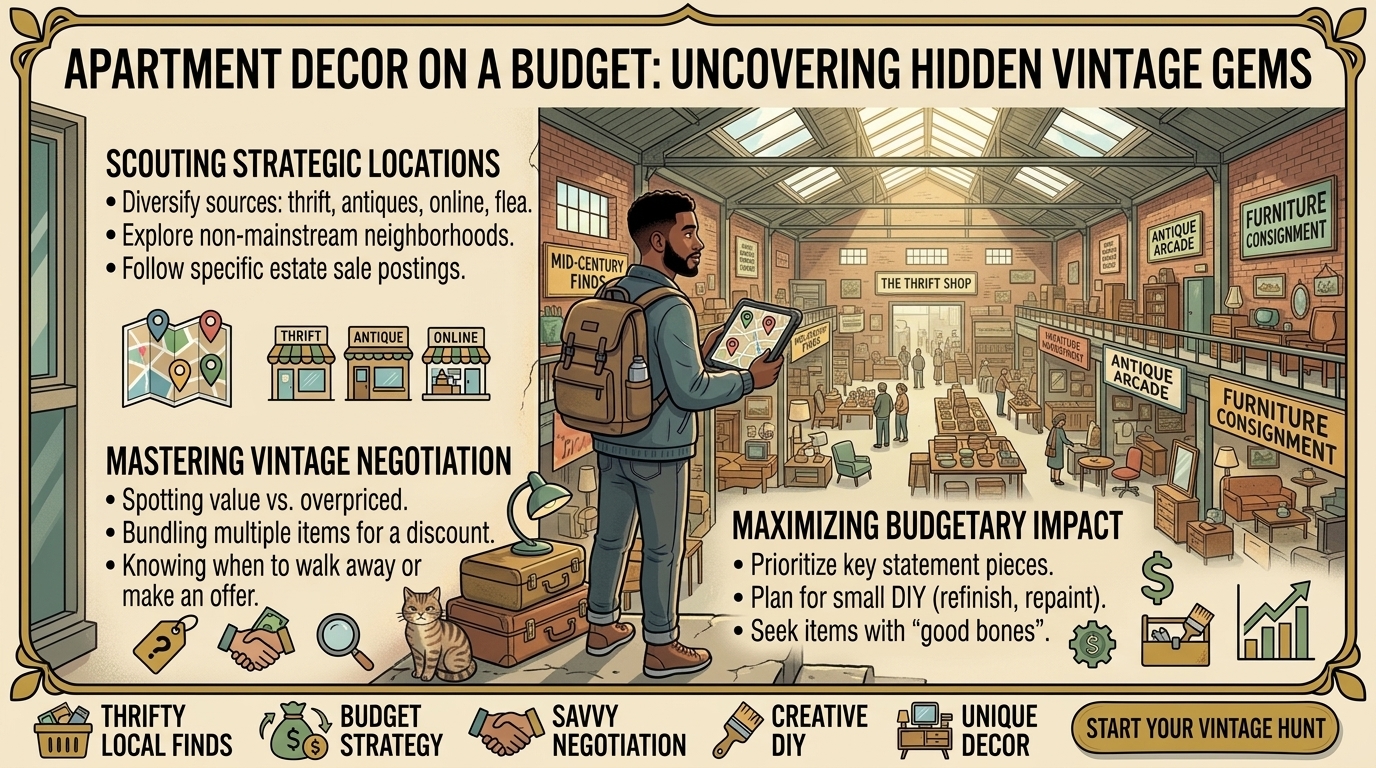
Finding incredible vintage pieces on a budget requires knowing where to look beyond high-end, curated antique galleries that charge steep boutique markups. Use this strategic breakdown to scout your local area:
1. Neighborhood Thrift and Charity Shops
- Target Locations: Look for thrift stores located in affluent suburban fringes or historic residential neighborhoods. Donations to these shops often include high-end estate pieces sold at rock-bottom prices because volunteers simply want inventory to move quickly.
- The Strategy: Visit on weekday mornings when fresh donations are rolled out onto the sales floor.
2. Consignment Warehouses and Flea Markets
- Target Locations: Industrial districts on the edges of major cities (like Brooklyn warehouses, Bay Area flea markets, or Austin vintage collectives) house massive inventory.
- The Strategy: Consignment shops are goldmines because sellers are motivated to lower prices after items sit on the showroom floor for 30 to 60 days. Always check clearance corners.
3. Estate Sales and Downsizing Auctions
- Target Locations: Search online platforms like EstateSales.net to find estate sales happening in your city over the weekend.
- The Strategy: Estate sales offer the lowest possible prices because entire households must be cleared out within a weekend. Show up on Sunday afternoon (the final hours) when prices are routinely slashed by 50% to 75%.
Part III: Regional Vintage Hotspots Across Our Key Hubs
Depending on your geographic location, your vintage hunting strategy adapts to local culture:
- New York & San Francisco: Urban treasure hunting relies heavily on neighborhood browsing, stoop sales, local flea markets (like the Brooklyn Flea or Alameda Point Antiques Faire), and digital peer-to-peer apps. Because apartments are small, timing and quick transport arrangements are critical.
- Texas, California, & Washington: Cities like Austin, Los Angeles, and Seattle offer sprawling antique malls, roadside vintage barns, and outdoor flea markets where you can unearth incredible mid-century modern and rustic southwestern pieces if you are willing to drive slightly outside the city center.
Part IV: Step-by-Step Guide to Evaluating Vintage Furniture
When shopping on a strict budget, a cheap piece is only a bargain if it is structurally sound. Follow this inspection checklist before buying:
Step 1: Sniff Test for Odors (The Dealbreaker)
- Open drawers and stick your nose inside. Musty basement smells can often be aired out with baking soda or vinegar, but smoke, pet urine, and heavy mildew odors can penetrate deep into wood pores and are nearly impossible to remove entirely. Walk away from smelly upholstered items.
Step 2: Inspect Joinery, Not Just Surfaces
- Pull out drawers to check how they are built. Look for dovetail joints (interlocking fingers of wood) rather than staples or cheap glue. Dovetails are the hallmark of quality woodworking.
Step 3: Test Stability and Wobbles
- Sit on the chair or lean gently on the table. A wobbly leg can usually be fixed with wood glue or tightened screws, but a completely fractured structural frame requires advanced woodworking skills to repair.
Part V: Pro Tips for Upcycling and Styling Vintage on a Budget
- Embrace Minor Patina: A few scratches or dings tell a story. Don’t feel pressured to refinish every piece; sometimes a little lemon oil or Howard Restor-A-Finish brings dull wood back to life instantly.
- Reupholster Smartly: If you find a structurally flawless mid-century armchair with ugly fabric, don’t pass it up. Reupholstering a seat cushion is an easy beginner DIY project with a staple gun and a yard of new fabric.
10 Frequently Asked Questions (FAQ)
1. How can I tell if a piece of vintage furniture is real solid wood or cheap veneer?
Check the edges and underside. Real wood will show continuous grain patterns wrapping around edges, whereas cheap veneer will show peeling layers or repeating, artificial patterns.
2. Are thrift stores cheaper than vintage boutique shops?
Yes. Standard thrift stores (like Goodwill or local charity shops) price items to sell quickly, whereas boutique vintage stores curate and restore pieces, charging higher retail markups.
3. How do I transport large vintage furniture without owning a truck?
Use peer-to-peer delivery apps like Lugg or TaskRabbit, rent a local cargo van for a few hours via car-sharing services, or ask if the vintage shop offers flat-rate local delivery.
4. What is the best day of the week to go vintage furniture shopping?
Weekday mornings (Tuesday through Thursday) are ideal because foot traffic is low and new weekend donations have just been organized on the floor.
5. How can I remove water rings from vintage wood tables?
Mix equal parts white toothpaste and baking soda, rub it gently into the water ring with a soft cloth in the direction of the wood grain, then wipe clean and apply furniture polish.
6. Is it safe to buy vintage upholstered furniture (like sofas)?
Only if you inspect it thoroughly for bed bugs, mold, and structural sagging. If you buy a vintage upholstered sofa, budget for professional steam cleaning or simple DIY slipcovers.
7. What is mid-century modern furniture and why is it so popular?
Mid-century modern (spanning roughly the 1940s to 1960s) features clean lines, organic curves, minimal ornamentation, and functional design that fits apartment layouts effortlessly.
8. How do I negotiate prices at vintage stores or flea markets?
Be polite, inspect the piece for flaws, point them out respectfully, and ask: “Is there any wiggle room on this price if I can take it home today?” Many independent sellers are open to reasonable offers.
9. What basic tools do I need to fix up budget vintage finds?
A screwdriver set, wood glue, fine-grit sandpaper, a can of Howard Restor-A-Finish, and furniture oil will solve 90% of minor vintage wear and tear.
10. Can I mix vintage furniture with modern budget pieces (like IKEA)?
Absolutely! Mixing eras—often called eclectic design—prevents your apartment from looking like a catalog showroom and gives your home depth, personality, and soul.
Conclusion
Decorating your apartment on a strict budget doesn’t mean settling for flimsy, generic furniture that lacks character. By mastering the art of scouting local thrift stores, consignment warehouses, and estate sales, you can unearth durable, solid-wood pieces with rich history and timeless style. Embrace the hunt, inspect your finds carefully, and transform your space into a curated reflection of your unique personality. Visit nyattitude.com regularly for more expert apartment styling guides, urban living tips, and budget design inspiration!