Every monumental indie film, groundbreaking tech startup, immersive art installation, and genre-bending music video starts the same way: with a lonely creator sitting in a room wondering, “Who can help me bring this to life?”
Great art and innovation rarely happen in a vacuum. Whether you are cutting a short film, developing an indie video game, launching an independent digital zine, or producing an underground electronic track, your project is only as strong as the team backing it. Yet, finding the right co-founder, co-writer, designer, or audio engineer can feel like hunting for a needle in a digital haystack.
If you are operating out of major metropolis hubs renowned for culture and industry—such as New York, San Francisco, Seattle, Austin, or Los Angeles—you are surrounded by tens of thousands of like-minded visionaries. The challenge isn’t a lack of talent; it is knowing where and how to find them. This comprehensive guide breaks down the ultimate digital platforms, physical spaces, networking strategies, and vetting tips to connect you with elite creative collaborators for your next independent project.
1. Digital Ecosystems & Niche Communities
Before pounding the pavement, you can cast a wide, targeted digital net. General social media often drowns out creative portfolios, but specialized platforms put your project directly in front of vetted talent.
Leverage Specialized Portfolio & Networking Networks
- Behance and Dribbble: Perfect for finding visual artists, UI/UX designers, animators, and digital illustrators. Instead of reading a standard resume, you can look directly at a creator’s aesthetic style and past work history.
- Vampr: Often described as the “LinkedIn for musicians and audio creatives,” this platform allows you to swipe and connect with instrumentalists, producers, and vocalists looking for project partnerships.
- Discord & Reddit Communities: Subreddits like r/INAT (I Need A Team) and specialized game development, screenwriting, or indie dev Discord servers are goldmines. They feature dedicated channels where creators post active project pitches, skill breakdowns, and portfolio links.
2. Physical Urban Hotspots: Where Creatives Actually Hang Out
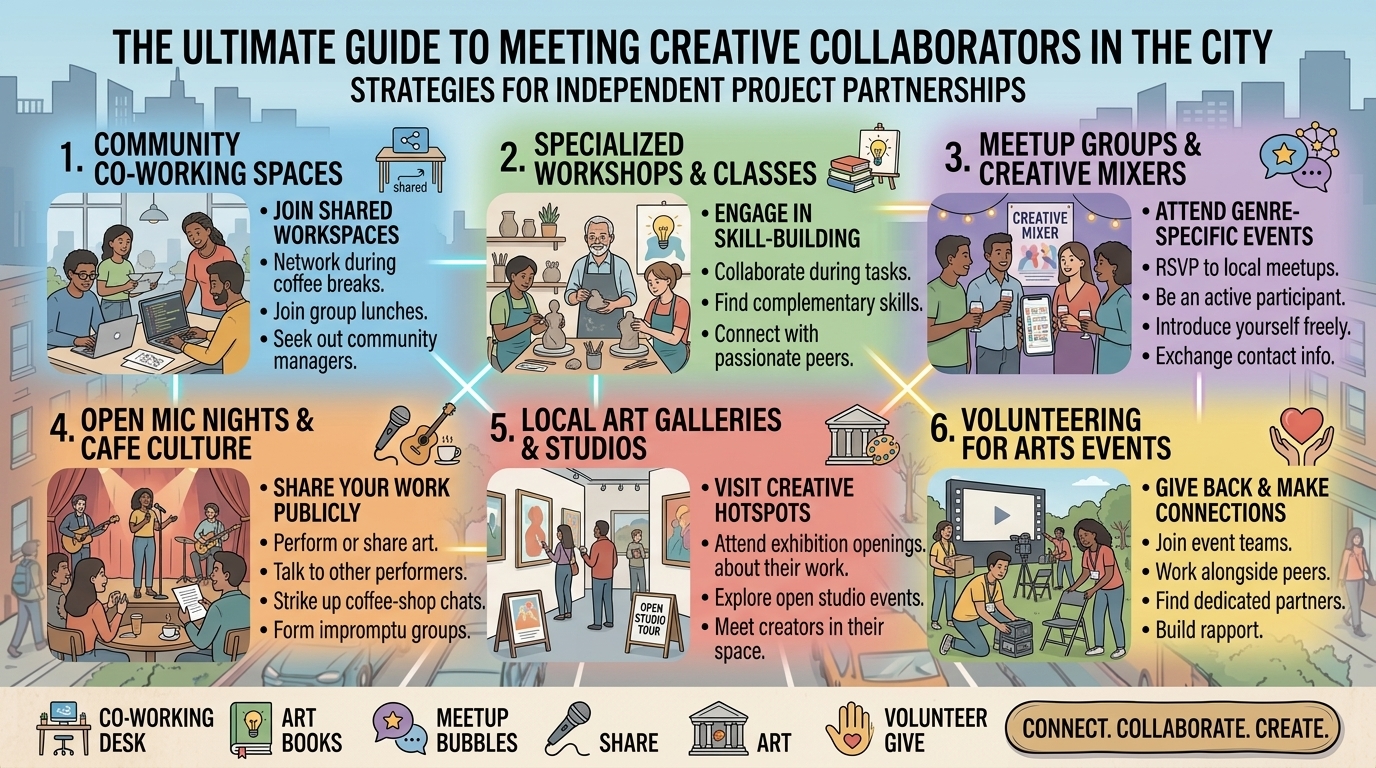
While remote collaboration is easier than ever, the deepest creative bonds—the kind that turn into multi-year partnerships—are often forged face-to-face over a cup of coffee or a late-night drink. If you live in major creative capitals, you have access to vibrant local scenes.
[Urban Creative Hubs]
       │
       ├──> Coworking Spaces (WeWork, Independent Hubs)
       ├──> Monthly Meetups (CreativeMornings, Design Groups)
       └──> Local Culture Spots (Indie Bookstores, Vinyl Listening Bars, Art Collectives)
Capitalize on Local Event Series and Coworking Culture
- CreativeMornings: A global breakfast lecture series operating actively in major cities like New York, San Francisco, Seattle, and Austin. It brings hundreds of local designers, filmmakers, and writers together every month for free coffee, inspiration, and open networking.
- Independent Bookstores and Art Spaces: In cities like San Francisco or New York, spots like Dog Eared Books or local independent art galleries host poetry readings, zine releases, and artist mixers. These are prime locations to meet writers, layout designers, and conceptual artists.
- Coworking Hubs and Maker Spaces: Renting a desk for a day at an independent creative workspace puts you in direct proximity to freelance copywriters, developers, and producers who are actively looking for side projects to flex their skills.
3. How to Write a Project Pitch That Attracts Top Tier Talent
Talented creatives are usually flooded with ideas; what they lack is confidence in your execution. If you want top-tier partners to respond to your call, your pitch needs to look professional, structured, and inspiring.
- Lead with a Hook, Not an NDA: Never demand a Non-Disclosure Agreement before someone even knows what your project is about. It kills organic interest. Instead, share a compelling logline or mood board.
- Define the Scope Clearly: State whether the project is pro-bono (for portfolio-building, revenue share, or passion) or paid. Clarity upfront builds immediate trust.
- Show, Don’t Just Tell: Include a pitch deck, conceptual artwork, a script sample, or an early prototype. Talented collaborators want to partner with projects that already have momentum.
4. Vetting Your Collaborators: Avoiding Creative Dead Ends
Finding a collaborator is a lot like dating; initial chemistry doesn’t always translate into long-term compatibility. Before locking someone into a core role on your indie team, run them through a practical trial phase.
- Start with a Micro-Test: Assign a small, low-stakes test task (such as designing a single character concept sheet, writing one scene, or recording a 30-second audio cue) to see how they handle feedback and deadlines.
- Assess Communication Styles: Are they responsive? Do they handle constructive criticism well, or do they take design changes personally? A brilliant artist with a toxic ego will ultimately sink an independent project faster than a lack of funds.
Frequently Asked Questions (FAQ)
1. Where is the best place to find free creative collaborators for zero-budget indie projects?
Platforms like Reddit (r/INAT), specialized Discord servers, local university art/film department boards, and grassroots meetup groups are your best bets for finding peers willing to trade skills for portfolio building and revenue-share models.
2. How do I protect my intellectual property (IP) when working with strangers?
While you shouldn’t lead with heavy NDAs for basic brainstorming, once you enter deep development with a partner, draft a simple independent contractor or collaboration agreement that outlines copyright ownership, revenue splits, and credit terms.
3. Are paid platforms better than free forums for finding reliable talent?
Generally, yes. When money changes hands—even a modest freelance rate—it establishes a professional contract. People treat paid assignments with higher priority than voluntary side projects.
4. How can I network effectively if I am naturally introverted?
Focus on structured environments like workshop classes, panel discussions, or monthly morning lecture series where the agenda is already set. This removes the awkwardness of cold-approaching strangers; you can naturally bond over the speaker or the workshop topic.
5. What should I include in a “Looking for Collaborators” post?
Include a clear project title, medium, genre, current stage of development, what specific roles you are looking to fill, whether it is paid/rev-share, and a link to your previous work or visual mood board.
6. How do I handle creative disagreements with my project partner?
Establish creative decision-making roles early. For instance, designate a “project lead” or director who has the final tie-breaking vote on directional choices, while giving individual leads absolute autonomy over their specific department.
7. Is it better to collaborate locally or with remote international partners?
Both have merits. Local partners allow for in-person brainstorming sessions and deep community bonding, while global partners give you access to a massive talent pool across different time zones and cultural backgrounds.
8. How long should a trial collaboration period last?
A two-to-four-week trial period is ideal. It gives both parties enough time to complete a tangible milestone together and evaluate whether their working speeds and communication habits align.
9. What red flags should I watch out for when vetting a new partner?
Watch out for chronic unresponsiveness, vague portfolio pieces, an unwillingness to sign basic accountability agreements, or a tendency to dismiss feedback from other team members.
10. Can I build an entire indie team entirely through social media?
Absolutely. Many modern indie game studios, music collectives, and zine publishers operate 100% remotely, having formed their entire core teams through platforms like Twitter/X, Discord, and specialized creator networks.
Conclusion
Finding the right creative collaborators in a bustling urban landscape requires a blend of digital outreach, local community immersion, and clear communication. By stepping out into your city’s creative hubs, utilizing specialized portfolio networks, and vetting partners through trial milestones, you can assemble a passionate, high-performing team. Your next great independent project doesn’t have to be a solo journey—go out there and find your creative co-conspirators.
What is the most memorable collaboration experience you’ve ever had, or what skill are you currently looking for to complete your indie team? Let us know in the comments below!