There is an iconic, cinematic transformation that occurs across New York City every single year. Autumn leaves vanish from the trees of Central Park, the crisp October breeze hardens into a biting November chill, and suddenly, the concrete jungle enters a period of intense meteorological test: the New York winter.
For newcomers arriving from the warm expanses of Texas, the sun-drenched beaches of California, the evergreen mists of Washington, or the mild microclimates of San Francisco, the first true NYC winter is a profound shock to the system. When temperatures plunge into the teens, sleet turns slush into hazardous bogs, and howling wind tunnels scream between Midtown skyscrapers, the city strips away its glamorous illusions.
Yet, surviving and thriving through a harsh winter in New York City does something extraordinary to a person. It acts as an instant catalyst for grit, resilience, adaptability, and emotional strength. Here is a deep-dive exploration of how freezing temperatures and urban blizzards forge unbreakable character, along with field-tested survival tips for conquering the cold season.
The Elements of the Chill: What Makes an NYC Winter Uniquely Brutal
Outsiders often assume winter is cold everywhere. However, winter in New York City possesses a distinct physical signature driven by the city’s unique geography and infrastructure.
1. The Urban Wind Tunnel Effect
Manhattan’s rigid grid system—designed for efficiency—creates powerful atmospheric pressure corridors. When cold fronts sweep down from the Arctic across the Hudson and East Rivers, winds funnel through concrete canyons with terrifying velocity. A thermometer reading of 25°F (-4°C) can easily feel like single digits once the wind chill bites through your wool coat.
2. The Slush Reality
Snow in postcards looks picturesque, pristine, and magical. Snow in New York City lasts for about twelve hours before heavy traffic, diesel buses, and pedestrian boots grind it down into the dreaded NYC slush—a murky, gray, chemical-laced mixture of ice, road salt, and dirt that pools mercilessly at every crosswalk. Navigating a flooded intersection without ruining your footwear is a masterclass in spatial problem-solving.
3. Subterranean Contrasts
You will quickly learn the unique psychological whammy of stepping out of a freezing subway platform where temperatures hover near freezing, boarding an overheated train car heated to 85°F, and stepping back out into the freezing wind. Managing your body temperature without overheating or freezing requires strategic layering.
How Winter Builds Instant Character
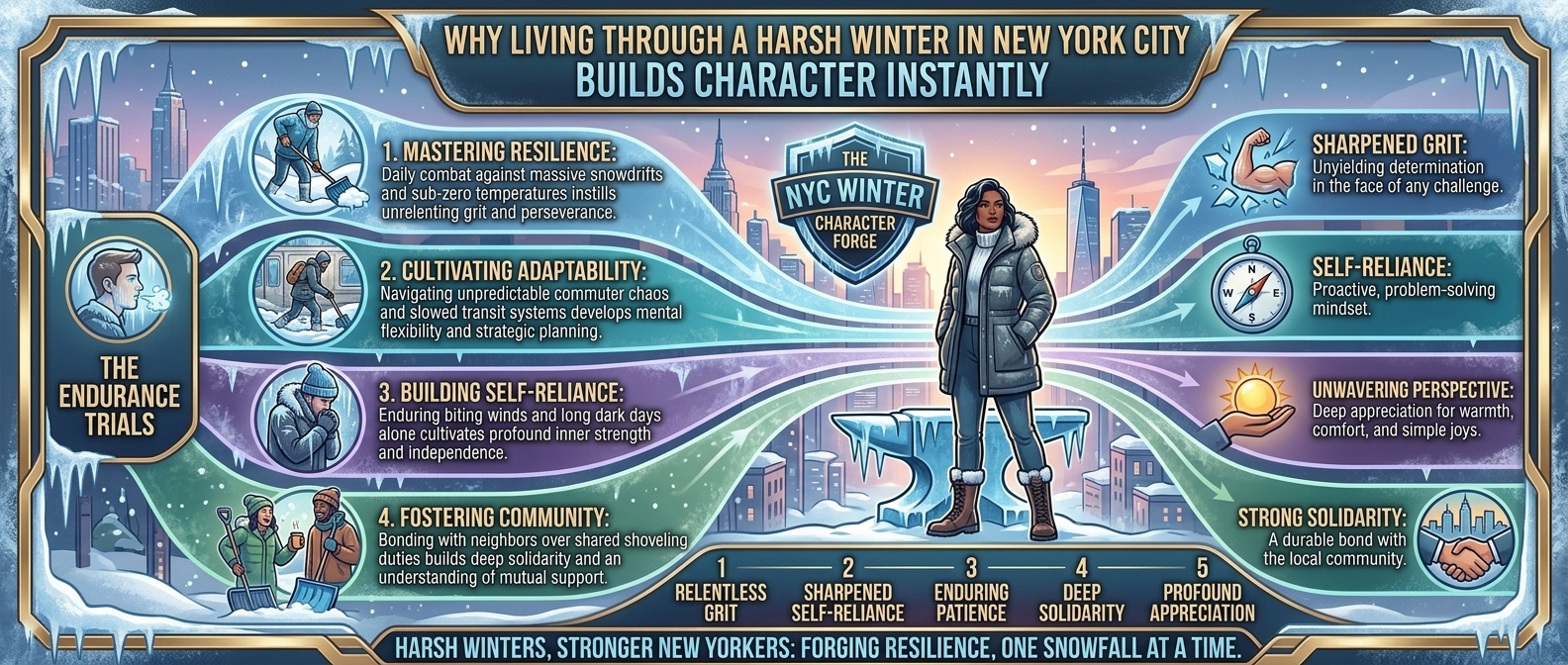
Enduring three to four months of sub-freezing weather transforms your psychology in measurable ways. Here is how the harsh season builds character instantly:
1. Cultivating Radical Resilience
When your morning commute involves chipping frozen ice off your building’s stoop, waiting ten minutes for a delayed train on an unheated subway platform, and trudging through knee-high snowdrifts, complaining loses its appeal. You learn to accept discomfort with a sense of grim humor. This resilience naturally spills over into your professional and personal life: if you can survive a January nor’easter, you can handle a tough client review or a broken lease.
2. The Power of Community Bonding
Ironically, harsh weather brings New Yorkers closer together. When everyone is shivering on a crowded platform or slipping on icy sidewalks, a collective empathy takes over. Strangers help each other dig cars out of snowbanks, hold doors open against fierce gusts, and share commiseration at local coffee shops. You realize very quickly that surviving the city requires solidarity.
3. Mastering the Art of Preparation
Lazy habits do not survive a New York winter. If you fail to check the weather forecast, forget your gloves, or wear thin-soled sneakers during a flash blizzard, you will pay an immediate physical penalty. Winter forces you to become hyper-organized, proactive, and mindful of your environment.
Essential Survival Tips for Conquering the NYC Cold
To build character without getting frostbite or pneumonia, follow these expert rules for mastering the winter season:
1. Invest in Heavy-Duty Outerwear (Function Over Fashion)
Do not compromise on your winter coat. A stylish, lightweight fashion jacket will fail you by mid-January. Look for a heavy, windproof down parka that falls below your knees, features a fur-lined hood to block wind, and is rated for extreme sub-zero temperatures.
- The Layering Rule: Master the three-layer system: a moisture-wicking base layer (merino wool or thermal synthetics), an insulating mid-layer (fleece or heavy sweater), and a wind/waterproof outer shell.
2. Upgrade Your Footwear Arsenal
New York winters will destroy cheap shoes within weeks.
- Buy a dedicated pair of waterproof, rubber-soled winter boots with good traction for walking over slick ice.
- Treat your leather boots with protective waterproofing spray to shield them against corrosive road salt.
3. Fight Seasonal Affective Disorder (SAD) Proactively
Shorter winter days mean leaving for work in the dark and returning home in the dark. This lack of sunlight can heavily drain your energy and mood.
- Light Therapy: Invest in a 10,000-lux sad light therapy box and use it for 15–20 minutes every morning while drinking your coffee.
- Indoor Sanctuary: Keep your apartment warm, well-lit with warm-toned bulbs, and cozy to create an inviting indoor haven against the stark grey exterior.
10 Frequently Asked Questions (FAQs)
1. How cold does it actually get during a New York City winter?
Winter temperatures typically range from 20°F to 40°F (-6°C to 4°C) through January and February, though drop-offs below 0°F (-18°C) with wind chill happen during severe polar vortex events.
2. Is it expensive to heat a New York City apartment in the winter?
It depends on your building. By law, landlords must provide adequate heat (typically maintaining indoor temperatures at least 68°F during the day and 62°F at night when outdoor temps drop below freezing). In older pre-war apartments with steam radiators, heating is usually included in rent, though radiators can sometimes clang loudly and dry out the air.
3. What should I pack if I am visiting NYC during the winter months?
Pack thermal socks, heavy-duty gloves or mittens, a warm beanie that covers your ears, a windproof scarf, a long heavy parka, and sturdy waterproof boots.
4. How do subways handle heavy snowstorms and blizzards?
The MTA runs 24/7 and has dedicated winter weather protocols, including running scraper cars to clear ice from third rails. However, major blizzards can cause outdoor above-ground lines to experience delays or suspension, so always monitor official transit alert apps.
5. How do I prevent my skin from drying out in heated indoor spaces?
The combination of freezing outdoor air and blasting indoor radiator heat strips moisture from your skin rapidly. Use a heavy-duty moisturizer, apply lip balm constantly, and invest in a cool-mist humidifier for your bedroom.
6. Are there fun things to do in NYC during the winter?
Absolutely! Winter offers some of the city’s most magical experiences: ice skating at Rockefeller Center or Bryant Park, walking through Central Park blanketed in fresh snow, enjoying cozy jazz clubs, and attending Restaurant Week deals in January.
7. How do I avoid slipping on black ice on sidewalks?
Walk slowly and deliberately with a slightly shorter stride, keep your hands out of your pockets to maintain balance, and watch out for glossy, wet-looking patches on stone or concrete steps.
8. Why do landlords pile salt on sidewalks during winter?
Property owners in NYC are legally required to clear snow and ice from their building sidewalks within a specific timeframe after a storm ends. Spreading rock salt melts lingering ice and prevents slips and falls.
9. How do I maintain an active social life when it’s freezing outside?
Shift your social habits from outdoor walking events to cozy indoor gatherings. Host casual dinner parties, visit museums, explore indoor food halls, or meet friends at neighborhood coffee shops and wine bars.
10. Does surviving an NYC winter really change your personality?
Yes. It instills a sense of shared urban pride. When you realize you walked three blocks through a howling nor’easter just to get your morning coffee and make it to your job on time, you realize you have officially earned your stripes as a resilient New Yorker.
Conclusion
Living through a harsh winter in New York City is an uncompromising rite of passage. It tests your patience, challenges your physical endurance, and forces you to adapt with speed and grit. Yet, once you learn how to dress properly, embrace the city’s snow-covered beauty, and lean into the shared resilience of millions of fellow residents, you realize that the cold season doesn’t break you—it builds you. It gives you the legendary backbone that defines true New Yorkers.
Embrace the chill, armor up, and discover more urban survival guides, lifestyle tips, and city inspiration right here at nyattitude.com to help you master life in the greatest city on earth!