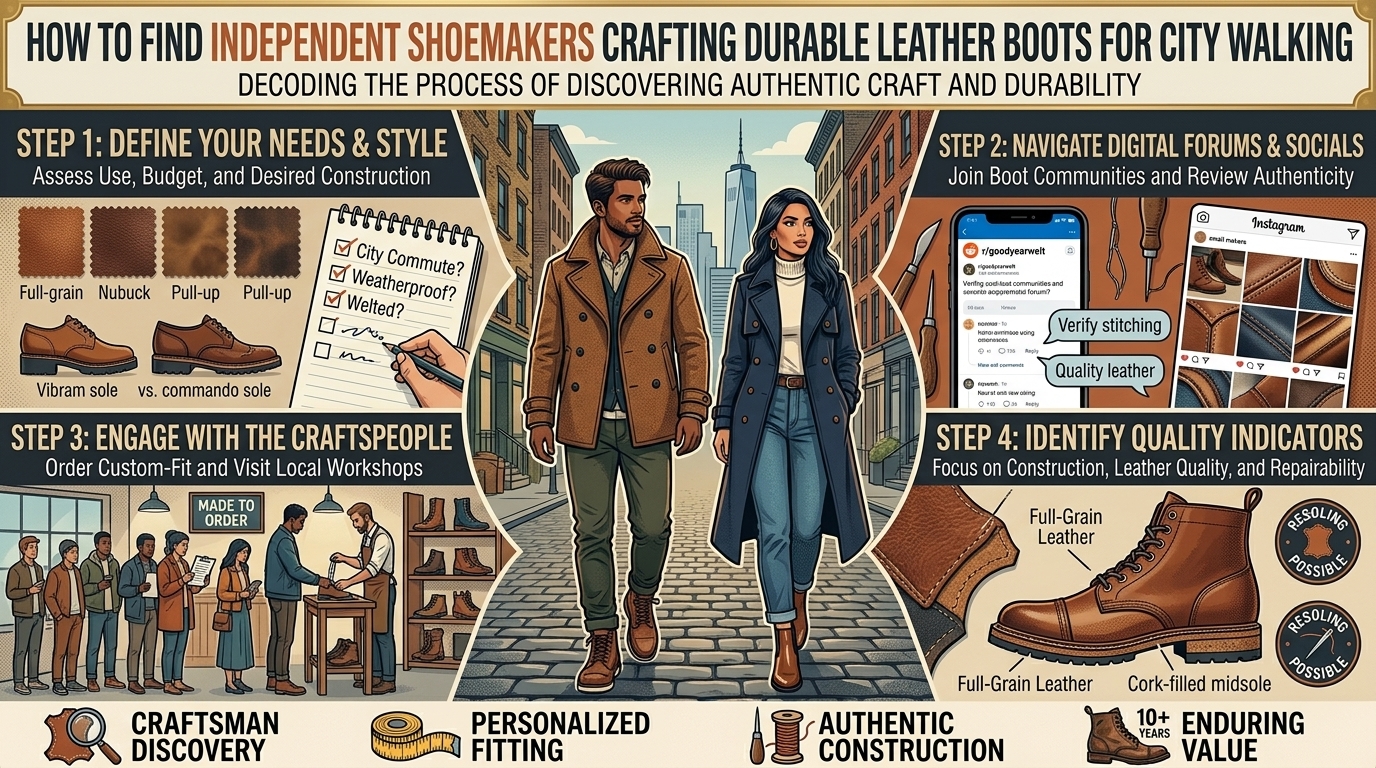
In an age dominated by fast fashion, synthetic footwear, and mass-market glued soles that fall apart after a single season of rain and pavement friction, investing in high-grade leather boots has returned as an essential urban ritual. For city dwellers who track thousands of steps a day, a boot is not merely a style statement—it is a critical piece of wearable architecture designed to protect your posture, withstand concrete abrasion, and elevate your daily wardrobe.
Finding genuinely independent shoemakers who use time-tested construction methods (such as Goodyear welts, Blake stitching, or stitchdown construction) requires navigating past clever marketing and greenwashed claims. Whether you are pounding the pavement in New York City, negotiating steep wet inclines in San Francisco, handling damp coastal routes in Washington, walking through sprawling transit districts in California, or braving unpredictable weather in Texas, the right pair of handcrafted boots makes all the difference.
At NY Attitude, we deliver street-tested style blueprints, artisanal footwear guides, and urban gear breakdowns. This comprehensive guide details how to locate independent cordwainers and shoemakers, evaluate footwear construction, and select durable leather boots engineered for long-distance city walking.
1. The Anatomic & Structural Matrix of City-Walking Footwear
Walking on unforgiving city concrete subjects your feet, ankles, and knees to continuous shock impact. Mass-produced cemented boots (where the sole is simply glued to a thin upper) deteriorate rapidly under these high-friction conditions. Independent master shoemakers rely on traditional welted construction, full-grain upper leathers, and cork-filled midsoles that conform over time to your unique foot anatomy.
+--------------------------------------------------------------------------+
|                     URBAN LEATHER BOOT ANATOMY MATRIX                    |
+------------------------------------+-------------------------------------+
| 1. FULL-GRAIN LEATHER UPPER        | 1.8–2.2mm thickness, full fiber     |
|    Maximum abrasion defense        | density, natural breathability      |
+------------------------------------+-------------------------------------+
| 2. GOODYEAR WELT / STITCHDOWN      | 360° lock-stitched perimeter,       |
|    Resoleable structural boundary  | completely water-resistant joinery  |
+------------------------------------+-------------------------------------+
| 3. CORK MIDSOLE & STEEL SHANK      | Custom foot-molding arch support,   |
|    Impact absorption & alignment   | prevents fatigue on concrete pavement|
+------------------------------------+-------------------------------------+
The Technical Hallmarks of Handcrafted Boots
- Goodyear Welt Construction: A strip of leather (the welt) is sewn directly to both the upper and the innersole, while a second stitch joins the welt to the outsole. This double-stitch structure creates a water-resistant seal and allows the boot to be resoled repeatedly for decades.
- Stitchdown Construction: The upper leather is turned outward and stitched directly to the midsole. Popular among pacific northwest and utility makers, stitchdown construction offers extreme durability, lateral stability, and water shedding.
- Full-Grain Veg-Tan Leather: Unlike corrected-grain or “genuine” leather (which is sanded down and coated in plastic polyurethane), full-grain leather retains the outer hide layer. It develops a rich patina over time and resists tearing under stress.
- Cork Bed & Steel Shank: High-end independent makers place a layer of natural cork beneath the leather insole, anchored by a tempered steel or heavy leather shank. As you walk, body heat and pressure mold the cork into a custom orthopedic footbed.
| Construction Parameter | Mass-Market Glued Boot | Independent Welted Boot | City Walking Advantage |
| Sole Attachment | Chemical adhesive / glue | Goodyear welt / Stitchdown | Fully resoleable; zero sole separation |
| Upper Material | Genuine / Bonded leather | 1.8mm+ Full-grain steerhide | High puncture & moisture resistance |
| Midsole Support | Synthetic foam / Paperboard | Natural cork filler + Steel shank | Prevents arch collapse & foot fatigue |
| Outsole Material | Soft thin rubber | High-density Vibram / Rubber lug | Superior grip on wet metal grates & concrete |
2. Neighborhood Sourcing: Locating Independent Artisans Across Key Regions
Independent shoemakers and artisanal cobbler studios thrive in specific creative and industrial pockets across the United States. Finding them involves looking beyond main-street retail chains:
1.Step 1: Explore Urban Artisanal Districts:Search for heritage cordwainer studios and artisanal cobbler shops.
- New York & San Francisco: Look in historic industrial corridors like Williamsburg, Red Hook, the Lower East Side, and San Francisco’s Mission District. These areas house niche bootmakers, bespoke fitting studios, and heritage stockists.
- Pacific Northwest & Washington: Target heritage workshops in Seattle and Spokane that specialize in heavy-duty stitchdown service boots built for wet, rugged coastal environments.
2.Step 2: Research Small-Batch Makers & Direct Workshops:Verify small-batch production runs and maker transparency.
- Inspect Sourcing Transparency: Authentic independent workshops clearly state where their hides are tanned (e.g., Horween in Chicago, C.F. Stead in England, or Wickett & Craig in Pennsylvania).
- Check Batch Numbers: Independent cordwainers build boots in limited production runs, often hand-stamping batch numbers inside the shaft or tongue.
3.Step 3: Confirm Fit and Arch Placement:Schedule an in-person fitting or utilize bespoke measuring guides.
- Measure on a Brannock Device: Independent makers size their lasts (the wooden foot molds used to shape boots) precisely. Always measure your heel-to-ball distance alongside overall length.
- Test Arch Engagement: Ensure the boot’s waist and steel shank support your natural arch without pressing uncomfortably into your instep.
3. Five Go-To Outfit Styling Formulas for City Walking Boots
- The Downtown Heritage Commuter: Independent dark brown chromexcel leather service boots + 14oz raw selvedge denim (cuffed 1.5 inches) + heavyweight grey fleece hoodie + tailored wool overcoat.
- The Rainy Pacific Northwest Specialist: Black lug-sole Goodyear welted chelsea boots + water-resistant tailored canvas trousers + heavy merino wool knit + vintage waxed cotton jacket.
- The Texas High-Low Urbanite: Handcrafted leather cap-toe boots + straight-leg indigo jeans + crisp white poplin button-down + unstructured linen-wool blazer.
- The Coastal California Minimalist: Tan suede stitchdown boots + cropped pleated chinos + lightweight ribbed turtleneck + unlined denim utility coat.
- The Off-Duty Architectural Look: Black lace-up boot with Vibram lug soles + wide-leg trousers + fitted black crewneck + leather bomber jacket.
10 Frequently Asked Questions (FAQ)
1. Why are independent handmade boots significantly more expensive than commercial mall brands?
Handmade boots utilize premium full-grain leathers, natural cork insoles, tempered steel shanks, and labor-intensive Goodyear or stitchdown welt construction. The manual skill required and the ability to resole the boot multiple times justify the higher initial investment.
2. How long does it take to break in a pair of full-grain welted boots?
Break-in periods typically range from 2 to 4 weeks of consistent wear. Because the leather upper and cork midsole are thick and sturdy, they require time and foot warmth to soften, flex, and shape to your anatomy.
3. What is the best outsole type for walking long distances on city pavement?
A Vibram lug sole or a high-density rubber mini-lug sole offers the ideal combination of shock absorption, durability against concrete grinding, and wet-weather traction on slick metal grates and subways.
4. Can independent Goodyear-welted boots be resoled indefinitely?
As long as you care for the upper leather by conditioning it regularly, a Goodyear welted boot can typically be resoled 3 to 5 times or more by any qualified cobbler, extending its life for decades.
5. What is the difference between chrome-tanned and vegetable-tanned boot leather?
Chrome-tanned leather (like Chromexcel) is supple, water-resistant, and requires a shorter break-in period. Vegetable-tanned leather uses natural plant tannins, resulting in a firmer, highly durable hide that ages with a distinct, rich patina.
6. How do I prevent my leather boots from squeaking when walking on smooth floors?
Squeaking often occurs when friction builds between the leather insole and tongue or around a dry shank. Applying a light dusting of talcum powder beneath the removable insert or conditioning the tongue leather usually resolves the issue.
7. How should I care for handmade boots after walking through rain or snow?
Never place wet leather boots near heaters or radiators, as direct heat dries out and cracks natural fibers. Wipe away moisture, stuff the boots with newspaper or cedar tree inserts, and let them dry naturally at room temperature.
8. Are chelsea boots as durable for city walking as lace-up service boots?
Yes, provided they feature Goodyear welted construction, high-grade elastic side goring, and robust outsoles. Lace-up boots, however, offer greater ankle adjustability for custom tension during long walks.
9. How do cedar boot trees extend the life of independent leather footwear?
Cedar boot trees absorb moisture and sweat from the interior lining, maintain the original boot shape to prevent severe vamp creasing, and impart a fresh, natural scent that deters odors.
10. How do I know if a boot last fits my foot correctly?
The boot should feel snug across the ball of your foot like a firm handshake, with approximately 0.5 inches of toe space up front. Your heel should experience minimal slip (less than 1/4 inch) during the initial break-in period.
Conclusion
Investing in independent shoemakers who craft durable leather boots for city walking elevates both your daily comfort and long-term personal style. By understanding traditional welted construction, choosing full-grain hides, supporting small-batch cordwainers, and maintaining your footwear with cedar trees and leather balms, you create a sustainable, resoleable foundation built to tackle city pavement for years.
For more urban footwear blueprints, artisanal craft breakdowns, and city style strategies across Texas, New York, California, Washington, and San Francisco, stay tuned to NY Attitude.