There is a distinct architectural rhythm to moving through a modern metropolis. Whether you are navigating the towering glass canyons of Manhattan, strolling past the historic brick facades of San Francisco’s waterfront, traversing the creative tech corridors of Washington, or absorbing the expansive urban grids of Texas and California, cities are fundamentally living museums.
When most people think of experiencing fine art, their minds automatically default to the indoor ritual: purchasing a ticket, stepping through heavy security turnstiles, checking coats, and whispering in echoic galleries under climate-controlled lighting.
Yet, some of the most profound, provocative, and globally significant artistic masterpieces are not locked behind museum doors. They are scattered across the urban landscape—anchoring subway mezzanines, rising out of public plazas, guarding corporate courtyards, and transforming mundane street corners into open-air cultural exhibitions.
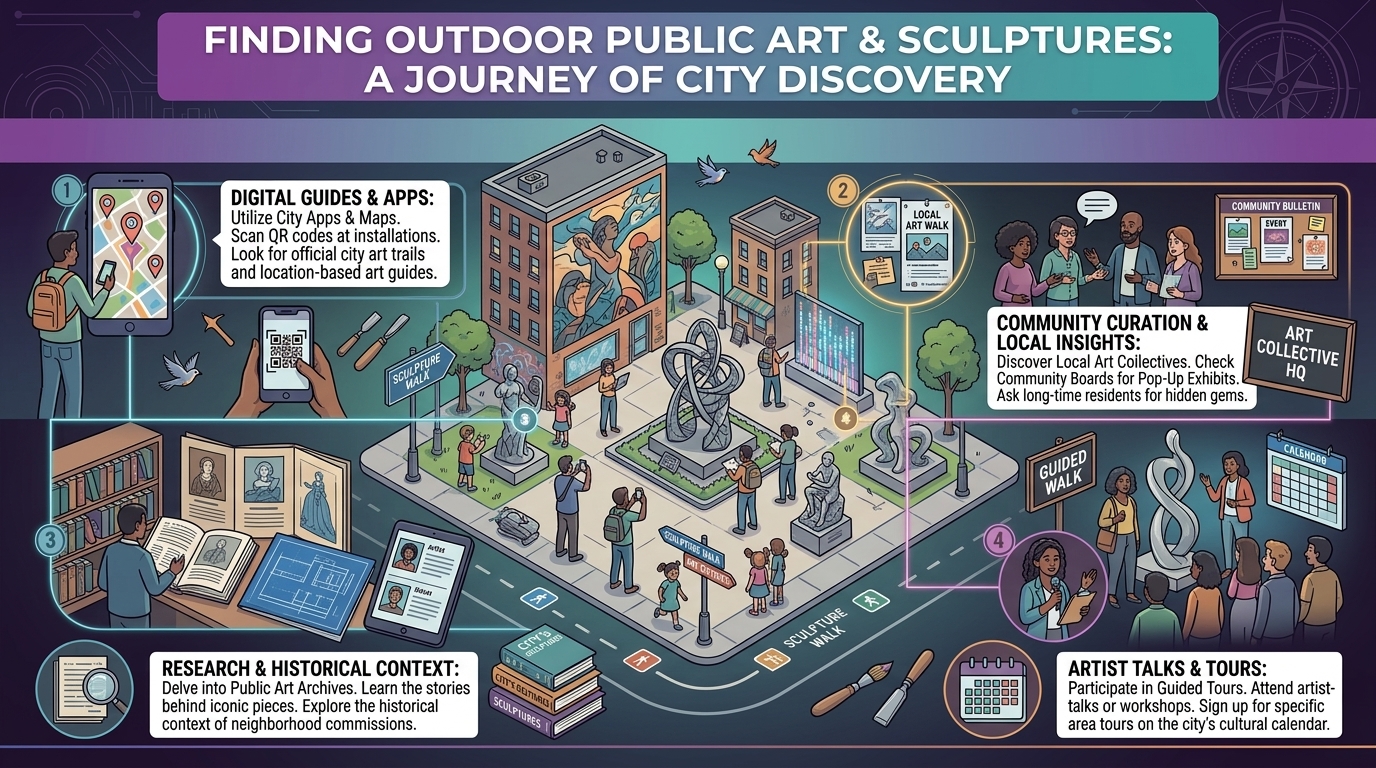
If you know how to look past the rush of daily transit, you can unlock an entirely hidden layer of urban curation. This comprehensive guide details how to discover outdoor public art installations and sculptures scattered around major cities, offering tactical exploration strategies, historical context, and expert tips for the modern urban explorer.
The Philosophy of Public Art: Why Art Belongs Outside
For decades, public art was viewed merely as ornamental decoration—a civic bronze statue of a 19th-century politician on a horse, or a generic decorative fountain in front of a municipal building.
Modern urban planning has completely revolutionized this concept. Today, public art is seen as a democratic equalizer.
- Accessibility: Outdoor art requires no ticket, no dress code, and no financial investment. It forces an accidental encounter between everyday citizens and world-class sculpture, challenging commuters to pause, reflect, and question their physical environment.
- Activating Dead Spaces: Public sculptures can turn a windswept, sterile concrete plaza into a vibrant neighborhood anchor. They humanize scale, introducing organic curves, brilliant colors, and reflective metals against rigid geometric skyscrapers.
Regional Spotlight: Where Outdoor Art Thrives
Different metropolitan regions integrate public art through distinct lenses shaped by their local geography and cultural history:
1. New York City: The Urban Canvas
From the permanent bronze charging bull of Bowling Green to temporary monumental sculpture installations in Madison Square Park and Doris C. Freedman Plaza in Central Park, New York treats its streets and parks as an ever-shifting gallery. The city’s Percent for Art program mandates that a percentage of capital project budgets go directly toward commissioning site-specific public art across all five boroughs.
2. San Francisco & The West Coast: Tech, Nature, and Abstraction
Along the San Francisco Bay, public art often intersects with stunning natural geography. Installations range from monumental kinetic sculptures along the Embarcadero to hidden abstract art installations nestled inside tech-forward corporate plazas and coastal parks.
Step-by-Step Strategy: How to Find Hidden Public Art
Discovering outdoor art requires shifting from a distracted commuter mindset to an active observational stance. Use this step-by-step strategy:
1. Hunt for Private Public Spaces (POPS)
In high-density commercial cities like New York and San Francisco, real estate developers are often granted zoning bonuses to build taller towers if they provide accessible open-air plazas, courtyards, or indoor atriums for the public.
- The Secret: These privately owned public spaces are legally required to house public art, installations, or sculptures. Checking municipal zoning maps will lead you straight to hidden courtyards tucked behind corporate monoliths that feature museum-grade modern sculptures completely hidden from street traffic.
2. Look Up and Down (The Peripheral Vision Rule)
Most pedestrians keep their eyes locked straight ahead or down at their mobile screens. Public art is intentionally designed to disrupt this tunnel vision:
- Look Up: Check building facades, elevated railway columns, rooftop terraces, and suspended wire installations.
- Look Down: Sidewalk mosaics, embedded metallic marker trails, and manhole covers often feature custom historical artwork designed by local artists.
10 Frequently Asked Questions (FAQs)
1. Are outdoor public art installations entirely free to visit?
Yes! All public sculptures, street murals, plaza installations, and park-based exhibitions are 100% free and open to the general public 24 hours a day, 365 days a year.
2. How can I find temporary sculpture installations before they close?
Follow city cultural affairs departments, local public art funds (such as the Public Art Fund in NYC), and contemporary art magazines on social media or subscribe to their exhibition newsletters.
3. Are public sculptures protected against vandalism and weather damage?
Yes. Most commissioned public installations are constructed from weather-resistant industrial materials—such as weathering steel (COR-TEN), marine-grade bronze, polished stainless steel, and treated stone—and are routinely maintained by municipal conservation teams.
4. Can I touch public art installations?
It depends on the specific piece. While abstract stone sculptures and interactive kinetic pieces often invite tactile engagement, delicate metal finishes, painted surfaces, or temporary installations may feature “Please Do Not Touch” notices to protect the artwork.
5. What is the “Percent for Art” law?
It is a municipal legislation adopted by many major cities requiring a specific percentage (usually 1% of the construction budget) of capital improvement projects to be allocated toward commissioning public artwork for that site.
6. Where can I find official maps of public art trails?
Most cities host interactive digital maps via their parks and recreation or cultural affairs websites, categorizing public sculptures by neighborhood, artist, and installation year.
7. Why do some public sculptures look abstract or confusing?
Abstract public art is designed to provoke personal interpretation, challenge conventional aesthetics, and harmonize with or contrast against surrounding architectural geometry rather than merely depicting a realistic likeness.
8. Are guided walking tours available for public art?
Yes! Independent architectural foundations, historical societies, and local art historians frequently lead weekend walking tours focusing exclusively on monumental sculpture and public art history.
9. How do artists get chosen to create public art installations?
Artists typically submit competitive proposals through a rigorous municipal or non-profit request-for-proposals (RFP) process, where a panel of curators, community members, and urban planners evaluate their vision.
10. Why is discovering public art important for urban exploration?
Because it transforms a standard walk through the city into an inspiring cultural journey, connecting you directly to the creative soul, history, and civic imagination of the metropolis.
Conclusion
Finding outdoor public art installations and sculptures scattered around the city changes the way you experience your daily environment. By stepping past the rush of transit, exploring hidden corporate plazas, and keeping your eyes open to architectural details, you turn every city street into an open-air museum.
Wander off the beaten path, look up from your screen, and discover more urban exploration guides, neighborhood art secrets, and lifestyle inspiration right here at nyattitude.com to help you master life in the greatest cities on earth!