There comes a point in every urban dweller’s life—whether you are navigating the concrete canyons of New York, feeling the relentless pace of San Francisco or broader California, keeping up with the tech-driven tempo of Washington, or balancing the booming sprawl of Texas—when the ambient hum of city traffic begins to feel like static electricity under your skin.
You do not need a two-week vacation or an expensive flight to reset your nervous system. Often, the ultimate remedy lies just a couple of hours away, tucked along the edge of a map where land meets water.
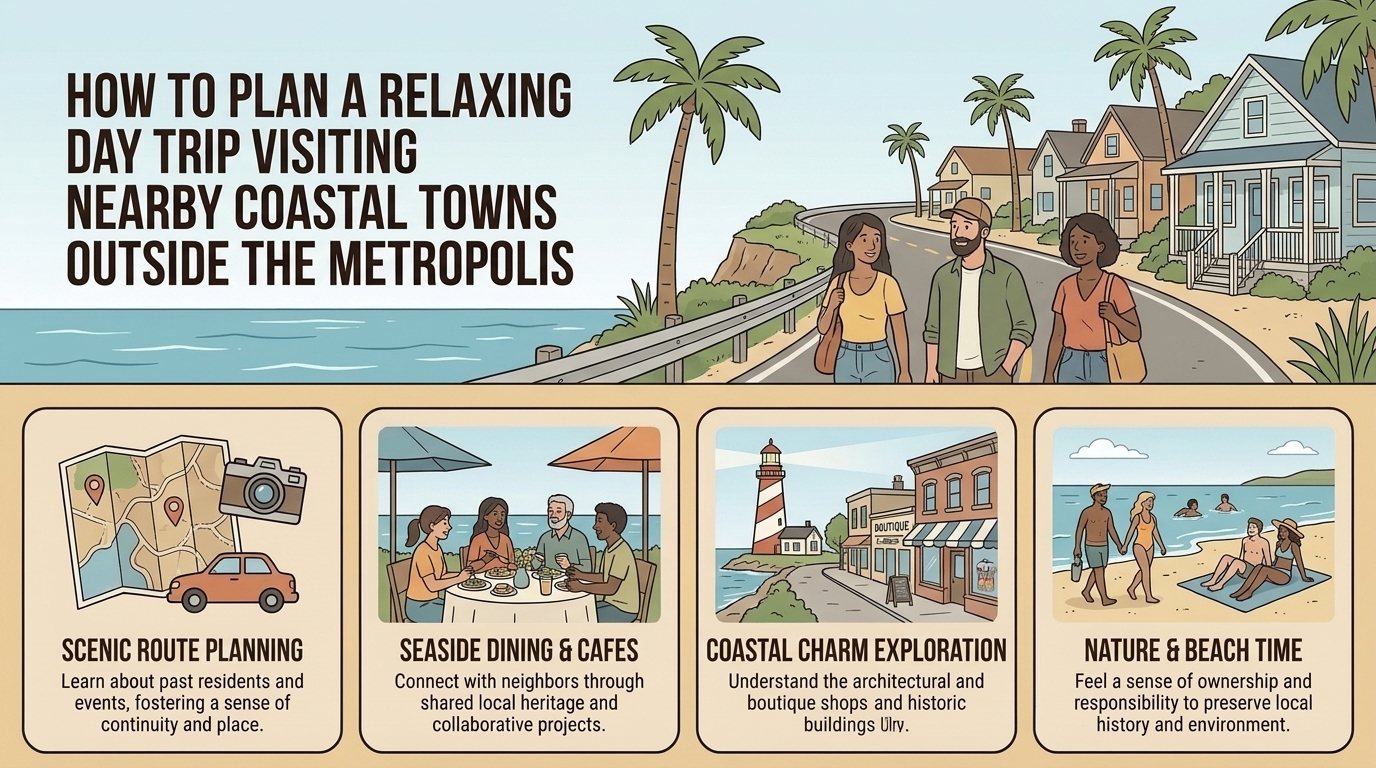
Planning a relaxing day trip to a nearby coastal town is an art form. Done right, it transforms an ordinary Saturday into a restorative mini-vacation. This comprehensive blueprint will guide you through choosing the ideal coastal escape, timing your transit, packing with intention, and fully unplugging outside the metropolis.
Why a Coastal Day Trip is the Ultimate Antidote to Urban Burnout
Psychologists often speak of “attention restoration theory,” which suggests that natural environments—particularly aquatic landscapes—effortlessly engage our attention while allowing our cognitive fatigue to drain away.
1. The “Blue Mind” Phenomenon
Marine biologist Wallace J. Nichols popularized the term “Blue Mind,” describing the mildly meditative state the human brain enters when we are near, in, or on water. The sound of rhythmic waves, the vast horizon line, and the scent of salt air physically lower cortisol levels, slow your heart rate, and clear mental clutter.
2. Low Friction, High Reward
Unlike long-haul travel, which requires packing luggage, dealing with airport security, and checking into hotels, a coastal day trip keeps logistics minimal. You pack a single tote bag, turn the ignition or hop on a regional train, and within 60 to 120 minutes, you are eating fresh seafood with sand in your shoes.
Mapping Your Coastal Escape: Regional Horizons
Depending on your home base, your definition of a “coastal town” takes on a unique regional flavor. Here is how coastal day-tripping looks across key landscapes:
1. New York: Escaping to Maritime History and Sandy Spits
- The Vibe: Classic maritime charm, historic lighthouses, boardwalks, and windswept Atlantic barrier islands.
- Where to Look: From Manhattan or Brooklyn, day-trippers head east toward the historic harbor towns of the North Fork of Long Island, the maritime hamlets of the Hudson River Valley, or south toward the Jersey Shore’s quieter historic pockets.
2. San Francisco & California: Dramatic Bluffs and Pacific Serenity
- The Vibe: Rugged sea cliffs, hidden tide pools, rolling fog, and vibrant surf culture.
- Where to Look: Bay Area residents can escape across the Golden Gate to coastal gems like Sausalito or Bolinas, or head south down the Peninsula to Half Moon Bay and Santa Cruz. Southern Californians can duck away to Laguna Beach, Ojai’s coastal neighbors, or San Diego’s sleepy harbor nooks.
3. Washington: Puget Sound Ferries and Island Hideaways
- The Vibe: Evergreen-fringed shores, misty marine air, sleepy ferry towns, and dramatic tidal shifts.
- Where to Look: Seattle dwellers can drive or take a passenger ferry to Bainbridge Island, Vashon Island, or the historic Victorian seaport of Port Townsend, where the mountains meet the salt chuck.
4. Texas: Gulf Coast Breezes and Hidden Bay Towns
- The Vibe: Warm Gulf breezes, historic boardwalks, coastal birding sanctuaries, and laid-back beach towns.
- Where to Look: Texans based in Houston, Austin, or San Antonio can head toward the historic coastal bends of Galveston Island, the quiet shores of Matagorda, or the wildlife-rich bay hamlets around Rockport and Port Aransas.
Step-by-Step Blueprint: How to Plan the Perfect Coastal Day Trip
An effortless trip looks spontaneous, but it is actually built on smart, light preparation. Follow this step-by-step framework:
Step 1: The Golden Rule of Timing (Beat the Exodus)
Coastal routes are notorious for weekend gridlock.
- Departure: Leave early. Aim to hit the road or transit line by 7:30 AM or 8:00 AM. Arriving before the crowds gives you first pick of parking, quiet morning coffee spots, and empty shorelines.
- Return: Either leave by 3:00 PM before the afternoon beach rush heads home, or lean entirely into the evening by staying for dinner and watching the sunset, driving back after 7:30 PM when traffic clears.
Step 2: Choose Your Coastal Vibe
Are you looking for active exploration or pure relaxation? Match your destination to your mood:
- The Quaint Harbor Village: Focus on towns with historic working docks, antique shops, and seafood shacks.
- The Wild Nature Reserve: Choose coastal state parks or wildlife refuges where hiking trails meet rocky shores or sand dunes.
- The Lazy Beach Town: Prioritize towns with walkable main streets, ice cream parlors, and wide, uncrowded stretches of sand.
Step 3: Craft a Loose Itinerary (Not a Strict Schedule)
The secret to relaxation is rejecting over-scheduling. Pick one anchor activity (e.g., a boat tour, a specific seafood restaurant, or a coastal cliff hike) and leave the rest of the day wide open to wander.
Essential Packing List for a Stress-Free Coastal Day
Do not overpack, but ensure you have the core items that prevent minor discomforts from ruining your day:
- Layers are Mandatory: Coastal weather is notoriously fickle. A brilliant 75°F sunny morning can turn into a 55°F windy marine chill by 2:00 PM. Always pack a windbreaker or a cozy fleece.
- Footwear for Flexibility: Wear supportive walking shoes or sandals with good traction if you plan on exploring rocky tide pools or wooden boardwalks.
- Sun and Wind Protection: High-SPF sunscreen, polarized sunglasses (crucial for cutting ocean glare), and a wide-brimmed hat.
- Hydration and Snacks: Pack a reusable water bottle and light snacks so you aren’t forced to wait in long tourist-trap lines just to grab a quick bite.
- A Waterproof Tote or Wet-Gear Bag: Essential for tossing in sandy towels, damp jackets, or impulse purchases from local boutiques.
10 Frequently Asked Questions (FAQs)
1. How far away should a coastal day trip destination ideally be?
An ideal day trip destination is between 1 to 2.5 hours away each way. This keeps total transit time under 4 to 5 hours, leaving you plenty of actual leisure time at your destination.
2. How can I avoid weekend traffic congestion on coastal highways?
Use real-time navigation apps, leave significantly earlier than standard check-out times (before 8:30 AM), consider taking commuter ferries or regional rail lines where available, and plan alternative inland return routes if coastal highways back up.
3. What should I do if the coastal weather forecast predicts fog or rain?
Don’t cancel immediately! Coastal fog and moody overcast skies create an incredible, atmospheric backdrop for photography, cozy café visits, and peaceful, uncrowded beach walks. Just bring a waterproof outer shell.
4. Are coastal towns budget-friendly for a day trip?
Yes. Unlike overnight stays where lodging consumes your budget, a day trip is remarkably economical. Your main expenses will be gas or transit fare, parking, a nice meal, and perhaps a small treat or souvenir.
5. How do I find quiet, uncrowded beaches near major cities?
Look past the main commercial beach hubs. Check state park directories, wildlife refuge borders, or local hiking blogs that highlight lesser-known public access points requiring a short walk from the parking area.
6. What is the best way to handle parking in popular beach towns?
Arrive early to secure legal street parking or municipal lots. Download local parking apps (like ParkMobile) in advance if the town utilizes digital meters, and always obey local residential parking signs to avoid tickets or towing.
7. Can I bring my dog on a coastal day trip?
It depends entirely on the town and local beach ordinances. Many state parks and municipal beaches restrict dogs during peak summer months, though some towns feature dedicated off-leash dog beaches or permissive coastal walking trails. Always check rules beforehand.
8. What are some top coastal day trip spots for major US regions?
- New York: Greenport or Montauk (Long Island).
- San Francisco/California: Sausalito, Half Moon Bay, or Santa Cruz.
- Washington: Bainbridge Island or Port Townsend.
- Texas: Galveston Island or Rockport.
9. How can I support local businesses responsibly during my visit?
Skip chain restaurants and big-box stores. Eat at family-owned fish houses, buy coffee from local independent roasters, and purchase souvenirs from cooperative art galleries or local craftspeople.
10. What is the best way to unwind physically once I arrive?
Start your day with a slow walk right at the water’s edge, letting the rhythm of the waves ground you. Avoid checking your phone or work emails for at least the first two hours of arrival to maximize your mental reset.
Conclusion
Stepping away from the metropolis to breathe in the salt air is one of the kindest things you can do for your mind and body. Whether you are exploring the rugged Pacific bluffs of California and San Francisco, taking a misty ferry across Washington’s Puget Sound, wandering New York’s historic maritime shores, or enjoying a warm Gulf breeze in Texas, a restorative coastal escape is closer than you think.
Pack a light bag, leave early, roll your car windows down, and let the ocean tide wash away the stress of the city week!
What is your absolute favorite coastal town to visit for a quick day trip? Drop a comment below and share your hidden beach recommendations with our community!