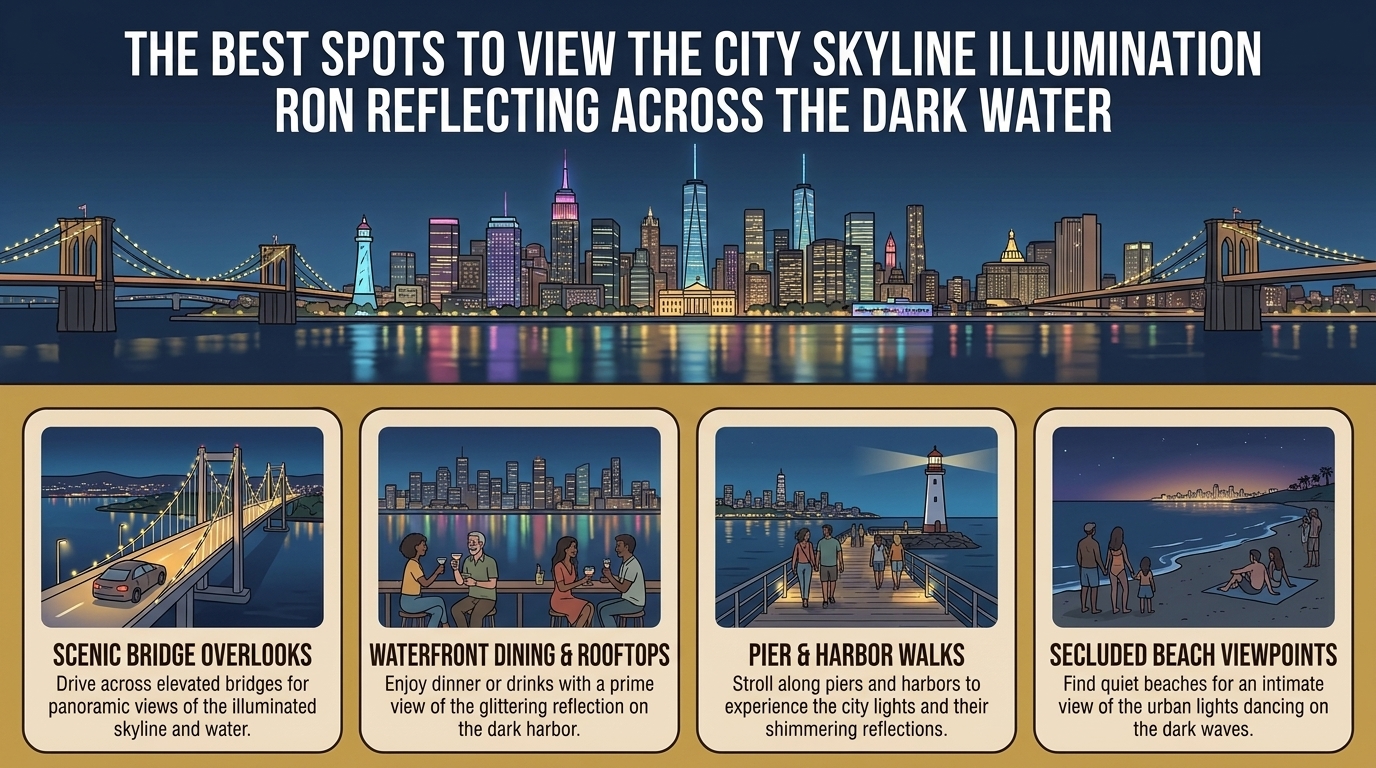
There is a profound, hypnotic transformation that occurs when day surrenders to night in a major metropolis. The frantic energy of concrete and steel softens, and the city reemerges as an intricate constellation of neon, amber, and electric-blue light. But a skyline viewed purely on land tells only half the story. The true magic happens when those glowing towers find their mirror image cast across a dark, receptive body of water—folding the towering architecture into a shimmering, liquid dreamscape.
Whether you are seeking a romantic evening escape, a meditative moment of solitude, or the ultimate vantage point for photography, finding the right waterfront perspective is essential.
From the historic harbor channels of New York and the glittering bays of San Francisco and coastal California, to the evergreen-framed waterways of Washington and the vibrant riverfronts of Texas, this comprehensive guide explores the absolute finest spots to witness city skylines brilliantly illuminated against dark water.
The Physics and Poetry of Water Reflections
What makes a skyline reflection so mesmerizing? Scientifically, water acts as a natural diffuser and low-pass filter, smoothing the harsh geometric edges of skyscrapers and converting point-sources of artificial light into vertical ribbons of glowing color. Psychologically, human beings are drawn to water boundaries (the liminal space where land meets liquid) because it offers an expansive visual field, lowering heart rates and triggering a deep sense of awe.
When framing your evening view, look for three critical elements:
- Distance: Standing directly beneath a skyscraper limits your perspective; you need enough open water space to capture the full vertical sweep of the towers.
- Surface Calm: Gentler tides, protected bays, or inland rivers provide clearer, mirror-like reflections compared to choppy, open ocean swells.
- Contrasting Architecture: A healthy mix of historic masonry and sleek modern glass creates varied light textures on the water’s surface.
Regional Panorama Guide: Where to Find the Best Water Reflections
Every region offers a distinct architectural personality when illuminated at night. Let’s explore the top environments across our key cultural hubs.
1. New York City: The Global Gold Standard of Illumination
New York’s iconic skyline—anchored by the Empire State Building, the Chrysler Building, and One World Trade Center—is arguably the most famous night view on earth.
- The Vibe: High-octane, dazzling, historic, and immense.
- Prime Water Mirror Settings: The East River waterfronts in Brooklyn (such as Brooklyn Bridge Park and Old Pier 1) offer legendary alignment where the glowing Manhattan towers frame historic suspension bridges, casting long, shimmering golden trails across the dark channel.
2. San Francisco & California: Bay Lights and Pacific Harbors
California’s coastal topography creates dramatic staging for night lights. In San Francisco, the rolling hills step down directly to the San Francisco Bay, allowing multi-tiered illumination to cascade down to the water.
- The Vibe: Atmospheric, coastal-chic, bridged by glowing spans, and often kissed by rolling evening fog.
- Prime Water Mirror Settings: The Embarcadero, Treasure Island, and waterfront piers provide unobstructed angles of the Transamerica Pyramid, downtown high-rises, and the Bay Bridge lights dancing across the dark Pacific tides. Southern California harbors offer similar magic from San Diego to Los Angeles coastal marinas.
3. Washington: Pacific Northwest Waterways and Puget Sound Glow
Washington’s urban centers—particularly Seattle—blend dramatic glass high-rises with deep maritime history framed by dark, reflective inlets.
- The Vibe: Moody, evergreen-scented, sophisticated, and serene.
- Prime Water Mirror Settings: Gas Works Park on Lake Union or the Seattle Waterfront along Elliott Bay offer breathtaking evening views where the Space Needle and downtown towers cast emerald and amber reflections over quiet northern waters.
4. Texas: Modern Skyline Growth Along Rivers and Lakes
Texas cities have undergone explosive architectural evolution, creating striking modern skylines that look incredible against southern night skies.
- The Vibe: Bold, dynamic, warm, and expansive.
- Prime Water Mirror Settings: Austin’s Lady Bird Lake (Town Lake) offers stunning downtown vantage points where modern glass towers reflect cleanly off calm river waters. Similarly, Houston features hidden urban bayou viewing angles where the downtown energy meets dark waterfront stillness.
Step-by-Step Guide: How to Capture and Enjoy the Ultimate Night View
Whether you are looking to snap a professional long-exposure photograph or simply savor a quiet evening with a thermos of coffee, follow this framework to make the most of your excursion:
- Arrive During “Blue Hour”: Do not wait for pitch-black night. The absolute best time to view and photograph city illuminations is during the blue hour—the 30 to 45 minutes immediately after sunset when the sky retains a deep, rich cobalt hue that balances out the bright artificial lights of the buildings.
- Seek Elevated Waterfront Promenades: Look for terraced parks, public piers, or riverside walking paths that sit just a few feet above water level. This slight elevation prevents foreground clutter and gives you an unobstructed reflection lane.
- Minimize Wind Interference: Windy nights ripple the water’s surface, breaking light reflections into abstract pixelated dust. On breezy evenings, seek out sheltered coves, river bends, or marina slip-walls where the water remains glassy.
- Pack Comfort Essentials: Night viewing near water gets cold quickly, even in warm climates like Texas or California, due to dropping marine or river temperatures. Always pack a wind-blocking jacket and a warm beverage.
- Practice Respectful Quiet: Waterfront evening spots are often peaceful sanctuaries for local residents and wildlife. Keep voices moderate and respect park closing hours.
10 Frequently Asked Questions (FAQs)
1. What is the exact best time of day to view skyline illumination on water?
The ideal window is blue hour—roughly 20 to 50 minutes after sunset. During this window, the natural ambient light in the sky matches the intensity of the building windows, preventing the skyline from looking like washed-out white blobs against a totally black background.
2. Why do some water reflections look like clean mirror images while others look smeared?
Clean, mirror-like reflections require glassy, undisturbed water. If a body of water experiences heavy boat traffic, strong tidal currents, or high winds, the surface ripples break up light rays, turning crisp architectural reflections into vertical smudges of color.
3. Do I need an expensive camera to take good photos of skyline reflections?
Not at all. Modern smartphones have exceptional low-light and “night mode” software that automatically takes multi-second exposures. To get the sharpest shot, rest your phone securely on a railing or use a compact travel tripod.
4. Are waterfront viewing spots safe to visit late at night?
Most major public parks, boardwalks, and managed promenades (like New York’s Brooklyn Bridge Park or San Francisco’s Embarcadero) are well-lit and heavily trafficked during evening hours. However, always stick to well-traveled paths and avoid isolated, unlit industrial docks after dark.
5. What are some of the most iconic spots in the US for water-reflection views?
Top locations include Brooklyn Bridge Park (looking at Manhattan, New York), Treasure Island (looking at San Francisco, California), Gas Works Park (looking at Seattle, Washington), and Ann and Roy Butler Hike-and-Bike Trail (looking at Austin, Texas).
6. How do I prevent camera glare when shooting through glass or near water?
If you are shooting from inside a building or a ferry window, press your lens hood directly against the glass to block interior reflections. When shooting outdoors near water, use a polarizing filter if using a DSLR to control water surface glare.
7. Can I view skyline reflections during foggy or misty weather?
Yes, and in fact, fog adds a dramatic cinematic quality! Low-hanging marine fog catches building lights and creates a glowing atmospheric halo above the skyline, though it may partially obscure the upper spires of the tallest towers.
8. Are boat cruises a good way to see skyline water reflections?
Evening dinner or harbor cruises (available in New York, San Francisco, and major port cities) offer some of the most dynamic, 360-degree floating perspectives of skyline reflections, as you glide across the water directly through the center of the light corridor.
9. Why do city skylines look different on weekdays versus weekends?
Many corporate high-rises turn off a large portion of their interior office lights late in the evening or on weekends. For the brightest, most fully illuminated skyline, Tuesday through Thursday evenings typically offer maximum office window lighting compared to quiet Sunday nights.
10. How can I find lesser-known, uncrowded reflection spots locally?
Open up a satellite map of your nearest city, locate rivers, bays, or lakes directly adjacent to the downtown commercial core, and look for public parks, pedestrian bridges, or university boat houses on the opposite bank.
Conclusion
There is a quiet majesty in watching a bustling city pause, light its fires, and cast its glowing reflection across the dark water. It reminds us that human creativity extends far beyond practical engineering—into the realm of pure art. Whether you are taking in the historic magnitude of New York, the coastal magic of San Francisco and California, the evergreen grace of Washington, or the vibrant modern energy of Texas, taking time to seek out these aquatic mirrors offers a restorative shift in perspective.
Step out this evening, find your patch of dark water, and watch the city come alive in a whole new light.
What is your favorite waterfront spot to watch the city lights shimmer at night? Drop a comment below and share your favorite local reflection views with our community!