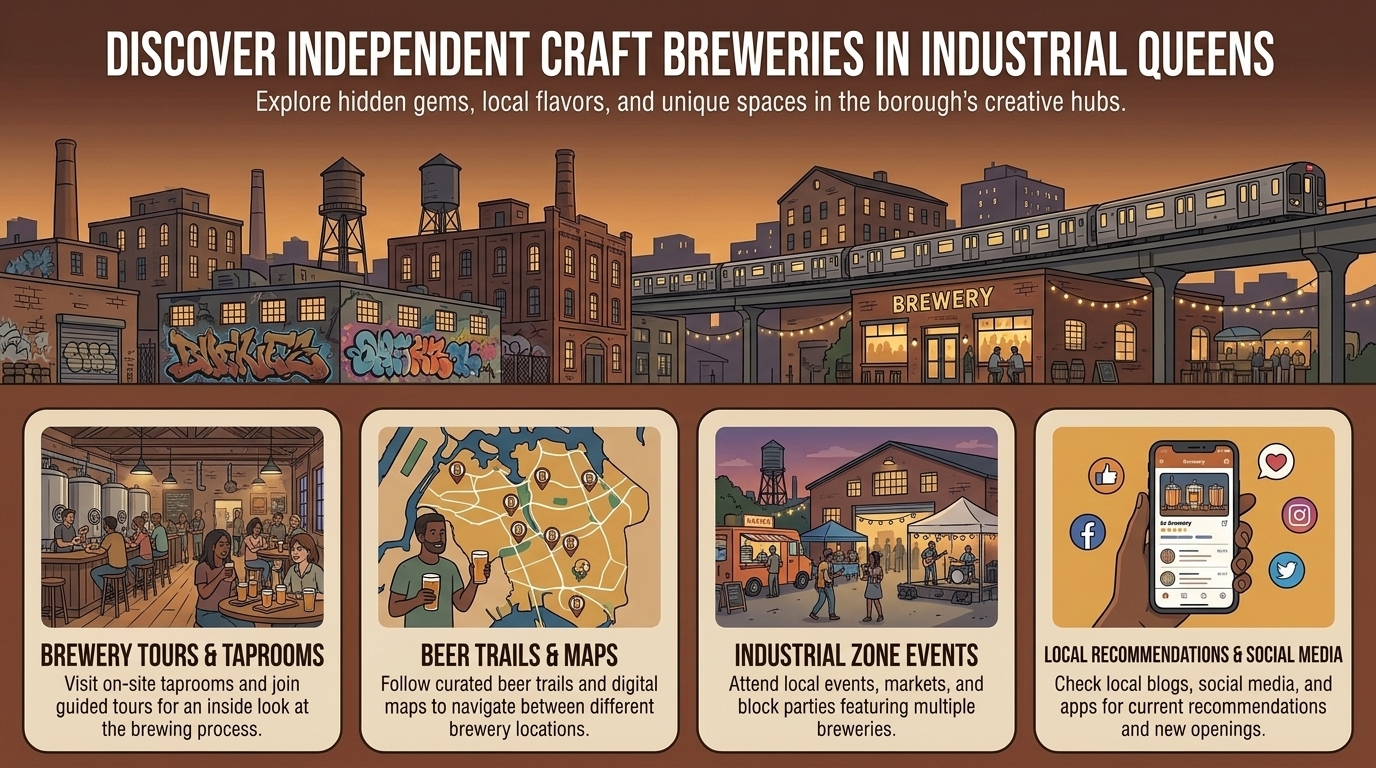
There is a distinct, industrial grit that defines the backstreets of Queens, New York. Long before craft beer became a cultural phenomenon, these sprawling zones—cemented by corrugated metal warehouses, loading docks, overhead freight rail lines, and auto-body shops—were built for manufacturing, shipping, and heavy labor.
Today, those very same utilitarian spaces have become the epicenter of an underground craft beer revolution. Hidden behind nondescript garage doors and beneath fading signage, independent brewers are utilizing raw, industrial footprints to build world-class taprooms, barrel-aging rooms, and experimental laboratories.
Whether you are a seasoned local beer hunter or an urban explorer looking to peel back the layers of New York’s most diverse borough, this master guide will teach you how to unearth, access, and deeply appreciate the independent craft breweries operating in the industrial heartlands of Queens.
The Industrial Allure: Why Breweries Thrive in Warehouses
At first glance, an active manufacturing district might seem like an unconventional place to sip a hazy IPA or a complex barrel-aged stout. Yet, for independent brewers, industrial zones offer unmatched structural advantages.
1. Space, Ceiling Height, and Structural Integrity
Commercial brewing requires immense physical space. Giant stainless steel fermenters, brite tanks, grain mills, and packaging lines demand high ceilings, heavy-load concrete floors, and wide-open square footage that standard retail storefronts simply cannot provide. Industrial warehouses in neighborhoods like Long Island City, Astoria, and Ridgewood provide the blank canvas brewers need to scale production.
2. Zoning and Raw Community Energy
Industrial zoning often allows for manufacturing operations that normal commercial corridors restrict. Over the last decade, forward-thinking urban zoning adjustments have paved the way for “production taprooms”—spaces where visitors can drink a pint feet away from the tanks where the liquid was fermented. Furthermore, these gritty backstreets offer an authentic, unpretentious atmosphere far removed from corporate nightlife districts.
Mapping the Craft Strongholds: Industrial Queens Neighborhoods
Queens is geographically massive and culturally mosaic. To successfully hunt for independent breweries, you need to focus on specific industrial pockets where the brewing scenes are concentrated.
1. Long Island City (LIC): The Waterfront Warehouse Vanguard
Long Island City is ground zero for Queens craft brewing. Bound by the East River and dominated by old manufacturing plants, rail yards, and converted warehouses, LIC features a dense concentration of pioneering taprooms.
- The Vibe: Sleek industrial-chic meets gritty maritime history, with skyline views peeking out between old factory rooftops.
- Key Industrial Players: Home to trail-blazing operations like Rockaway Brewing Company (operating out of a former carriage house/warehouse space), Big Alice Brewing (known for hyper-local experimental batches), LIC Beer Project, and Alewife Brewing.
2. Ridgewood & Maspeth: The Borderland Labs
Tucked along the Brooklyn-Queens border, neighborhoods like Ridgewood and Maspeth feature dense blocks of 20th-century brick industrial buildings, garment factories, and wood-working shops.
- The Vibe: Underground, fiercely independent, artsy, and deeply community-driven.
- Key Industrial Players: Epicenters like Evil Twin Brewing NYC (which operates a massive industrial production facility and outdoor space in Ridgewood) anchor a scene known for pushing experimental brewing boundaries.
3. Astoria & Greater Queens Pockets: Residential Meets Industrial
While parts of Astoria are heavily residential, its outer edges and industrial fringes near transit yards and shipping corridors house legendary brewing pioneers like SingleCut Beersmiths, crafting music-inspired masterpieces in unassuming manufacturing zones.
Step-by-Step Guide: How to Find Hidden Industrial Breweries
Finding breweries tucked deep inside active commercial parks requires a bit more savvy than simply typing “bars near me” into a map. Use this step-by-step discovery framework:
- Look Past the Facade: Industrial breweries rarely look like traditional pubs. When navigating an industrial park or warehouse street, look for subtle clues: sandwich board signs on the sidewalk, string lights draped over a loading bay, open garage doors revealing picnic tables, or groups of people carrying cardboard crowlers.
- Consult Independent Craft Mapping Apps: Utilize hyper-local directories like BeerMenus, Untappd, or regional craft beer trails to track active New York producers.
- Follow Local Collabs and Collectives: Independent brewers love collaborating. If you follow one Queens brewery on social media, look at who they tag in their brew-day stories. Breweries constantly spotlight their neighborhood peers.
- Talk to Local Bottle Shop Owners: Independent beer retailers and bottle shops in NYC are the ultimate gatekeepers of local knowledge. Walk in, buy a single can, and ask the staff: “What new production taprooms just opened up in the industrial stretch of Queens?”
- Check Operating Hours Closely: Unlike commercial bars open seven days a week until late, industrial production taprooms often have unique operating hours—sometimes focusing heavily on Thursday-through-Sunday taproom schedules due to active brewing days during the early week.
Etiquette and Insider Tips for Visiting Industrial Taprooms
Stepping into an active industrial brewery taproom is a unique cultural experience. Keep these tips in mind to navigate the space like a seasoned local:
- Respect the Machinery: You are drinking inside a functional factory. Obey all safety chains, caution tape, and signs marked “Authorized Personnel Only.” Do not touch tanks or hoses.
- Embrace Food Trucks and BYO Policies: Many industrial taprooms do not operate commercial kitchens. Instead, they partner with rotating local food trucks or allow patrons to order delivery straight to their picnic tables. Always check their food policy before you arrive hungry!
- Bring Cash and Digital Options: While most taprooms accept cards, having a few digital payment methods or cash ready speeds up service during peak Saturday afternoon rushes.
- Buy Cans To-Go: Support independent creators directly by purchasing fresh 4-packs or crowlers straight from the source. You will often find taproom-exclusive releases that never make it to traditional retail shelves.
10 Frequently Asked Questions (FAQs)
1. What is an “industrial brewery taproom”?
An industrial brewery taproom is a tasting room built directly inside or adjacent to a working production brewery located in manufacturing or industrial-zoned districts, allowing visitors to drink fresh beer surrounded by fermentation tanks and warehouse architecture.
2. Are industrial breweries in Queens easy to access via public transit?
Most are accessible via the NYC subway system (such as the N/W/7 trains in Long Island City or the M/L lines near Ridgewood), though they may require a 5-to-15-minute walk through industrial blocks from the station.
3. Do industrial taprooms serve food, or should I eat beforehand?
Many industrial taprooms do not have full restaurant kitchens due to zoning and space limits. They frequently rely on rotating food trucks parked outside or encourage customers to bring in or order local food delivery.
4. Can I bring children and dogs to Queens industrial taprooms?
Policies vary by location. Many industrial taprooms with large outdoor yards or spacious indoor halls are family-friendly and dog-friendly during daytime hours, though some shift to 21+ policies during late-night weekend hours. Always check ahead.
5. What are some famous craft breweries located in Queens?
Top names include Finback Brewery, SingleCut Beersmiths, Rockaway Brewing Company, Big Alice Brewing, Alewife Brewing, and Evil Twin Brewing NYC.
6. Do I need to make reservations to visit an industrial taproom?
For regular weekend taproom visits, reservations are rarely needed—seating is typically first-come, first-served. However, reservations may be required for special can releases, private tours, or ticketed tasting events.
7. What is the difference between a brewpub and an industrial production brewery?
A brewpub is primarily a restaurant that happens to brew its own beer on-site for direct service. An industrial production brewery focuses heavily on bulk commercial brewing and distribution, with a taproom attached as a secondary retail and community space.
8. Are industrial brewery tours available in Queens?
Some independent breweries offer guided or self-guided tours detailing their grain-to-glass process, though many modern taprooms are designed so you can simply view the active production floor directly from your table.
9. Why do craft brewers prefer industrial warehouses over fancy storefronts?
Warehouses provide essential high ceilings, heavy-duty concrete flooring capable of supporting massive liquid-filled tanks, industrial loading docks for ingredient freight delivery, and lower square-foot overhead costs.
10. How can I stay updated on new brewery openings in Queens?
Follow local New York craft beer blogs, check regional pages on craft beer forums, and subscribe to newsletters from NYC-based independent brewing associations.
Conclusion
Uncovering independent craft breweries hidden within the industrial backstreets of Queens is an adventure that combines urban exploration with culinary discovery. By stepping off the beaten path and venturing into warehouse districts in Long Island City, Ridgewood, and beyond, you support passionate creators who are keeping New York’s independent manufacturing spirit alive—one pint at a time.
Lace up your walking shoes, explore the industrial grid, and discover the incredible brews waiting behind the next roll-up garage door!
What is your favorite industrial craft brewery or hidden taproom gem in Queens? Drop a comment below and share your local beer recommendations with our community!