Metropolitan life is defined by concrete, steel, glass, and the perpetual hum of traffic. Whether you live amid the towering high-rises of Manhattan, the dense Victorian-lined corridors of San Francisco, or the fast-growing urban cores of Washington and Seattle, the urban landscape can occasionally feel suffocatingly gray.
Yet, tucked directly between monolithic residential towers, brick apartment complexes, and bustling commercial corridors lie secret, verdant sanctuaries: community gardens.
These patches of cultivated earth are not accidental. They are hard-fought grassroots victories, ecosystems of resilience, and quiet oases hidden in plain sight. Finding them requires more than a casual glance at a map; it requires knowing where to look, how urban spaces are organized, and how to plug into localized neighborhood networks.
1. The Urban Ecology of Hidden Pocket Greenery
To find community gardens wedged between large buildings, you first need to understand why and how they exist in high-density environments.
- The Interstitial Spaces: City planners and developers frequently leave odd, irregularly shaped parcels behind during massive residential buildouts—abandoned lots, utility easements, or zoning buffer zones. Local community coalitions weaponize these leftover footprints to plant flora.
- The Shadow Ecosystems: Gardens nestled between high-rises face unique microclimates. They balance intense vertical wind tunnels with strategic pockets of direct sunlight. The gardeners who tend them are master botanists who understand how to cultivate heirloom tomatoes and hydrangeas despite narrow windows of sunlight.
- The History of Grassroots Activism: In cities like New York and San Francisco, many hidden community gardens were born out of 1970s and 80s urban reclamation movements, where neighbors cleared trash-filled vacant lots to create safe communal spaces.
2. Top Tips for Locating Hidden Neighborhood Oases
You won’t always find these secret spaces by searching major tourism maps. Discovering them requires a blend of digital reconnaissance and old-fashioned urban exploration.
+-----------------------------------+---------------------------------------------------+
| Discovery Method                  | Actionable Focus                                  |
+-----------------------------------+---------------------------------------------------+
| Satellite Map Scanning            | Look for irregular green squares within gray blocks.|
| Alleyway and Sidewalk Scouting    | Check narrow dead-end passages and side gates.     |
| Municipal Open Space Registries   | Cross-reference city parks and recreation portals.|
| Local Bulletin Boards             | Inspect cafe flyers and library corkboards.       |
+-----------------------------------+---------------------------------------------------+
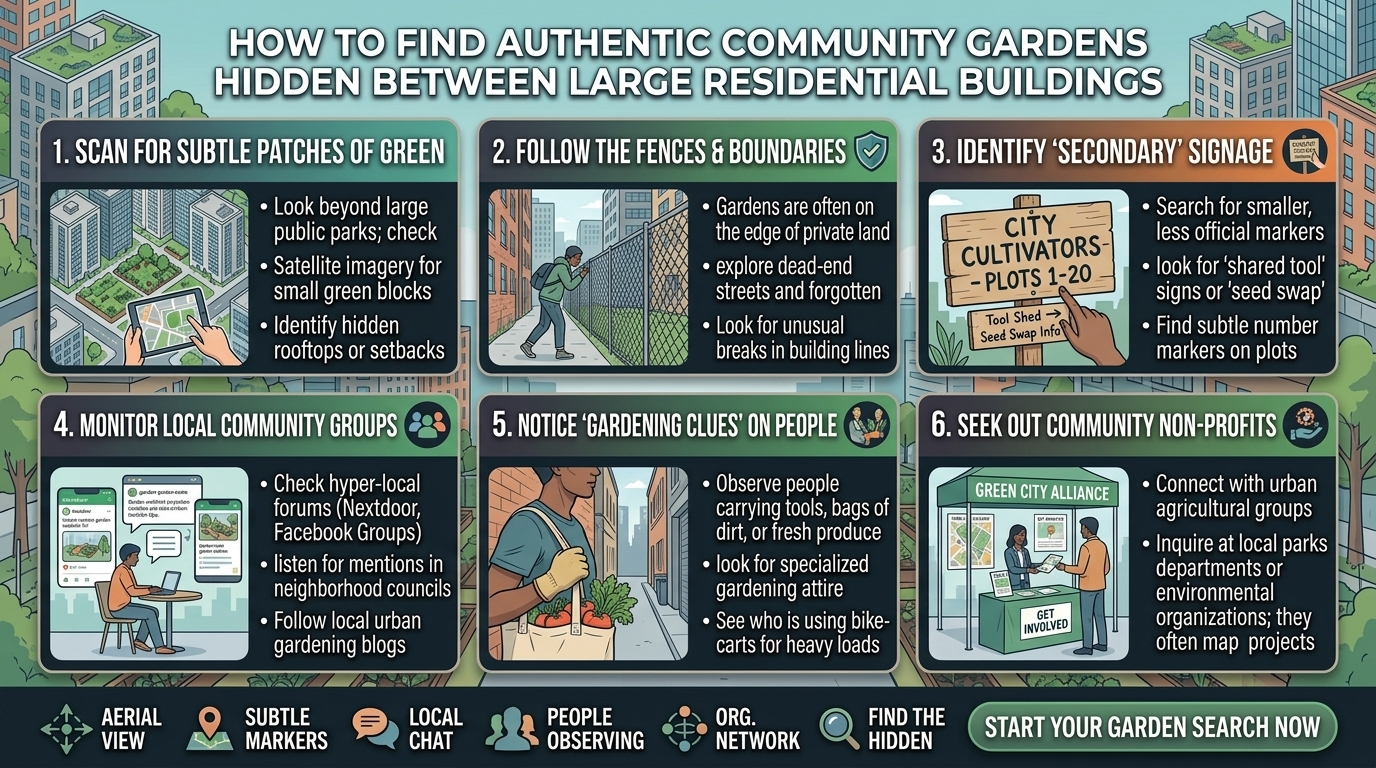
- Play Satellite Detective: Open up satellite map views of dense residential neighborhoods. Scan the interiors of large city blocks—the areas hidden behind the street-facing facades of apartment buildings. If you spot an irregular splash of green canopy surrounded by concrete courtyards, you have likely found a hidden garden courtyard or community plot.
- Walk the Alleys and Side Streets: Many of the best pocket gardens do not front major avenues. They are tucked down narrow side streets, pedestrian-only alleyways, or behind discreet wrought-iron gates bearing unassuming padlocks and hand-painted signs.
- Consult Municipal Green Inventories: City park departments maintain digital maps of registered community spaces. For instance, municipal portals list dozens of hidden spaces managed by neighborhood coalitions.
3. The Cultural and Social Fabric of Hidden Gardens
A community garden is much more than a collection of dirt plots; it is the beating heart of local neighborhood micro-cultures.
- Intergenerational Connection: These spaces bring together long-term neighborhood elders who share generational growing tips with newcomers, students, and young professionals.
- Biodiversity Havens: Amid miles of concrete, these micro-gardens serve as critical rest stops for migratory birds, honeybees, and butterflies, preserving localized urban biodiversity.
- Shared Stewardship: Most hidden gardens operate on strict volunteer models. Visitors will often find open-gate hours where neighbors gather for weeding, composting, and community potlucks.
4. Frequently Asked Questions (FAQ)
1. Are hidden community gardens open to the general public?
Many community gardens feature designated public hours where anyone can walk in, sit on a bench, and enjoy the space. However, individual planting plots are usually reserved for registered members through a waitlist.
2. How can I find community gardens tucked between private buildings?
Use satellite mapping tools to look for interior courtyards with green canopies, check municipal park and recreation department registries, or look for small signage posted near pedestrian alleyways.
3. Can anyone apply for a plot in a city community garden?
Generally, yes. Most municipal or non-profit-managed gardens require that you be a resident of the city, and you may need to sign up for a waitlist that can range from a few months to a couple of years due to high demand.
4. Do I need to pay to join a community garden?
Most gardens charge a very modest annual membership fee (often between $15 and $50). These funds go directly toward purchasing shared tools, soil amendments, seeds, and water access infrastructure.
5. What are “open-gate” hours and why do they matter?
Open-gate hours are scheduled times when the garden’s volunteers unlock the main gates to welcome the public. Checking these hours is the best way to legally explore a locked courtyard garden.
6. Are these gardens safe and organic?
Virtually all community gardens enforce strict organic gardening practices, meaning synthetic pesticides and chemical fertilizers are banned to protect the urban soil health and local pollinators.
7. How do gardens survive when surrounded by massive skyscrapers?
Gardeners utilize specialized container planting, raised beds, vertical trellises, and shade-tolerant plant species to maximize the limited sunlight filtering down between tall buildings.
8. Can I volunteer at a community garden even if I don’t have a plot?
Absolutely. Many communal gardens rely heavily on drop-in volunteers for general maintenance, composting projects, and seasonal cleanups, with no long-term commitment required.
9. What should I do if I find an abandoned or locked garden space?
Do not attempt to jump fences or trespass. Instead, look for contact information or a governing organization name on the entrance signage to inquire about its current operating status.
10. How do community gardens impact local neighborhoods?
Research shows that neighborhood community gardens improve mental well-being, lower localized heat-island effects, manage stormwater runoff, and foster strong social bonds among apartment dwellers.
Conclusion
Finding an authentic community garden hidden between towering residential buildings feels like discovering a secret level in a familiar city. These living landmarks remind us that nature stubbornly and beautifully persists, even in the densest urban environments. By keeping your eyes open, respecting local guidelines, and exploring the interstitial spaces of your city, you can tap into a peaceful, green counter-culture thriving right outside your door.