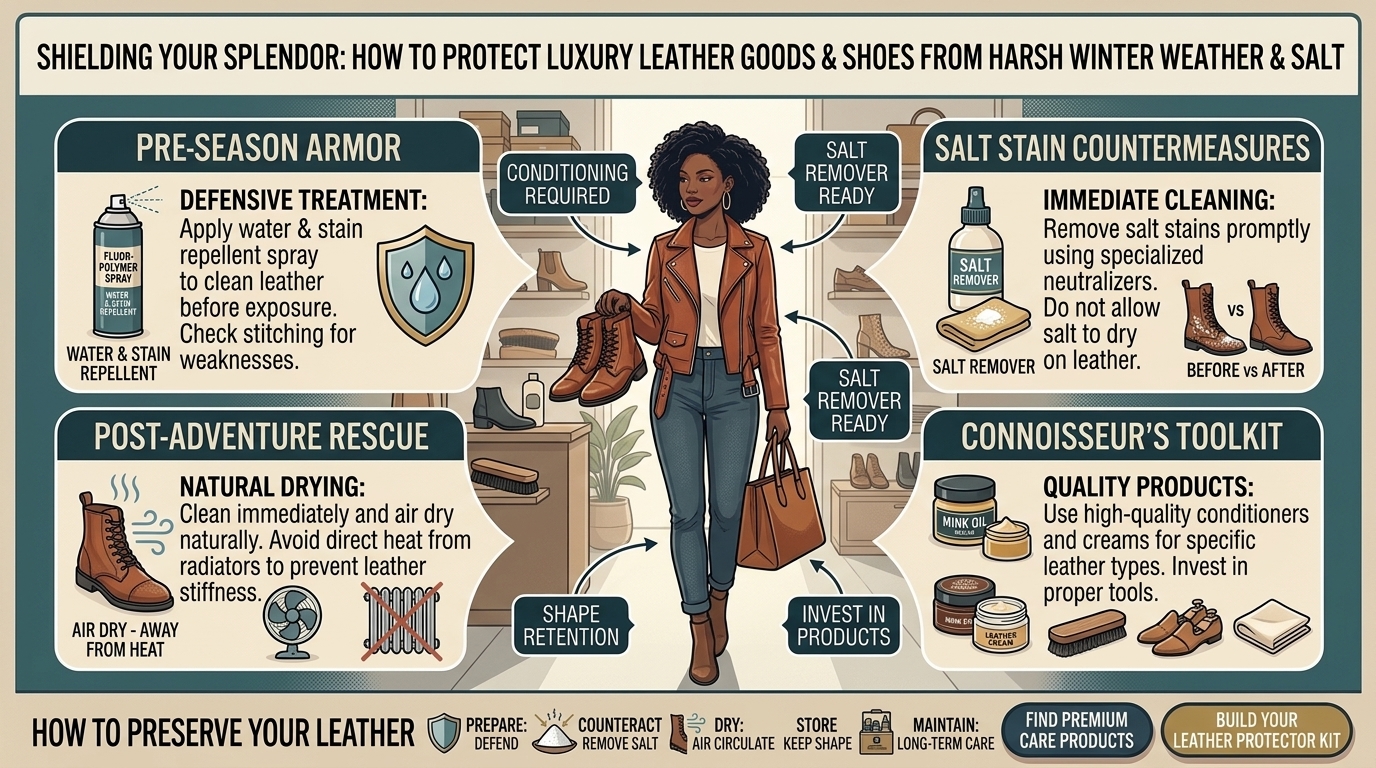
How to Protect Your Luxury Leather Goods and Shoes from Harsh Winter Weather Salt
Welcome back to nyattitude.com, your definitive digital authority on luxury lifestyle, high-end garment preservation, and metropolitan style. Whether you are navigating the slush-piled concrete avenues of Manhattan and Brooklyn, stepping through the brisk winter breezes of San Francisco and Washington, or traveling across sudden cold snaps in Texas and California, winter brings an unspoken hazard to your wardrobe.
For the true connoisseur of luxury fashion, few sights are more gut-wrenching than looking down at a pristine pair of full-grain calfskin dress shoes, designer leather boots, or a high-end structured tote, only to find them marred by ugly, crusty white rings. That is winter road salt: a silent, aggressive chemical agent designed to melt ice, but engineered by physics to ruthlessly dehydrate, crack, and permanently ruin fine leather goods.
Investing in luxury leather is an art. Protecting it from winter salt is the science required to keep that investment alive. Let’s break down the ultimate master guide on preventing salt damage, treating existing stains safely, and preserving your luxury collection through the harshest months of the year.
Phase 1: Understanding the Enemy — What Winter Salt Does to Luxury Leather
To protect your wardrobe, you first need to understand why road salt is so destructive. When municipal authorities treat streets and sidewalks for snow and ice, they use a potent mix of sodium chloride, calcium chloride, and magnesium grit.
When this chemical sludge splashes onto your designer shoes or gets transferred onto the bottom panels of your luxury leather handbag, three catastrophic things happen:
- Severe Dehydration: Leather is an organic, skin-like material that relies on natural tanning oils and moisture to remain supple. Salt is a powerful desiccant—it aggressively sucks every drop of moisture out of the hide.
- Fiber Breakdown and Cracking: As the salt dries, it forms rigid, expanding crystals inside the microscopic pores of the leather. These crystals sever the delicate protein fibers from the inside out, leading to permanent structural cracking and grain peeling.
- The Alkaline Tide Mark: The white crust you see on the surface isn’t just dirt; it is an alkaline deposit that alters the leather’s pH balance, staining the pigment and destroying the finish.
Phase 2: Proactive Defense — How to Prepare Leather Before Winter Hits
The golden rule of luxury leather care is simple: Prevention is infinitely easier than restoration. Before the first winter freeze hits your city, establish a defensive preparation routine.
1. The Pre-Season Conditioning Barrier
Just as you apply heavy moisturizers to your skin before stepping out into freezing wind, your leather needs a deep conditioning shield.
- Apply a premium, high-grade leather conditioner or natural beeswax-based balm.
- Massage it thoroughly into the grain, seams, and welt lines where salt and moisture love to pool.
- Allow it to absorb overnight, then buff it out. This creates a flexible, nourished barrier that prevents salt water from penetrating the core fibers instantly.
2. Apply a Dedicated Water-Repellent and Anti-Salt Spray
Once conditioned, apply a breathable, silicone-free water and stain-repellent spray specifically formulated for high-end smooth leather or suede. This creates an invisible hydrophobic shield that causes winter slush and salted water to bead up and roll right off the surface rather than soaking in.
3. Rotate Your Footwear and Bags
Never wear the same pair of leather boots two days in a row during winter. Leather needs a minimum of 24 to 48 hours to fully dry out and breathe after exposure to ambient dampness. Insert solid cedar shoe trees immediately after taking your shoes off to absorb internal moisture and maintain the shoe’s structural integrity.
Phase 3: Emergency First Aid — How to Safely Remove Salt Stains
If you failed to prep your items or got caught in a brutal blizzard slush-puddle, do not panic. Avoid the cardinal sin of luxury care: Do not scrub aggressively with hot water or soap, and never place wet leather near a radiator, heater, or direct sunlight. Rapid artificial heat will bake the salt into the leather and instantly crack the hide.
Follow this step-by-step restoration method used by professional leather artisans:
Step 1: Gentle Dry Brushing
Allow your shoes or bag to dry completely at room temperature with cedar trees or paper stuffing inside. Once dry, take a soft-bristled horsehair shoe brush and gently sweep away any loose, crystallized surface salt. Do not scrub hard.
Step 2: The Neutralizing Vinegar Solution
Road salt is heavily alkaline, meaning you need a mild acid to safely neutralize it without harming the leather’s finish.
- Mix equal parts distilled white vinegar and cool water in a small bowl (a 50:50 ratio).
- Lightly dampen a clean, lint-free microfiber cloth with the solution. It should be moist, not dripping wet.
- Gently dab and wipe along the salt lines. Start from the inside of the stain and work outward to prevent creating hard tide rings. The mild acidity of the vinegar will instantly dissolve the salt crystals.
Step 3: The Rinse and Air Dry
Take a second clean cloth dampened with plain cold water and wipe down the treated area to remove any residual vinegar. Leave the item to air-dry naturally at room temperature for at least 30 to 60 minutes.
Step 4: Deep Conditioning and Polishing
Because vinegar and salt strip the leather of its natural oils, your shoes or bag will look dry and dull. Immediately follow up by applying a rich leather conditioning cream. Once absorbed, finish with a matching colored shoe cream or wax polish to restore the luxury sheen and seal the grain.
Comparative Matrix: How to Treat Different Leather Types in Winter
| Leather Finish | Primary Vulnerability | Salt Stain Removal Method | Recommended Protection Product |
| Smooth Calfskin / Full-Grain | Visible white crusting and dry cracking | 50/50 White Vinegar & Water solution | Beeswax balm & nourishing cream |
| Suede & Nubuck | Highly absorbent; easily water-stained | Suede eraser & specialized salt remover foam | Dedicated silicone-free suede protector spray |
| Pebble / Scotch Grain | Salt traps deeply inside textured grooves | Vinegar solution applied with a soft horsehair brush | Rich liquid or soft cream conditioner |
| Patent Leather | Surface cracking if salt etches the glossy coat | Damp microfiber cloth with mild dish soap drop | Patent leather cleaner & gloss restorer |
Pro-Tips for Metropolitan Luxury Owners
- The Commuter Bag Hack: If you carry a luxury leather tote (like a designer work bag) through snowy city streets, never place it directly on the floor of a taxi, subway car, or cafe bench where winter salt residue accumulates. Keep a lightweight nylon dust bag in your tote to slip the bag into during transit.
- Invest in Overshoes (Galoshes): If you must walk through heavy street salt in cities like New York or Washington, slip a pair of sleek rubber overshoes (like SWIMS) over your luxury dress shoes during your commute. Slip them off once you reach your climate-controlled destination.
- Inspect the Welts Regularly: Salt loves to accumulate in the welt stitching where the upper leather meets the sole. Take an old, clean toothbrush dipped lightly in your vinegar solution to clear out hidden salt tracks along the seams.
Frequently Asked Questions (FAQ)
1. Can winter salt permanently ruin luxury leather?
Yes. If left untreated for weeks, salt crystals absorb all internal moisture, break down the structural protein fibers, and cause permanent cracking, discoloration, and leather rot.
2. Is regular tap water enough to wash away salt stains?
Tap water alone will remove surface salt, but it often leaves behind hard mineral rings and does nothing to neutralize the alkaline chemical composition of de-icing road salt. A 50/50 white vinegar and water mix is chemically required.
3. Can I use apple cider vinegar or malt vinegar instead of white vinegar?
No! Always use clear, distilled white vinegar. Darker vinegars like malt or balsamic contain sugars and pigments that will permanently stain and discolor light or luxury leather finishes.
4. What should I do if salt stains appear on my designer suede boots?
Suede requires a completely different approach. Never use liquid vinegar on suede. Instead, let the boots dry, use a specialized suede eraser to buff out the crust, and apply a dedicated suede salt-stain remover foam.
5. Why do my leather shoes feel stiff after getting exposed to slush?
Stiffness is a direct sign that the salt has stripped the natural tanning oils from the hide. You must condition the leather immediately after cleaning to restore its suppleness.
6. Can I use a hair dryer to speed up the drying process?
Never. Applying direct heat from a hair dryer, space heater, or radiator will shock the wet leather, causing it to warp, shrink, and crack irreversibly. Always let leather dry naturally at room temperature.
7. How often should I condition my leather shoes during winter?
Under heavy winter conditions with frequent exposure to snow and salt, you should clean and condition your luxury leather shoes every 3 to 4 weeks to maintain protection.
8. Does leather polish protect against salt?
Shoe polish provides a minor cosmetic barrier, but it is primarily designed for color and shine. You must use a true wax-based balm or waterproofing cream to create a barrier against moisture and salt.
9. What are cedar shoe trees, and why are they necessary?
Cedar shoe trees absorb internal sweat and moisture overnight while keeping the shoe’s original form stretched out, preventing salt-induced warping and creases from setting permanently.
10. Where can I find more luxury care guides and metropolitan lifestyle tips?
Keep your browser bookmarked right here at nyattitude.com for daily dispatches on luxury maintenance, style longevity, and urban living advice!
Conclusion
Winter weather doesn’t have to spell disaster for your prized luxury leather goods and shoes. By moving past passive wear and adopting a disciplined routine of pre-season conditioning, immediate post-exposure first aid with a vinegar neutralizing rinse, and proper storage using cedar trees, your investment pieces will survive the slushiest urban commutes unscathed. Protect your wardrobe with intention, step out with confidence, and maintain your signature metropolitan attitude all winter long.
What luxury care guide or metropolitan style topic should nyattitude.com explore next? Let us know your thoughts in the comments below!