Where to Find High-End Thrift Stores Carrying Designer Clothing Items at Lower Prices
Welcome back to nyattitude.com, your definitive digital guide to luxury lifestyle curation, smart consumerism, and metropolitan style. If you love the idea of wearing pristine Prada wool coats, Chanel structured jackets, Celine leather boots, and Rick Owens avant-garde denim, but you refuse to pay eye-watering retail markups, you are part of a massive style movement.
The smartest dressers across the country—from the bustling high-fashion avenues of New York and San Francisco to the trendsetting corridors of Los Angeles, Seattle, and Austin—know that true luxury is not about buying retail. It is about the hunt. High-end consignment, luxury resale, and curated designer thrift stores have entirely transformed how we build our wardrobes.
If you are hunting for where to find genuine high-end thrift stores and luxury consignment boutiques carrying premier designer clothing items at a fraction of their original cost, this comprehensive master guide maps out the ultimate destinations, insider tips, and strategic hacks.
Phase 1: High-End Thrift vs. Luxury Consignment (Knowing the Difference)
Before you map out your shopping route, it is vital to understand the structural ecosystem of secondhand designer shopping:
- Traditional Charity Thrift Stores: Stores run by non-profits where items are donated in bulk. Finding true designer pieces here requires immense patience, luck, and frequent digging, but prices are often pennies on the dollar.
- Curated Luxury Consignment Boutiques: Physical storefronts that hand-select high-end garments directly from private closets, stylists, and celebrities. Items are authenticated, dry-cleaned, and organized by brand or size, offering a boutique retail experience at 40% to 80% off retail prices.
- Omnichannel Resale Giants: Digital-first and hybrid platforms that operate massive physical authentication hubs and storefronts, offering millions of verified designer items with foolproof consumer guarantees.
Phase 2: Top Metropolitan Hotspots for Designer Thrift & Consignment
Because our style community spans major cultural and fashion hubs, the gold standard for designer bargains varies depending on where you are hunting:
1. New York City (Manhattan & Brooklyn)
- The Vibe: High-velocity luxury turnover from stylists, editors, and industry insiders.
- Where to Go: Head to the Lower East Side and East Village to explore outposts like 2nd STREET (famous for extensive racks of Japanese luxury designers and streetwear) and Tokio7. For hyper-curated high-end pieces, cross the river to Brooklyn’s upscale consignment boutiques along Atlantic Avenue and Williamsburg.
- What to Find: Runway samples, contemporary New York designer labels (Proenza Schouler, Khaite, The Row), and archival European luxury.
2. San Francisco & Northern California
- The Vibe: Tech-executive wealth turnover, sustainable luxury, and timeless European designer houses.
- Where to Go: Explore the Mission District and Pacific Heights for institutions like Sui Generis Designer Consignment (famed for massive men’s and women’s designer inventories including Hermès, Chanel, and Prada) and Cris Consignment, a fixture offering contemporary design at accessible prices for nearly 40 years.
- What to Find: Pristine outerwear, Italian leather goods, and high-end tailoring from corporate leaders looking to refresh their capsule wardrobes.
3. Los Angeles & Southern California
- The Vibe: Red-carpet excess, celebrity closet clear-outs, and cutting-edge streetwear.
- Where to Go: Melrose Avenue, the Arts District, and West Hollywood house legendary resale spaces where celebrity stylists offload designer wardrobe samples after single wear cycles.
- What to Find: One-of-a-kind designer gowns, luxury denim, rare vintage Gucci, and high-end accessories.
4. Texas & Washington (Austin & Seattle)
- The Vibe: Eclectic vintage meets modern slow-fashion wealth and rugged heritage luxury.
- Where to Go: Target upscale neighborhood maker markets and independent consignment co-ops in Austin’s South Congress district or Seattle’s boutique shopping corridors.
- What to Find: Designer leather goods, artisanal silver, and heavy wool outerwear mixed with premium everyday designer basics.
Comparative Matrix: Where to Shop for Designer Bargains
| Shopping Avenue | Pricing Scale | Authentication Guarantee | Inventory Curation | Best For |
| Boutique Consignment Stores | Moderate to High ($$) | High (Hand-inspected by staff) | Impeccable; organized by brand/size | Designer clothing, tailored suits, shoes |
| High-End Thrift / Charity Shops | Low ($) | Variable (Buyer beware) | Chaotic; requires heavy digging | Unexpected vintage gems, casual wear |
| Hybrid Omnichannel Retailers | Moderate to Low ($$) | Absolute (Professional digital/physical check) | Massive searchable database | Specific brand bags, shoes, rare runway pieces |
Phase 3: Insider Pro-Tips for Scoring Designer Items at Rock-Bottom Prices
Finding luxury clothing at deep discounts is an art form. Use these field-tested strategies to maximize your success:
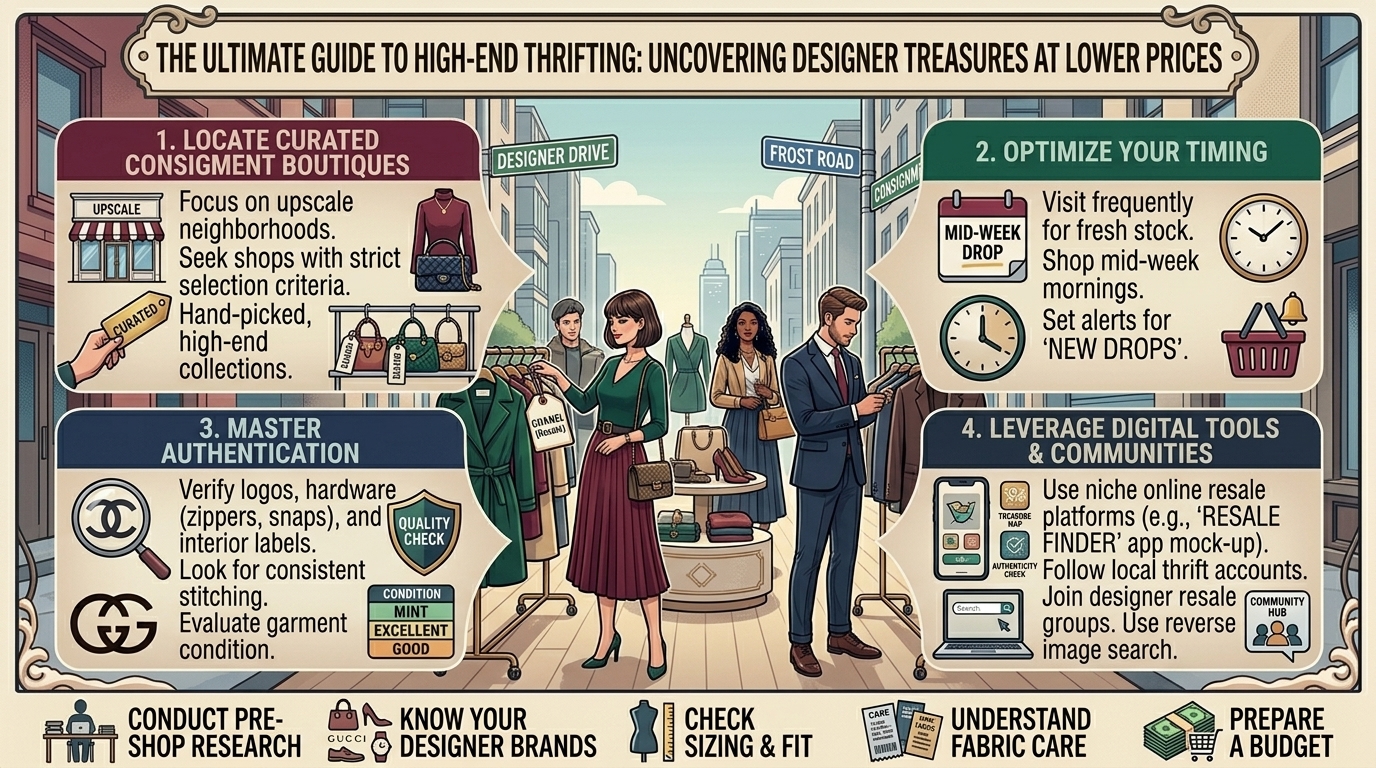
- Learn the Markdown Calendars: High-end consignment boutiques operate on strict aging schedules. Items that do not sell within 30, 60, or 90 days are systematically marked down by 20% to 50%, or donated. Ask store associates when their markdown cycles occur.
- Inspect the Seams and Hardware Closely: When buying luxury items secondhand, check zipper teeth (look for YKK or branded Riri/Lampo zippers), check lining integrity, and examine stitching symmetry. Counterfeits often fail on minor hardware details.
- Shop Off-Season: Buy your heavy winter cashmere coats and wool blazers in July and August when demand is low. Conversely, shop for luxury silk slip dresses and designer swimwear in January. Consignment stores slash prices to clear floor space.
- Befriend the Store Staff: Consignors drop off new luxury items daily. If you build a rapport with local boutique owners or floor associates, they will often text you when a fresh batch from a high-profile client hits the back room before it even makes it to the sales floor.
Frequently Asked Questions (FAQ)
1. How can I ensure a designer clothing item is authentic when thrift shopping?
Check internal brand tags, font consistency, fabric composition labels, and serial numbers or hologram stickers (common in luxury houses like Chanel and Louis Vuitton). When in doubt, utilize digital authentication apps or bring the item to a trusted local luxury consignment expert.
2. Why are high-end thrift items so much cheaper than retail?
Clothing is a depreciating asset. Once an item leaves a primary retail boutique, its market value drops instantly. Consignors price items to sell quickly based on current market demand, seasonal trends, and brand retention rates.
3. What designer brands hold their resale value the best?
Classic heritage houses like Hermès, Chanel, Louis Vuitton, The Row, Prada, and Celine consistently retain high resale value because of their timeless designs and strict quality control.
4. Do physical thrift stores clean designer clothes before selling them?
Most reputable high-end consignment and luxury thrift boutiques require consignors to bring items in professionally dry-cleaned condition, or the store cleans them in-house before placing them on the sales floor.
5. What is the best day of the week to visit luxury consignment stores?
Mid-week (Tuesday or Wednesday) is ideal. Weekend crowds pick over the best weekend drops, whereas mid-week restocks offer a calmer shopping experience and fresh inventory.
6. Can I negotiate prices at high-end consignment shops?
Unlike traditional thrift stores where prices are fixed, some independent consignment boutiques are open to slight negotiation—especially if an item has been sitting on the rack for over 60 days or has minor flaws.
7. Are online designer resale platforms better than physical thrift stores?
Online platforms offer massive searchable inventories, but physical thrift and consignment stores allow you to feel the fabric weight, inspect the stitching in natural light, and score immediate markdown clearance deals.
8. How do I know my correct size in European designer brands?
European designer sizing (Italian or French) runs significantly smaller than standard US sizing. A designer Italian size 42 typically corresponds to a US size 6. Always check brand-specific size charts or try items on in-store.
9. What should I do if a luxury garment needs minor tailoring?
Factor tailoring costs into your purchase! Buying a $1,500 designer blazer for $200 leaves plenty of room in your budget to take it to a professional tailor, ensuring it fits your exact proportions like a custom-made piece.
10. Where can I find more designer shopping guides and style advice?
Keep your browser bookmarked right here at nyattitude.com for ongoing dispatches on luxury resale, metropolitan style secrets, and smart urban shopping!
Conclusion
Building a high-end designer wardrobe does not require draining your savings account or paying exploitative retail markups. By exploring curated consignment hubs in fashion-forward cities like New York and San Francisco, understanding markdown cycles, and mastering the art of the hunt, you can secure extraordinary luxury clothing items at a fraction of their original cost. Shop with intention, embrace the thrill of the second-hand treasure hunt, and wear your luxury finds with absolute confidence.
What shopping guide or metropolitan style topic should nyattitude.com explore next? Drop your thoughts in the comments below!