There is a distinct, grounding ritual to holding a physical piece of music history in your hands. In an era dominated by hyper-compressed digital streaming algorithms, invisible cloud libraries, and endless algorithmic playlists, the deliberate act of hunting for vinyl offers a profound sensory anchor.
Whether you are a seasoned crate-digger who has spent decades refining your collection or a newcomer inspired by the warm, analog crackle of a vintage pressing, independent record stores are cultural sanctuaries. Across major cultural hubs like New York City, San Francisco, Seattle, and Austin, independent record shops serve as community living rooms, local archives, and treasure troves for rare vintage collections.
If you are looking to escape sterile corporate shopping malls and step into the authentic underworld of independent music curation, this comprehensive guide outlines the absolute best spots to find independent vinyl record stores with rare vintage collections, along with expert tips on grading, digging, and preserving your audio finds.
The Philosophy of Crate-Digging: Why Independent Shops Matter
Corporate mega-retailers and big-box electronics chains treat vinyl records like trendy lifestyle accessories, stocking identical stacks of modern pop reissues wrapped in shrink-wrap. Independent record shops operate under an entirely different philosophy.
- Curatorial Autonomy: Independent stores are typically owned and operated by obsessive music historians, former DJs, and lifelong collectors. Their inventory reflects personal passion rather than corporate distribution contracts.
- The Thrill of the Hunt: True vintage vinyl shopping is an archaeological endeavor. Sifting through unlabeled cardboard boxes, checking matrix numbers, and discovering a rare 1970s Japanese pressing of a legendary jazz album or an original 1980s underground punk 7-inch creates an unmatched rush of discovery.
Regional Spotlight: Iconic Cities and Their Hidden Vinyl Vaults
To build an extraordinary collection, you need to know where the local scenes thrive. Here is a breakdown of legendary record store territories across major American regions:
1. New York City: The Endless Crate-Digging Labyrinth
New York’s vinyl ecosystem spans legendary multi-level basements and cutting-edge neighborhood storefronts.
- Human Head Records (Bushwick, Brooklyn): A true digger’s paradise. Tucked away on Meserole Street, Human Head features deep bins covering everything from vintage modal jazz, rare soul, and funk to experimental world music, complete with legendary $2–$6 bargain bins alongside high-end collector walls.
- Jazz Record Center (Chelsea, Manhattan): Operating for over forty years, this is the definitive global destination for rare jazz vinyl, original Blue Note pressings, vintage 78s, and rare music ephemera.
- Generation Records (Greenwich Village, Manhattan): A historic pillar of downtown Manhattan known for its deep historical stock, specializing heavily in classic rock, punk, metal, and rare vintage alternative pressings.
2. San Francisco & The Pacific Northwest: Coastal Soundscapes
- Noise (Richmond District, San Francisco): A brilliant neighborhood record store, art gallery, and live performance venue that specializes in used and rare vintage vinyl, stocking everything from rare psych-rock and post-punk to vintage world music and original jazz.
- Daybreak Records (Seattle, Washington): A meticulously organized, bright, modern haven renowned for high-end, rare, and collectible LPs, classic rock, vintage soul, and rare Japanese import pressings.
3. Austin, Texas: The Live Music Capital’s Analog Corners
- Breakaway Records (North Loop, Austin): A legendary neighborhood shop packed with pristine vintage soul, funk, classic rock, and rare original pressings that reward in-person exploration.
Step-by-Step Guide to Finding Rare Vintage Pressings
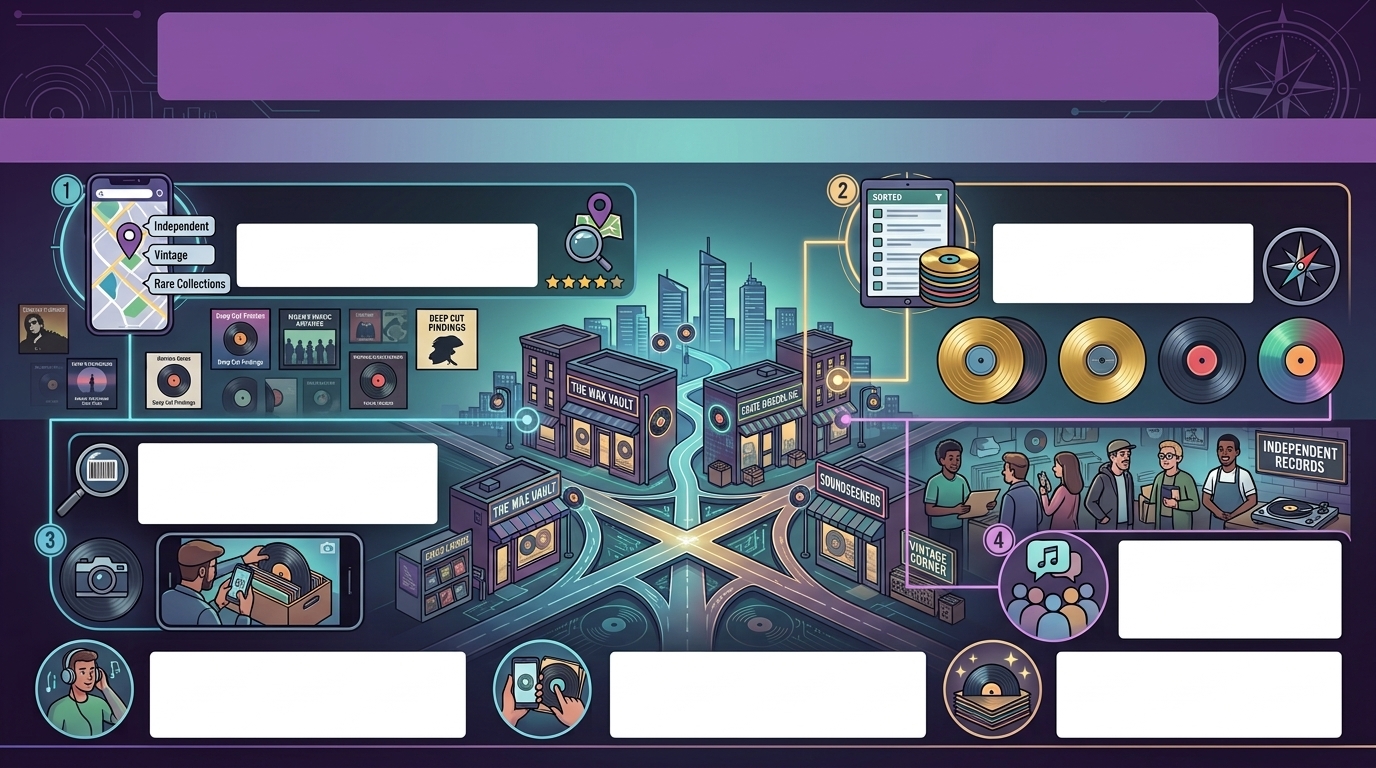
If your primary goal is tracking down rare, collectable, or first-press vintage vinyl, casual browsing won’t cut it. Use this professional strategy when entering a new independent shop:
1. Befriend the Staff
Record store clerks know every square inch of their inventory. Instead of asking generic questions, be specific: “Hey, I’m looking for mid-70s spiritual jazz or UK post-punk imports—anything new come in that hasn’t hit the main bins yet?” Building a rapport with the owner often grants you early access to fresh collections before they are priced and displayed.
2. Master Record Grading Standards
When buying vintage vinyl, price is entirely dictated by condition. Familiarize yourself with the Goldmine Standard Grading Scale:
- Mint (M): Factory sealed, flawless. (Rarely applies to true vintage records).
- Near Mint (NM): Nearly perfect record that shows very minor signs of handling. Plays without surface noise.
- Very Good Plus (VG+): Shows slight signs of wear, light scuffs, or minor sleeve wear, but plays with exceptionally clear audio and minimal background crackle.
- Very Good (VG): Noticeable surface wear, minor scratches, and mild background noise during quiet passages, but skips are absent. (Great for budget collectors looking for rare titles).
3. Check the Dead Wax (Run-Out Groove)
For serious collectors hunting rare vintage pressings, the tiny blank space between the final track and the record label holds the ultimate secret. Master pressing plants etch matrix numbers, stampers, and initials into this “dead wax.” Checking these numbers helps verify whether you are holding an original first-press release or a later repress.
10 Frequently Asked Questions (FAQs)
1. How can I tell if a vintage record is an original pressing or a modern reissue?
Check the run-out groove (dead wax) for stamped matrix numbers, cross-reference the catalog number with online databases like Discogs, and inspect the record label design and jacket typography for period-accurate details.
2. Is it safe to buy vintage vinyl without listening to it first?
Most reputable independent stores have in-store listening stations where you can preview a record on a turntable before purchasing. If a store doesn’t have a turntable, always ask to inspect the vinyl under a bright light for deep scratches.
3. Why are some original vintage pressings significantly more expensive than new reissues?
Original vintage pressings are valued for their specific analog mastering chains, historical authenticity, superior heavy vinyl weight (in certain eras), and limited surviving quantities.
4. How should I store and transport my vinyl while traveling?
Never leave vinyl records in a hot car, as the heat will warp the PVC permanently. When flying, always carry your records in your personal carry-on bag rather than checking them in baggage.
5. What cleaning supplies do I need for vintage records?
Invest in an anti-static carbon fiber brush to sweep away surface dust before playing, a wet-vacuum record cleaning kit for deep cleaning, and high-density polyethylene inner sleeves to replace cheap paper jackets.
6. Do independent record stores buy or trade used vinyl?
Yes! Almost all independent shops actively buy, trade, or appraise used personal collections. If you are looking to sell, call ahead to see if they require an appointment with their buyer.
7. What is Record Store Day, and why is it important?
Record Store Day is an annual international celebration held every April where independent shops release exclusive, limited-edition colored vinyl pressings, supporting local storefronts and independent artists.
8. Are rare records always in “Mint” condition?
Not at all. For extremely rare blues, punk, or 1950s jazz records, surviving copies are often heavily played (“VG” condition) because people actually enjoyed listening to them. Collectors often compromise on condition to own a rare piece of musical history.
9. Why do independent record stores often smell unique?
That iconic, comforting scent is a mixture of aged cardboard paper jackets, decades-old dust, vinyl plastic compounds, and natural wood shelving—a sensory hallmark of archival history.
10. Why is supporting independent record stores essential for music culture?
Independent record shops foster real human connection, support local underground artists, preserve rare audio history, and act as cultural anchors that keep neighborhood music scenes vibrant and alive.
Conclusion
Finding independent vinyl record stores with rare vintage collections transforms music consumption from a passive digital habit into an exciting, tactile adventure. By stepping off the main commercial avenues, exploring neighborhood hidden gems in New York, San Francisco, Seattle, or Austin, and mastering the art of crate-digging, you connect directly with the beating pulse of music history.
Dust off your turntable, support your local independent shop, and discover more urban exploration guides, neighborhood secrets, and lifestyle inspiration right here at nyattitude.com to help you master life in the greatest cities on earth!