In an era of hyper-fast transit, rideshares, and GPS-guided efficiency, we often travel through cities like sealed packages. We descend into subterranean subways or stare through tinted car windows, bypassing the very essence of urban life. True urban exploration cannot be driven past at forty miles per hour; it must be inhaled, heard, and walked.
Across vibrant cultural epicenters like New York, San Francisco, Los Angeles, Seattle, and Austin, the soul of a city lives not in its skyscrapers or corporate plazas, but in its neighborhood sidewalks. It lingers in the scent of roasting garlic drifting from a family-owned trattoria, the hum of conversations outside a corner bodega, and the distinct architectural heritage carved into historic brownstones, Victorians, and adobe walls.
At nyattitude.com, we celebrate style, culture, and intentional living. This comprehensive masterclass acts as your ultimate guide to mapping, walking, and tasting the most authentic neighborhood routes across America, blending cultural history with legendary local bites.
Part 1: The Philosophy of the Slow Urban Stroll
Before lacing up your walking shoes, it helps to understand why neighborhood walking is an art form in its own right.
+-----------------------------------+-----------------------------------+
| Modern Tourist Traps              | Authentic Neighborhood Walking    |
+-----------------------------------+-----------------------------------+
| Paced by transit schedules        | Paced by curiosity and appetite   |
| High-priced, commercialized menus | Multi-generational family recipes |
| Sanitized, generic attractions    | Raw, unfiltered local community   |
| Rushed sightseeing checklists     | Immersive sensory documentation   |
+-----------------------------------+-----------------------------------+
1. The Power of Micro-Exploration
When you walk at a standard three-miles-per-hour pace, you notice details that vehicles completely erase: hand-painted tile signage, hidden community gardens tucked between buildings, specialty neighborhood markets, and the distinct dialect shifts that happen every few blocks.
2. Culinary Storytelling on Foot
Food is culture made edible. Walking routes that weave through historic immigrant enclaves or evolving cultural districts allow you to trace the migration patterns, economic struggles, and artistic triumphs of a city through its foodways—from a three-generation dim sum parlor to a neighborhood taco truck.
Part 2: Signature Neighborhood Walking Routes Across the US
To help you plan your next urban excursion, here are field-tested neighborhood walking routes across key American cultural landscapes, paired with what to look for and where to taste local flavor.
1. New York City: The Lower East Side & Chinatown Food and Heritage Loop
- The Route: Start at Tompkins Square Park in the East Village, walk south down Avenue A, cut across Houston Street into the historic heart of the Lower East Side, and wind your way through the chaotic, colorful alleyways of Chinatown down toward Chatham Square.
- Cultural Highlights: Tenement museum blocks, historic synagogues converted into community spaces, and narrow alleyways bearing over a century of immigrant history.
- Authentic Local Bites: Grab a classic knish from a century-old Jewish bakery, sample piping hot soup dumplings from a subterranean Chinatown stall, and finish with a fresh cannoli in nearby Little Italy.
2. San Francisco: The Mission District & Clarion Alley Mural Walk
- The Route: Begin near Dolores Park, walk east down 16th Street, weave through the colorful side streets toward Mission Street, and dedicate an hour to exploring the political and artistic murals of Clarion Alley and Balmy Alley.
- Cultural Highlights: A vibrant epicenter of Chicano and Latino culture, blending early Spanish mission history with modern radical street art, indie bookstores, and buzzing community plazas.
- Authentic Local Bites: Taste a legendary Mission-style super burrito wrapped in tin foil from a neighborhood taqueria, grab artisanal pan dulce from a local bakery, and cool down with a scoop of tropical-fruit-infused ice cream.
3. Austin, Texas: South Congress (SoCo) & The Travis Heights Historic Stroll
- The Route: Start at the north end of South Congress Avenue near Lady Bird Lake, walk south past iconic vintage neon signs, and slip off the main drag into the winding, shaded residential lanes of historic Travis Heights.
- Cultural Highlights: A fascinating juxtaposition of old-school Texas quirky independence (“Keep Austin Weird”), modern boutique culture, historic stone bridges, and lush creek-side canopy trails.
- Authentic Local Bites: Hit a legendary neighborhood trailer park food court for authentic Texas brisket tacos, grab a cold local craft beer, and stop by a historic neighborhood soda fountain or coffee roastery.
4. Seattle, Washington: International District & Pioneer Square Heritage Trail
- The Route: Begin at Occidental Square in historic Pioneer Square (Seattle’s oldest neighborhood), walk beneath the historic iron pergolas, and transition north into the vibrant Chinatown-International District (CID).
- Cultural Highlights: Romanesque Revival red-brick architecture from the late 19th century blending seamlessly with historic Asian-American community centers, herbalist apothecaries, and public art installations.
- Authentic Local Bites: Savor authentic hand-pulled noodles, stop by a traditional bubble tea house, or taste fresh Pacific Northwest seafood bites from century-old market stalls.
Part 3: Tactical Tips for an Immersive Neighborhood Walk
Maximizing an urban walking excursion requires preparation, spatial awareness, and a mindset open to serendipity.
+-------+-----------------------------------+-----------------------------------+
| Tip   | Action Strategy                   | Purpose                           |
+-------+-----------------------------------+-----------------------------------+
| 1     | Master the "Grid vs. Organic" Map | Understand neighborhood layouts   |
| 2     | Follow the Local Crowds           | Queue lines equal authentic flavor|
| 3     | Carry Small Cash Denominations    | Vital for cash-only family spots  |
| 4     | Engage with Shopkeepers           | Unlock hidden historical insights |
+-------+-----------------------------------+-----------------------------------+
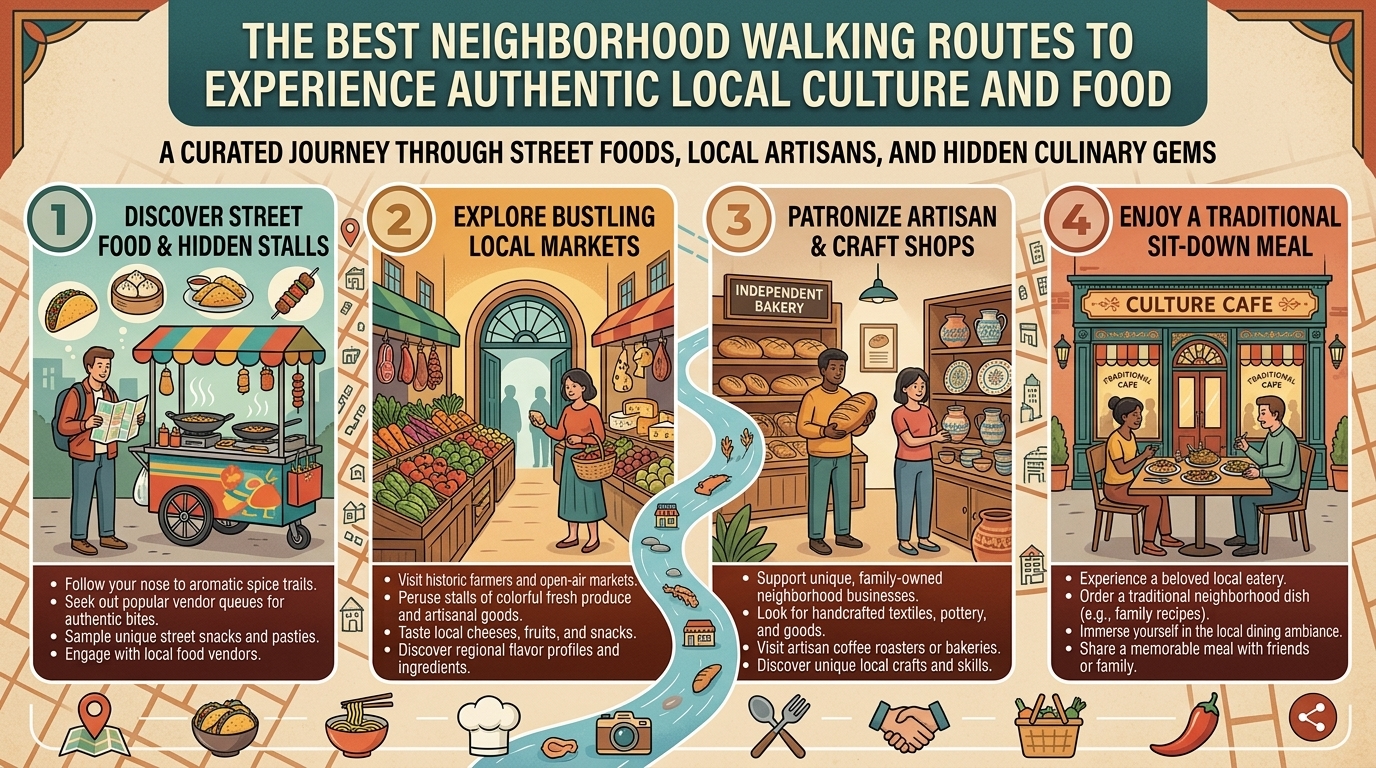
1. Follow the Rule of Local Queues
When searching for a food stop along your route, avoid places with English-only photo menus aimed at tourists. Instead, look for compact spots packed with neighborhood regulars, where orders are shouted across counters and menus change daily based on market availability.
2. Strike Up Conversations
Don’t hesitate to ask a neighborhood bookseller, a park bench regular, or a butcher behind a counter what their favorite hidden spot is two blocks over. Locals love sharing institutional knowledge that algorithms and travel guides miss.
Frequently Asked Questions (FAQ)
1. How do I plan a safe walking route in unfamiliar urban neighborhoods?
Research neighborhood boundaries ahead of time using local city blogs and community forums. Stick to well-traveled commercial corridors during daylight hours, keep your phone secure, and maintain situational awareness by keeping headphone volume low.
2. What are the best hours of the day to undertake a cultural food walk?
Mid-morning (9:30 AM to 11:30 AM) is ideal for bakeries, markets, and quiet architectural viewing before lunch rushes hit. Alternatively, late afternoon (3:00 PM to 5:30 PM) offers beautiful golden-hour lighting for photography and lively pre-dinner street culture.
3. Should I book a guided walking tour or explore independently?
Both have merits! Guided tours offer deep historical context and instant access to curated food tastings. Independent walking gives you total freedom to linger in a bookstore, change routes on a whim, and explore at your own psychological pace.
4. How much cash should I carry on a neighborhood food walk?
While digital payments are ubiquitous, many historic mom-and-pop bakeries, taco trucks, and produce stalls still prefer or require cash, or have minimum purchase limits for cards. Carrying $20 to $40 in small bills ($1s, $5s, $10s) is standard practice.
5. What footwear is essential for urban walking routes?
Never wear brand-new shoes on a long urban walk. Opt for broken-in, supportive walking shoes or athletic trainers with thick shock-absorbing soles, paired with moisture-wicking socks to prevent blisters across varied asphalt and concrete terrains.
6. Can I bring dietary restrictions (gluten-free, vegan) on neighborhood food walks?
Yes, especially in progressive culinary hubs like San Francisco, New York, and Austin, where almost every neighborhood spot accommodates plant-based or allergen-free diets. However, historic specialty bakeries may have limited options.
7. How do I handle photography respectfully in residential cultural neighborhoods?
Always ask permission before photographing individuals, street vendors, or children. While streetscapes and architecture are public, stepping onto private property or snapping close-ups of local residents without consent can feel intrusive.
8. What is the best way to transport food samples or leftovers while walking?
Pack a lightweight, foldable canvas tote bag or a small daypack in your luggage. It keeps your hands free, prevents single-use plastic bag clutter, and safely cushions baked goods or snacks as you walk.
9. How can I find neighborhood routes that avoid heavy vehicular traffic?
Look for designated greenways, pedestrian-only plazas, historic district walking paths, and parks connected by neighborhood green corridors (such as Austin’s hike-and-bike trail connectors or San Francisco’s Slow Streets).
10. Where can I find more urban lifestyle guides and neighborhood reviews?
For continuous inspiration on stylish city living, local culture, and curated urban explorations, keep your browser locked right here to nyattitude.com!
Conclusion
Exploring a city on foot is the ultimate act of urban reclamation. By stepping off the tourist track and immersing yourself in the historic sidewalks, immigrant narratives, and culinary traditions of neighborhood walking routes, you transform a simple trip into a profound cultural journey. Whether you are tasting street food in Chinatown, admiring murals in the Mission, or tracing historic blocks in Austin, the pavement holds infinite stories waiting to be discovered.
At nyattitude.com, we champion exploring your world with curiosity, style, and intention. Lace up your shoes, step outside, and experience the authentic pulse of your city today!