For anyone traversing the high-energy streets of metropolitan centers like New York, San Francisco, Los Angeles, Seattle, and Austin, Manhattan’s Financial District and downtown core can feel like an overwhelming vortex of yellow cabs, blaring sirens, and hurried pedestrians. Skyscrapers cast deep shadows over concrete canyons, and the relentless hum of urban commerce rarely slows down.
Yet, hidden right in plain sight amidst the glass and steel are pockets of profound, timeless quiet. If you know where to look, downtown Manhattan harbors an extraordinary network of historic church courtyards, pocket gardens, and cloistered churchyards. These spaces act as living acoustic and historical time capsules, offering an immediate sensory escape from the city noise.
At nyattitude.com, we celebrate style, discovery, and intentional urban living. This comprehensive masterclass details how to locate, access, and deeply appreciate these hidden ecclesiastical sanctuaries, blending architectural history with practical exploration tips.
Part 1: The Architecture of Sanctuary – Why Church Yards Defy the City Grid
To understand why historic church courtyards feel so drastically different from standard municipal concrete parks, you have to look at their architectural lineage and urban placement.
+-----------------------------------+-----------------------------------+
| Modern Corporate Plaza            | Historic Church Courtyard         |
+-----------------------------------+-----------------------------------+
| Designed for fast foot traffic    | Designed for contemplation & prayer|
| Hard stone, glass, and steel walls| Organic greenery, moss, & old stone|
| High ambient wind tunnels         | Acoustic buffering via masonry    |
| Cluttered commercial distractions | Sacred historical continuity      |
+-----------------------------------+-----------------------------------+
1. Acoustic and Physical Buffering
Historic downtown churches were often built with thick, load-bearing stone walls, Gothic Revival masonry, and deep porticos. When paired with mature perimeter shade trees, iron fencing, and raised garden beds, these structures act as natural sound barriers. They reflect and scatter high-frequency street noise, dropping decibel levels noticeably the moment you cross the threshold.
2. Layers of Urban History
Unlike modern urban parks engineered by real estate developers, downtown churchyards hold centuries of human stories. Walking these grounds means treading on the same soil walked by early colonial settlers, Revolutionary War figures, and waves of immigrants who built the city’s foundation.
Part 2: Landmark Downtown Manhattan Churchyards to Explore
While downtown Manhattan continues to evolve, several historic religious sites have preserved their peaceful outdoor gardens and courtyards against the tide of real estate development.
1. Trinity Church & Graveyard (Broadway at Wall Street)
- The Experience: Standing proudly at the head of Wall Street, Trinity Church is a masterpiece of Neo-Gothic architecture. Surrounding the 1846 sandstone sanctuary is one of Manhattan’s most famous historic churchyards. Beneath the shade of ancient trees and weathered headstones (including the final resting place of Alexander Hamilton), visitors find a surprisingly calm sanctuary amidst the high-stakes frenzy of the Financial District.
- The Vibe: Majestic, historical, and deeply atmospheric.
2. St. Paul’s Chapel & Churchyard (Broadway and Vesey Street)
- The Experience: Built in 1766, St. Paul’s Chapel is Manhattan’s oldest public building in continuous use and a stunning example of Georgian architecture. Its quiet rear churchyard and courtyard grounds provide a serene, reflective escape just blocks away from the bustling World Trade Center complex.
- The Vibe: Somber, reflective, and rich with revolutionary and modern civic history.
3. The Church of the Transfiguration / “The Little Church Around the Corner” (1 West 29th Street)
- The Experience: Tucked slightly north in the NoMad/Midtown border area, this historic institution is legendary for its English-style cottage gardens, rambling ivy walls, and peaceful brick courtyards. Stepping off 29th Street into its hidden garden feels less like entering New York City and more like stumbling upon an old English country parish.
- The Vibe: Whimsical, botanical, and intensely cozy.
Part 3: Tactical Tips for Finding and Experiencing Hidden Urban Sanctuaries
Discovering unmarked pocket spaces and navigating private church grounds requires a respectful, observant explorer’s mindset.
+-------+-----------------------------------+-----------------------------------+
| Tip   | Action Strategy                   | Purpose                           |
+-------+-----------------------------------+-----------------------------------+
| 1     | Look for Historic Iron Gates      | Subtle cues indicate public access|
| 2     | Respect Quiet Hours & Services    | Avoid loud talking or active worship|
| 3     | Practice Digital Silence          | Turn off ringers to preserve peace|
| 4     | Check Seasonal Opening Times      | Grounds close early during winter |
+-------+-----------------------------------+-----------------------------------+
1. Spotting the Cues of Accessibility
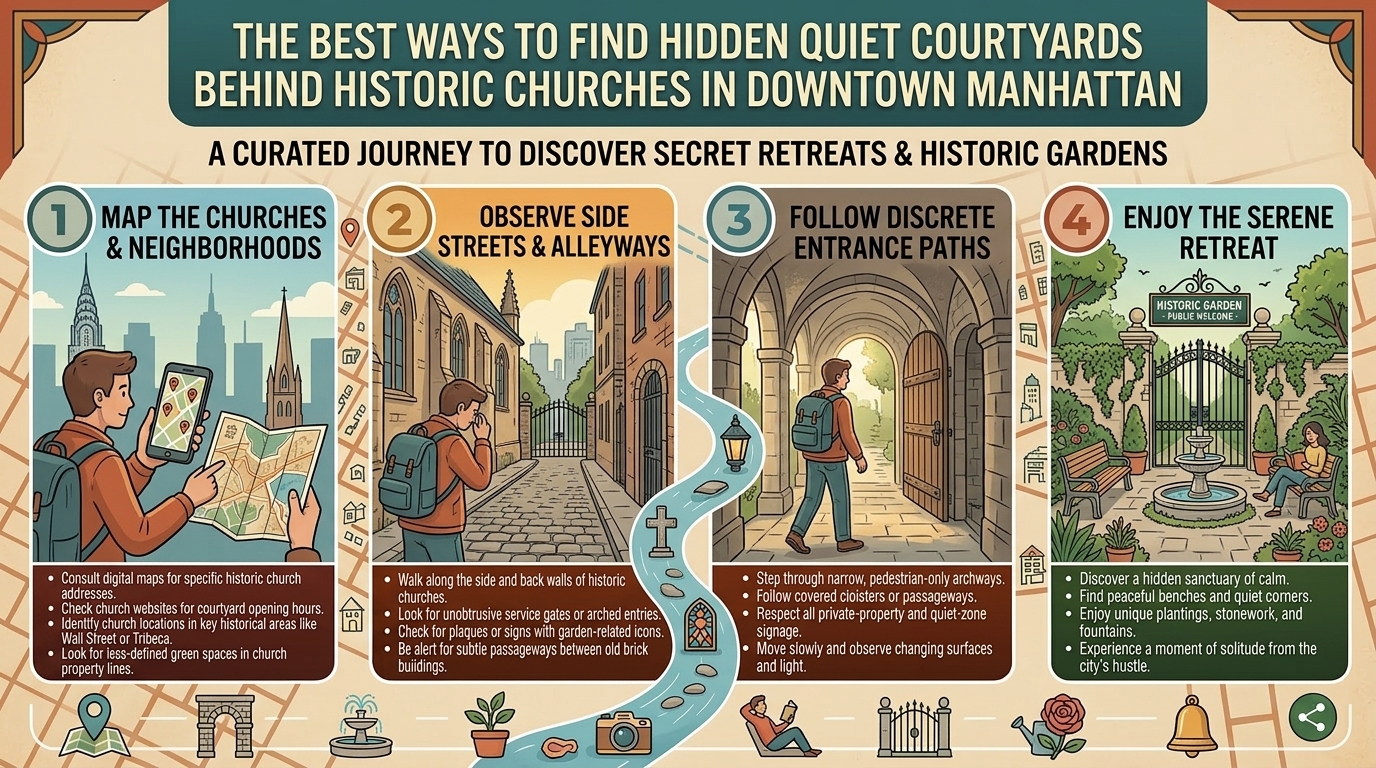
Many historic churches feature heavy wrought-iron fences that look intimidating at first glance. However, look closely for small welcome plaques, open gates, or posted visiting hours. If a sign indicates the churchyard is open to the public, step inside respectfully—these spaces are intentionally maintained to offer urban workers and travelers a moment of respite.
2. Maintaining Sacred Etiquette
Remember that these locations are active houses of worship and resting places. Keep your voice to a hushed whisper, silence your mobile devices, refrain from eating or drinking on historic grounds, and avoid stepping on delicate flower beds or leaning against ancient monuments.
Frequently Asked Questions (FAQ)
1. Are historic church courtyards in downtown Manhattan completely free to visit?
Yes! Most historic churchyards and open-air gardens attached to downtown parishes are entirely free and open to the public during daytime operating hours, though donations to support their historical upkeep are always welcome.
2. What are the typical visiting hours for these spaces?
Most downtown church courtyards open around 8:30 AM to 9:00 AM and close near dusk (typically between 4:00 PM and 6:00 PM, depending on the season and security requirements). Always verify current hours online before planning a late afternoon visit.
3. Can I take photographs inside historic church yards?
Casual photography for personal use, architectural study, or sketching is generally permitted and welcomed. However, flash photography inside active sanctuaries during services, commercial video shoots, or setting up large tripods typically requires prior church permission.
4. Are these courtyards accessible for visitors with mobility challenges?
Many historic churchyards feature old stone pathways, uneven brickwork, and historic steps due to their 18th- and 19th-century origins. However, major institutions like Trinity Church have made significant updates to provide accessible ramps to main entry points and paved garden areas.
5. Why are there cemeteries attached to churches in downtown Manhattan?
Historically, before municipal public cemeteries were established in the 19th century, urban churches served as the primary burial grounds for local parishioners and notable civic leaders, embedding history directly into the heart of the parish footprint.
6. Can I bring my dog into a church courtyard or garden?
Generally, no. Because these spaces often double as consecrated historic cemeteries and quiet meditative gardens, pets are strictly prohibited, with service animals being the sole exception.
7. How do I find lesser-known, unadvertised pocket gardens near downtown churches?
Keep an eye out for narrow alleyways between commercial buildings near historic parish houses. Utilizing local architectural walking guides or community blogs will often point you toward hidden interior courtyards.
8. What is the best season to experience these urban green spaces?
Spring (April and May) brings vibrant floral blooms and blossoming dogwood trees, while autumn (October and November) offers gorgeous changing foliage against historic brownstone and Gothic brick facades.
9. Will I encounter large crowds in these spaces?
While high-traffic sites like Trinity Church see steady tourist foot traffic during peak midday hours, visiting early in the morning right when gates open or during mid-afternoon weekday lulls guarantees absolute peace and solitude.
10. Where can I find more lifestyle guides and hidden urban escapes?
For continuous inspiration on stylish city living, local culture, and curated urban explorations across America, keep your browser locked right here to nyattitude.com!
Conclusion
Finding quiet courtyards tucked away behind historic downtown churches is an art that transforms how you experience a metropolis. Instead of viewing a city like New York as an endless wall of concrete and noise, discovering these sacred green pockets reveals a deeply human, historically rich layer hidden right beneath the surface. Whether you are seeking a quiet place to read, a moment of meditation, or a glimpse into centuries-old architecture, these sanctuaries offer an unmatched urban retreat.
At nyattitude.com, we empower you to navigate city life with elegance, curiosity, and grace. Step off the busy avenue, find your quiet courtyard, and rediscover your inner peace today!
Tourist In Your Own Town #33 – Trinity Church
This video offers a visual tour inside and around Trinity Church in Lower Manhattan, showcasing its historic architecture and serene churchyard setting.