There is a distinct ritual to navigating a major metropolis. Whether you are stepping out into the brisk morning air of Manhattan or Brooklyn, catching the misty coastal draft in San Francisco or Seattle, or navigating the dynamic cultural corridors of Texas and California, your first order of business is finding a sanctuary.
For many travelers and recent transplants, morning coffee means joining the endless queue at a corporate green-logo mega-chain, staring at a digital menu board, and receiving a mass-produced, heavily sweetened beverage in a generic paper cup. But if you want to understand the true pulse of a neighborhood, you have to look deeper.
Independent coffee shops are the modern cultural living rooms of urban life. They are where neighborhood artists sketch, writers draft chapters, locals catch up on community gossip, and master roasters experiment with single-origin beans.
This comprehensive guide reveals how to bypass the tourist traps, decode the geography of hidden neighborhood cafes, and discover authentic, independent coffee gems tucked away from the crowds.
The Philosophy of the Independent Cafe: Why Chains Miss the Mark
Corporate coffee chains are engineered for velocity, uniformity, and predictability. No matter whether you step into a shop in Midtown Manhattan or downtown Seattle, the lighting, music, and menu remain identical.
Independent coffee shops, by contrast, are deeply tied to their local ecosystem.
- Architectural Character: Independent cafes inhabit repurposed spaces—historic brick brownstone basements, old bank lobbies, converted maritime warehouses, and sunlit corner storefronts with eccentric layouts.
- The Craft of Sourcing: True independent shops often partner with small-batch roasters, prioritizing ethical direct-trade beans, seasonal single-origin pour-overs, and house-made syrups that reflect local palate preferences.
Step 1: The Geography of Discretion (How to Spot a Hidden Gem)
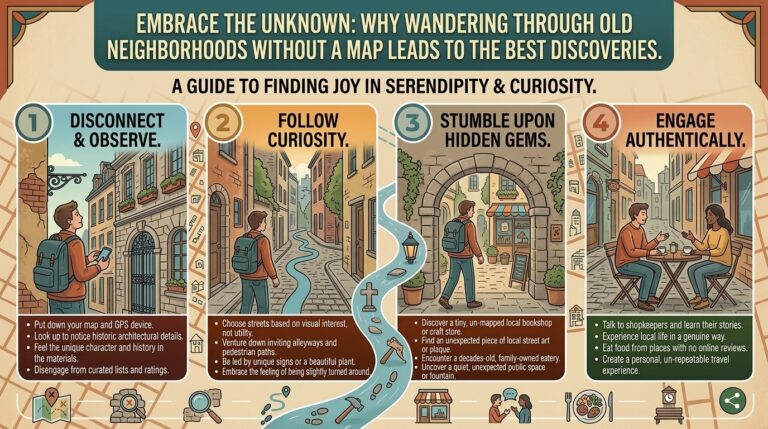
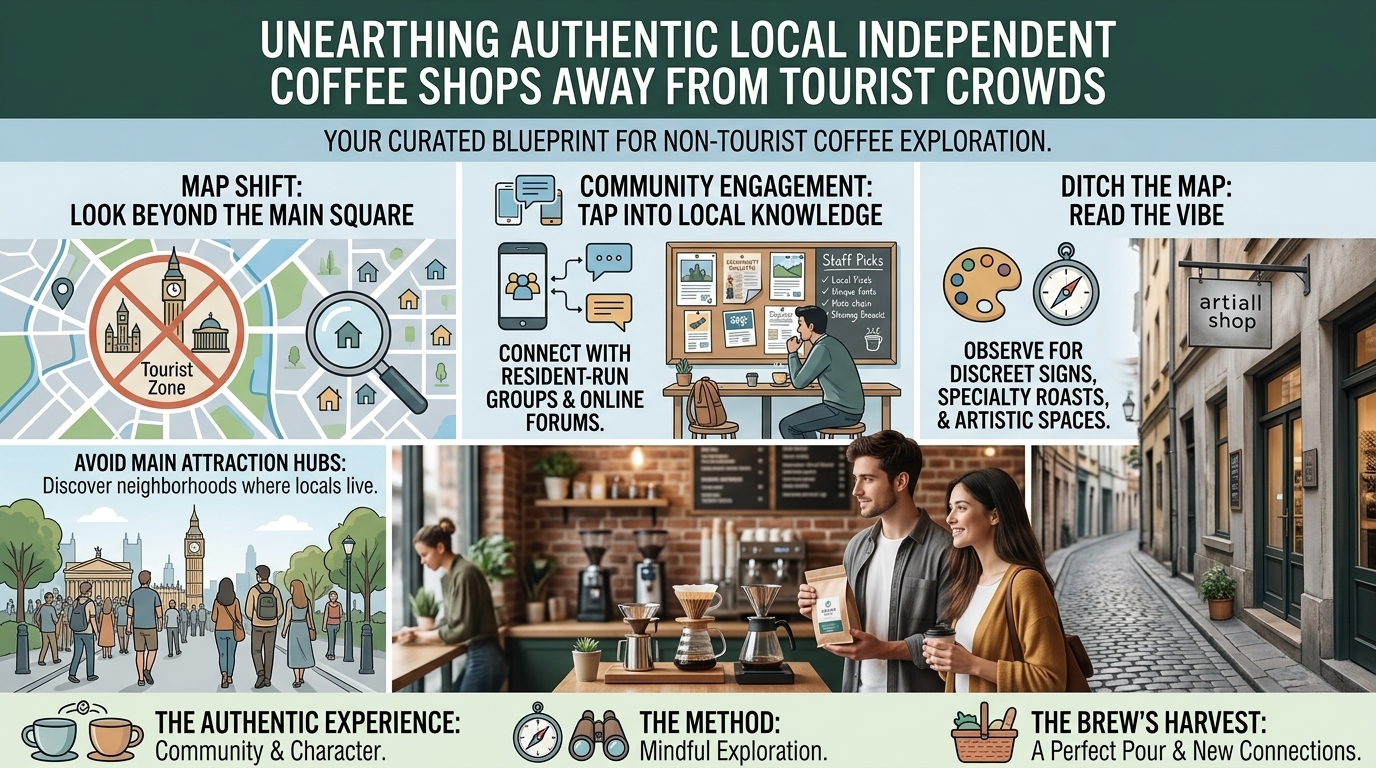
Tourist-heavy cafes thrive on high-visibility foot traffic—they sit directly adjacent to major museums, transit hubs, and famous monuments, charging inflated prices for mediocre execution. To find authentic local spots, you must change your mapping strategy.
1. The Two-Block Rule
- Step Away from the Main Drag: Never look for a coffee shop on primary commercial avenues (such as Fifth Avenue or Broadway). Instead, walk two blocks east or west down residential side streets.
- Residential Integration: The best neighborhood cafes are tucked seamlessly into residential blocks where they can serve the local community rather than weekend sightseers.
2. Spotting the Micro-Signals
- Minimalist Signage: True specialty coffee shops rarely rely on giant, glowing neon signs. Look for discreet chalkboards on the pavement, simple brass lettering on a glass door, or an understated wooden logo.
- The Local Crowd: Peek through the window. If the patrons look like they brought a book, know the barista by name, or brought their dog inside, you have found an authentic neighborhood anchor.
Step 2: Regional Neighborhood Hotspots for Hidden Coffee Culture
Across major metropolitan landscapes, certain sub-neighborhoods maintain a fiercely independent coffee culture far removed from the tourist crush:
- New York City: While Times Square and SoHo are saturated with chains, head to the quiet, tree-lined residential streets of the East Village, Carroll Gardens in Brooklyn, or upper Manhattan brownstone belts to find tiny, owner-operated espresso bars.
- San Francisco & Washington: Seek out converted industrial spaces in outer neighborhoods or misty residential hill pockets where independent roasters focus on precision pour-overs and community tables.
10 Frequently Asked Questions (FAQs)
1. How can I tell if a coffee shop is truly independent or part of a stealth corporate chain?
Check their website’s “About Us” page or look at their scale. If they have three or more locations spanning multiple states or major corporate backing, they are a regional chain. True independent shops usually have one or two locations rooted in a specific neighborhood.
2. Are independent coffee shops more expensive than major chains?
Not necessarily. While specialty single-origin pour-overs can cost more, standard espresso drinks and drip coffees are usually priced comparably to corporate chains—while offering exponentially higher bean quality and ethical sourcing.
3. What is “single-origin” coffee, and why do independent shops focus on it?
Single-origin coffee comes from a specific farm, region, or cooperative rather than being blended from multiple global sources. It allows coffee enthusiasts to taste distinct flavor notes (like blueberry, citrus, or chocolate) native to that specific soil and climate.
4. Is it rude to work on a laptop at small, independent coffee shops?
It depends on the shop’s size and culture. Many tiny, high-volume espresso bars have limited seating and are “laptop-free” zones to encourage conversation. Always check for signage or ask the barista before setting up a workstation.
5. How do I order a specialty drink if I don’t know much about coffee?
Don’t be intimidated! Specialty baristas love sharing their knowledge. Simply tell them what you usually like (“I like something smooth, not too sweet, with oat milk”), and let them guide you to the right menu option.
6. Why do many independent cafes not offer large sizes (like 20oz or 24oz)?
Specialty coffee is formulated for balance. Extracting too much water through a standard double shot of espresso results in a bitter, over-extracted drink. Most independent shops cap their milk drinks at 8oz to 12oz to preserve the coffee’s flavor profile.
7. Do hidden independent coffee shops sell whole bean coffee for home brewing?
Yes! In fact, buying a bag of freshly roasted whole beans is one of the best ways to support independent shops. The baristas will even grind the beans on-site to match your specific home brewing method (French press, drip, or espresso).
8. What is the best time of day to visit a quiet local coffee shop?
For a peaceful, uncrowded experience, visit between 8:00 AM and 9:00 AM (after the early commuter rush) or during the mid-afternoon lull between 2:00 PM and 4:00 PM.
9. Can I find good non-coffee options at independent cafes?
Absolutely. Most high-end independent shops take pride in sourcing ceremonial-grade Japanese matcha, single-origin loose-leaf teas, and house-made chai blends.
10. Why is supporting local independent coffee shops important for a city’s culture?
Independent coffee shops act as social anchors. They preserve neighborhood character, support local bakeries and artists, and create welcoming third spaces that make sprawling concrete cities feel like home.
Conclusion
Finding authentic local independent coffee shops away from tourist crowds transforms your daily routine from a mindless caffeine errand into an intentional cultural experience. By venturing off the main commercial corridors, looking for subtle micro-signals, and supporting passionate neighborhood roasters, you plug directly into the beating heart of urban life.
Slow down, savor your next cup, and discover more urban guides, neighborhood secrets, and lifestyle inspiration right here at nyattitude.com to help you master life in the greatest cities on earth!