There is a profound psychological transformation that occurs when you transition from being a passive visitor in a metropolis to an active participant in its story. Whether you have recently packed up your life and moved from the wide-open expanse of Texas, the sun-kissed coastal highways of California, the pine-shrouded forests of Washington, or the tech-pioneering hills of San Francisco to build a life in a bustling powerhouse like New York City, the initial sensory overload can be staggering.
When you first arrive, a major city can feel like an overwhelming movie set. You see the towering glass skyscrapers, hear the relentless roar of traffic, and navigate the pulsing crowds in the subway turnstiles. Yet, it remains an abstraction—a collection of expensive real estate, trendy brunch spots, and flashing billboards.
The moment that abstraction breaks down and turns into genuine belonging is the moment you begin to understand who built these streets, what blood and resilience went into shaping them, and how ordinary people lived before you arrived.
The most powerful portal to this understanding is not found in high-end commercial shopping districts or heavily crowded tourist landmarks. It is found inside the quiet, unassuming, deeply passionate local historical museums tucked away in neighborhood corners across the city.
This comprehensive guide explores why stepping away from the mega-museums and visiting hyper-local historical institutions gives you a deeper, richer, and more enduring appreciation for the city you call home.
The Illusion of the Megacity: Why Scale Hides History
When people think of museums in global capitals, their minds immediately drift to monumental, world-class institutions—places like the Metropolitan Museum of Art, the Smithsonian, or the Museum of Modern Art. These colossal spaces hold global treasures spanning millennia and continents.
However, because their scope is so massive and international, they often create a sense of detachment. They tell the story of humanity, but they rarely tell the gritty, intimate story of the specific sidewalk you walked on this morning.
1. The Micro-Narrative vs. The Macro-History
- Macro-History: Teaches you about global dynasties, major political treaties, and world-shifting industrial revolutions.
- Micro-History: Teaches you why a specific street curves awkwardly (because it used to be a 17th-century cow path), why a particular neighborhood smells like roasted spices or old bakeries, and how immigrant families fought for labor rights in tenement basements just three blocks from your apartment.
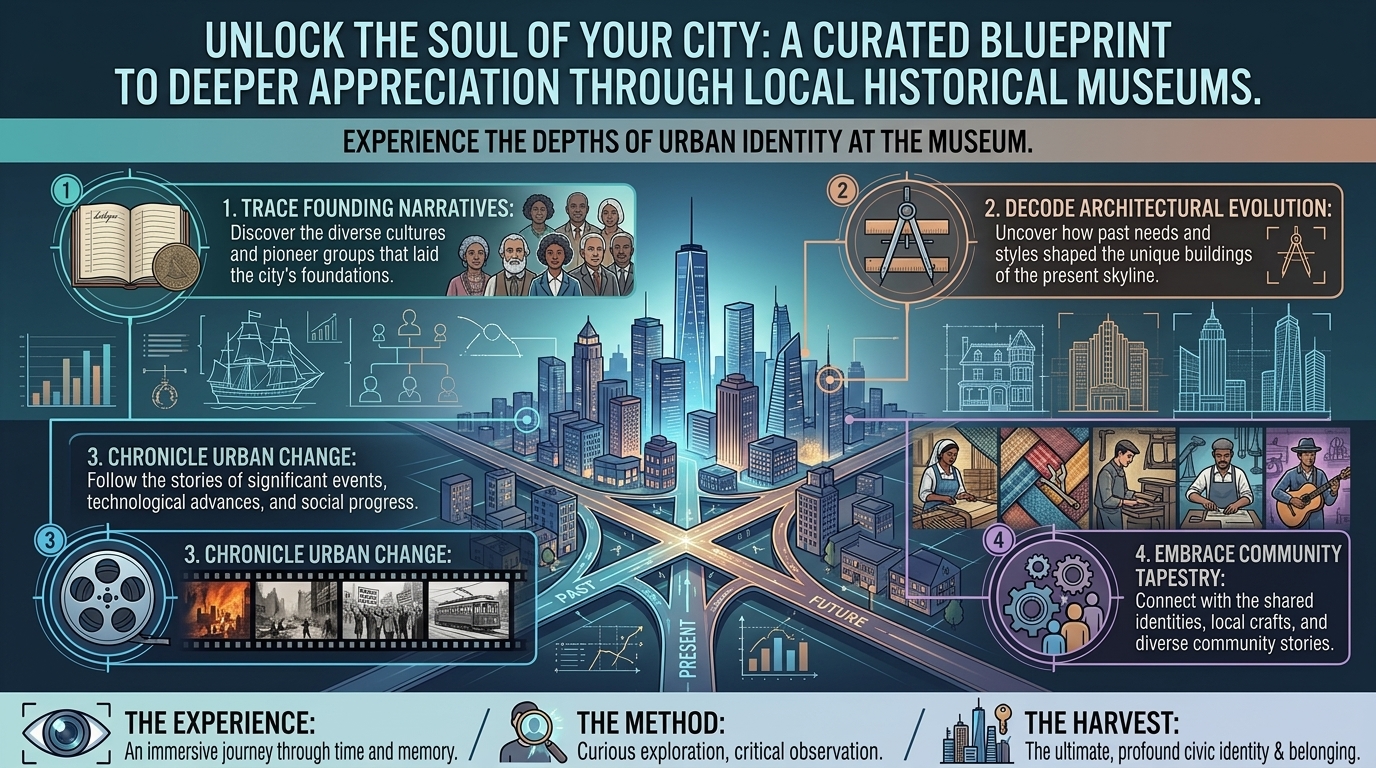
When you visit a local historical museum, you stop looking at the city as a static backdrop and start seeing it as a living, breathing archaeological layer cake of human ambition.
Step 1: Unearthing the Roots (What Local Museums Reveal)
Local historical societies and neighborhood museums do something that major national institutions cannot: they preserve the microscopic artifacts of everyday life.
1. Preserving Working-Class Resilience
While mainstream history books often focus on the elite tycoons, politicians, and real estate developers who financed the city’s growth, local museums focus heavily on the everyday laborers—the dockworkers, garment sewers, domestic servants, transit builders, and independent shopkeepers.
- Tactile Evidence: Seeing a handwritten ledger from a 19th-century dry goods store, a pair of worn leather boots worn by an immigrant ironworker who built the elevated rail lines, or a battered tin lunchbox instantly humanizes the historical landscape.
2. Understanding Neighborhood Evolution
Cities are never finished; they are constantly being torn down, rezoned, and rebuilt. Local museums serve as archival memory banks for communities undergoing rapid gentrification or demographic shifts.
- They show you what your favorite trendy coffee shop looked like when it was a textile sweatshop in 1910, or how a quiet residential tree-lined block was once an industrial manufacturing hub. This historical context changes your daily walk to work from a mindless commute into an act of historical navigation.
Step 2: Practical Tips for Maximizing Your Museum Explorations
To get the most out of your visits to hyper-local historical societies and neighborhood museums, approach them with an intentional strategy:
- Go Beyond the Center: While major civic museums downtown are wonderful, seek out outer-borough historical houses, maritime museums, and volunteer-run neighborhood archives. They often possess the most raw, unedited local artifacts.
- Talk to the Docents and Volunteers: The secret weapon of any local historical museum is its staff. Many are lifelong residents, retired archivists, or passionate neighborhood historians who can tell you stories that are entirely absent from the wall plaques. Always ask: “What is the most surprising thing hidden in this neighborhood that most people walk right past?”
- Pair the Exhibit with a Walking Tour: After exploring an exhibit on a specific historical era, take a walking tour of that exact neighborhood. Match the historical photographs and maps you saw in the museum to the physical buildings standing on the street today.
10 Frequently Asked Questions (FAQs)
1. Are local historical museums expensive to visit?
Most local historical societies and neighborhood museums are non-profit organizations that charge nominal admission fees (often under $10) or operate on a suggested donation basis, making them highly accessible for regular cultural exploration.
2. How do local historical museums differ from major art or science museums?
Local museums focus specifically on the geographic, social, cultural, and architectural evolution of a single city, town, or neighborhood, utilizing community-donated artifacts, photographs, and oral histories.
3. Are these small museums good for children and families?
Yes! Many neighborhood historical museums feature interactive family programs, historic craft workshops, and scavenger hunts designed to make local history engaging for younger minds.
4. Can visiting local museums help me feel more settled after moving to a new city?
Absolutely. Understanding the historical struggles, triumphs, and daily lives of people who lived in your new city decades or centuries before you creates a powerful sense of rootedness and geographic identity.
5. How can I find lesser-known historical museums near me?
Check out regional councils on the arts, municipal landmarks preservation commission websites, or independent local heritage trails that catalog independent historical archives.
6. Do local museums rely on community archives?
Yes. A vast majority of their collections come from direct donations by local families—such as old photo albums, letters, business ledgers, and clothing handed down through generations.
7. Is photography permitted inside local historical museums?
Policies vary, but many smaller local museums allow non-flash photography for personal use, especially of permanent architectural and artifact displays. Always check signage at the front desk.
8. Why do some historical societies operate out of historic houses?
Many local museums are housed inside preserved historical structures (such as 18th-century farmhouses, 19th-century brownstones, or old municipal buildings), allowing you to experience the architecture firsthand while viewing the exhibits.
9. How often do local historical museums update their exhibits?
Because they operate on smaller budgets, permanent collections may stay in place for longer periods, but they frequently host rotating temporary exhibits highlighting specific local anniversaries, immigrant groups, or artistic movements.
10. Why is supporting local history important for urban communities?
Because it preserves the soul of a city against the tide of rapid commercial development, ensuring that the diverse voices, struggles, and stories of past generations are never forgotten.
Conclusion
Visiting local historical museums is much more than a quiet weekend pastime; it is an essential urban practice that deepens your connection to the city you live in or explore. By peeling back the layers of steel, glass, and concrete to discover the human stories, neighborhood struggles, and architectural evolutions underneath, you transform your perception of the urban landscape.