When urban developers and historic preservationists look at abandoned industrial warehouses, turn-of-the-century railway terminals, century-old municipal markets, and classic brick meatpacking plants, they see more than old concrete and rusted steel. They see the future of urban culinary culture.
Across the United States—from the foggy waterfronts of San Francisco and the sun-baked boulevards of California, to the sophisticated dining rooms of Washington State, the historic grit of New York, and the sprawling metropolitan epicenters of Texas—historic indoor food halls have emerged as vibrant civic living rooms.
These aren’t sterile suburban food courts or predictable fast-food strips. They are architectural landmarks reborn as bustling hubs where heritage, community, and hyper-local artisan gastronomy intersect. Whether you are searching for freshly shucked oysters, heirloom-grain sourdough, small-batch artisanal cheeses, or fusion street food crafted by independent local chefs, historic food halls offer an immersive feast for all five senses.
This comprehensive guide will teach you how to explore, appreciate, and navigate historic indoor food halls like a seasoned local culinary anthropologist.
1. The Anatomy of Historic Food Halls: Where Architecture Meets Gastronomy
To truly appreciate a historic food hall, you have to understand how these spaces evolved. Long before the era of air-conditioned suburban shopping malls, cities relied on central municipal markets to feed their growing populations.
Preservation Meets Modern Innovation
When these monumental buildings fell into disuse during late-20th-century suburban flight, cities faced a choice: demolish them or reimagine them. Forward-thinking urban planners chose preservation. Today, walking into a historic food hall means stepping inside a masterclass of adaptive reuse architecture:
- Exposed Industrial Elements: Expect soaring timber trusses, exposed rivet-heavy iron beams, and original brickwork that has stood for over a hundred years.
- Open-Floor Layouts: Old loading docks and central concourses are transformed into communal seating zones flanked by micro-stalls operated by independent artisans.
- A Sensory Tapestry: The mingling aromas of wood-fired pizza ovens, roasting coffee beans, fresh seafood, and handmade spices create an intoxicating atmosphere that mirrors the history of the neighborhood itself.
2. Regional Spotlights: Food Hall Culture Across Key Metropolitan Hubs
Every major cultural hub brings its unique regional palate and architectural identity to its indoor markets. Here is what defines food hall culture in key regions:
New York: The Melting Pot of Historic Architecture and Global Flavors
New York City boasts some of the oldest and most legendary market traditions in the country. From historic brick terminal spaces to restored industrial warehouses in Brooklyn and Manhattan, New York food halls serve as vertical density hubs. Here, you can sample everything from artisanal Jewish deli classics and Italian salumerias to cutting-edge fusion tacos, all under vaulted ceilings that once housed mid-century freight trains or wholesale produce vendors.
San Francisco & California: Farm-to-Table Heritage Indoors
In San Francisco and broader California metropolitan areas, historic food halls are deeply tied to the state’s agricultural abundance. Iconic spaces like San Francisco’s Ferry Building Marketplace (housed within a magnificent 1898 Beaux-Arts terminal) celebrate sustainable agriculture, local organic dairy, artisan chocolatiers, and fresh Pacific seafood. The focus here is heavily weighted toward hyper-local sourcing, organic integrity, and artisanal craftsmanship.
Washington State: Pacific Northwest Craftsmanship and Maritime Roots
In Washington’s urban centers, historic markets reflect the moody, rich ecosystem of the Pacific Northwest. Indoor food halls feature exposed cedar beams, artisanal coffee roasters, wild-caught salmon mongers, and farm-to-table purveyors who emphasize sustainable, locally harvested ingredients. These spaces double as warm, cozy sanctuaries against the region’s famous misty weather.
Texas: Expansive Scale, Deep Roots, and Bold Flavors
Texas food halls take the traditional market concept and amplify it with Southern hospitality and grand architectural scale. Located in historic downtown warehouses, former bottling plants, or renovated historic car dealerships across Austin, Dallas, Houston, and San Antonio, Texas food halls blend historical preservation with massive communal gathering spaces, live music stages, craft smokehouses, and independent artisan bakeries.
3. Step-by-Step Methodology: How to Explore Like a Food Hall Insider
Navigating a massive, crowded historic food hall on a weekend afternoon can easily lead to sensory overload. Follow this proven step-by-step framework to maximize your culinary expedition:
Step One: Do a “Scouting Lap” First
Never order food at the very first stall you see. Resist the initial temptation of the delicious smells greeting you at the entrance. Walk the entire perimeter and interior corridors of the hall first. Take note of which artisan vendors have lines, read their menus, inspect their display cases, and map out your culinary game plan.
Step Two: Embrace the “Tasting Flight” Strategy
Food halls are designed for culinary exploration, not heavy commitment. Instead of buying a massive, single portion from one vendor, split your meal across multiple stalls. Order an artisan oyster sampler from the fishmonger, a single gourmet taco or empanada from a scratch-kitchen vendor, a craft cocktail or local cider, and finish with a single artisanal pastry or scoop of small-batch gelato.
Step Three: Strike Up Conversations with the Artisans
The greatest asset of a true independent food hall isn’t just the food—it’s the people behind the counter. Because these are independent makers rather than corporate chain employees, the person slicing your cheese, pouring your craft beer, or kneading your pasta dough is often the owner or the master maker. Ask them about their sourcing, their fermentation process, or how they got their start. You will often score free samples, deep historic insights, and secret menu recommendations.
4. Essential Tips for the Ultimate Food Hall Experience
- Visit During Off-Peak Hours: Weekend lunch rushes (12:00 PM to 2:00 PM on Saturdays) are notoriously packed. For a relaxing experience with zero lines, visit on weekday mornings, late afternoons (3:00 PM to 5:00 PM), or right when the hall opens.
- Bring Reusable Bags and Containers: Many artisan vendors sell specialty pantry goods, local honey, organic olive oils, and fresh baked goods that you’ll want to take home. Having an eco-friendly tote bag handy makes shopping seamless.
- Scan for Hidden Mezzanines and Patios: Many historic food halls feature hidden second-floor balconies, quiet interior courtyards, or outdoor seating areas that most tourists miss because they stay crowded around the ground-floor central entrance.
- Support Micro-Vendors: Keep an eye out for popup stalls or rotating incubator booths. These spaces give new, underrepresented, and immigrant chefs a platform to launch their culinary concepts.
5. Frequently Asked Questions (FAQ)
1. What makes a food hall “historic” versus a standard modern food court?
Historic food halls are housed in architecturally significant, older buildings (such as former railway stations, warehouses, or municipal markets) and feature a curated collection of independent local artisans rather than national fast-food chains.
2. Are indoor food halls friendly for dietary restrictions (vegan, gluten-free, etc.)?
Yes! Because food halls bring together dozens of independent micro-vendors under one roof, they naturally offer incredible diversity, ranging from dedicated vegan street food stalls to gluten-free artisan bakeries.
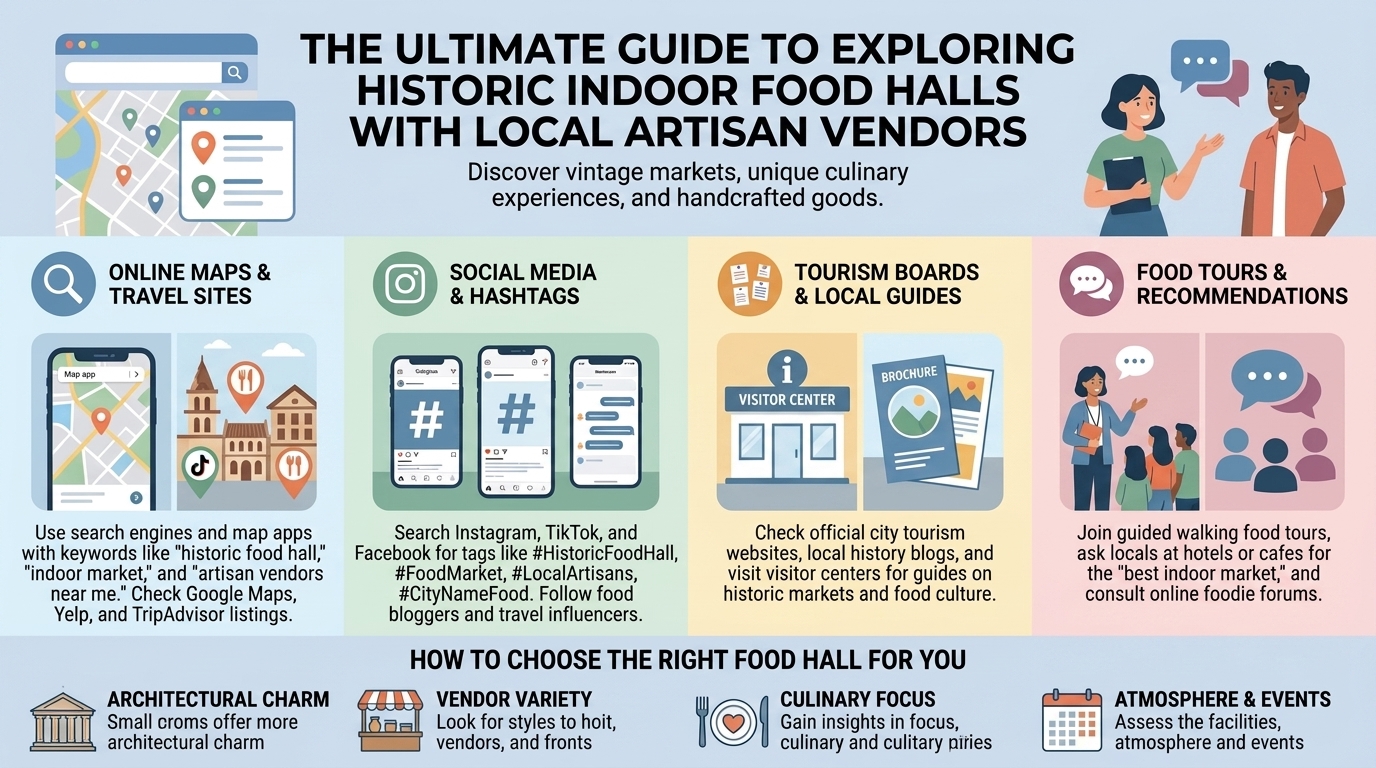
3. How do I find historic food halls when traveling to a new city?
Search for terms like “historic municipal market,” “adaptive reuse food hall,” or check local independent city guides and architectural preservation society maps.
4. Is cash accepted, or are food halls cashless?
The vast majority of modern food halls and artisan vendors operate entirely cashless, accepting credit cards, Apple Pay, and contactless smartphone payments. It is always wise to carry a card just in case.
5. What is the best time of day to visit a busy food hall?
Late morning (around 11:00 AM before the lunch rush) or mid-afternoon (between 2:30 PM and 4:30 PM) offer the most relaxed environments to talk with vendors and find seating easily.
6. Can I bring my dog inside a historic food hall?
Policies vary widely depending on local health department regulations and specific building management rules. While historic outdoor markets or covered exterior arcades often welcome leashed pets, strict indoor food preparation areas usually prohibit animals except for service dogs.
7. Do food halls offer seating, or is it standing room only?
Most food halls feature large communal seating areas, bar seating directly at individual vendor counters, and outdoor patio spaces. However, peak weekend hours can make finding a table competitive.
8. How can I ensure I’m supporting local artisans instead of corporate fronts?
Check the vendor’s website or signage. Independent artisan vendors will typically highlight their local sourcing, small-batch production methods, and single-location operations.
9. Are historic food halls family and kid-friendly?
Extremely! The casual, lively atmosphere and wide variety of food options (from wood-fired pizza and artisanal burgers to gourmet ice cream) make food halls ideal destinations for families with children.
10. Can I buy raw ingredients and produce, or is it only prepared food?
Many historic food halls (such as San Francisco’s Ferry Building or New York’s historic market spaces) feature a hybrid model offering both prepared dining options and raw artisan goods like fresh produce, butcher counters, and fresh fishmongers.
Conclusion: Savoring the Architectural and Culinary Soul of the City
Historic indoor food halls are much more than places to grab a quick bite to eat. They are living, breathing monuments to urban resilience, architectural preservation, and culinary innovation. By stepping inside these restored historical landmarks, you support independent local makers, experience the authentic cultural heartbeat of cities like New York, San Francisco, Washington, and Texas, and embark on a delicious journey through time.
Next time you explore a metropolitan center, skip the predictable tourist traps, seek out the grand old arches of a historic market hall, and taste the true soul of the city.