How to Shop Secondhand Like a Professional Stylist in the Vintage Markets of Queens
The thrifting world often shines its light on Manhattan’s polished consignment shops or Williamsburg’s curated vintage boutiques. However, professional fashion stylists, costume designers, and seasoned vintage archivists know that New York’s true secondhand capital lies across the East River: Queens.
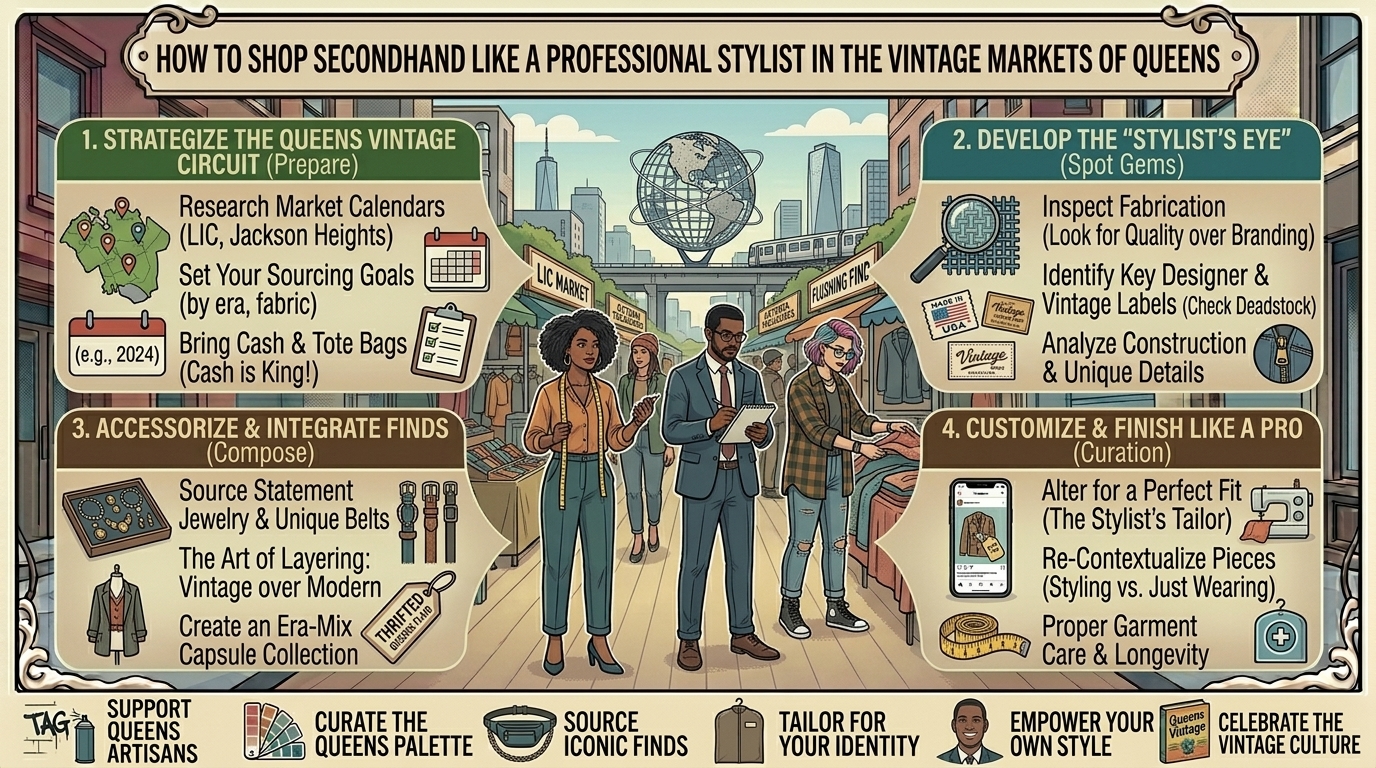
Queens offers an unparalleled vintage shopping landscape. From the sprawling antique warehouses of Astoria and Long Island City to the community-driven pop-up markets of Ridgewood, Sunnyside, and Jackson Heights, the borough is a goldmine for one-of-a-kind garments, archival designer pieces, mid-century textiles, and rare accessories. Shopping here requires more than just luck—it demands strategy, technical evaluation skills, and an insider’s understanding of neighborhood market dynamics.
At NY Attitude, we bring you the ultimate fashion, lifestyle, and urban style guides. Whether you are building a timeless wardrobe in New York, curating vintage looks from San Francisco and California, or hunting for unique street style in Texas and Washington, this definitive guide shares the exact methods professional stylists use to source, evaluate, negotiate, and style vintage fashion in the markets of Queens.
1. Why Queens Is New York’s Underrated Vintage Sanctuary
+--------------------------------------------------------------------------+
|                     QUEENS VINTAGE ADVANTAGE MATRIX                      |
+------------------------------------+-------------------------------------+
| 1. HIGHER DIVERSITY & UNTOUCHED inventory | Micro-neighborhoods yield unique|
|    Deeper ethnic & era variations  | multi-generational family heirlooms |
+------------------------------------+-------------------------------------+
| 2. BETTER PRICE-TO-QUALITY RATIOS  | Significantly lower overhead than   |
|    Less inflated markup            | Manhattan/Williamsburg boutiques    |
+------------------------------------+-------------------------------------+
| 3. HIGHER VOLUME & BULK MARKET VOID| Sprawling multi-vendor spaces &     |
|    Massive thrift warehouses       | community church flea markets       |
+------------------------------------+-------------------------------------+
Neighborhood Sourcing Profiles
- Astoria & Long Island City (LIC): Best for mid-century estate collections, 1960s–1980s outerwear, architectural jewelry, and high-end antique furniture.
- Ridgewood: The epicenter for 1990s Y2K streetwear, experimental indie vendor pop-ups, Japanese denim, and band tees.
- Jackson Heights & Sunnyside: Incredible hotspots for authentic ethnic textiles, vintage silks, handcrafted leather goods, and multi-generational estate jewelry.
| Queens Vintage Zone | Primary Aesthetic | Best For | Price Point | Stylist Strategy Level |
| Long Island City Flea & Warehouses | Industrial, Mid-Century, High Fashion | Archival coats, leather bags, statement jewelry | $$-$$$ | Advanced (Requires time to dig) |
| Ridgewood Pop-Ups & Vintage Shops | Streetwear, Y2K, 90s Grunge | Distressed denim, graphic tees, boots | $$ | Intermediate (Trend-focused) |
| Astoria Thrift Outlets & Estate Shops | 60s/70s Retro, Classic American | Tailored blazers, silk scarves, wool coats | $-$$ | Beginner to Intermediate |
| Jackson Heights Community Fleas | Global Vintage, Boho, Handcrafted | Silk kimonos, silver jewelry, embroidered textiles | $ | Advanced (Spotting raw materials) |
2. The Professional Stylist’s Sourcing & Evaluation Toolkit
1.Step 1: Pack Your Stylist Field Kit:Equip yourself with the physical tools needed to inspect vintage garments.
- Fabric Tape Measure: Never rely on vintage tag sizes. A 1970s Size 12 fits like a modern Size 6. Measure shoulder width, bust/chest, waist, and inseam on the spot.
- Mini LED Penlight or Phone Light: Inspect dark linings, armpits, and seams for hidden stains, moth holes, or dry rot.
- Portable Garment Steamer & Seam Ripper (Keep in your vehicle/tote): Essential for quick assessments and post-purchase restoration.Step 1 end.
2.Step 2: Execute the 5-Point Fabric & Construction Audit:Master the technical inspection process before buying.
- Check the Seam Allowances: Older vintage garments (pre-1980s) feature generous seam allowances, making it easy for a tailor to let them out 1–2 sizes.
- Test Zipper Integrity & Hardware: Look for solid brass Metal CC, Talon, or Ideal zippers. Ensure zipper teeth align smoothly.
- Inspect Natural Fibers vs. Synthetics: Prioritize 100% Wool, Silk, Linen, Cotton, and Rayon. Avoid yellowed polyester blends that hold permanent odor.
- Check for Dry Rot (Especially on Vintage Tees & Denim): Gently tug the fabric near seams. If you hear a soft tearing sound or the threads disintegrate, the cotton has dry rot and cannot be saved.
3.Step 3: Master Market Etiquette & Haggling:Negotiate like an industry insider without being disrespectful.
- Cash Is King: Vendors in outdoor markets prefer cash. Offering cash often secures an immediate 10%–15% discount.
- Bundle Purchasing: Stylists rarely buy single items. Group 3 to 5 items together and ask: “What’s your best combined price for the bundle?”
3. How to Style Vintage Pieces into Modern Wardrobes
Shopping for vintage is only half the battle—styling it so you look fashionable rather than like you’re wearing a costume is where the art lies:
- Follow the 70/30 Rule: Pair 70% modern foundational basics (clean white tees, tailored contemporary trousers, modern footwear) with 30% high-impact vintage statement pieces (an oversized 1980s leather trench or a 1970s printed silk blouse).
- Tailoring Is Non-Negotiable: Budget an extra $15–$40 per item for professional tailoring. Modernizing the hemline of a vintage wool coat or tapering the sleeves of an oversized blazer instantly transforms a thrifted find into a custom luxury look.
- Mix Textures and Eras: Contrast an oversized 1990s distressed leather jacket with a sleek silk slip dress, or style structured 1960s gold jewelry over a modern minimalist hoodie.
10 Frequently Asked Questions (FAQ)
1. What is the best day of the week to shop vintage markets in Queens?
Friday mornings and Saturday early mornings are best. Vendors unpack fresh estate inventory on Friday mornings, while Saturday mornings offer first picks at weekend outdoor flea markets before crowds arrive.
2. How can I verify if a vintage designer tag is authentic?
Inspect tag typography, stitching, and interior care labels. Pre-1970s garments rarely have care tags (which were mandated in the US in 1971). Look for union tags (such as ILGWU tags), which confirm authentic vintage American union manufacturing.
3. How do I get stubborn vintage smells out of clothes?
Avoid harsh hot-water washes. Instead, spray garments with a 50/50 mixture of cheap vodka and water (used by Broadway wardrobe departments), hang them outdoors in fresh air, or use a professional steam cleaner with a drop of eucalyptus oil.
4. Are vintage sizes smaller than modern clothing sizes?
Yes. Due to vanity sizing over the decades, vintage garments are significantly smaller than modern sizes. Always measure the garment’s flat dimensions (chest, waist, hip, length) rather than relying on the tag size.
5. What are the most valuable items to look for in Queens thrift shops?
Look for heavyweight 100% wool overcoats, union-made denim jackets, single-stitch vintage graphic tees, genuine leather outerwear, and solid sterling silver or gold-filled estate jewelry.
6. Can you negotiate prices in brick-and-mortar vintage shops?
In curated brick-and-mortar boutiques, prices are generally fixed. However, if an item has a minor defect (missing button, small seam split, or minor stain), politely asking if they can offer a small discount for repairs is widely accepted.
7. What is “dry rot,” and how can I spot it on vintage t-shirts?
Dry rot occurs when vintage cotton garments stored in damp, dark environments experience fiber breakdown. If you gently pull on the hem or collar fabric and it rips easily like paper, the shirt has dry rot and is unwearable.
8. How do I clean vintage silk or wool without ruining it?
Hand-wash delicate wool and silk in cold water using a mild wool-safe detergent or baby shampoo. Never wring out the fabric; press it gently between dry towels and lay it flat to dry.
9. Where can I find pop-up vintage markets in Queens?
Check community event boards and social media feeds for local markets in Ridgewood, Astoria, and LIC, such as Queens Night Market (for artisanal/vintage goods) and local weekend community pop-ups.
10. How do stylists inspect vintage garments quickly?
Stylists use a rapid 30-second sweep: check collar edge (stains), underarms (sweat damage/odor), front belly area (food drops), zipper track (functionality), and fabric tag (fiber content).
Conclusion
Shopping secondhand in Queens like a professional stylist requires patience, technical knowledge, and an eye for potential. By understanding neighborhood market specialties across Astoria, Long Island City, and Ridgewood, conducting rigorous 5-point fabric audits, and pairing statement vintage pieces with modern tailoring, you can build a distinctive wardrobe that stands out in any city.
For more style guides, city breakdowns, and fashion insights across New York, California, San Francisco, Texas, and Washington, stay tuned to NY Attitude.