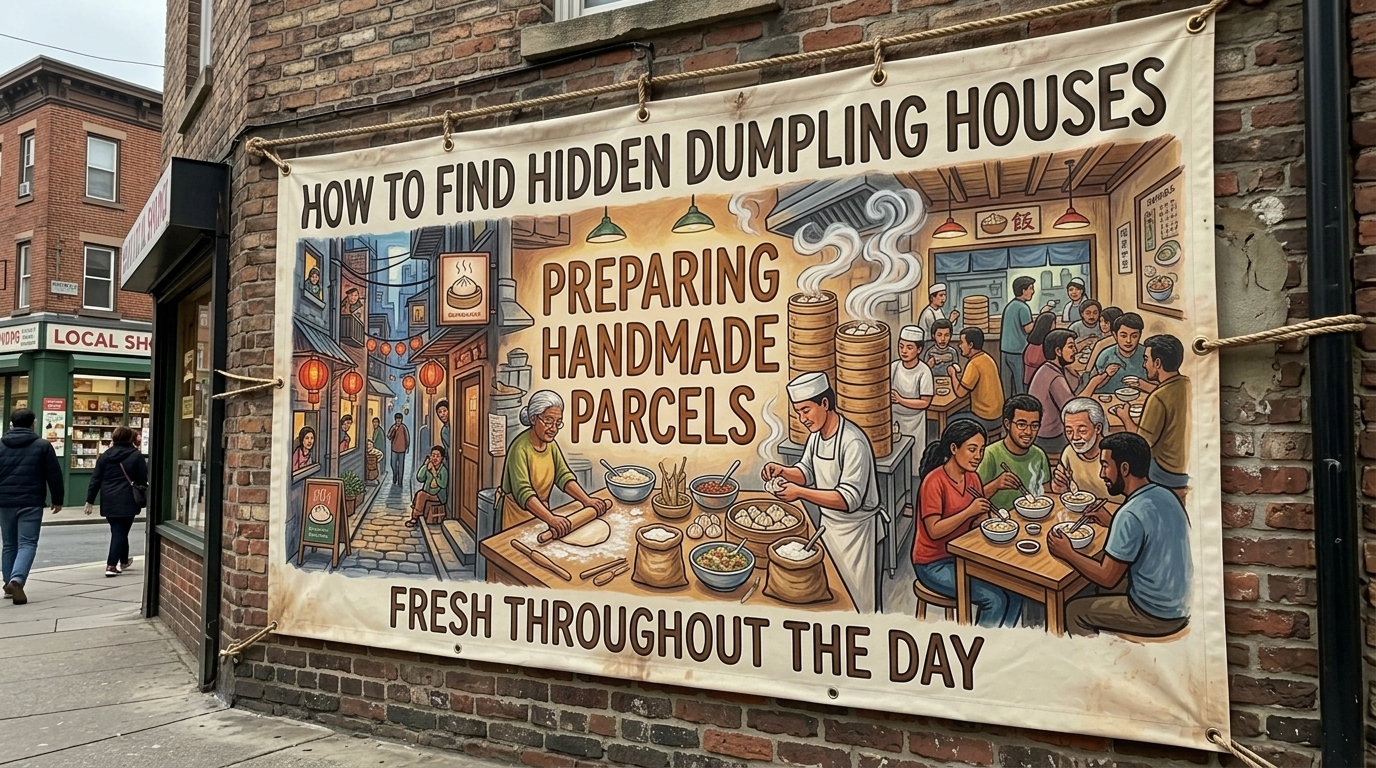
How to find hidden dumpling houses preparing handmade parcels fresh throughout the day? There is a quiet, rhythmic alchemy that occurs behind the frosted glass windows of a truly authentic dumpling house. Long before the morning rush or the evening dinner wave, while the rest of the city is still shaking off the morning fog, a master wrapper is already at work. Hands dusted with flour press, stretch, and fold resilient dough into neat, crescent-shaped crescents, tucking away fillings of minced pork and chives, rich ginger-scented broth, or earthy wild mushrooms.
For passionate culinary explorers living in or visiting major cultural melting pots like New York, San Francisco, California, Washington, and Texas, tracking down these hidden dumpling dens is a thrilling pursuit. Mass-market frozen chains and automated restaurant suppliers dominate many commercial strips, but the true gems—the tiny storefronts where handmade parcels are rolled, filled, and steamed fresh throughout the day—still guard the gold standards of culinary comfort.
This comprehensive guide explores how to sniff out these elusive neighborhood treasures, what separates mediocre wrappers from masterworks, and how to master the art of the dumpling hunt across America’s top food regions.
The Anatomy of a True Handmade Dumpling House
Not all dumplings are created equal. When searching for a premier neighborhood dumpling spot, you need to know what signs separate an authentic, scratch-made kitchen from a commercial wholesale operation.
1. The Visual and Auditory Cues
When you approach a genuine neighborhood dumpling house, look and listen before you even glance at the menu:
- The Window Display: Many traditional shops feature a front-facing workspace where a cook sits rhythmically rolling out dough wrappers with a short wooden dowel. If you see sacks of flour stacked in the corner and a constant rotation of freshly pinched parcels lining wooden trays, you have hit the jackpot.
- The Sound of the Cleaver: The crisp, rapid thwack-thwack-thwack of a heavy cleaver mincing pork shoulder, scallions, and ginger against a heavy tree-trunk cutting board is the universal soundtrack of fresh dumpling prep.
2. Wrapper Integrity and Textural Science
The secret to any world-class dumpling lies in its skin.
- Boiled/Water Dumplings (Jiaozi): The wrapper should strike a delicate balance—thick enough to hold a rich, juicy meatball and its natural broth without tearing, yet tender enough to melt smoothly on the palate with a slight, pleasant elasticity (Q texture).
- Pan-Fried Dumplings (Guotie/Potstickers): These require a sturdy bottom crust that achieves a golden, glass-like crunch from a flour-water slurry fried in a heavy iron skillet, while keeping the upper folds soft and steamed.
- Soup Dumplings (Xiao Long Bao): The ultimate test of kitchen craft. The wrapper must be impossibly thin yet structurally sound enough to hold a boiling-hot gelatinous soup broth and pork filling without bursting when lifted with chopsticks.
Regional Spotlight: Uncovering Dumpling Gems Across the Map
While dumpling culture has ancient roots, it has evolved uniquely across America’s vibrant regional landscapes:
New York: The Underground and Historic Enclaves
From the labyrinthine streets of Manhattan’s Chinatown and Flushing’s subterranean food courts in Queens to independent spots in Brooklyn, New York is a treasure trove of regional Chinese, Tibetan, and Korean dumpling styles.
- Pro Tip: Look for basement-level stalls or unassuming storefronts with Chinese-only signage where elderly locals queue up for paper trays of water dumplings served with black vinegar and chili oil.
San Francisco & Northern California: Farm-to-Table Freshness Meets Tradition
Northern California’s obsession with sustainable, local agriculture translates directly into exceptional dumpling fillings. Local chefs source organic pork, fresh wild mushrooms, and sustainably harvested Dungeness crab to craft fusion and traditional parcels that celebrate seasonal harvests.
Southern California & Greater California: The Suburban Culinary Powerhouse
The sprawling valleys and metropolitan hubs of Southern California harbor world-class dumpling empires and hidden strip-mall operations alike. Here, you will find everything from traditional Shanghainese soup dumpling houses to modern artisan pop-ups experimenting with local California produce.
Washington: Pacific Northwest Maritime Influences
Washington’s damp, crisp climate makes steaming hot dumplings an absolute essential. Seattle and surrounding areas feature unique independent shops that incorporate Pacific Northwest flavors, such as wild salmon, geoduck, and locally foraged forest mushrooms, into traditional dumpling styles.
Texas: Big Flavors and Fusion Innovation
Texas may be legendary for barbecue, but its diverse metropolitan areas—Austin, Houston, and Dallas—boast thriving, innovative Asian culinary scenes. Texas dumpling houses often blend traditional wrapping techniques with bold regional flavor profiles, pairing classic pork or shrimp with smoky spices and locally sourced herbs.
Insider Tips for Finding and Enjoying Hidden Dumpling Spots
- Follow the Kitchen Schedule: Fresh dumplings are usually made in batches throughout the day. Ask the staff when the next batch of fresh wrappers is being rolled to experience them at their absolute peak texture.
- Master the Dipping Sauce Ratio: Don’t drown your dumplings in heavy sauces. The classic baseline is three parts high-quality Chinkiang black vinegar to one part soy sauce, optionally spiked with a spoonful of house-made roasted chili oil or shredded fresh ginger.
- Look for Tight Menus: The best dumpling houses specialize. If a menu lists 150 items ranging from chow mein to sweet and sour chicken, it is likely a general takeout joint. If the menu focuses heavily on 5 to 10 variations of dumplings, wontons, and handmade noodles, you are in the right place.
- Inspect the Steam: Authentic shops use bamboo baskets stacked high, sending fragrant plumes of steam into the dining room.
10 Frequently Asked Questions (FAQs)
1. How can I tell if a dumpling wrapper is handmade or store-bought?
Handmade wrappers have irregular edges, slight thickness variations, and a powdery dusting of flour on the surface. Store-bought machine-cut wrappers are perfectly round, uniform in thickness, smooth, and often treated with preservatives to prevent sticking.
2. What is the difference between jiaozi, potstickers, and wontons?
Jiaozi are typically boiled or steamed with medium-thick wrappers. Potstickers (guotie) are pan-fried with a crispy skirt. Wontons feature much thinner, silkier wrappers, are typically folded into triangular shapes, and are usually served in clear broths or tossed in chili oil.
3. How do I eat a soup dumpling (Xiao Long Bao) without burning my mouth?
Use your chopsticks to lift the dumpling gently by its top knot and place it onto your soup spoon. Nibble a tiny hole in the side of the wrapper to let the steam escape, sip the rich broth carefully from the spoon, and then dip the remaining dumpling in vinegar and ginger before eating it whole.
4. Why do some dumpling skins turn gummy or soggy?
Gummy skins usually happen when dumplings are boiled in insufficient water, overcooked, or left sitting in liquid too long. Freshly made wrappers cooked in a rolling boil maintain their chew far better than frozen ones.
5. Can I freeze fresh handmade dumplings at home?
Yes! Place fresh, uncooked dumplings in a single layer on a parchment-lined baking sheet in the freezer for one hour until solid. Then transfer them to a freezer bag. Cook them straight from frozen by dropping them into boiling water—just add an extra minute or two to the cooking time.
6. What are the best fillings for beginners trying authentic dumplings?
Classic pork and chive, pork and napa cabbage, or chicken and sweet corn offer balanced, approachable flavor profiles that highlight the quality of the wrapper and meat.
7. Why is black vinegar served with Chinese dumplings?
Chinkiang black vinegar provides a malty, rich, and tangy acidity that cuts through the savory richness of pork fat and sesame oil, balancing the flavor profile of the dish.
8. Are there vegetarian or vegan options at traditional dumpling houses?
Many traditional shops offer vegetable-heavy fillings featuring ingredients like bok choy, pressed tofu, shiitake mushrooms, glass noodles, and Chinese chives (jiucai).
9. How do restaurants get that crispy “skirt” on pan-fried potstickers?
Chefs pour a slurry made of water, a small amount of flour or cornstarch, and oil into the hot pan halfway through frying, then cover it with a lid. As the water evaporates, it leaves behind a delicate, lacy golden crisp connecting all the dumplings together.
10. Where is the best place to start looking for hidden dumpling houses in major cities?
Start by exploring authentic neighborhood food courts, bustling immigrant residential enclaves, and independent grocery store food counters rather than trendy downtown commercial districts.
Conclusion
There is an undeniable magic in discovering a tiny, unassuming dumpling house tucked away on a bustling city corner or a quiet neighborhood street. It connects us to centuries of culinary tradition, human craftsmanship, and community warmth. Whether you are hunting for delicate soup dumplings in San Francisco, exploring underground food halls in New York, or savoring fresh parcels across Texas, Washington, and California, the quest for the ultimate handmade dumpling is an adventure well worth taking. Follow your senses, look for the flour-dusted windows, and savor every single bite.