There is a distinct kinetic energy that reverberates through the streets of West Chelsea. While major international cultural institutions like the Museum of Modern Art (MoMA) in Midtown or the Whitney Museum in the Meatpacking District draw massive tourist throngs, the true beating heart of New York City’s contemporary art world pulses quietly along the converted industrial blocks between 10th and 11th Avenues in Chelsea.
Whether you have relocated from the wide, sunlit horizons of Texas, the coastal creative enclaves of California, the pine-shrouded studios of Washington, or the tech-pioneering hills of San Francisco, discovering Chelsea’s independent gallery scene is a transformative experience. Home to over 300 commercial and independent art galleries packed into a few square blocks, this neighborhood represents the highest concentration of cutting-edge contemporary art anywhere on the planet.
Navigating this labyrinth of concrete, brick, and glass without a strategy can be overwhelming. This comprehensive guide provides everything you need to know to explore, appreciate, and master the independent art galleries of West Chelsea like a seasoned insider.
The Genesis of Chelsea Art: From Industrial Warehouses to Cultural Mecca
To truly appreciate modern Chelsea, you must understand its industrial lineage. Prior to the mid-1990s, West Chelsea was a gritty maritime and industrial waterfront zone characterized by railway spurs, freight yards, automotive garages, and brick manufacturing warehouses.
When soaring real estate prices in SoHo forced artists and dealers to look northward in the mid-90s, gallerists realized that Chelsea’s cavernous, high-ceilinged industrial warehouses with massive freight elevators and raw concrete floors made the ultimate exhibition spaces. Today, these historic structures house some of the most influential independent and contemporary art galleries in the world—free of charge to the public.
Step 1: Navigating the District (The Grid and the Architecture)
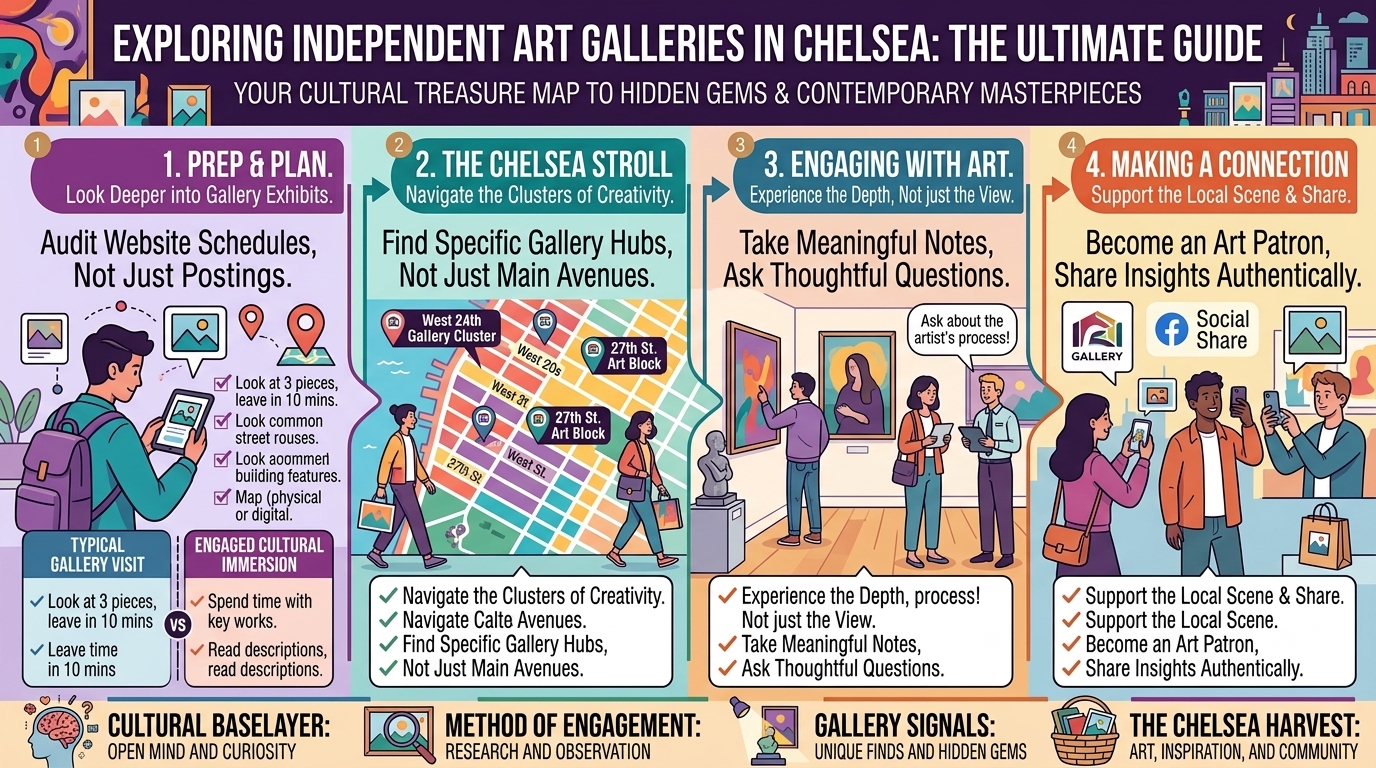
Chelsea’s gallery ecosystem operates on a distinct rhythm and geography, centered primarily between West 18th and West 28th Streets, stretching westward from 10th Avenue toward the Hudson River.
1. Decoding the Gallery Formats
- The Mega-Galleries: Institutions like Gagosian, David Zwirner, and Hauser & Wirth occupy massive multi-story architectural compounds with museum-grade lighting and installation spaces. While incredible, they are corporate commercial spaces.
- The Independent & Emerging Spaces: Tucked down side streets or on upper floors are smaller, independent, and artist-run galleries (such as White Columns nearby, or specialized project spaces). These independent outposts are where radical ideas, avant-garde mediums, and raw, unfiltered emerging talent are first introduced to the world.
2. The High Line Advantage
Running directly overhead along the western edge of Chelsea is the High Line—an elevated linear park built on a historic freight rail line.
- The Insider Tip: Use the High Line as your viewing platform. Several independent galleries feature direct viewing windows or outdoor sculpture terraces that intersect with the park, allowing you to preview installations from above before descending to street level.
Step 2: The Art-Hopper’s Playbook (Tactical Tips for Your Visit)
Visiting Chelsea galleries is an art form in itself. Because these spaces are functioning commercial businesses rather than traditional public museums, navigating them requires understanding unwritten etiquette.
1. Master Gallery Hours and Opening Cycles
- The Schedule: Most Chelsea galleries are open Tuesday through Saturday, from 10:00 AM to 6:00 PM. They are strictly closed on Sundays and Mondays.
- Thursday Night Openings: Thursday evenings (typically between 6:00 PM and 8:00 PM) are the golden hour of the Chelsea art scene. Galleries host public opening receptions for new exhibitions. While crowded, these events offer vibrant energy, complimentary wine, and occasional opportunities to converse directly with artists and curators.
2. Gallery Etiquette: How to Walk Through the White Cube
- Admission is 100% Free: Unlike museums that charge steep ticket fees, independent galleries in Chelsea do not charge admission. You do not need an appointment for standard exhibitions.
- The Bag Rule: Just like museums, large backpacks and bulky umbrellas must be checked at the front desk to protect fragile artworks.
- Photography Policies: Many galleries permit photography (without flash) for personal use, but always check for small “No Photography” icons near the entrance desk out of respect for copyright laws.
- Speak Up: Do not be intimidated by the minimalist white walls and austere front desks. Gallery associates are hired to discuss the work. Approaching the desk and asking, “Can you tell me a bit about the artist’s process for this series?” unlocks deeply fascinating conversations.
Step 3: Must-Visit Independent Spaces and Hidden Gems
While blue-chip galleries dominate the main thoroughfares, seek out these independent, experimental, and project-based spaces that champion non-traditional mediums:
- Printed Matter (West 22nd Street): An independent non-profit organization dedicated to the publication, display, and distribution of artists’ books and zines. It is an incredible treasure trove of independent publishing and underground art ephemera.
- The Project Spaces on West 20th–24th Streets: Look for second-floor walk-ups and discreet ground-level doors bearing minimal signage. These smaller independent rooms frequently host solo exhibitions by international artists who have never shown in the United States before.
10 Frequently Asked Questions (FAQs)
1. Do I need to pay an admission fee to enter Chelsea art galleries?
No! All commercial and independent art galleries in Chelsea are entirely free and open to the general public during normal operating hours.
2. Can I buy art in these galleries if I am not a millionaire collector?
While many blue-chip works sell for hundreds of thousands of dollars, independent and emerging-artist galleries frequently feature smaller works, editions, prints, and zines ranging from $50 to a few thousand dollars. Furthermore, browsing and educating your eye costs nothing.
3. What are the best days and times to visit to avoid heavy crowds?
Wednesday or Friday mornings between 10:00 AM and 12:00 PM are the quietest times. You will often have entire gallery rooms to yourself, allowing for intimate, contemplative viewing.
4. Are children and strollers welcome in Chelsea galleries?
While children are legally permitted, standard gallery spaces feature delicate, fragile installations, expensive sculptures resting unprotected on floors, and quiet, echoic environments. Strollers can also be difficult to maneuver in crowded or multi-level spaces.
5. Can I take photographs inside the galleries for social media?
Generally yes, provided you turn off your flash (which can damage light-sensitive works or distract other viewers). However, always look for posted signs or ask the gallery attendant first.
6. How often do gallery exhibitions change in Chelsea?
Exhibitions typically rotate every 4 to 6 weeks. This means there is always something entirely new to see, even if you visit the neighborhood monthly.
7. What is the difference between a museum and a commercial gallery?
Museums acquire and preserve permanent collections for public education. Commercial and independent galleries represent living artists, mount temporary exhibitions to showcase new work, and function as businesses that sell art to collectors and institutions.
8. How do I find out when gallery opening receptions are happening?
Platforms like GalleryGuide, Artforum Agenda, and independent newsletters track weekly opening schedules across West Chelsea.
9. Where is the best place to grab coffee or food during a Chelsea gallery crawl?
The surrounding neighborhood is packed with world-class options, from trendy cafes near the High Line to the bustling food stalls inside Chelsea Market on West 15th Street.
10. Why is Chelsea considered the global epicenter of contemporary art?
Because the density of world-class spaces, the concentration of influential international collectors, and the historic industrial architecture combine to create an unmatched ecosystem where global art trends are born every single week.
Conclusion
Exploring the independent art galleries in the Chelsea neighborhood is one of the most culturally enriching experiences New York City has to offer. By stepping past the pristine glass doors of West Chelsea’s historic warehouses, you unlock a dynamic, ever-changing world of contemporary expression, radical ideas, and breathtaking visual storytelling—completely free of charge.
Expand your perspective, immerse yourself in urban culture, and discover more art guides, city itineraries, and lifestyle inspiration right here at nyattitude.com to help you master life in the greatest cities on earth!