Welcome to nyattitude.com, your definitive digital guide for urban exploration, local history, and discovering hidden architectural treasures nestled within major metropolitan landscapes. Whether you are walking the historic harbor edges of New York City and San Francisco, tracing the maritime fabric of Washington state, exploring coastal waters across California, or investigating industrial port history in Texas, our cities hold profound secrets.
When most people think of historic lighthouses and weathered maritime landmarks, they picture windswept, isolated cliffs miles from civilization. Yet, many of the nation’s most storied navigational beacons and nautical monuments are located entirely within bustling city limits. Trapped between towering skyscrapers, modern suspension bridges, and busy urban parks, these historic outposts offer a fascinating glimpse into the seafaring past of America’s greatest ports.
In this comprehensive, SEO-optimized guide, we will explore urban maritime history, reveal where to find hidden lighthouses inside major metropolitan areas, and provide actionable tips for planning an unforgettable urban nautical excursion.
The Industrial Evolution: Lighthouses in the Concrete Jungle
Why are there historic lighthouses inside modern city limits? The answer lies in the explosive growth of American commerce and maritime trade.
1. Navigating Bustling Urban Harbors
In the 18th and 19th centuries, cities like New York, San Francisco, Seattle, and Galveston were surging ports of entry. As trade vessels, immigration ships, and cargo schooners crammed into narrow river mouths and complex bays, municipal governments and the United States Lighthouse Board erected navigational lights right where the shipping lanes converged. Over decades, as cities expanded outward through land reclamation and urban sprawl, these once-isolated points were swallowed by the metropolis, leaving historic lighthouses standing proudly amid urban parks and industrial waterfronts.
2. Architectural Contrast
There is a powerful visual poetry in standing beside a 19th-century cast-iron lighthouse while a modern commuter ferry or massive cargo container ship glides past, framed against a backdrop of urban skyscrapers. These landmarks remind us that our cities were built by the sea, the river, and the bay.
Regional Maritime Landmarks Across Major Metros
Different regions offer unique maritime histories shaped by local geography, trade, and engineering:
- New York City: From the iconic Little Red Lighthouse (officially Jeffrey’s Hook Light) tucked under the George Washington Bridge in Manhattan to historic beacons across Brooklyn and Staten Island, New York Harbor is rich with urban maritime lore.
- San Francisco & California: The San Francisco Bay Area is a treasure trove of urban lighthouses and naval landmarks. Landmarks like Point Blunt, Alcatraz Light (the first lighthouse on the West Coast), and historic stations along the San Francisco and Oakland waterfronts stand amid sweeping urban panoramas.
- Washington State: Puget Sound and its urban waterfronts—including areas surrounding Seattle and Tacoma—blend maritime heritage with striking Pacific Northwest backdrops, featuring historic light stations, Coast Guard quarters, and preserved maritime museums.
- Texas: Along the Gulf Coast and industrial deep-water channels, historic beacons and maritime markers tell the story of Texas’s booming maritime economy, linking early Spanish colonial and 19th-century shipping roots to modern global trade.
Step-by-Step Guide: How to Locate and Explore Urban Lighthouses
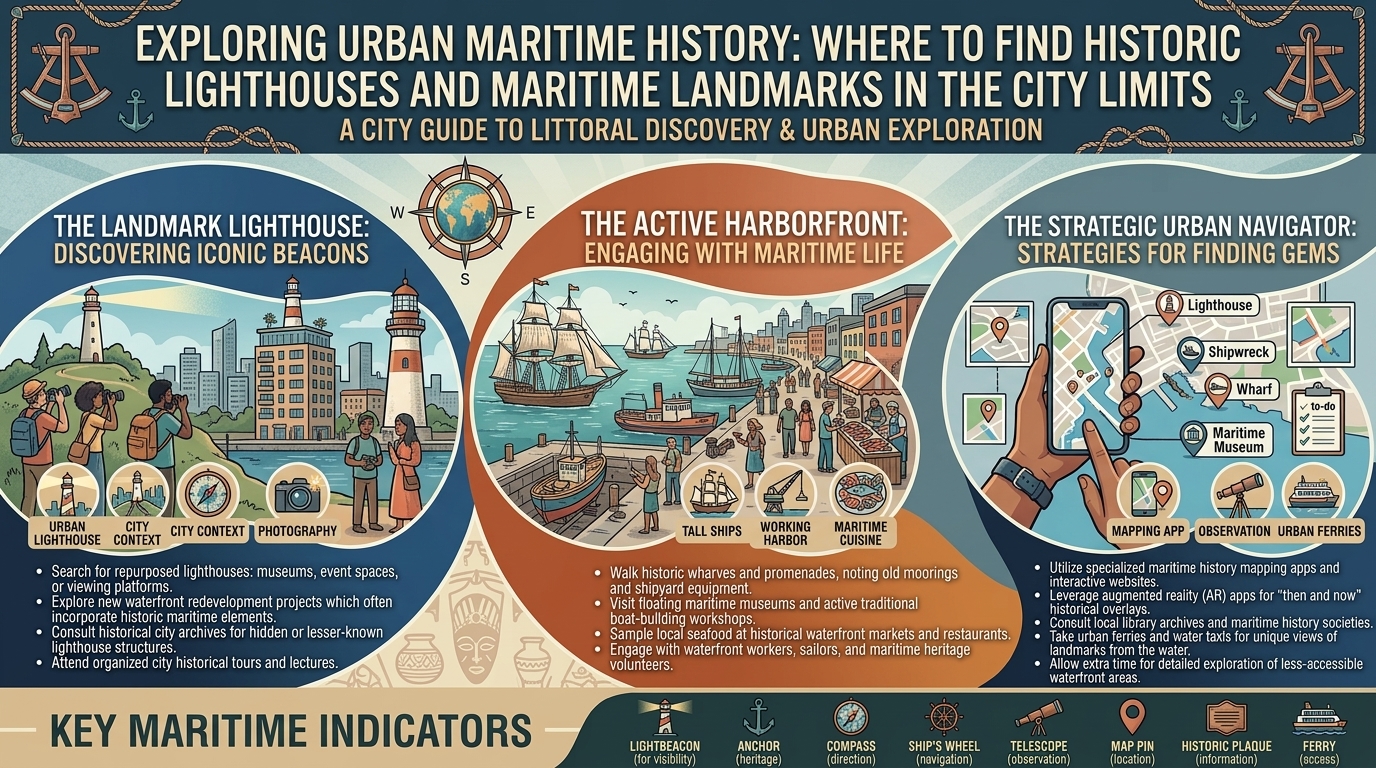
Finding historic lighthouses hidden in plain sight within a massive city requires a mix of historical research and urban navigation. Follow this step-by-step approach:
      [ Step 1: Historical Research ]  -->  Consult Coast Guard & Local Maritime Archives
                   ↓
      [ Step 2: Mapping Urban Parks ]  -->  Check City Park Systems & Waterfront Trails
                   ↓
      [ Step 3: Plan Access & Transit ] -->  Verify Public Walkways vs. Restricted Federal Lands
Step 1: Historical and Archival Reconnaissance
- Dive into local maritime history books or check online databases maintained by organizations like the U.S. Lighthouse Society.
- Look for old nautical charts showing where rocks, shoals, or narrow channels forced port authorities to place warning beacons within city boundaries.
Step 2: Cross-Reference with Modern Parks and Greenways
- Many urban lighthouses have been preserved by being incorporated into municipal parks, state historic sites, or waterfront greenways (such as the Hudson River Greenway in New York or the San Francisco Bay Trail). Search park district maps to find public access points.
Step 3: Verify Access, Tours, and Active Status
- Some urban lighthouses are still active aids to navigation maintained by the U.S. Coast Guard (restricted access), while others have been converted into public museums, gift shops, or historic monuments open for weekend tours. Always check operating hours before setting out.
Comprehensive Tips for Your Urban Maritime Excursion
- Combine Your Visit with a Waterfront Trail: Most urban lighthouses are connected to scenic walking and biking paths. Rent a city bike or lace up comfortable walking shoes to make a full day of exploring the waterfront.
- Bring a Wide-Angle Camera Lens: Because urban lighthouses are often squeezed between modern infrastructure (like massive bridges, highways, or apartment complexes), a wide-angle lens helps capture the fascinating architectural contrast between past and present.
- Check the Tide Schedules: If you are visiting lighthouses built on rocky outcrops, breakwaters, or tidal flats (common in bay areas), check local tide charts to ensure access paths won’t be temporarily submerged.
Frequently Asked Questions (FAQ)
1. Can you go inside and climb all urban lighthouses?
No. While some urban lighthouses have been converted into museums or historic sites that allow visitors to climb the tower during seasonal open houses, many are automated, inactive, or located on active federal/Coast Guard property with restricted public entry.
2. What is the most famous urban lighthouse in New York City?
The Little Red Lighthouse (Jeffrey’s Hook Light), made famous by the classic children’s book The Little Red Lighthouse and the Great Gray Bridge, sits right on the Hudson River shoreline directly beneath the base of the George Washington Bridge in Manhattan.
3. Are urban lighthouses still used for navigation today?
Some are! While modern GPS and electronic navigation have replaced many traditional lights, several urban lighthouses remain official, active aids to navigation maintained by the Coast Guard, flashing automated warning signals nightly.
4. How can I find parking near waterfront historical sites in major cities?
Urban parking near waterfront parks can be expensive or limited. Whenever possible, take public mass transit, commuter rail, or rideshares, or utilize designated city greenway bike paths.
5. Are there any lighthouses located directly on San Francisco Bay islands?
Yes! Iconic landmarks like the Alcatraz Island Lighthouse (the West Coast’s oldest operating light when established) and lights on Yerba Buena Island and Angel Island sit right inside the bay, visible from the San Francisco city shoreline or accessible via ferry tours.
6. Do I need to pay an admission fee to see urban lighthouses?
Most urban lighthouses are located within public city parks or state historical reserves, meaning viewing them from the outside is completely free. Entering adjacent maritime museums or climbing historical towers may require a modest admission fee.
7. What makes urban lighthouses different from coastal lighthouses?
While coastal lighthouses were built on remote cliffs to warn ships of open-ocean hazards, urban lighthouses were engineered to guide vessels through narrow, congested inner-harbor channels, river bends, and busy docking zones.
8. Are pets allowed near urban lighthouse parks?
Generally, yes, if the lighthouse is situated within a public municipal park or waterfront trail. However, pets are typically not allowed inside historic buildings or museums unless they are certified service animals.
9. Can I volunteer to help preserve historic urban lighthouses?
Absolutely! Many local historical societies, conservancies, and maritime associations rely heavily on volunteers to give tours, maintain grounds, and assist with archival preservation projects.
10. What is the best time of day to photograph urban lighthouses?
Late afternoon and golden hour provide breathtaking lighting, casting warm sun across historic brick or cast-iron towers. Additionally, capturing these landmarks during “blue hour” right after sunset allows you to photograph them glowing against illuminated city skylines.
Conclusion
Discovering historic lighthouses and maritime landmarks tucked away within bustling city limits is a wonderful way to connect with the deep industrial and nautical roots of America’s metropolitan areas. Whether you are exploring the shadow of the George Washington Bridge in New York, gazing across San Francisco Bay, or tracking port history across Texas and Washington, these beacons tell a story of resilience, commerce, and exploration. Step off the beaten path, explore your city’s waterfront, and experience the fascinating intersection of past and present.
What historic maritime landmark or urban lighthouse is closest to your home, and have you ever explored its grounds?