Every great city possesses an invisible, vital pulse—a kinetic, restless current of ideas, sounds, colors, and ambitions that drives its cultural evolution forward. This is what we call creative energy. It is the invisible force that transforms brick alleys into open-air art galleries, vacant warehouses into buzzing artist collectives, and silent morning park benches into stages for spoken-word poets and acoustic visionaries.
Across America’s most culturally catalytic regions—from the relentless creative hustle of New York and the avant-garde spirit of San Francisco, to the sunlit innovators of California, the politically charged cultural minds of Washington, and the booming artistic renaissance of Texas—this energy is palpable. You do not merely look at it; you breathe it, feel it, and participate in it.
If you are a traveler, artist, entrepreneur, or urban explorer looking to move beyond surface-level tourism and truly plug into the creative engine of a metropolis, this comprehensive guide provides the ultimate roadmap. Discover how to immerse yourself fully in the artistic currents shaping our modern cities.
1. The Anatomy of Urban Creative Energy: What Drives a Metropolis?
Creative energy does not happen by accident; it is the result of a delicate ecosystem where geography, history, population diversity, and economic friction collide. When thousands of creative minds live in close physical proximity, ideas cross-pollinate at rapid speeds.
- Friction and Diversity: Cultural evolution thrives on diversity. When different immigrant backgrounds, socio-economic experiences, and artistic disciplines intersect in urban neighborhoods, entirely new genres of music, cuisine, design, and literature are born.
- Informal Spaces: Creative energy requires spaces where people can gather without corporate gates—sidewalk stoops, community gardens, underground jazz cellars, and public plazas.
- Risk-Tolerance: A city driving culture forward must be forgiving of failure. It must welcome unconventional ideas, bold murals, experimental theater, and radical architectural concepts.
2. Regional Creative Engines: Coast-to-Coast Cultural Hubs
Different regions channel their creative energy through distinct cultural expressions shaped by their unique environments.
New York and San Francisco: The Vanguard of Art and Protest
- New York: The creative energy of New York is defined by velocity and grit. From the independent galleries of the Lower East Side to experimental theater in Brooklyn and jazz heritage in Harlem, NYC rewards relentless ambition. The sheer density of the city forces creators to innovate constantly, blending high art with street-level counterculture.
- San Francisco: Steeped in a rich history of free speech, the Beat Generation, and technological innovation, San Francisco’s creative energy marries radical political activism with digital and fine art. From Mission District murals to waterfront poetry circles, the Bay Area pulses with a unique countercultural heartbeat.
Texas, California, and Washington: Frontier Innovation and Southern Renaissance
- California: Beyond San Francisco, California’s sprawling creative landscape—spanning Los Angeles, San Diego, and creative tech hubs—fosters a booming culture of visual arts, film production, sustainable design, and surf-inspired counter-culture.
- Texas: Texas cities like Austin (“Keep Austin Weird”), Houston, and Dallas are experiencing massive cultural booms. Blending traditional southern heritage with modern avant-garde film, culinary innovation, and live music scenes (especially indie and blues), Texas is a massive engine of contemporary creativity.
- Washington: In the Pacific Northwest, Seattle and surrounding Washington towns combine environmental consciousness with independent literary movements, grunge music heritage, and cutting-edge design, all framed by breathtaking natural landscapes.
3. Proven Strategies for Plugging Into Local Creative Communities
To move from being a passive observer of a city to an active participant in its creative energy, use these proven immersion strategies:
| Immersion Strategy | How to Execute It | Best For |
| Micro-Cultural Patronage | Attend independent film screenings, basement poetry slams, and local zine fairs instead of mega-concerts. | Supporting the grassroots creators keeping the city’s artistic soul alive. |
| Neighborhood Drifting (Derive) | Put away digital maps and wander on foot through historic arts quarters, industrial corridors, and immigrant enclaves. | Discovering hidden street art, independent bookstores, and unexpected architectural gems. |
| Co-Learning & Workshop Attendance | Sign up for community-run screenprinting classes, ceramics workshops, or open-air architectural sketching circles. | Transforming from a spectator into an active creator by learning hands-on skills from local artisans. |
| Engaging Local Archives & Zines | Visit independent neighborhood libraries, local historical societies, and radical archives to study underground urban movements. | Understanding the historical foundation that feeds current creative movements. |
4. Step-by-Step Guide: Designing Your Creative Immersion Itinerary
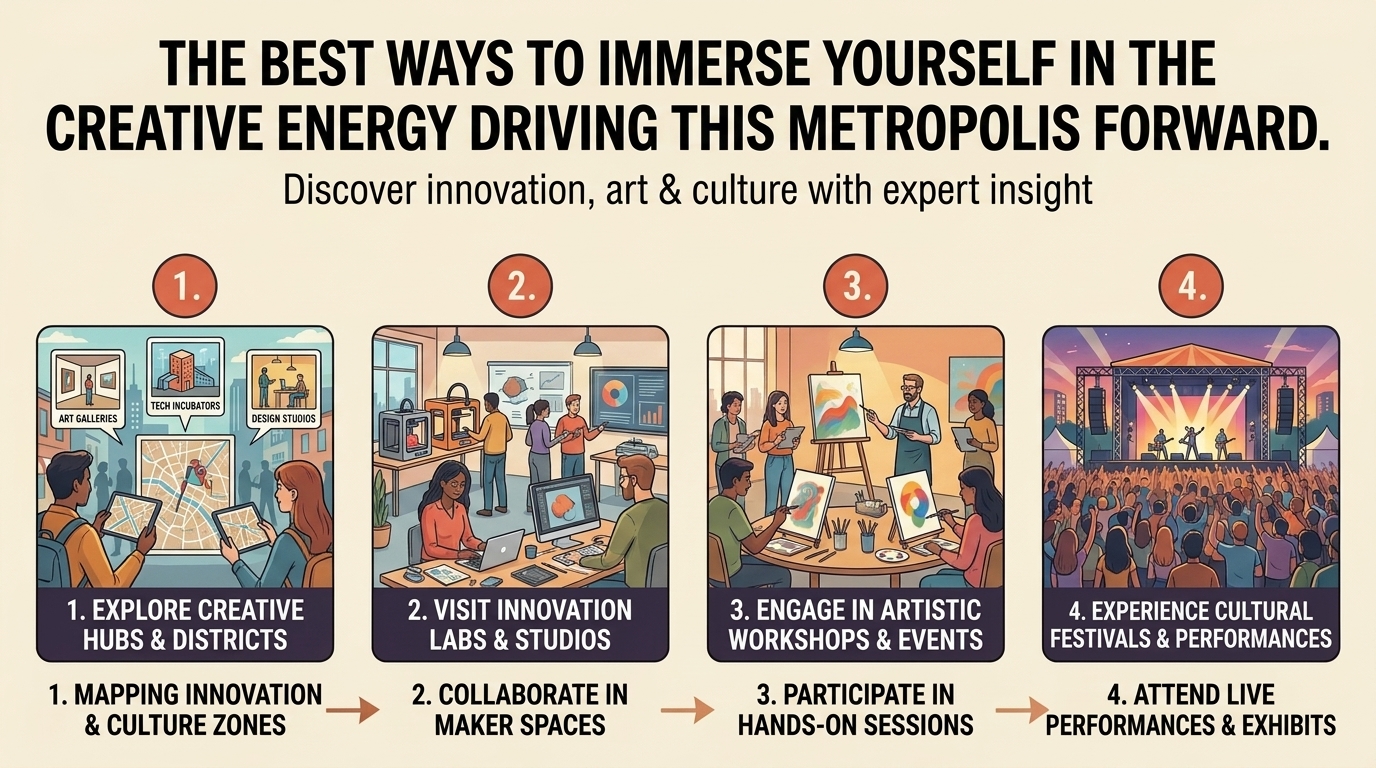
If you want to spend a week or a weekend completely immersed in the creative heartbeat of a metropolis, follow this structured blueprint:
- Morning Contemplation (8:00 AM – 11:00 AM): Start in a historic public square or independent neighborhood cafe. Sketch the architecture, observe commuters, and read local independent publications or poetry chapbooks.
- Midday Exploration (11:00 AM – 3:00 PM): Ditch standard tourist museums. Visit artist co-ops, independent record stores, vintage furniture showrooms, and community garden art installations. Speak directly with shopkeepers and local makers.
- Evening Immersion (6:00 PM – 10:00 PM): Attend a live neighborhood event—an outdoor poetry reading, a gallery opening in a converted warehouse, or an independent live music showcase in an intimate venue.
- Late-Night Reflection: Take a late walk through well-lit urban corridors, observing how the city shifts its tone as day turns to night, noting the neon lighting, shadows, and lingering street sounds.
5. Ten Frequently Asked Questions (FAQ)
1. What does “creative energy” mean in the context of a city?
It refers to the dynamic, active cultural momentum driven by local artists, musicians, writers, designers, and community members who continuously reinvent the city’s artistic, social, and structural identity.
2. How can I find underground or grassroots creative events?
Check local independent bookstore bulletin boards, follow regional neighborhood arts collectives on Instagram, browse community event calendars (like Resident Advisor or local subreddits), and pick up free local cultural zines.
3. Why are independent spaces more culturally vibrant than corporate entertainment complexes?
Independent spaces take artistic risks, prioritize community over maximum profit, and provide safe platforms for marginalized or avant-garde voices that corporate entities typically avoid.
4. What are the best cities in the United States for experiencing creative energy?
Cities with deep countercultural histories and high cultural diversity—such as New York, San Francisco, Austin, Seattle, and Los Angeles—are renowned for their powerful creative currents.
5. Do I need to be an artist to immerse myself in local creative culture?
Not at all! Being an engaged, curious audience member, buyer of independent art, patron of local poetry slams, and respectful observer is just as vital to the creative ecosystem.
6. How does gentrification impact a city’s creative energy?
Aggressive gentrification often drives up commercial rents, forcing independent galleries, studios, and artists out of neighborhoods, which can sterilize the local culture if not actively protected.
7. What is “neighborhood drifting” (or dérive)?
It is an exploratory technique where you walk through urban environments without a fixed destination, allowing architectural cues, street art, and atmospheric shifts to guide your route and spark inspiration.
8. How can I support local creators while traveling?
Buy chapbooks directly from local poets, purchase art from independent galleries, tip street musicians generously, attend ticketed community theater shows, and write positive reviews online.
9. What role do public spaces play in fostering creativity?
Public parks, plazas, and community gardens act as neutral canvases where diverse citizens collide, exchange ideas, host spontaneous performances, and build collective community resilience.
10. Where can I find more guides on exploring local culture and urban arts?
Keep exploring specialized regional lifestyle, art, and culture hubs like nyattitude.com, where we celebrate the independent spirit, creative energy, and unique heartbeat of America’s greatest cities.
Conclusion
Immersing yourself in the creative energy driving a metropolis forward requires curiosity, intentionality, and a willingness to step off the beaten tourist path. Whether you are exploring the avant-garde corridors of New York and San Francisco or tapping into the booming cultural renaissances of Texas, California, and Washington, the true soul of a city lives in its independent art, its grassroots communities, and its everyday human connections. Step outside, engage with local makers, and let the creative pulse of the city inspire your next adventure.
Looking for more guides on local arts, neighborhood culture, and authentic urban exploration? Continue browsing nyattitude.com to fuel your creative journey!