In an era defined by mass-produced, industrial coffee commodities sitting for months in distribution warehouses, a quiet aromatic renaissance is sweeping across major urban and regional landscapes. Whether you are seeking a meticulously roasted single-origin brew amidst the bustling avenues of New York, exploring artisan roasters tucked into the foggy neighborhoods of San Francisco and the wider California coffee corridor, tracking sustainable beans near policy-heavy districts in Washington, or uncovering the vibrant, community-driven coffee cultures thriving across Texas, discerning caffeine connoisseurs are making a conscious shift: they are bypassing corporate chains and sourcing organic, locally roasted coffee beans directly from independent micro-roasters.
Choosing independent micro-roasters is about much more than getting a caffeine fix; it is an endorsement of agricultural transparency, environmental sustainability, and artisanal mastery. Micro-roasters work directly with smallholder coffee farmers, ensuring fair wages, ethical supply chains, and superior green bean selection. When these raw beans meet the hands of a local roaster who tunes every batch by ear, sight, and aroma, the result is a cup of coffee bursting with complex flavor notes—floral, citrus, chocolatey, and fruit-forward—that industrial roasts simply cannot replicate.
This comprehensive guide explores the anatomy of micro-roasting, the importance of organic certification and direct trade, actionable tips for discovering independent roasters nearby, regional highlights across major American hubs, and a definitive framework to master the art of sourcing and brewing your local beans at home.
Part 1: Deconstructing Micro-Roasting vs. Industrial Production
To appreciate why locally roasted coffee commands loyalty, we must first understand the structural chasm separating independent micro-roasters from industrial coffee conglomerates.
1. The Industrial Coffee Pipeline
Mass-market commercial coffee brands operate on industrial efficiency. Huge volumes of low-grade Robusta or inferior Arabica beans are harvested mechanically, stored in giant silos for months, roasted in massive commercial drum ovens that blast beans at high temperatures to maximize volume (often burning the coffee to mask defects), and packaged into air-permeable bags sitting on supermarket shelves for up to a year.
- The Result: Stale, lifeless coffee dominated by harsh bitterness, lacking any nuance or natural regional character.
2. The Micro-Roaster Philosophy
Independent micro-roasters operate with precision, scale limitations, and passion. Roasting typically occurs in small batches ranging from 2 to 15 kilograms using specialized drum or fluid-bed roasters.
- The Precision: The roaster carefully monitors bean temperature, charge temperature, first crack, and development time. They roast specifically to highlight the inherent flavor profile (the terroir) of the coffee bean—whether it’s the blueberry notes of an Ethiopian natural or the chocolate-caramel profile of a Honduran washed coffee.
- Freshness Guarantee: Beans are sold at peak freshness (usually 3 to 14 days post-roast), ensuring that when you grind them at home, the volatile aromatic compounds explode into your cup.
Part 2: The Core Pillars of Sourcing Ethical, Organic Coffee
When evaluating independent roasters, look for three foundational commitments: organic growing practices, direct-trade transparency, and roast date transparency.
[ THE PILLARS OF ETHICAL COFFEE SOURCING ]
               │
               ├── 1. Organic Farming (Zero synthetic pesticides, healthy soil ecosystems)
               ├── 2. Direct or Relationship Trade (Fair wages, supporting smallholders)
               ├── 3. Roast Date Transparency (Printed roast dates, never vague expiration windows)
1. The Value of Organic and Regenerative Agriculture
Coffee is one of the most heavily chemically treated crops in the world when grown conventionally, utilizing synthetic fertilizers and pesticides that strip local soils and harm ecosystems.
- Organic Certification ensures that coffee is grown using natural composts, shade-grown canopies that preserve migratory bird habitats, and sustainable crop rotation. Many independent micro-roasters go beyond formal certification labels, establishing direct relationships with farmers practicing regenerative agriculture.
2. The Significance of the Roast Date
Supermarket coffee lists a “Best By” date that is often a year or more in the future. Local micro-roasters list the exact Roast Date (e.g., Roasted on Oct 12). Coffee beans undergo a degassing phase immediately after roasting, reaching peak flavor profile between 4 and 14 days post-roast. Knowing the exact roast date allows you to brew your coffee when it is at its absolute peak.
Part 3: Actionable Tips to Discover Independent Micro-Roasters Nearby
Finding exceptional local micro-roasters requires looking past mainstream coffee shop chains and utilizing targeted discovery strategies. Implement these five insider steps:
1. Partner with Independent Neighborhood Cafes
The absolute easiest way to find local micro-roasters is to visit independent specialty coffee shops that do not roast their own beans.
- Actionable step: Look at the retail shelf of your favorite local neighborhood cafe. Independent cafes almost always feature guest roasters from nearby micro-roasteries. Ask the barista: “Which local roaster do you feature on filter brew this week?”
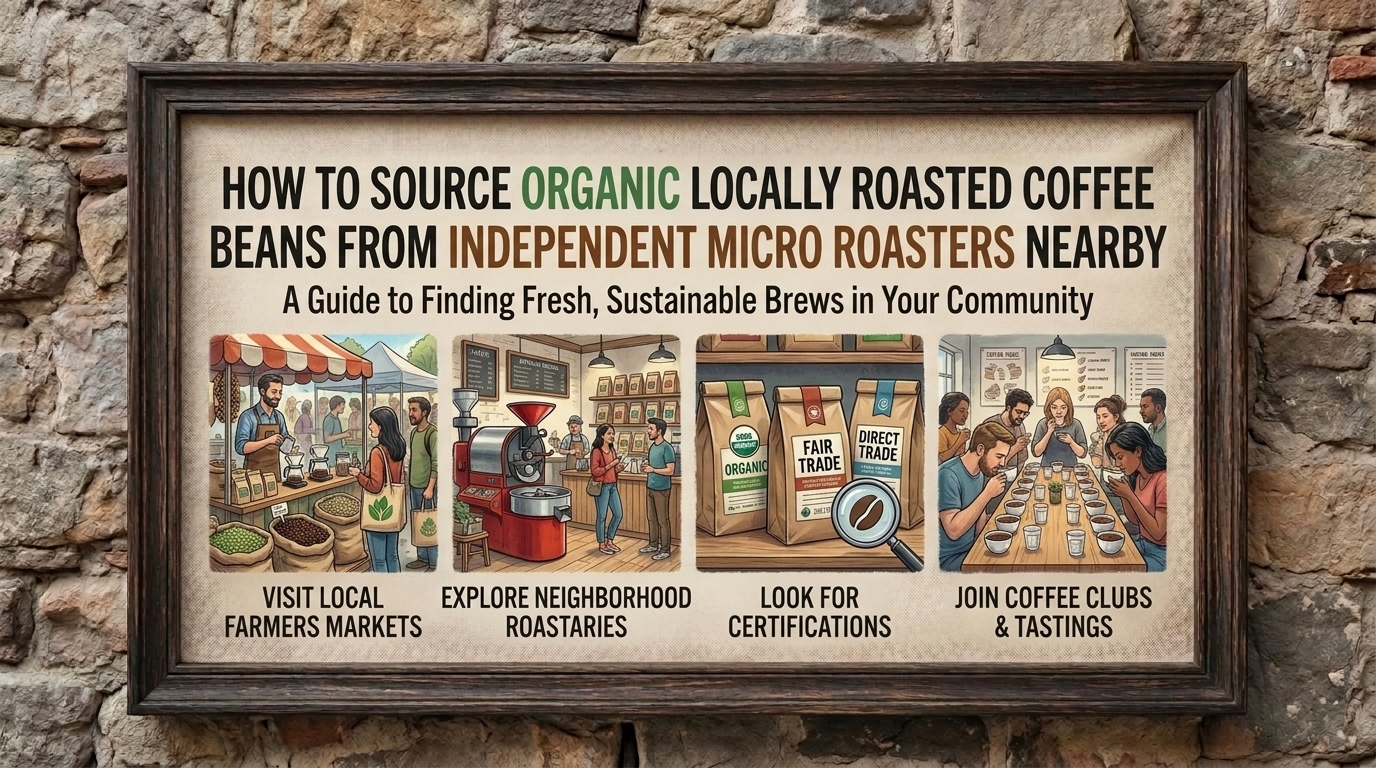
2. Attend Regional Farmers Markets and Craft Fairs
Micro-roasters are small business entrepreneurs who love engaging directly with their local community.
- Actionable step: Visit historic weekend farmers markets or artisanal food fairs in your city (such as Union Square in New York, Ferry Plaza in San Francisco, or local weekend markets in Austin and D.C.). You will frequently find local roasters offering complimentary espresso shots and selling freshly packaged bags with roast dates from that same week.
3. Leverage Specialty Coffee Directories and Interactive Maps
Digital mapping tools have made finding local roasters much easier if you know what keywords to use.
- Actionable step: Avoid searching generic terms like “coffee shops.” Instead, search for “micro-roastery,” “specialty coffee roaster,” or “local coffee roasters” on mapping apps, or consult specialty coffee discovery networks like Sprudge, Bean Box, or local independent food subreddits.
4. Inspect the Bag Label for Critical Data
When evaluating a bag of coffee at a local roaster or shop, examine the packaging carefully. A reputable micro-roaster will proudly display:
- Country of origin and specific washing station or farm name.
- Altitude and processing method (Washed, Natural, Honey).
- Exact tasting notes (e.g., Jasmine, Meyer Lemon, Cane Sugar).
- Exact roast date. If a bag lacks these details, it is likely mass-market wholesale repackaged as artisan.
5. Inquire About Cupping Sessions and Roastery Tours
Many independent micro-roasters host public “cupping” sessions (professional coffee tastings) or open-house roasting days on weekends.
- Actionable step: Follow local roasters on social media or sign up for their newsletters. Attending a cupping session is an incredible education in understanding how processing methods and origins alter flavor profiles.
Part 4: Regional Perspectives: Micro-Roaster Culture Across Major Hubs
The character of independent micro-roasting reflects the unique climate, culture, and pace of its surrounding region:
- New York: Fast-paced, high-density, and culturally diverse. New York micro-roasters specialize in bright, vibrant single-origin light roasts for remote workers and creative professionals, as well as rich, chocolatey medium blends suited for classic diner or espresso setups.
- San Francisco & California: The historic pioneers of the West Coast specialty coffee movement. Bay Area and California roasters emphasize hyper-sustainable direct trade, experimental anaerobic processing methods, compostable packaging, and light-roast profiles that highlight fruit and floral acidity.
- Washington: Blends policy-driven professionalism with a booming craft beverage scene. Washington roasters often feature balanced, comforting medium roasts designed for long office hours, alongside rare, exquisite micro-lots sourced from ethical Latin American and East African cooperatives.
- Texas: Embracing grand scale, warm hospitality, and bold local pride, Texas micro-roasters in Austin, Dallas, Houston, and San Antonio offer welcoming roasting showrooms, rich medium-dark blends, and innovative cold-brew programs designed to beat the warm southern climate.
Part 5: Step-by-Step Guide: Sourcing and Brewing Your Local Beans
[ THE LOCAL COFFEE SOURCING & BREWING RITUAL ]
       │
       ├── 1. Discovery (Identify local micro-roaster via farmers market or specialty shop)
       ├── 2. Selection (Choose single-origin organic beans with a fresh roast date)
       ├── 3. At-Home Storage (Store in an airtight ceramic/opaque container, never fridge)
       ├── 4. Fresh Grinding (Burr grinder just before brewing to preserve aromatics)
       └── 5. Mindful Extraction (Precise water temperature and pour-over/french press ratio)
- Step 1: The Discovery: Locate an independent micro-roaster within your regional footprint.
- Step 2: The Selection: Purchase a bag of single-origin light or medium roast beans roasted within the last 7 to 10 days.
- Step 3: Proper Storage: Keep your beans in their original one-way valve bag or transfer them to an airtight, opaque container. Never store coffee in the refrigerator or freezer, as moisture and food odors will ruin the delicate oils.
- Step 4: Grind Just Before Brewing: Invest in a quality conical burr grinder. Grind your beans immediately before brewing to prevent the rapid oxidation that destroys volatile aromatics within minutes.
- Step 5: The Brew: Use filtered water heated to 200°F (just off a boil) and a balanced brew ratio (typically 1:16 coffee-to-water) using a pour-over, French press, or drip machine.
Part 6: 10 Frequently Asked Questions (FAQs)
1. Why do specialty micro-roaster beans cost more than supermarket coffee?
Supermarket coffee is a mass-produced industrial commodity grown with heavy chemical fertilizers, harvested mechanically, and priced to move volume. Micro-roasters pay fair, sustainable wages to smallholder farmers practicing ethical organic agriculture, use high-grade Arabica beans, and roast in small batches by hand. You are paying for food integrity, ethical labor, and extraordinary flavor.
2. How long do locally roasted coffee beans stay fresh after the roast date?
While beans are technically safe to consume for months, they hit their optimal flavor window between 4 and 21 days post-roast. After 4 weeks, volatile aromatic compounds begin to dissipate, and the coffee gradually loses its bright flavor complexity, becoming flat or woody.
3. Should I store my coffee beans in the refrigerator or freezer?
No! This is a common myth. Storing coffee beans in the refrigerator exposes them to humidity, condensation, and food odors (like onions or cheese), which instantly ruin the delicate coffee oils. Keep them in a sealed, opaque container at room temperature away from direct sunlight.
4. What is the difference between Light, Medium, and Dark roasts?
Roast level refers to how long the green beans are exposed to heat in the roaster drum:
- Light Roast: Preserves the bean’s natural origin characteristics (fruit, floral, citrus notes) with high acidity and no surface oil.
- Medium Roast: Balances origin flavors with caramel and chocolate development, offering moderate acidity and body.
- Dark Roast: Emphasizes roaster-driven flavors (smoke, dark chocolate, molasses) with low acidity and shiny oil on the bean surface.
5. Do micro-roasters offer decaf options that actually taste good?
Yes! Industrial decaf uses harsh chemical solvents (like methylene chloride) to strip caffeine. Quality micro-roasters source decaf beans processed via the Swiss Water Process or Sugar Cane (EA) Process, which use pure water or natural compounds to remove 99.9% of caffeine while preserving the rich, authentic flavor of the coffee.
6. What is the single most important equipment upgrade for making great coffee at home?
A burr grinder. Pre-ground coffee loses over 60% of its aroma within 15 minutes of grinding. A burr grinder ensures uniform particle size, which guarantees even extraction and clean flavors, whereas cheap blade grinders chop beans into uneven boulders and dust.
7. What does “Direct Trade” mean, and why is it better than Fair Trade?
While Fair Trade certification guarantees a baseline minimum price, it often involves heavy bureaucratic fees and does not guarantee high quality or direct communication between farmer and buyer. Direct Trade means the roaster works directly with the farmer or cooperative, cutting out middlemen and paying significantly higher premiums for superior quality and sustainable farming.
8. Can I use locally roasted specialty beans in a standard automatic drip machine?
Absolutely! While pour-overs and French presses are popular, freshly ground local micro-roaster beans will dramatically improve the quality of coffee brewed in any standard home drip machine. Just ensure your water is filtered and your grind size matches your machine.
9. How can I find micro-roasters when traveling to a new city?
Search for local independent specialty cafes, look up regional coffee roaster guilds, or check food journalism platforms like Sprudge or local city subreddits. When visiting major hubs like New York, San Francisco, or Austin, independent coffee maps will immediately guide you to top local roaderies.
10. Why do some specialty coffees taste sour or fruity? Is that a defect?
That “sourness” is actually fruit acidity, which is a natural, desirable characteristic of high-altitude Arabica beans, especially light roasts processed via “washed” or “natural” methods. Industrial coffee is dark-roasted into oblivion to eliminate all natural acidity, so uninitiated palates sometimes mistake bright fruit notes for sourness. Embrace the fruit!
Conclusion
Sourcing organic locally roasted coffee beans from independent micro-roasters transforms your daily morning ritual from a mechanical routine into a mindful, sensory celebration.
Whether you are enjoying a bright single-origin cup in New York, exploring sustainable roasters in San Francisco and California, finding comforting blends in Washington, or uncovering vibrant coffee showrooms in Texas, supporting independent roasters connects you directly to global agricultural artistry. Skip the stale supermarket aisles, seek out your local micro-roaster, grind fresh, and taste the difference that authentic craft makes.