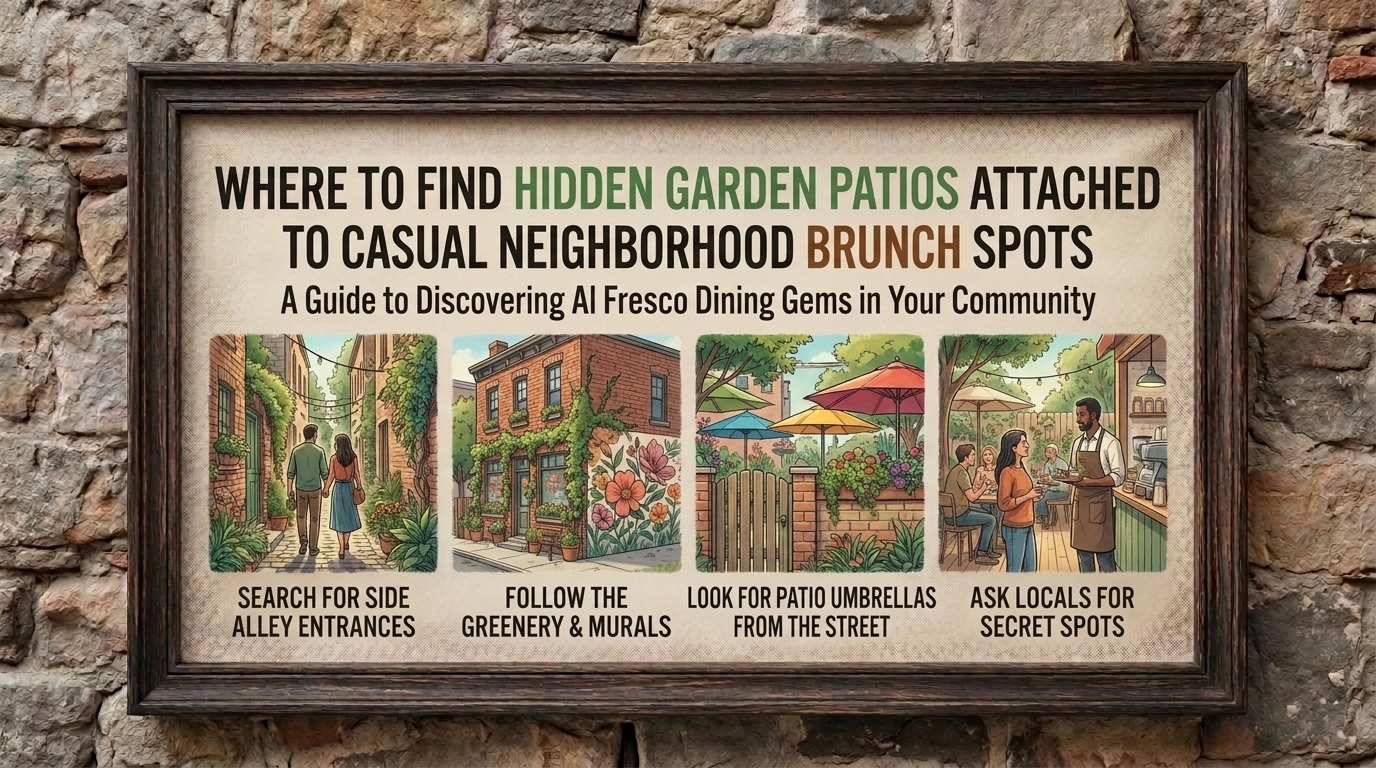
Where to Find Hidden Garden Patios Attached to Casual Neighborhood Brunch Spots
Introduction
In our fast-paced, digital world, the weekend brunch has evolved from a simple weekend meal into a cherished cultural ritual. Yet, as urban centers grow denser, brunching often becomes an exercise in claustrophobia: crammed indoor dining rooms, the loud clatter of industrial espresso machines, long queues spilling onto concrete sidewalks, and top-40 playlists bouncing off bare brick walls.
For those seeking an antidote to indoor sensory overload, a secret world exists just behind the unassuming facades of neighborhood avenues. Across the vibrant cultural and culinary landscapes of New York, San Francisco, California, Washington, and Texas, tucked away behind swinging wooden doors, narrow brick entryways, and ivy-covered walls, lie hidden garden patios.
These lush outdoor oases combine the laid-back, comforting familiarity of a casual neighborhood brunch spot with the restorative tranquility of nature. Savoring a warm plate of lemon-ricotta pancakes or avocado toast beneath a canopy of wisteria, surrounded by potted ferns, rustic wooden tables, and dappled sunlight, transforms a standard weekend breakfast into a mini-vacation.
However, finding these clandestine backyard dining spots requires more than a standard search engine query. It requires insider reconnaissance, urban geography, and an understanding of how secret urban green spaces operate.
This comprehensive guide explores the architecture of urban garden sanctuaries, actionable strategies to discover hidden brunch patios near you, regional highlights across America’s top culinary hubs, and a definitive step-by-step framework to master the art of the ultimate hidden garden brunch date.
Part 1: The Psychology and Architecture of Urban Garden Patios
To understand why hidden garden patios feel so restorative, we must examine the intersection of urban design, biophilia, and culinary hospitality.
1. The Biophilic Sanctuary Effect
Biophilia—the innate human tendency to seek connections with nature and other forms of life—plays a profound role in our dining psychology. Urban dwellers spend the vast majority of their lives surrounded by steel, glass, asphalt, and blue light screens.
When you step off a bustling city street into a hidden courtyard patio filled with living plants, natural wood, clay pots, and morning sunlight, your nervous system responds immediately. Cortisol levels drop, heart rates stabilize, and the frantic pace of modern life slows down. A garden patio acts as an urban psychological pressure valve.
2. The Architecture of Hidden Entrances
The charm of a secret garden patio lies heavily in its threshold transition. The best spots are disguised behind completely unpretentious facades—a simple apartment-style doorway, a unassuming bakery storefront, or a narrow side alley. This element of surprise heightens the reward: walking through a dark, narrow interior hallway only to emerge into a sun-drenched, open-air botanical courtyard feels like stepping through a portal.
Part 2: Actionable Strategies to Discover Hidden Garden Patios
Finding these clandestine courtyards requires moving beyond standard restaurant guides and adopting the mindset of an urban explorer. Implement these five insider strategies:
1. Look for the “Deep Footprint” Architectural Clue
When scouting neighborhoods (such as the West Village in New York, the Mission District in San Francisco, or historic districts in Austin), look closely at the building structures.
- Actionable step: Observe older 19th-century or early 20th-century low-rise buildings. These structures often feature deep internal courtyards or rear property expansions that historic zoning laws originally permitted as light-wells or carriage yards, which modern independent restaurateurs have converted into stunning private garden dining rooms.
2. Master Satellite Mapping Reconnaissance
Digital mapping tools can reveal hidden architectural secrets if you change your viewing perspective.
- Actionable step: Use satellite view or 3D bird’s-eye mapping tools on your phone or computer. Zoom in closely on residential or mixed-use neighborhood blocks. Look for green patches, umbrellas, wooden deck layouts, or glass sunroof structures tucked completely behind row houses where no street-level outdoor seating is visible from the front avenue.
3. Consult Independent Neighborhood Food Curators
The absolute best source for secret garden intel isn’t a massive corporate review aggregator—it’s local independent food writers, neighborhood newsletters, and boutique interior design blogs.
- Actionable step: Search Instagram or local food blogs using hyper-local neighborhood tags combined with design keywords (e.g., #BrooklynGardenCafe, #SFSecretCourtyard, #AustinPatioBrunch). Food photographers love sharing aesthetic, plant-filled outdoor hideaways.
4. Befriend Local Baristas and Independent Shop Keepers
Independent small business owners are deeply connected to their neighborhood’s micro-ecosystem.
- Actionable step: When picking up a coffee at an independent neighborhood cafe on a quiet Tuesday morning, ask the barista: “If I’m looking for a casual brunch spot with a quiet, plant-filled backyard patio where I can read a book, where do locals go?” They will frequently point you to hidden neighborhood gems that tourists never find.
5. Arrive Early or Target Off-Peak Windows
Because hidden garden patios have limited square footage (often seating only 15 to 30 people), they fill up exceptionally fast on sunny weekend mornings.
- Actionable step: Target opening time (typically 9:00 AM or 10:00 AM) or late afternoon windows. Arriving right when doors open guarantees you your choice of the best table under the wisteria or next to the fountain.
Part 3: Regional Profiles: Garden Patios Across Major Culinary Hubs
The character and aesthetic of a hidden garden brunch patio reflect the unique climate, architecture, and cultural rhythm of its region:
[ REGIONAL GARDEN PATIO ECOSYSTEMS ]
               │
               ├── New York ──────► Secret brownstone backyards, ivy-draped brick courtyards
               ├── San Francisco ─► Victorian carriage houses, succulent walls, foggy micro-climate sun traps
               ├── California ────► Year-round open-air courtyards, citrus trees, bohemian sun-drenched patios
               └── Texas ─────────► Expansive oak-shaded beer-gardens turned upscale brunch yards, bright citrus
1. New York: Brownstone Backyards and Ivy Courtyards
In New York (particularly across Brooklyn brownstone belts and the historic streets of Greenwich Village), hidden garden patios are carved out of tight interior block spaces. Surrounded by historic 19th-century red brick walls covered in dense English ivy, creeping fig, and hanging fern baskets, these spots offer a peaceful, sheltered sanctuary from city sirens.
2. San Francisco & California: Victorian Courtyards and Succulent Walls
San Francisco and the broader California coast embrace outdoor living with spaces featuring rustic redwood decking, drought-tolerant succulent living walls, olive trees, and glass windbreaks. These patios capture the crisp, golden morning sunlight, making them perfect for lingering over artisanal pastries and farm-to-table egg dishes.
3. Washington: Historic Carriage Yards and Diplomatic Enclaves
Washington features hidden garden patios tucked behind historic row houses in neighborhoods like Dupont Circle, Georgetown, and Capitol Hill. These courtyards often feature brick-paved pathways, wrought-iron bistro tables, and blooming cherry blossoms or azaleas during spring.
4. Texas: Oak-Shaded Courtyards and Southern Hospitality
Texas brunch culture embraces expansive, welcoming outdoor spaces. In Austin, Dallas, and Houston, casual neighborhood brunch spots frequently feature massive backyard patios shaded by heritage live oak trees, string lights, communal picnic tables, and blooming jasmine, creating a relaxed, sun-drenched atmosphere.
Part 4: Step-by-Step Guide: Your Hidden Garden Brunch Ritual
[ THE GARDEN BRUNCH RITUAL ]
       │
       ├── 1. The Hunt (Identify hidden courtyard spots via satellite maps or local tips)
       ├── 2. The Early Arrival (Secure prime seating under the foliage before the rush)
       ├── 3. The Sensory Shift (Leave devices stowed, absorb birdsong and greenery)
       ├── 4. The Casual Feast (Order fresh seasonal brunch plates and cold-pressed drinks)
       └── 5. The Mindful Linger (Relax with a book or journal in the dappled sunlight)
- Step 1: The Selection: Choose your target neighborhood and verify whether your chosen spot takes reservations or operates on a walk-in garden queue.
- Step 2: The Threshold Entry: Walk past the modest storefront, step through the interior hallway or side gate, and let your eyes adjust to the natural green canopy.
- Step 3: The Settle: Request a table nestled near the potted plants, living wall, or garden fountain. Stow your phone away to maintain the restorative atmosphere.
- Step 4: The Order: Opt for fresh, seasonal dishes that match the outdoor vibe—such as a vibrant berry-topped French toast, local farm eggs benedict, or a refreshing citrus spritz.
- Step 5: The Unwind: Take your time. Bring a physical book or a pocket notebook, sip your coffee slowly, and enjoy the rare luxury of quiet open-air dining in the heart of the city.
Part 5: 10 Frequently Asked Questions (FAQs)
1. How can I ensure I get a table on a busy weekend morning without waiting for hours?
Arrive within the first 30 minutes of opening service (typically between 9:00 AM and 9:30 AM). Alternatively, many hidden garden spots accept online reservations specifically for their outdoor patio sections weeks in advance—always check their booking platform before walking up.
2. What happens if it starts raining or the weather turns cold?
Most reputable neighborhood garden patios are equipped with weather contingencies—such as retractable canvas awnings, clear polycarbonate rain roofs, outdoor infrared heaters, or cozy wool throw blankets provided for guests. However, always check the weather forecast before committing to an outdoor brunch date.
3. Are hidden garden patios pet-friendly?
Many outdoor garden patios welcome well-behaved dogs, especially in California, Austin, and neighborhood spots across New York and San Francisco. However, health regulations vary by municipality regarding animals near food prep areas. Always check the restaurant’s pet policy online or call ahead before bringing your dog.
4. Why do garden patios feel so much more relaxing than indoor dining rooms?
Garden patios eliminate harsh artificial fluorescent lighting, acoustic echo chambers, and cramped spatial arrangements. Exposure to living plants (biophilia), natural sunlight, fresh air, and lower ambient noise levels naturally calms the human nervous system and reduces cortisol.
5. Do garden patios offer shade during hot summer months?
Yes. Quality garden brunch spots invest heavily in mature trees, large market umbrellas, canvas shade sails, or wooden pergolas covered in climbing vines (like wisteria or passionflower) to ensure guests stay comfortable even on warm sunny days.
6. Can I work on my laptop while eating brunch in a garden patio?
During busy weekend brunch rushes (9:00 AM to 2:00 PM), laptops are generally discouraged because outdoor seating is in high demand. However, during quiet weekday breakfast or mid-afternoon windows, many casual garden spots are happy for you to read, write, or work quietly.
7. How do I find hidden patios when traveling to a new city?
Search for local lifestyle blogs, independent neighborhood guides (such as Eater regional columns or local subreddits), and search terms like “best secret outdoor patios,” “hidden courtyard cafes,” or “backyard brunch spots” for that specific destination.
8. Are hidden garden patios accessible for wheelchair users or strollers?
Because historic buildings often feature narrow interior corridors, old brick thresholds, or gravel garden paths, accessibility can occasionally be a challenge. Always call the restaurant ahead of time to verify if their garden patio has step-free entry routes.
9. What should I wear for a garden patio brunch?
Opt for comfortable, breathable, layered clothing. Outdoor patio temperatures can fluctuate depending on morning shade, direct sunlight, or coastal breezes. Stylish, casual resort wear or smart-casual layers work perfectly.
10. Why are hidden garden patios considered a secret weapon for weekend self-care?
They combine three powerful restorative elements into one experience: delicious comforting food, immersion in nature and sunlight, and an escape from digital noise. It is an accessible, luxurious form of urban mindfulness.
Conclusion
Finding hidden garden patios attached to casual neighborhood brunch spots is one of the greatest pleasures of urban exploration. Whether you are uncovering secret ivy courtyards in New York, sun-drenched succulent patios in San Francisco and California, historic carriage yards in Washington, or oak-shaded retreats in Texas, stepping off the concrete street into a living botanical sanctuary transforms your weekend routine.
Step away from crowded indoor dining rooms, seek out the hidden garden gate, and savor a peaceful, sunlit brunch surrounded by nature.