In an age dominated by fluorescent-lit supermarkets, frictionless self-checkout kiosks, automated inventory algorithms, and aisles of shrink-wrapped, uniform produce, grocery shopping has largely been reduced to a sterile, transactional chore. We push giant metal carts through identical corridors, select pre-washed vegetables bred strictly for shelf-life endurance, and slide our credit cards without speaking a single human word.
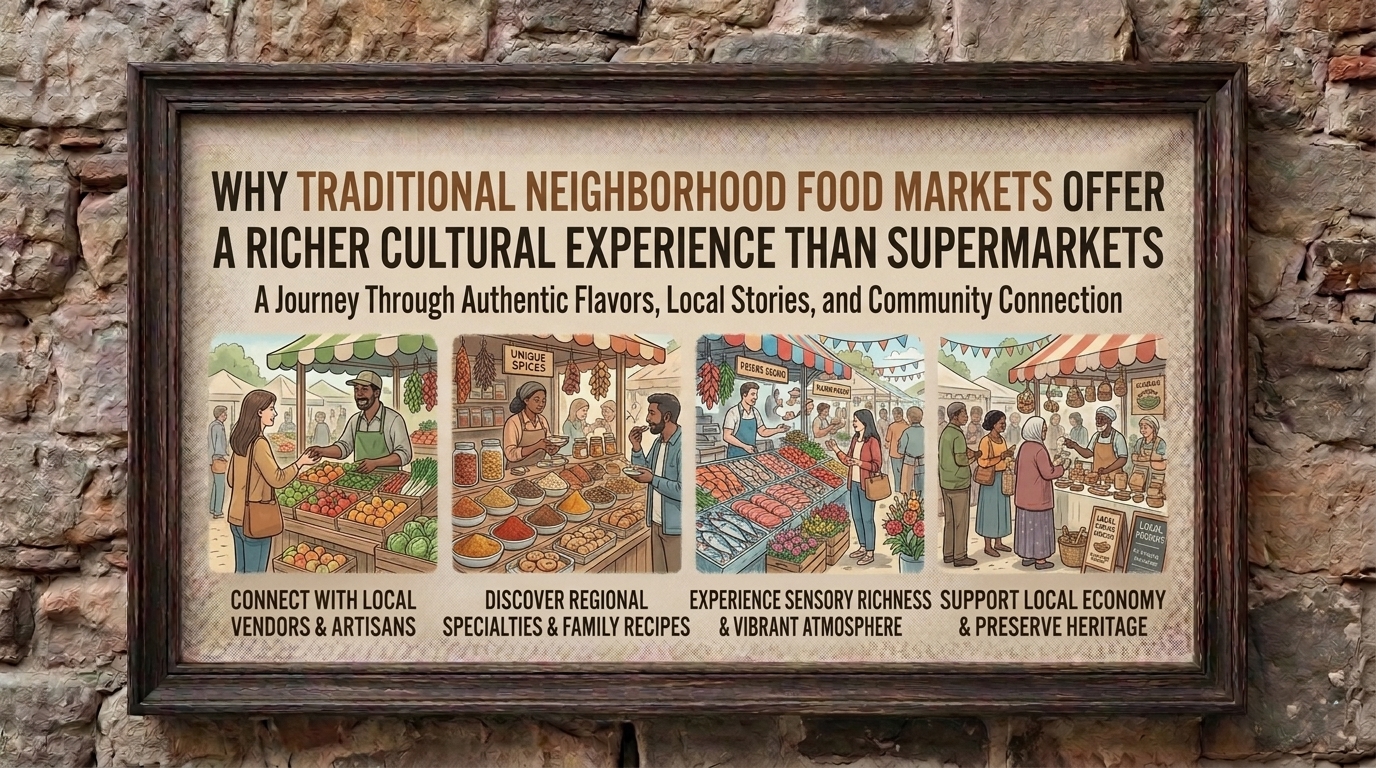
Yet, a vibrant, sensory counter-movement thrives just a few blocks away from the corporate chains. Across the dynamic metropolitan corridors of New York, San Francisco, California, Washington D.C., and Texas, traditional neighborhood food markets—from historic open-air farmers markets and bustling Chinatown produce stalls to vibrant Latino mercados and Middle Eastern bazaars—offer something that modern supermarkets can never replicate: a deeply human, multi-sensory portal into global culture.
Choosing a traditional neighborhood market over a corporate supermarket is not merely a choice about buying ingredients; it is an immersive cultural education. It is an invitation to engage with local farmers, taste seasonal harvests at their absolute peak, hear the cadence of multi-lingual commerce, and participate in ancient community traditions.
This comprehensive guide explores the socio-cultural evolution of food markets, the psychological differences between supermarkets and bazaars, actionable tips for navigating neighborhood markets like a seasoned local, regional perspectives across major culinary hubs, and a definitive breakdown of answers to common market-shopping questions.
Part 1: The Evolution of Food Procurement: Supermarkets vs. Markets
To understand why traditional markets feel so profoundly different, we must examine how our relationship with food distribution has transformed over the last century.
1. The Supermarket Homogenization
The modern supermarket was engineered for maximum industrial efficiency, centralized distribution, and corporate profit margins. To achieve year-round availability of every conceivable food item, supply chains were industrialized. Tomatoes are picked green in massive monoculture fields, gassed with ethylene to turn red during transit, and bred for thick skins rather than flavor.
In exchange for convenience, supermarkets strip away all geographical, seasonal, and human context. An apple purchased in February in New York looks and tastes identical to one purchased in San Francisco or Texas—often because it has spent months sitting in a cold-storage warehouse.
2. The Traditional Market as a Living Cultural Ecosystem
Conversely, traditional neighborhood food markets are organic extensions of their surrounding communities. They operate on the rhythms of local soil, regional climate, and generational heritage.
- The Human Connection: At a neighborhood market, you buy your peaches from the orchardist who grew them, your handmade tortillas from a family recipe passed down through decades, and your spices from a merchant who imported them directly from cooperative farms abroad.
- The Sensory Immersion: The shopping experience is guided by the sights of vibrant indigo eggplants, the sharp scent of fresh cilantro and roasting coffee, the tactile evaluation of ripe melons, and the lively chatter of neighbors catching up on weekly gossip.
Part 2: The Core Pillars of Cultural Richness in Neighborhood Markets
What specifically elevates a traditional neighborhood market into a rich cultural experience? It comes down to four foundational pillars:
[ THE PILLARS OF TRADITIONAL MARKET CULTURE ]
               │
               ├── 1. Agricultural Biodiversity & Seasonality (Heirloom varieties, regional terroir)
               ├── 2. Direct Human Interaction (Storytelling, oral recipes, culinary mentorship)
               ├── 3. Immigrant Heritage & Authenticity (Specialty ingredients, cross-cultural exchange)
               └── 4. Zero-Waste Community Economies (Direct producer revenue, minimal packaging)
1. Agricultural Biodiversity vs. Monoculture
Supermarkets stock uniform produce items optimized for shipping durability (often limited to just 2 or 3 commercial varieties of apples or potatoes). Traditional markets, however, showcase incredible agricultural biodiversity. You will find dozens of heirloom varieties of tomatoes, bitter melons, dragon fruit, heritage garlic, and wild mushrooms that commercial supply chains ignore because they bruise too easily during interstate transit.
2. Culinary Storytelling and Oral Transmission
When you shop at a neighborhood market, transactions turn into conversations. Ask a vendor how to cook an unfamiliar vegetable, and you won’t get a corporate manual—you will receive an oral history, a family recipe, and enthusiastic cooking tips handed down through generations. This dynamic transforms food shopping into a masterclass in cultural anthropology.
Part 3: Actionable Tips to Navigate Traditional Markets Like a Local
Transitioning from the predictability of a supermarket to the dynamic energy of a traditional neighborhood market requires a shift in mindset and strategy. Implement these five insider tips:
1. Bring Cash in Small Denominations
While many modern farmers market vendors now take digital payments, independent stalls, family-run produce carts, and older market merchants still operate primarily on a cash-only basis.
- Actionable step: Stock up on $1, $5, and $10 bills before you arrive. Handing exact change speeds up busy weekend queues and builds immediate goodwill with vendors.
2. Follow the Season, Not a Rigid Shopping List
In a supermarket, you expect to buy asparagus in December and winter squash in July. Traditional markets operate strictly on seasonal realities.
- Actionable step: Arrive with an open mind. Instead of forcing a recipe that calls out-of-season ingredients, look at what looks freshest, brightest, and most abundant on the tables that morning, and let the market dictate what you cook for dinner that night.
3. Arrive Early for Peak Selection or Late for Bargains
Timing is everything when navigating open-air markets.
- Actionable step: If you want the pristine, delicate heirloom tomatoes, fresh-cut flowers, and rare specialty greens, arrive within the first hour of opening. If you want to chat leisurely with vendors and score end-of-market discounts on bulk produce meant to be cooked immediately, arrive in the final hour before closing.
4. Engage Vendors with Curious Questions
Market vendors are proud artisans and passionate growers who love talking about their craft.
- Actionable step: Don’t just point and grab. Ask questions: “Where are these grown?” “How do you prepare this bitter melon?” “Is this variety sweet or tart?” You will often be rewarded with free samples, deeper discounts, and invaluable cooking advice.
5. Equip Yourself with Reusable Gear
Traditional markets generate far less plastic packaging than supermarkets, but you must bring your own tools to manage loose goods.
- Actionable step: Pack sturdy canvas tote bags, a rolling cart for heavy root vegetables and melons, and a collection of lightweight mesh produce bags to separate delicate berries and leafy greens.
Part 4: Regional Perspectives: Market Culture Across Major American Hubs
The character and atmosphere of traditional food markets reflect the unique cultural fabric and agricultural bounty of their surrounding region:
- New York: From the historic Union Square Greenmarket to bustling neighborhood fruit stands in Astoria, Flushing, and Chinatown, New York markets are vibrant crucibles of immigration and regional farming. They bring upstate Hudson Valley agriculture into direct contact with millions of urban residents from every corner of the earth.
- San Francisco & California: Blessed with a year-long Mediterranean growing climate, California boasts legendary markets like the San Francisco Ferry Plaza Farmers Market. These markets are temples of farm-to-table cuisine, featuring organic stone fruits, artisan cheeses, artisanal olive oils, and hyper-local coastal harvests.
- Washington: Capital markets in Washington blend diplomatic diversity with historic agricultural traditions. Neighborhood markets near Eastern Market or Dupont Circle showcase a mix of Mid-Atlantic farm produce, artisanal charcuterie, and global street food vendors catering to a culturally diverse urban population.
- Texas: Texas farmers markets and historic open-air mercados across Austin, San Antonio, Houston, and Dallas blend southern hospitality, vibrant Mexican culinary heritage, and sprawling regional agriculture. Expect fresh citrus, massive heirloom watermelons, Texas pecans, and warm community fellowship.
Part 5: Step-by-Step Guide: Your Neighborhood Market Experience
[ THE TRADITIONAL MARKET RITUAL ]
       │
       ├── 1. The Preparation (Grab cash, canvas bags, and keep an open menu mindset)
       ├── 2. The Sensory Walk (Absorb sights, aromas, and sounds without rushing)
       ├── 3. The Vendor Connection (Ask questions, taste samples, learn grower stories)
       ├── 4. The Seasonal Haul (Select heirloom produce, fresh herbs, and artisan goods)
       └── 5. The Kitchen Transformation (Cook a simple, hyper-fresh meal honoring the ingredients)
- Step 1: The Preparation: Equip yourself with cash, reusable bags, and an open culinary curiosity. Leave your rigid grocery list at home.
- Step 2: The Initial Loop: Take a slow, unhurried walk through the entire market layout before buying a single item. Observe which stalls have the longest lines, inspect the produce quality, and take in the ambient aromas.
- Step 3: The Conversation: Stop at a stall that catches your eye. Compliment the produce, ask the grower about their harvest, and sample a piece of fruit if offered.
- Step 4: The Selection: Build your basket thoughtfully, balancing colorful vegetables, fresh aromatic herbs, and perhaps a specialty artisan cheese or freshly baked bread.
- Step 5: The Celebration: Return home and prepare a simple meal that lets the vibrant flavors of your market haul take center stage.
Part 6: 10 Frequently Asked Questions (FAQs)
1. Are traditional neighborhood markets more expensive than supermarkets?
It depends on what you buy. While specialty organic items or hyper-rare heirloom produce can sometimes carry a premium, standard seasonal vegetables and fruits at local farmers markets are often comparably priced—or cheaper—than supermarket organic sections because you are eliminating middleman distribution markups. Furthermore, you buy only what you need, reducing food waste.
2. Why do tomatoes and fruits taste so much better at neighborhood markets?
Supermarket produce is bred for thick skins and long shelf-life so it can survive cross-country shipping trucks and weeks of warehouse storage, often picked unripe. Traditional market growers harvest fruit at peak ripeness on the vine, focusing on flavor, sugar content, and aroma rather than shipping durability.
3. What should I do if I don’t know how to cook a unique vegetable I find at a market?
Ask the vendor! Market farmers and merchants love teaching customers how to prepare their crops. A simple question like “I’ve never cooked romanesco before—how do you recommend preparing it?” will usually yield a simple, delicious 3-step home recipe on the spot.
4. Do traditional markets operate year-round?
Many urban markets operate 52 weeks a year, transitioning their inventory based on seasonal harvests. In colder regions (like New York or Washington), winter markets shift toward root vegetables, winter squashes, orchard apples, artisanal cheeses, ciders, and greenhouse-grown greens. In California and Texas, markets thrive with lush produce almost year-round.
5. How can I ensure I am buying truly local or organic produce at an open-air market?
Read the vendor signage or ask directly. Certified farmers markets explicitly require growers to sell only what they produce themselves within a specific regional footprint. If you have questions about organic practices, ask vendors about their soil management and pest control methods—most small-scale regenerative farmers are proud to share their ecological stewardship.
6. Why is shopping at a neighborhood market considered a sustainable choice?
Supermarket produce travels an average of 1,500 miles from farm to shelf, burning massive amounts of fossil fuels in refrigerated transport and generating mountains of single-use plastic packaging. Traditional market produce travels a fraction of that distance, is sold loose or in reusable containers, and supports local agricultural green spaces.
7. Can I bring children or pets to traditional food markets?
Children love traditional markets because of the vibrant colors, energetic sounds, and frequent opportunity to sample fresh fruit. Pets (dogs) are welcome at many outdoor street markets and farmers markets (especially in California and Texas), though health regulations usually prohibit them inside enclosed food halls or near active food preparation stalls. Always check local rules.
8. What is the best time of day to visit a traditional food market?
For the widest selection and best produce quality, arrive within the first hour of opening. For a relaxed, unhurried shopping experience with shorter lines and friendly vendor conversations, visit during the mid-morning lull.
9. How do I store market produce since it lacks chemical preservatives and plastic wrapping?
Because fresh market produce is truly alive and unpreserved, it requires proper home storage. Wash leafy greens and wrap them in damp cloth or paper towels inside containers; store root greens without their tops (which draw moisture from the root); and keep ethylene-producing fruits (like bananas and tomatoes) separated from sensitive greens.
10. Why does shopping at a neighborhood market improve mental well-being?
Supermarket shopping is designed for solitary speed and hyper-efficient consumerism. Neighborhood markets engage all five senses, foster human conversation, connect you to seasonal rhythms, and ground you in your local community—offering a powerful psychological antidote to modern isolation and digital fatigue.
Conclusion
Choosing traditional neighborhood food markets over sterile corporate supermarkets is much more than a routine errand—it is a reclamation of culture, community, and sensory joy.
Whether you are exploring historic greenmarkets in New York, farm-to-table wonders in San Francisco and California, vibrant capital stalls in Washington, or sun-drenched mercados in Texas, traditional markets remind us that food is a story, an art form, and a bridge connecting us to the earth and to one another. Step away from the supermarket checkout aisle, grab your canvas bags, and experience the rich cultural life of your local neighborhood market.