In an era defined by mega-supermarkets, massive supply chain distributions, and fluorescent-lit grocery aisles stocked with fruits and vegetables coated in wax and shipped across continents, a quiet revolution is taking place on suburban driveways and urban residential side streets. Tucked away behind historic front porches, nestled in quiet neighborhood corners, and operated on the honor system by passionate local gardeners and small-scale urban farmers, neighborhood produce stands represent the purest form of farm-to-table eating.
Whether you are navigating the sprawling residential blocks of Texas, exploring historic brownstone neighborhoods in New York, uncovering hidden residential micro-farms across California, hunting for fresh urban harvests in Washington, or biking through the residential hills and avenues of San Francisco, finding these hidden fruit and vegetable stands transforms grocery shopping from a chore into a delightful local treasure hunt.
This comprehensive, highly informative guide will teach you everything you need to know to locate, evaluate, and respectfully patronize the freshest organic produce stands hidden right in your neighborhood’s backyard.
1. The Hidden Landscape: Why Residential Produce Stands Exist
Commercial agricultural logistics prioritize shelf-life, uniformity, and travel durability over flavor and nutritional density. Consequently, commercial produce is often picked weeks before peak ripeness. In contrast, residential side-street stands exist for an entirely different reason: passion, surplus, and community connection.
- Backyard Abundance and Urban Homesteading: Many urban and suburban homeowners plant fruit trees, raised-bed vegetable patches, or urban micro-farms that produce far more organic heirloom tomatoes, crisp apples, juicy figs, or Meyer lemons than a single household could ever consume.
- The Honor System Economy: Operating largely on trust, many of these residential stands feature a simple wooden table, a chalkboard price list, and a locked cash box or a QR code for digital payments (like Venmo or Zelle). This low-overhead model keeps prices remarkably fair while fostering deep mutual trust within the neighborhood.
2. Where to Look: Decoding Residential Geography and Urban Planning
Residential produce stands do not advertise on billboards or major highway signage. To find them, you need to understand how residential geography and local microclimates work.
- New York & San Francisco: In densely populated urban environments, look for community garden boundary fences, church courtyards, converted brownstone stoop setups, and residential fringe zones where urban homesteaders make use of small side yards or corner lots.
- California & Texas: Sprawling residential neighborhoods, suburban cul-de-sacs with mature fruit tree canopies (such as citrus, avocados, and stone fruit), and semi-rural residential pockets on the edges of major metropolitan areas are absolute goldmines for driveway farm stands.
- Washington: Focus on established residential neighborhoods featuring large lots, alley-adjacent gardens, and eco-conscious communities that heavily support backyard agriculture and organic composting.
3. Digital and Analog Sleuthing: Insider Search Strategies
Because these stands rely on word-of-mouth and low-key foot traffic, you have to combine digital grassroots tools with traditional neighborhood observation.
- Hyper-Local Social Media and Map Groups: Search neighborhood groups on platforms like Facebook, Nextdoor, or local Reddit communities using keywords like “homegrown produce stand,” “roadside farm stand near me,” or “backyard fruit for sale.” Neighbors frequently post when their backyard fig trees or peach branches are heavy with ripe fruit.
- The Weekend Bike or Walking Audit: The absolute best way to discover hidden stands is to ditch the car and explore residential side streets on foot or by bicycle on Saturday or Sunday mornings. Pay attention to quiet residential corners, alleyways, and driveways displaying handwritten chalk signs.
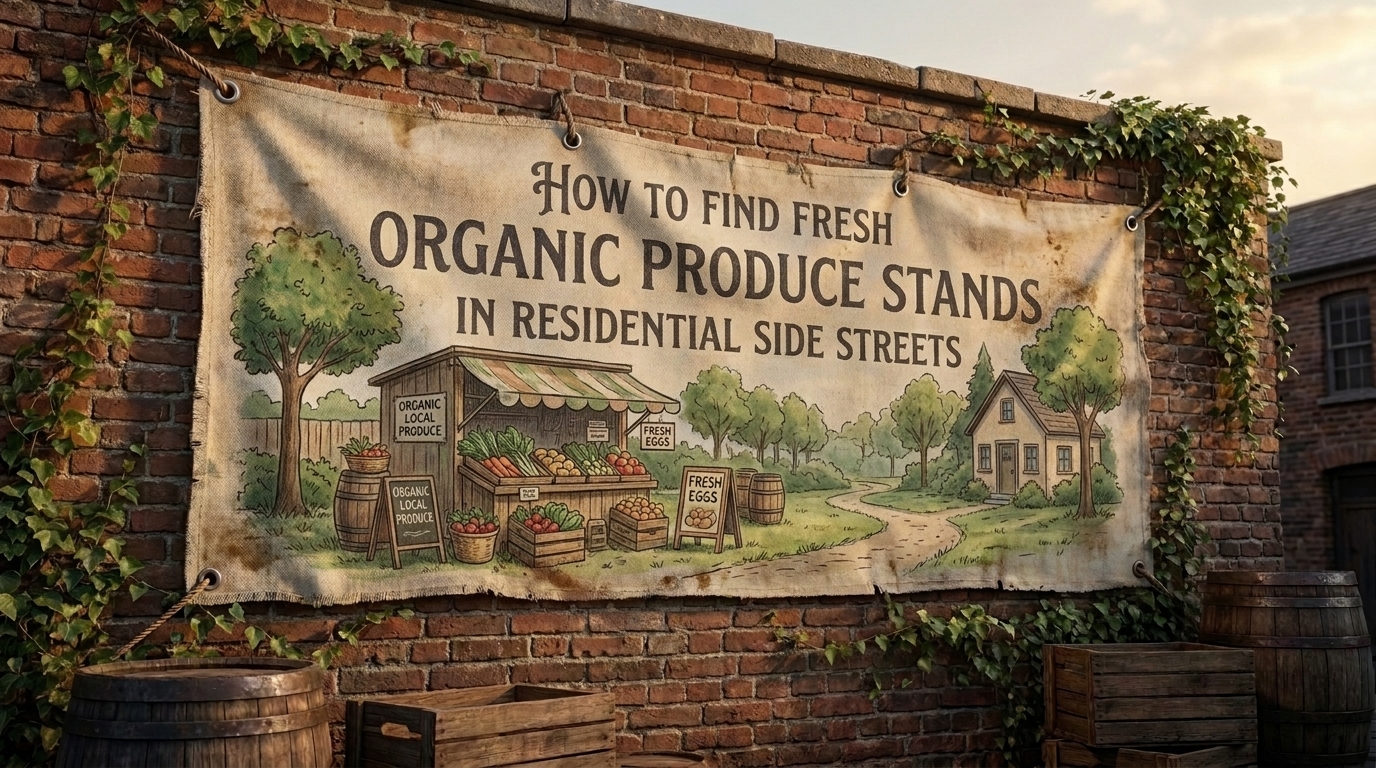
- Look for Visual Cues: Keep your eyes peeled for distinct visual indicators: small chalkboard easels on sidewalks, wooden crates stacked neatly by front gates, colorful mesh bags hanging from fences, or hand-painted signs reading “Fresh Eggs,” “Meyer Lemons,” or “Organic Heirloom Tomatoes.”
4. Evaluating Quality: What Makes Residential Produce Superior?
When you buy produce straight from a residential side-street stand, you are experiencing food at its absolute peak nutritional and sensory value.
- Ripened on the Vine or Tree: Commercial fruit is artificially ripened with ethylene gas in transit. Residential produce is allowed to ripen naturally in the sun, maximizing natural sugars, aroma, and antioxidant levels.
- Zero Pesticides and Regenerative Soil: Most backyard growers avoid harsh chemical pesticides, synthetic fertilizers, and chemical waxes, opting instead for compost, ladybugs, and organic pest control.
- Hyper-Seasonal Eating: You won’t find imported strawberries in December at a residential stand. You will find whatever is bursting with life right now in your local climate zone—whether that is crisp autumn apples, summer zucchini, or winter citrus.
5. Etiquette and Best Practices for Visiting Backyard Stands
Because residential stands sit on private property or quiet neighborhood streets, maintaining respectful etiquette ensures these delightful community assets continue to thrive.
- Bring Exact Change and Digital Backup: While many modern stands accept mobile payments via QR code, many traditional stands still rely on cash. Always carry a mix of small bills ($1, $5, $10) and coins so you don’t need change from an unattended cash box.
- Inspect Gently and Handle with Care: Unlike supermarket produce protected by thick skins bred for shipping, backyard organic produce is delicate and easily bruised. Handle items with care and avoid squeezing fruit aggressively.
- Respect Private Property Boundaries: Never wander past the designated stand area into private backyards, porches, or driveways unless explicitly invited. Treat the homeowner’s property with absolute respect.
10 Frequently Asked Questions (FAQs)
1. How do I find residential produce stands if they aren’t on Google Maps?
The best methods are exploring residential side streets on foot or bicycle during weekend mornings, joining neighborhood-specific social media groups (like Nextdoor or local Facebook garden swaps), and asking local gardeners.
2. Are residential produce stands actually organic?
While many backyard growers do not pay for expensive official USDA organic certification, the vast majority practice strictly organic, chemical-free gardening methods using homemade compost and natural pest control.
3. How do I pay if the produce stand is completely unattended?
Most unattended residential stands operate on the honor system. They provide a secure lockbox or cash slot, or display a digital payment handle (such as Venmo, Zelle, or PayPal) via a printed sign or QR code.
4. What time of day is best to visit a backyard produce stand?
Early weekend mornings (between 8:00 AM and 10:00 AM) are ideal. Backyard stands operate on limited inventory, so the freshest and most popular items (like heirloom tomatoes or ripe peaches) sell out quickly.
5. Are prices cheaper at residential stands compared to grocery stores?
Often, yes! Because backyard growers have zero overhead, transportation costs, or retail markups, they frequently price their surplus produce lower than grocery stores while offering vastly superior quality.
6. Can I return or exchange produce if it is overripe?
No. Residential produce stands are casual, peer-to-peer community exchanges, not corporate retail stores. Inspect your selections carefully before purchasing.
7. What types of produce are most commonly found in residential stands?
Depending on your region, you will commonly find seasonal backyard crops such as citrus (lemons, oranges, limes), stone fruits (peaches, plums, figs), tomatoes, herbs, squashes, berries, and fresh farm eggs.
8. Is it legal for homeowners to sell produce from their driveways?
Regulations vary by municipality. Many cities across California, Texas, and Washington have liberalized laws to encourage urban agriculture and neighborhood micro-commerce, while others have specific cottage food or zoning ordinances.
9. How can I build a good relationship with local backyard growers?
Be reliable, always pay the exact listed price (or tip extra if you love the produce), leave positive reviews or shout-outs in local community groups, and return empty egg cartons or baskets if the grower requests them.
10. What should I bring with me when hunting for neighborhood produce?
Always pack reusable shopping bags or canvas totes, a small amount of cash in various denominations, and a clean container or cooler bag if you are buying delicate summer fruits that bruise easily in warm weather.
Conclusion
Discovering fresh organic produce stands tucked away in residential side streets is one of the most rewarding ways to connect with your local community, support sustainable urban agriculture, and radically elevate the flavor of your home cooking. By stepping off the beaten path and exploring neighborhood corners across Texas, New York, California, Washington, and San Francisco, you trade corporate standardization for seasonal authenticity and genuine human connection. The next time you need fresh ingredients, skip the mega-supermarket and take a stroll down your neighborhood’s quietest side streets.
What is your favorite seasonal fruit or vegetable to hunt for in local neighborhood gardens and backyard stands?