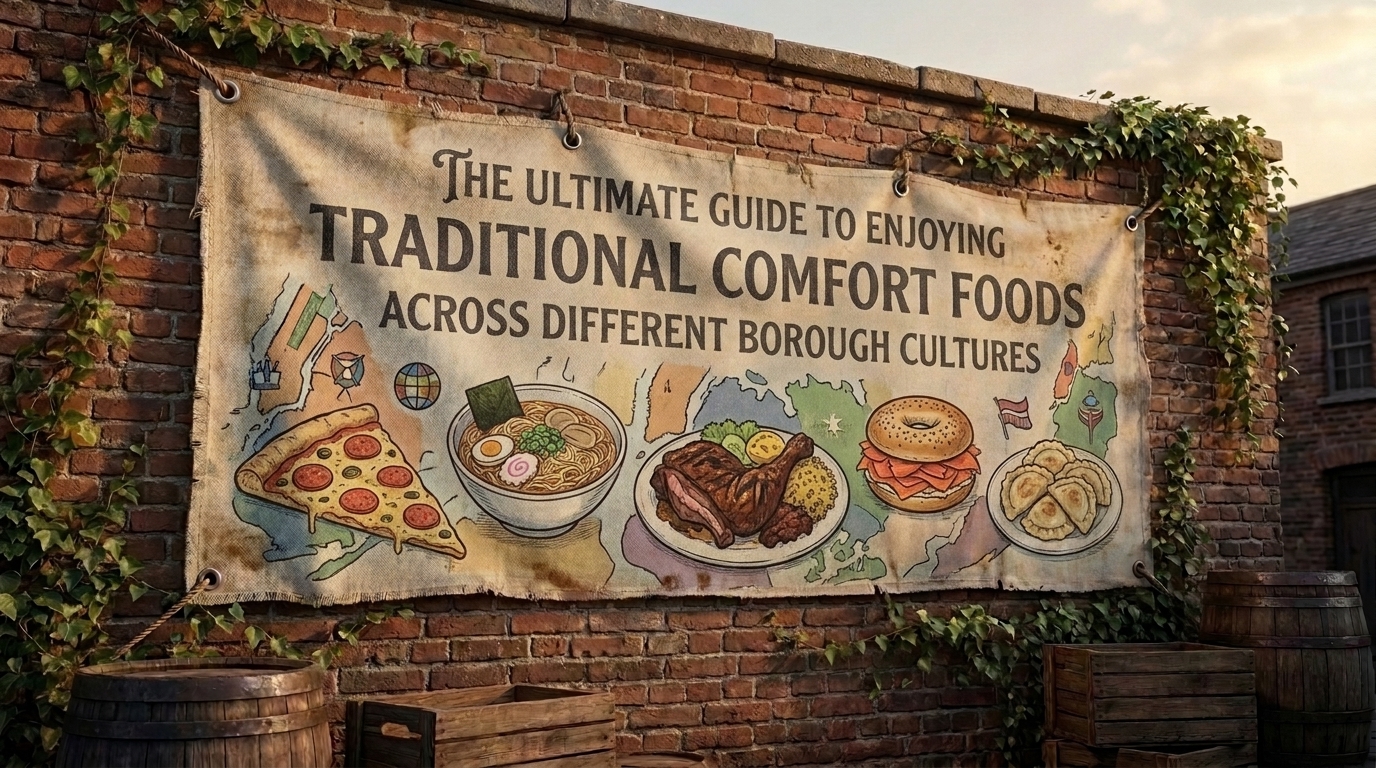
Food is the ultimate universal language, but dialect varies dramatically depending on the street corner, neighborhood, and cultural heritage of the community preparing it. When we talk about comfort food, we aren’t just talking about calories or convenience; we are discussing an edible archive of history, resilience, migration, and love. Across dynamic urban landscapes—from the distinct ethnic enclaves and historic boroughs of New York and the hilly, maritime neighborhoods of San Francisco, to the sun-soaked cultural corridors of California, the tech-meets-tradition communities of Washington, and the massive, culturally rich melting pots of Texas—traditional comfort foods tell the stories of the people who shaped them.
This comprehensive, highly informative guide will take you on a flavorful journey across diverse borough cultures and regional hubs, exploring what makes traditional comfort foods so deeply restorative, where to find them, and how you can appreciate them like a true local expert.
1. Defining Comfort Food: Beyond Salt, Sugar, and Fat
Why do certain dishes instantly lower our cortisol levels and transport us to a state of emotional safety? Scientifically and culturally, comfort food is deeply tied to nostalgia and community identity.
- The Psychology of Nostalgia: Comfort foods are heavily anchored in our formative memories. Whether it is the smell of slow-simmered brisket, the crisp shatter of a wood-fired empanada crust, or the steaming warmth of a spiced noodle soup, these dishes evoke a sense of home and belonging.
- Culinary Heritage as Resistance: Many of the world’s most beloved comfort foods were born out of resourcefulness—transforming inexpensive cuts of meat, humble grains, and seasonal vegetables into culinary masterpieces through slow cooking, curing, and expert spicing.
2. New York: The Five-Borough Mosaic of Immigrant Comforts
New York City is arguably the global capital of immigrant comfort food. Because successive waves of immigration settled in distinct neighborhoods across Manhattan, Brooklyn, Queens, the Bronx, and Staten Island, the city operates as a living mosaic of global culinary traditions.
- Lower East Side and Jewish Delis: Step into historic Jewish delis for towering pastrami on rye slathered with spicy mustard, paired with steaming bowls of matzo ball soup—the ultimate New York comfort cure for a cold winter day.
- Queens and Brooklyn Enclaves: Venture into Jackson Heights, Queens, or Sunset Park, Brooklyn, to experience authentic Tibetan momos, Colombian bandeja paisa, Dominican mangu, and authentic Mexican tacos al pastor served out of unassuming neighborhood counters. In these boroughs, comfort food is defined by authentic immigrant heritage.
3. San Francisco & California: Coastal Microclimates and Farm-to-Table Comforts
On the West Coast, comfort food takes on a lighter, hyper-seasonal philosophy heavily influenced by Pacific maritime bounty, agricultural abundance, and Asian-American fusion.
- San Francisco’s Fog-Chasing Classics: When the legendary San Francisco coastal fog rolls in over the bay, locals seek comfort in steaming bowls of sourdough bread bowls filled with creamy clam chowder, piping hot bowls of authentic Cantonese noodle soup in Chinatown, or fresh Mission-style burritos packed with slow-cooked carnitas and melted cheese.
- California’s Mission and Latin Roots: Across the wider California landscape, comfort food is deeply rooted in Mexican, Central American, and Asian culinary traditions, emphasizing fresh avocados, charred chiles, cilantro, citrus, and handmade corn tortillas.
4. Texas: Big Skies, Bold Flavors, and Slow-Smoked Traditions
In Texas, comfort food is a matter of profound pride and patience. The Lone Star State’s comfort cuisine is heavily shaped by the convergence of Southern soul food, classic Tex-Mex, and traditional Central European barbecue techniques.
- The Ritual of Texas Barbecue: True Texas comfort food centers around post-oak-smoked brisket cooked for fourteen hours until it melts in your mouth, served simply with pickles, raw onions, white bread, and savory pinto beans.
- Tex-Mex Staples: From sizzling chicken fajitas and cheesy enchiladas smothered in rich chili gravy to morning breakfast tacos stuffed with scrambled eggs, chorizo, and fresh pico de gallo, Texas comfort food is designed to feed the soul and fuel hard work.
5. Washington: Pacific Northwest Comforts Rooted in Forest and Sea
In Washington, the culinary identity balances rustic pioneer heritage with Pacific Northwest bounty—featuring wild seafood, foraged mushrooms, orchard fruits, and cozy coffeehouse culture.
- Maritime and Forest Harvests: Comfort food in Seattle and surrounding Washington communities often means wild-caught cedar-planked salmon, steaming bowls of Dungeness crab chowder, and flaky pastries made with local butter and apples.
- Global Fusion in Urban Hubs: Reflecting a vibrant Pacific Rim demographic, Washington’s urban centers offer incredible Vietnamese phở, Korean comfort stews, and artisanal comfort bakes that warm up the damp, misty climate.
6. Pro Tips for Exploring and Enjoying Comfort Foods Authentically
To get the absolute most out of your culinary explorations across these diverse regions, keep these practical guidelines in mind:
- Follow the Local Queue: If you see a long line of neighborhood locals patiently waiting outside a tiny, unassuming storefront during peak lunch hours, join the line. That is your definitive proof of authenticity and quality.
- Embrace Unfamiliar Ingredients: Traditional comfort foods often utilize ingredients that might seem intimidating at first—such as beef tongue, fermented bean pastes, organ meats, or bitter greens. Trust the generational wisdom of the recipe.
- Respect the Cultural Context: Learn a little bit about the history of the dish before eating it. Understanding why a specific community relies on certain spices or cooking methods deepens your culinary appreciation.
10 Frequently Asked Questions (FAQs)
1. What makes comfort food different from regular restaurant food?
Comfort food focuses on emotional satisfaction, tradition, and rich, satisfying flavors rather than avant-garde presentation or strict nutritional minimalism.
2. Why do different boroughs in cities like New York have completely different comfort foods?
Boroughs and neighborhoods formed around immigrant settlement patterns. Communities kept their culinary traditions alive by opening local bakeries, markets, and diners that reflected their home countries.
3. What is the most iconic comfort food in San Francisco?
A sourdough bread bowl filled with clam chowder or authentic Mission-style burritos are widely considered top icons of San Francisco comfort dining.
4. How does Texas barbecue differ from other regional styles?
Texas barbecue relies primarily on beef (specifically brisket), seasoned simply with coarse salt and black pepper, and cooked slowly over indirect post-oak heat without heavy, sweet tomato sauces.
5. Are comfort foods always unhealthy?
Not necessarily! While many comfort foods are rich in fats and carbohydrates, many traditional cultural comfort foods incorporate wholesome beans, whole grains, fresh herbs, and lean proteins.
6. How can I find authentic neighborhood comfort food spots when traveling?
Avoid tourist-heavy commercial strips. Instead, explore residential neighborhoods, local ethnic markets, and community food blogs written by regional residents.
7. What role does climate play in shaping comfort food traditions?
Climate heavily dictates what we crave. Colder, misty regions like Washington and New York inspire hearty stews, soups, and roasted meats, while warmer climates like Texas and California lean toward fresh, vibrant, and grilled flavors.
8. What is the history behind Tex-Mex comfort food?
Tex-Mex is a unique culinary fusion created by Tejano people (Texans of Mexican descent), blending traditional Mexican ingredients with American and Spanish colonial influences.
9. Why are independent family-owned spots better for traditional comfort food?
Family-owned establishments rely on generational recipes, hand-prepped ingredients, and personal pride rather than corporate manufacturing shortcuts and pre-packaged mixes.
10. How can I recreate authentic borough comfort foods at home?
Start by sourcing your ingredients from specialized ethnic grocery stores or local farmers markets, and invest time in traditional cooking methods like slow braising or hand-mixing doughs.
Conclusion
Enjoying traditional comfort foods across different borough cultures and regional landscapes is one of the most rewarding ways to experience the world. Whether you are savoring a steaming bowl of noodles in a bustling San Francisco alleyway, biting into a legendary pastrami sandwich in New York, enjoying slow-smoked brisket in Texas, or tasting fresh Pacific seafood in Washington, food connects us instantly to history and community. By exploring these diverse culinary traditions with an open mind and a healthy appetite, you turn every meal into a journey of cultural discovery.
What is your absolute favorite comfort food dish that reminds you of home or your favorite travel destination?