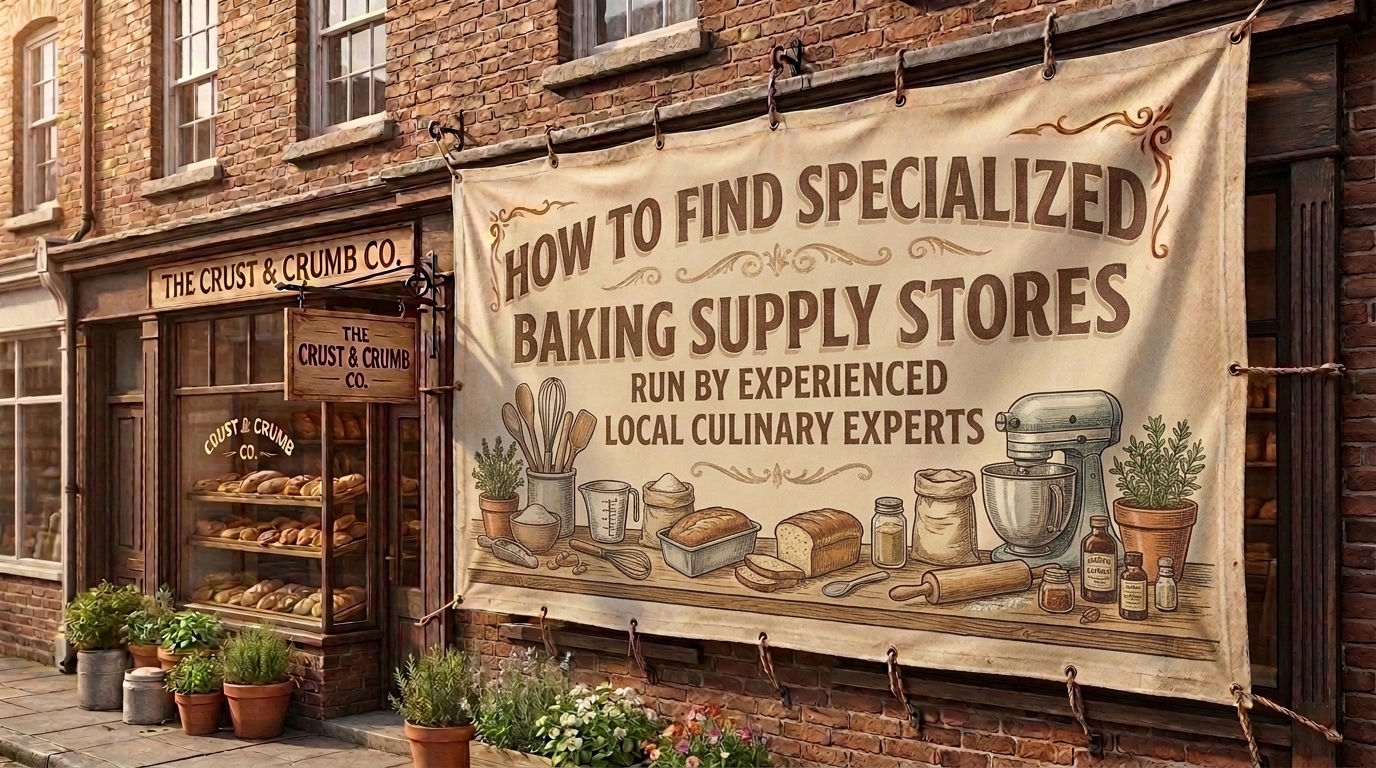
Baking is fundamentally an exact science, a delicate artistic medium, and an ancient culinary tradition all rolled into one. Whether you are building a wild sourdough starter from scratch, laminating butter into hundred-layer croissant dough, sculpting intricate wedding cake sugar flowers, or pressing authentic corn tortillas, your final results are only as good as your tools and ingredients.
Yet, for home bakers and passionate culinary enthusiasts, relying on standard supermarket baking aisles is often a frustrating experience. Mass-market grocery stores stock heavily processed commercial flours, artificial extracts, generic aluminum-laden baking powders, and flimsy kitchen equipment designed for basic convenience rather than precision results.
To elevate your baking to an entirely new level, you need to seek out specialized baking supply stores. Even better, you want to find boutique shops owned and operated by veteran pastry chefs, master bakers, and culinary experts who share their professional wisdom with every customer. Spanning the vibrant culinary landscapes of New York, the artisanal havens of San Francisco, the agricultural expanses of California, the sophisticated markets of Washington, and the booming food hubs of Texas, this comprehensive, highly informative guide teaches you how to find, evaluate, and forge lasting mentorships with your local baking supply experts.
1. Why Specialized Baking Stores Beat Big-Box Retailers Every Time
Walking into a dedicated baking supply shop is vastly different from pushing a cart down the baking aisle of a massive chain supermarket. Specialty baking stores offer profound advantages that directly impact your culinary success:
- Professional-Grade Ingredients: Specialty shops stock unbleached, unbromated stone-milled flours with exact protein percentages (vital for everything from airy panettone to chewy bagels), high-fat European-style butter, couverture chocolates with precise cocoa butter percentages, and rare flavorings like true Tahitian vanilla beans and natural fruit extracts.
- Commercial-Quality Equipment: Instead of warped, thin metal sheet pans that warp in a hot oven, specialized shops carry heavy-gauge aluminum baking sheets, perforated silicone mats, copper mixing bowls, professional-grade proofing baskets (bannetons), and calibrated digital scales.
- The Expert Behind the Counter: This is the ultimate differentiator. The person ringing up your purchases is often a retired pastry chef, a master chocolatier, or a dedicated fermentation specialist who can troubleshoot your collapsed sourdough loaf or advise you on why your buttercream split.
2. Regional Hotspots: Where Baking Experts Cluster Across Major Hubs
Finding specialized baking supply stores requires knowing the geographic patterns of regional culinary communities. Across major metropolitan hubs, these shops tend to anchor themselves in specific districts:
- New York: From historic restaurant supply corridors in the Bowery to specialized artisanal baking boutiques in Brooklyn, New York is a treasure trove for rare baking molds, professional silicone tools, specialty flours, and expert advice from veteran bakers.
- San Francisco & California: Deeply tied to the farm-to-table and artisan bread revolutions, California boasts incredible specialty purveyors. In San Francisco and the wider Bay Area, you can find specialty shops supplying organic heirloom grains, French copperware, and professional pastry tools favored by world-renowned chefs.
- Texas: Texas urban centers (such as Austin, Houston, and Dallas) host sprawling culinary supply houses and boutique baking shops that cater to both home enthusiasts and professional pitmasters and bakers, offering everything from heavy-duty cast iron to specialized sugars and pastry decorating gear.
- Washington: In the Pacific Northwest, specialty shops lean into sustainable baking, offering locally stone-milled organic grains, eco-friendly packaging, and expert guidance on high-altitude or moist-climate baking adjustments.
3. Digital and Analog Sleuthing: How to Unearth Hidden Baking Boutiques
Because specialized baking supply stores cater to a niche audience of professionals and dedicated hobbyists, they often lack massive digital marketing budgets. Use these advanced discovery tactics to find them:
- Hyper-Targeted Search Strings: Avoid generic queries like “bakery near me.” Instead, use precise search terms such as “specialty pastry supply store,” “commercial baking equipment retail public,” “independent cake decorating and baking shop,” or “stone-milled flour supplier storefront.”
- Scanning Restaurant Supply Districts: Every major metropolitan area has a commercial restaurant supply district (such as the Bowery in New York or specific commercial zones in San Francisco and Texas). Many of these warehouse-style supply houses are open to the general public and stock incredible baking inventories.
- Asking Local Pastry Chefs: If you visit an independent neighborhood bakery whose croissants or sourdough loaves blow you away, don’t hesitate to ask the counter staff or pastry chef: “Where do you source your specialty flour and equipment in the city?” Chefs are famously generous when sharing their secret supplier sources.
4. Building Relationships with Culinary Experts Behind the Counter
Once you locate a specialized baking shop, treating the staff as educational resources transforms your shopping experience from a simple transaction into a masterclass in baking.
- Bring Specific Baking Dilemmas: Don’t just ask general questions. Come prepared with concrete details about a baking failure: “My sourdough crumb is turning out too dense and gummy, even though my starter is active. Do you think I need a flour with a higher protein content, or am I under-proofing?”
- Ask About Special Orders: Independent baking shops often have direct import relationships with global flour mills and chocolate manufacturers. If you are looking for a specific French butter, a rare Italian tipo 00 flour, or a specialized copper mold, ask if they can add it to their next commercial delivery order.
- Attend In-Store Workshops: Many elite baking supply shops host weekend demonstrations, sourdough maintenance classes, chocolate tempering workshops, and cake-decorating clinics taught by local culinary experts.
5. Essential Tools and Ingredients to Stock Up On First
When you finally step into a specialized baking store, it is easy to get overwhelmed by the sheer volume of dazzling equipment. Prioritize these high-impact investments:
- A Calibrated Digital Kitchen Scale: In professional baking, measuring flour by volume (cups) is notoriously inaccurate because flour compacts easily. A digital scale that measures in grams is the single most important tool for baking consistency.
- High-Fat European Butter: Look for butters with 82% to 85% butterfat (such as Plugra, Kerrygold, or imported French varieties). The lower water content creates flakier pie crusts and crisper laminated pastries.
- Heavy-Gauge Baking Sheets: Invest in commercial aluminum half-sheet pans. They distribute heat evenly, prevent burnt cookie bottoms, and last a lifetime without warping.
10 Frequently Asked Questions (FAQs)
1. How do I find specialized baking supply stores in my city?
Search for terms like “commercial restaurant supply open to public,” “pastry and baking specialty shop,” or “artisanal flour and tool purveyor,” and ask local independent bakers where they buy their supplies.
2. Can the general public shop at commercial restaurant supply houses?
Many commercial supply houses cater to both wholesale restaurant clients and retail home bakers. Always check their website or call ahead to confirm public retail access.
3. Why is weighing ingredients in grams better than using measuring cups?
Measuring cups measure volume, which varies wildly depending on how flour is scooped. Weighing ingredients in grams measures exact mass, ensuring absolute consistency in every batch.
4. What is European-style butter and why do bakers prefer it?
European-style butter is churned longer to remove more moisture, resulting in a higher butterfat content (82%–85%) that yields superior flakiness, richness, and flavor in baked goods.
5. How can local culinary experts in baking stores help me improve my baking?
They possess deep technical knowledge regarding flour protein percentages, yeast behavior, fermentation timing, and equipment selection, allowing them to troubleshoot specific baking failures.
6. Are specialized baking ingredients more expensive than supermarket brands?
Yes, they often cost more upfront, but they reflect superior agricultural sourcing, unbleached purity, higher butterfat, or authentic import logistics that dramatically improve taste and texture.
7. What is the difference between all-purpose flour, bread flour, and cake flour?
The primary difference is protein content. Cake flour has low protein (tender crumb), all-purpose has medium protein (versatile), and bread flour has high protein (strong gluten structure for chewy crusts).
8. Can I find specialized baking supply stores in cities like New York and San Francisco?
Yes! New York and San Francisco boast some of the finest, most historic culinary and baking supply stores in the world, catering to passionate home bakers and elite chefs alike.
9. How should I store specialty flours at home?
Store flours in airtight containers in a cool, dark place. Whole grain and stone-milled flours contain natural oils that can go rancid quickly, so keeping them in the refrigerator or freezer is recommended.
10. Do baking supply stores offer classes or workshops?
Many independent specialty shops host weekend workshops, masterclasses, and product demonstrations taught by professional pastry chefs and bakers.
Conclusion
Finding specialized baking supply stores run by experienced local culinary experts transforms baking from a frustrating guessing game into a deeply rewarding craft. By stepping away from generic supermarket aisles and exploring independent baking boutiques across New York, San Francisco, Texas, Washington, and California, you gain access to professional-grade ingredients, elite equipment, and invaluable mentorship from master bakers. Equip your kitchen with the right tools, lean on the wisdom of your local culinary experts, and watch your baking reach delicious new heights.
What is the one baking tool or specialized ingredient that completely transformed your baking results once you started using it?