Why Traditional Food Recipes Passed Down Through Generations Tell Powerful Immigrant Stories
Food is rarely just sustenance. When a dish travels across borders, oceans, and generations, it becomes an living archive of human movement, political history, family resilience, and cultural survival. A family recipe handwritten on a yellowed index card—or passed down orally through kitchen demonstrations—holds far more than measurements and cooking times. It carries the geography of a lost homeland, the economic realities of a new beginning, and the unconditional love of ancestors who cooked so their children could thrive.
Across the United States—from the historic tenement kitchens of New York City and the tech-driven cultural melting pots of San Francisco to the sprawling cross-border hubs of Texas, Southern California, and Washington State—traditional recipes serve as the primary bridge connecting second and third-generation immigrants to their roots.
This comprehensive guide explores how culinary heritage functions as living history, why traditional recipes tell profound stories of immigrant resilience, and how we can preserve these indispensable foodways for generations to come.
The Recipe as an Architectural Blueprint of Human History
When historians study human migration, they examine census data, land deeds, and ship manifests. But when sociologists and anthropologists want to understand how immigrants actually felt, adapted, and built community, they look to the kitchen.
                         [ THE CULINARY TRANSMISSION BRIDGE ]
                                         |
             +---------------------------+---------------------------+
             |                                                       |
  [ HISTORICAL PRESERVATION ]                             [ EVOLUTION & ADAPTATION ]
  - Retains native spices & techniques                    - Incorporates local, seasonal ingredients
  - Preserves ancestral language terms                    - Creates cross-cultural fusion dishes
  - Encapsulates economic history                         - Ensures survival in new economic landscapes
  - Transmits oral family genealogies                     - Reconnects diaspora youth with identity
A traditional recipe passed down through generations functions in four distinct historical capacities:
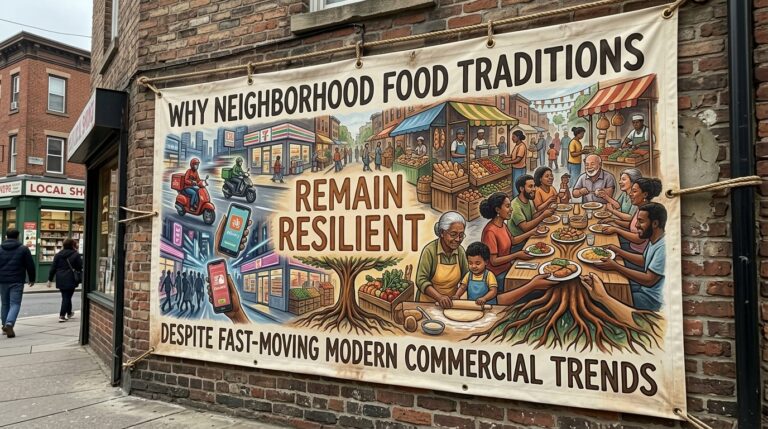
- An Economic Record: Traditional “peasant dishes”—from Italian polenta and Mexican mole to Vietnamese pho and Eastern European pierogies—reveal how resourceful cooks transformed inexpensive, accessible ingredients into deeply flavorful, nutrient-dense meals.
- A Map of Trade and Colonialism: Dishes like Filipino adobo, Vietnamese banh mi, or Indian curries document complex histories of trade, colonization, and cultural blending long before modern global travel existed.
- A Vessel for Language: Kitchens are often the last place where native dialects and heritage languages survive in diaspora families. Terms for specific cutting techniques, specialized earthenware pots, and rare spices keep ancestral vocabulary alive.
- An Act of Political Resilience: When displaced populations are stripped of land, titles, or physical possessions, culinary traditions are often the only heritage they can carry in their memories and recreate anywhere in the world.
Regional Foodways: How Immigrant Recipes Shaped Key US Hubs
The culinary identity of the United States is not a single monolith, but a mosaic formed by waves of migration. Each region reflects the distinct foodways brought by immigrant families over decades.
| Region / Metro | Dominant Historical Migration Waves | Iconic Generational Foodways | Cultural Preservation Impact |
| New York City (NY) | Jewish, Italian, Puerto Rican, Dominican, Chinese, West African | Hand-rolled bagels, hand-pulled Lanzhou noodles, Dominican sancocho, pastrami | Transformed pushcart street markets into historic municipal food hubs like Essex Market. |
| San Francisco & Bay Area (CA) | Cantonese, Taishanese, Mexican, Central American, Filipino | Artisanal dim sum, mission-style burritos, Salvadoran pupusas, sourdough starter traditions | Preserved West Coast maritime trade culture and established early Pacific Rim food supply chains. |
| Washington (Seattle & Puget Sound) | Japanese, Scandinavian, Hmong, Vietnamese, East African (Ethiopian/Somali) | Salmon cedar plank roasting, Hmong produce farming, Vietnamese pho, Ethiopian injera platters | Shaped Pacific Northwest farm-to-table markets and waterfront public markets like Pike Place. |
| Texas (Austin, Houston, San Antonio) | Mexican, Czech, German, Vietnamese, Nigerian | Czech kolaches, Tex-Mex flour tortillas, Vietnamese-Cajun crawfish, slow-smoked pit BBQ | Created unique hybrid culinary styles blending cross-border heritage with regional Texas smokehouse techniques. |
| Southern California (LA & San Diego) | Oaxacan, Korean, Salvadoran, Persian, Filipino | Oaxacan mole negro, Korean gimbap, fish tacos, Persian saffron ice cream | Established vibrant ethnic enclaves like Koreatown and Little Saigon as national culinary destinations. |
How Food Builds Cross-Generational Empathy and Identity
For children of immigrants growing up in multicultural environments, identity can feel complex and divided. Traditional family meals often serve as the emotional anchor that resolves this tension.
1. Reconnecting Diaspora Youth to Their Ancestry
When young people learn to fold a dumpling, roll a tamale, or balance the complex spices of a family stew, they are engaging in a tactile form of history lesson. Muscle memory replaces textbook learning, creating an indelible connection to ancestors they may never have met.
2. Preserving Memory in the Face of Loss
As elders age, their personal stories can easily be lost to time. Cooking alongside a grandparent creates an informal, comfortable space for oral storytelling. Questions like “Who taught you to make this?” or “Where did you buy these spices when you first arrived?” unlock memories of migration, youth, and family origins.
Step-by-Step: How to Document and Preserve Your Family’s Culinary Heritage
Many traditional family recipes exist purely as “a pinch of this” or “until it looks right.” Documenting these unwritten recipes requires systematic effort:
1.Cook Together and Record Video:Capture the unwritten instincts of generational cooks.
Set up a smartphone on a tripod while your family member cooks. Focus on watching their hands—notice the visual cues, texture changes, and timing rather than just listening to approximate measurements.
2.Weigh Ingredients as They Add Them:Translate ‘eyeballed’ amounts into exact kitchen numbers.
Place empty bowls on a digital scale, have the cook measure ingredients by hand as they normally do, and then weigh the exact grams before the ingredients enter the pot.
3.Document the Stories Behind the Dish:Record the emotional background behind the meal.
Write down the history of the dish alongside the recipe: When was this dish traditionally eaten? Was it a holiday meal or an everyday staple? Where did they buy the ingredients in their home country?
4.Create a Physical & Digital Family Archive:Keep family culinary traditions accessible for future generations.
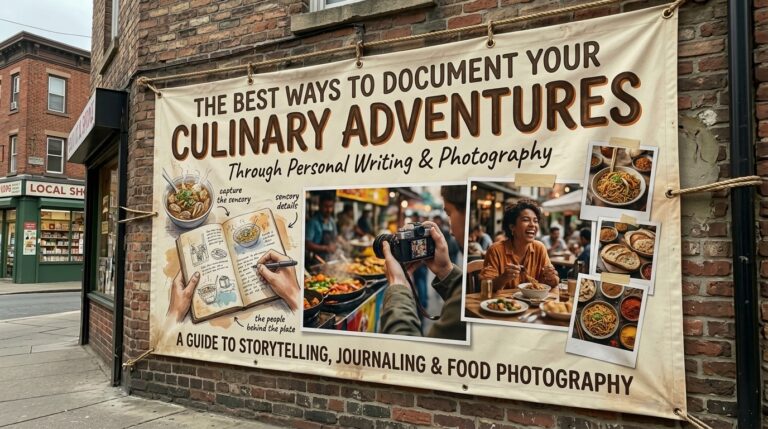
Compile recipes, photographs, and transcribed oral stories into a printed family cookbook or a shared digital repository so future generations can easily access their heritage.
Frequently Asked Questions (FAQ)
1. Why do immigrant recipes often change after arriving in a new country?
Immigrants frequently faced limited access to native ingredients in their new home. They adapted by substituting local, seasonal produce or alternative proteins while keeping traditional cooking techniques and spice profiles intact.
2. What is the difference between culinary appreciation and cultural appropriation?
Culinary appreciation involves researching a dish’s true origins, honoring its cultural creators, and supporting originators economically. Appropriation occurs when traditions are commodified, renamed, or claimed without attribution or respect.
3. How do traditional food recipes preserve endangered heritage languages?
Kitchens keep native terms alive. Specific words for regional ingredients, cutting methods, and cookware often survive in daily family use long after fluency in the primary language declines.
4. Why are “peasant dishes” considered the most important historical recipes?
Because they reveal human resourcefulness under economic scarcity. Transforming tough cuts of meat, wild herbs, and simple grains into flavorful meals highlights the brilliance and adaptability of working-class families.
5. How can food help bridge political and social divides?
Sharing a meal creates psychological safety (commensality). Sitting down to eat unfamiliar food breaks down social barriers, fosters curiosity, and humanizes communities different from our own.
6. What role do non-profit food incubators play in preserving immigrant recipes?
Programs like La Cocina in San Francisco or Essex Market in New York provide affordable kitchen spaces, business training, and retail stalls, allowing immigrant micro-entrepreneurs to formalize and share family recipes commercially.
7. How can I adapt traditional family recipes for modern dietary needs (e.g., vegan or gluten-free)?
Focus on retaining core aromatic bases—such as roasted garlic, ginger, chilies, or toasted spices—while substituting alternative proteins or gluten-free grains, preserving the soul of the dish.
8. Why is oral transmission of recipes vulnerable to being lost?
If a recipe is never written down or filmed, it relies entirely on one or two family members. If health declines or generations drift apart without cooking together, centuries of culinary knowledge can disappear in a single generation.
9. What makes regional food halls ideal places to experience authentic immigrant cooking?
Unlike large corporate restaurant groups, historic food halls host small, family-owned stalls where generational cooks prepare regional, authentic recipes directly for local diners.
10. How can young adults start learning their family’s traditional recipes?
Start small! Ask a family member to show you how to make your single favorite comfort dish. Offer to buy the groceries and help with prep work in exchange for a cooking lesson.
Conclusion: The Perpetual Table of Culinary Memory
Every time we prepare a traditional recipe passed down through generations, we pull a chair up to a table that spans time, space, and geography. We honor the struggles of those who came before us, celebrate the vibrant resilience of immigrant communities, and pass a living, breathing gift on to the future. In every bowl of broth, every handmade wrapper, and every spiced sauce, the story of human perseverance lives on.