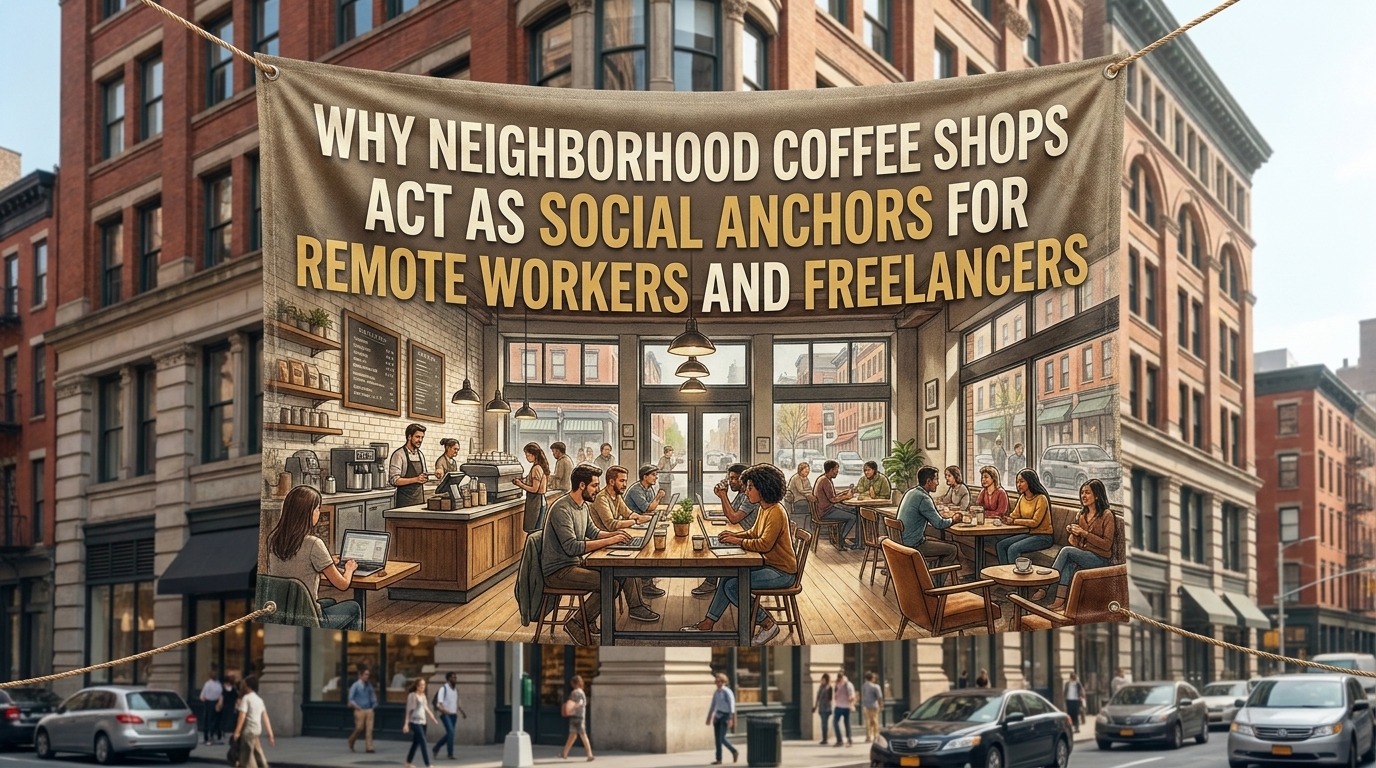
Why Neighborhood Coffee Shops Act as Social Anchors for Remote Workers and Freelancers
The traditional corporate office is no longer the sole center of professional life. Over the past decade, the global shift toward remote work, freelancing, and flexible schedules has fundamentally redefined where and how we work. Yet, while working from home offers unmatched flexibility and eliminates daily commutes, it presents a subtle, persistent challenge: professional isolation.
Humans are inherently social creatures. We thrive on passive social contact, ambient activity, and clear psychological boundaries between our personal and professional lives.
Enter the neighborhood coffee shop.
Across major economic and creative hubs—from the bustling avenues of New York City and the tech-driven corridors of San Francisco and California to the coffee-obsessed culture of Washington state and the rapidly growing remote workforce across Texas—independent coffee houses have emerged as essential third places. They serve as crucial social anchors, creative incubators, and productivity havens for millions of remote professionals.
This comprehensive guide explores the sociology of the third place, analyzes why coffee shops boost cognitive performance, spotlights regional coffee cultures, and provides actionable strategies for remote workers to optimize their cafe workflow while being respectful community members.
The Sociology of the “Third Place” in the Digital Age
To understand why remote workers flock to local cafes, we must look to urban sociology. In his seminal 1989 book The Great Good Place, sociologist Ray Oldenburg coined the term “Third Place” to describe social environments separate from the two primary environments of home (“first place”) and the workplace (“second place”).
                      [ THE THREE PILLARS OF DAILY LIFE ]
                                       |
             +-------------------------+-------------------------+
             |                                                   |
    [ FIRST PLACE: HOME ]                               [ SECOND PLACE: OFFICE ]
  - Domestic life & rest                              - Formal structure & direct management
  - Private, family environment                       - High accountability & meetings
                                       |
                                       v
                          [ THIRD PLACE: COFFEE SHOP ]
                        - Neutral ground & informal contact
                        - Low barrier to entry & accessible
                        - Leveler: social status fades away
                        - Conversation & ambient connection
                        - Psychological "destination" for focus
The Key Characteristics of a Great Third Place
- Neutral Ground: Visitors are under no obligation to host or play guest; everyone enters on equal footing.
- The Leveler: Formal job titles, socioeconomic status, and corporate hierarchies disappear. A freelance designer and a senior software engineer sit side-by-side at the same communal table.
- Conversation is the Primary Activity: Even when workers are focused on laptops, the ambient hum of casual conversation creates a sense of shared human presence.
- Accessibility and Accommodation: They are open, welcoming, and easily integrated into daily neighborhood routines.
- Regulars Shape the Character: The familiar faces of baristas and fellow daily patrons create a reassuring sense of belonging.
The Psychology of Productivity: Why Cafes Boost Focus
Working from a couch or home desk often leads to procrastination and burnout. Home is packed with domestic distractions—laundry, dishes, television, and household chores. Conversely, a coffee shop creates a psychological environment optimized for deep, creative focus.
1. The “Body Doubling” Phenomenon
In cognitive psychology, body doubling occurs when the presence of other people working around you increases your own focus and accountability. Seeing fellow freelancers typing away, studying, or reading triggers a subtle, subconscious cue that signals: it is time to be productive.
2. The Ambient Noise Sweet Spot (The Coffee Shop Effect)
Research published in the Journal of Consumer Research demonstrated that a moderate level of ambient noise—around 70 decibels, precisely the sound level of a bustling coffee shop—enhances performance on creative tasks. Unlike stark silence (which amplifies every minor distraction) or loud noise (which disrupts processing), cafe ambient sound (clinking cups, soft background music, espresso steam wands) promotes abstract thinking and creative problem-solving.
3. Visual Variety and Dopamine
Staring at the same four walls of a home office day after day leads to mental fatigue and creative stagnation. Moving to a new physical environment stimulates dopamine release, refreshing cognitive energy and unlocking new approaches to complex work problems.
Regional Coffee Culture: Social Anchors Across Key Hubs
The connection between remote workers and local coffee houses varies across distinct regional landscapes:
| State / Metro Region | Coffee Culture Persona | Key Spatial & Social Characteristics |
| San Francisco & Bay Area (CA) | Tech-Forward & Single-Origin | High-density communal seating, rapid Wi-Fi networks, pour-over specialty bars, organic milk alternatives, informal startup networking hubs. |
| New York City (NY) | Fast-Paced & Neighborhood Enclave | Compact micro-cafes, historic espresso bars, high laptop-turnover policies, vibrant neighborhood community anchors from Brooklyn to Manhattan. |
| Washington (Seattle/Puget Sound) | Pioneering & High-Hydration | Deep-rooted coffee heritage, cozy rain-friendly interiors, high focus on bean origin and roasting profile, long-stay-friendly neighborhood spots. |
| Texas (Austin, Houston, Dallas) | Spacious & Multi-Hyphenate | Expansive indoor/outdoor patios, hybrid cafe-bars (espresso by day, craft beer by night), ample seating, friendly community atmospheres. |
| Southern California (LA/San Diego) | Sunlit & Outdoor-Driven | Airy indoor-outdoor layouts, botanical patio seating, cold brew specialization, creative freelance hubs for writers, artists, and digital nomads. |
The Etiquette Guide: How to Be a Great “Cafe Remote Worker”
While coffee shops welcome remote professionals, long-stay laptop users can place a strain on independent small business margins if they aren’t mindful. Maintaining a healthy relationship between remote workers and cafe owners requires observing basic cafe etiquette:
1.Follow the ‘Rent’ Rule (Buy Periodically):Pay for the space you occupy.
Treat your purchases as rent for your workspace. A good rule of thumb is to purchase a beverage or food item every 90 to 120 minutes of stay.
2.Vacate Seating During Peak Meal Hours:Be conscious of high-traffic customer windows.
Avoid taking up large multi-person tables during busy lunch rushes (11:30 AM – 1:30 PM). Move to smaller single counter seats or step out to let dining customers sit.
3.Take Calls Outside or Mute Audio:Protect the quiet atmosphere of the space.
Never take loud Zoom meetings or phone calls on speaker. Use headphones at all times, keep your voice low, and step outside for extended verbal discussions.
4.Be Mindful of Power Outlets and Table Space:Share outlets and space generously.
Don’t hog multiple wall outlets or spread files across an entire communal table. Keep your setup compact so fellow remote workers can share the space.
Frequently Asked Questions (FAQ)
1. Why are neighborhood coffee shops called “third places”?
The term was created by sociologist Ray Oldenburg to describe social environments separate from home (“first place”) and the workplace (“second place”) where people gather informally to connect and build community.
2. How does working in a coffee shop help fight remote work isolation?
Even without direct conversation, being surrounded by human activity provides “passive social contact.” This ambient human presence satisfies our psychological need for connection without requiring exhausting social interaction.
3. What is the ideal sound level for creative productivity in a cafe?
Research shows that ambient noise around 70 decibels—typical of a soft-flowing coffee shop—improves abstract thinking and creative problem-solving compared to total silence or loud environments.
4. How much should I spend if I plan to work at a coffee shop all morning?
A respectful guideline is to buy a drink or food item every 1.5 to 2 hours. If you stay for 4 hours, purchasing two coffees and a snack or lunch item ensures you adequately support the business.
5. How can coffee shop owners balance remote workers with traditional turnover customers?
Many cafes designate specific “laptop-free zones” or “laptop-free weekend hours,” install dedicated communal work counters with outlets, and keep small 2-person tables open for quick turnover diners.
6. Is public coffee shop Wi-Fi safe for sensitive remote work tasks?
Public Wi-Fi networks can carry security risks. Always use a Virtual Private Network (VPN), enable two-factor authentication, and avoid accessing sensitive banking or confidential corporate files over open network connections.
7. Why do some remote workers prefer coffee shops over co-working spaces?
Coffee shops offer low financial barriers to entry, high flexibility, diverse organic neighborhood energy, and zero monthly subscription commitments compared to formal co-working memberships.
8. What are the best types of work tasks to tackle at a coffee shop?
Cafes are ideal for creative brainstorming, reading, writing, casual email clearing, learning, and planning. Highly technical, hyper-focused coding or sensitive client phone calls are often better suited for home offices.
9. How do coffee shops foster informal professional networking?
Regularly visiting the same neighborhood cafe builds familiarity with other local regulars. Over time, casual conversations at the milk carafe or pickup counter can lead to freelance collaborations, job referrals, and local friendships.
10. What equipment should I pack in a “mobile coffee shop office” kit?
A lightweight laptop, noise-canceling headphones, a compact portable power bank, a privacy screen protector, and a spill-resistant travel mug make up the ultimate mobile workspace setup.
Conclusion: Reclaiming Connection in the Remote Era
The rise of remote work has freed us from rigid corporate commutes, but it has also highlighted our deep human need for community, routine, and real-world connection. Neighborhood coffee shops across Texas, New York, California, Washington, and San Francisco are far more than places to grab caffeine on the go—they are vital social anchors that keep our digital work lives grounded in real-world human presence.
By supporting these independent local spaces respectfully, remote workers can build productive, inspiring daily routines while helping sustain the vibrant neighborhood culture that makes our communities feel like home.