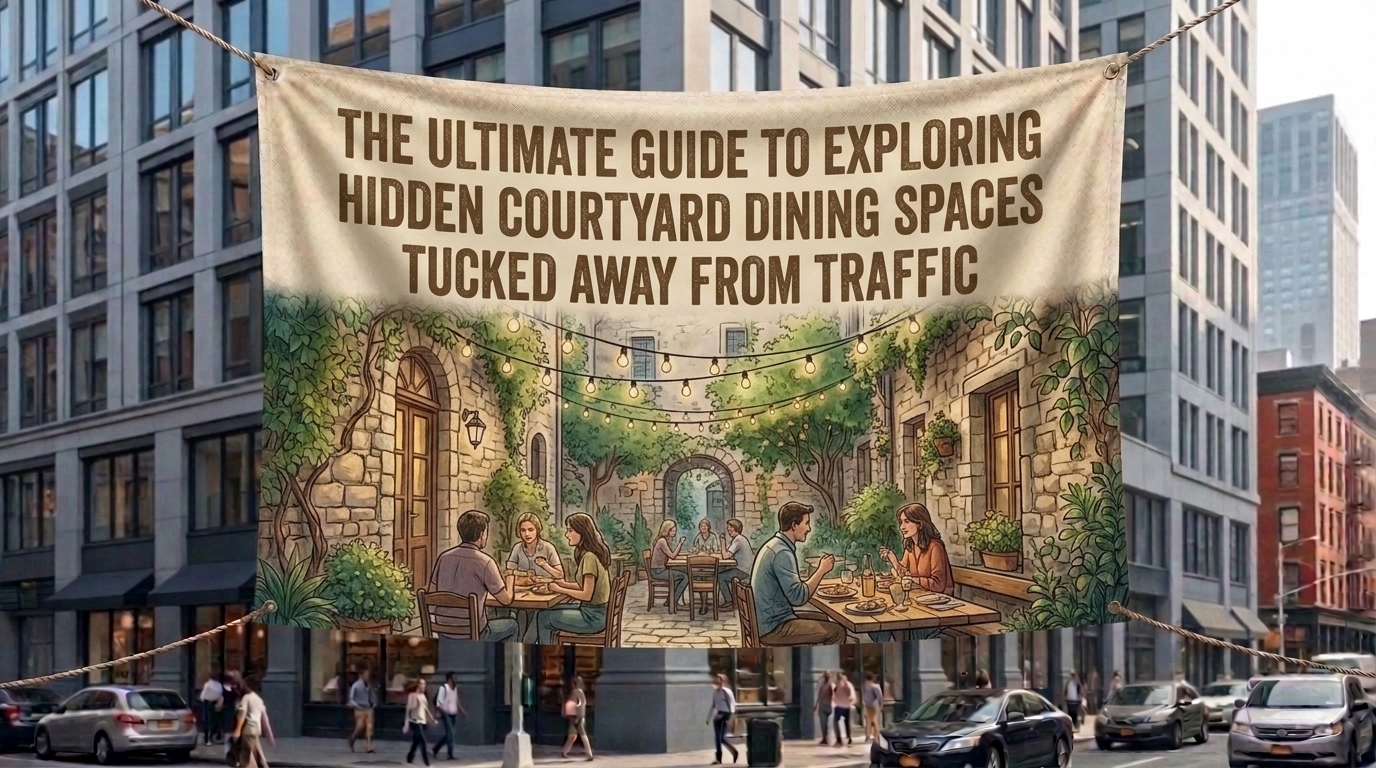
Urban dining frequently comes with a soundtrack: rumbling subway grates, blaring delivery trucks, screeching brakes, and constant vehicular exhaust. Yet, nestled directly behind bustling avenues across America’s prime culinary destinations—including New York, California (San Francisco), Texas, and Washington (Seattle & D.C.)—lies a secret architectural dimension.
Hidden courtyard dining spaces, interior garden patios, and historic carriage yards offer full sensory escapes from surrounding concrete corridors. Discovering these tucked-away open-air sanctuaries transforms an ordinary lunch or dinner into an immersive, peaceful escape.
1. Architectural Blueprint: How Hidden Courtyards Exist
Hidden outdoor spaces don’t happen by accident; they are the result of urban zoning evolution, historical preservation, and clever adaptive reuse:
┌─────────────────────────────────────────────────────────────────────────┐
│                    STREET FRONTAGE & VEHICULAR TRAFFIC                  │
└─────────────────────────────────────────────────────────────────────────┘
                                     │
                 ┌───────────────────┴───────────────────┐
                 │  Commercial Facade & Narrow Hallway   │
                 └───────────────────┬───────────────────┘
                                     │
  ┌──────────────────────────────────┴──────────────────────────────────┐
  │                 ENCLOSED INTERIOR COURTYARD SANCTUARY                │
  ├─────────────────────────────────────────────────────────────────────┤
  │  • 19th-Century Brick Light Wells   • Decibel-Buffer Acoustic Walls │
  │  • Historic Carriage Passages       • Microclimate Canopy & Greenery  │
  └─────────────────────────────────────────────────────────────────────┘
- 19th-Century Light Wells & Carriage Yards: Before electric lighting and refrigeration, buildings were constructed with deep interior light shafts or horse-and-carriage courtyards. Today, restaurateurs convert these spaces into protected dining rooms.
- Acoustic Decibel Dampening: Multi-story masonry and brick exterior walls act as natural sound barriers, blocking low-frequency engine rumbles and street-level noise to create quiet dining pockets.
- Microclimate Creation: Enclosed courtyards protect diners from harsh crosswinds while trapping ambient warmth, extending outdoor dining seasons during early spring and late autumn.
2. Regional Analysis: Courtyard Styles Across Strategic States
Courtyard dining changes dramatically based on regional architecture, local history, and regional climate:
| Region / City | Dominant Architecture Type | Signature Aesthetic & Vibe | Notable Secret Hideaways |
| New York, NY | Brownstone backyards, historic tenements, cobblestone alleys | Exposed 19th-century red brick, climbing ivy, string lights, iron bistro sets | West Village carriage houses, Nolita garden courtyards |
| San Francisco, CA | Victorian carriage houses, downtown POPOS (Privately Owned Public Open Spaces) | Succulent living walls, glass wind-buffers, heat lamps, redwood decking | Financial District hidden gardens, Jackson Square alleys |
| Texas (Austin/San Antonio) | Hacienda-style interior plazas, oak-shaded backyards | Limestone gravel, trailing jasmine, wrought iron, sprawling shade canopies | Historic Downtown San Antonio plazas, East Austin gardens |
| Washington (Seattle/D.C.) | Pacific Northwest timber patios, Georgetown historic brick stables | Covered glass pergolas, fire features, cedar framing, lush fern gardens | Ballard interior brick alleys, Capitol Hill courtyards |
3. How to Scout Hidden Courtyards: 4 Insider Scouting Tips
Locating these secluded spaces requires looking beyond street-level front doors and generic map searches:
- Master Satellite Reconnaissance Mapping: Switch your map app to 3D aerial or satellite view. Zoom in on commercial city blocks and look for green tree canopies, patio umbrellas, or glass sunroofs tucked behind main buildings.
- Look for the “Deep Footprint” Facade: Look for narrow storefront entryways flanked by long, low-ceilinged hallways or side alleyways. In historic districts, these corridors frequently lead back into open-air courtyard spaces.
- Monitor Municipal Architectural & Historical Plaque Registers: Search local historic preservation directories or architectural blogs for keywords like “converted carriage house,” “light-well patio,” or “rear garden space.”
- Scout Off-Peak Afternoons: Walk historic commercial corridors between 2:30 PM and 4:00 PM. Look down open side alleys or through long corridors when front doors are propped open for staff prep.
4. Etiquette & Protocol for Courtyard Dining
To preserve the peaceful ambience that makes these hidden courtyards special, keep these guidelines in mind:
- Keep Noise at a Conversational Level: Acoustic walls amplify sound inside enclosed brick yards. Keep conversation at a relaxed, moderate volume.
- Confirm Reservations Explicitly: When booking online, generic outdoor requests may put you on a sidewalk table right next to traffic. Specify “Inner Courtyard / Garden Dining Room” in your reservation notes.
- Be Mindful of Residential Neighbors: Many historic courtyards sit beneath urban apartments. Be respectful of quiet hours, especially during late-night dining.
5. Top 10 Frequently Asked Questions (FAQ)
Q1: Are hidden courtyard restaurants open year-round in colder climates like NY or Washington?
A: Yes. Most enclosed courtyards feature retractable glass roofs, overhead radiant heaters, and fire tables, keeping them comfortable throughout the winter season.
Q2: How do I ensure I get seated in the inner courtyard instead of the front sidewalk patio?
A: Call the venue directly or select the “Outdoor/Garden” seating tier on reservation apps, specifying “Interior Courtyard Only” in the special requests.
Q3: Are secret courtyard dining spaces accessible for guests with mobility devices?
A: Accessibility varies. Older 19th-century buildings may have narrow hallways or small steps. It’s best to call ahead to verify ramp or flat-ground access through side entrances.
Q4: Which city has the highest concentration of historic courtyard dining spaces?
A: New York City (specifically Greenwich Village and Brooklyn) and San Francisco (Jackson Square and North Beach) feature exceptionally high concentrations due to their 19th-century building layouts.
Q5: Are courtyard dining areas pet-friendly?
A: It depends on local health codes and venue layout. If the courtyard is accessed exclusively through a main indoor dining room, health regulations may restrict animals (except service dogs).
Q6: What is a POPOS space in San Francisco, and can you dine there?
A: POPOS stands for Privately Owned Public Open Space. Many feature hidden rooftop gardens or ground-floor courtyards where you can enjoy takeout from nearby spots in a quiet environment.
Q7: Why are hidden courtyards noticeably quieter than sidewalk tables?
A: Multi-story masonry and brick walls reflect and absorb street-level sound waves, lowering traffic noise decibels significantly compared to open sidewalk seating.
Q8: Do courtyard dining spaces charge a premium or higher menu prices?
A: Generally, no. Menu pricing remains consistent across the restaurant, though courtyard tables often book out further in advance due to high demand.
Q9: Can you book private events in these hidden garden spaces?
A: Yes. Because they are physically separated from main indoor dining rooms, courtyards are frequently rented out for private dinners, corporate gatherings, or intimate celebrations.
Q10: How do Texas courtyards manage extreme summer heat?
A: Texas venues rely heavily on dense tree canopies (like live oaks), high-powered misting systems, covered wooden shade structures, and directional fans to lower temperatures during hot afternoons.
Conclusion
Stepping away from the roar of city traffic and into a secluded, light-filled courtyard dining room is one of urban life’s great pleasures. Whether you’re exploring the brownstone alleys of New York, the Victorian plazas of San Francisco, the lush gardens of Texas, or the brick courtyards of Washington, using architectural clues and satellite mapping helps you find quiet, memorable dining spots right in the heart of the city.