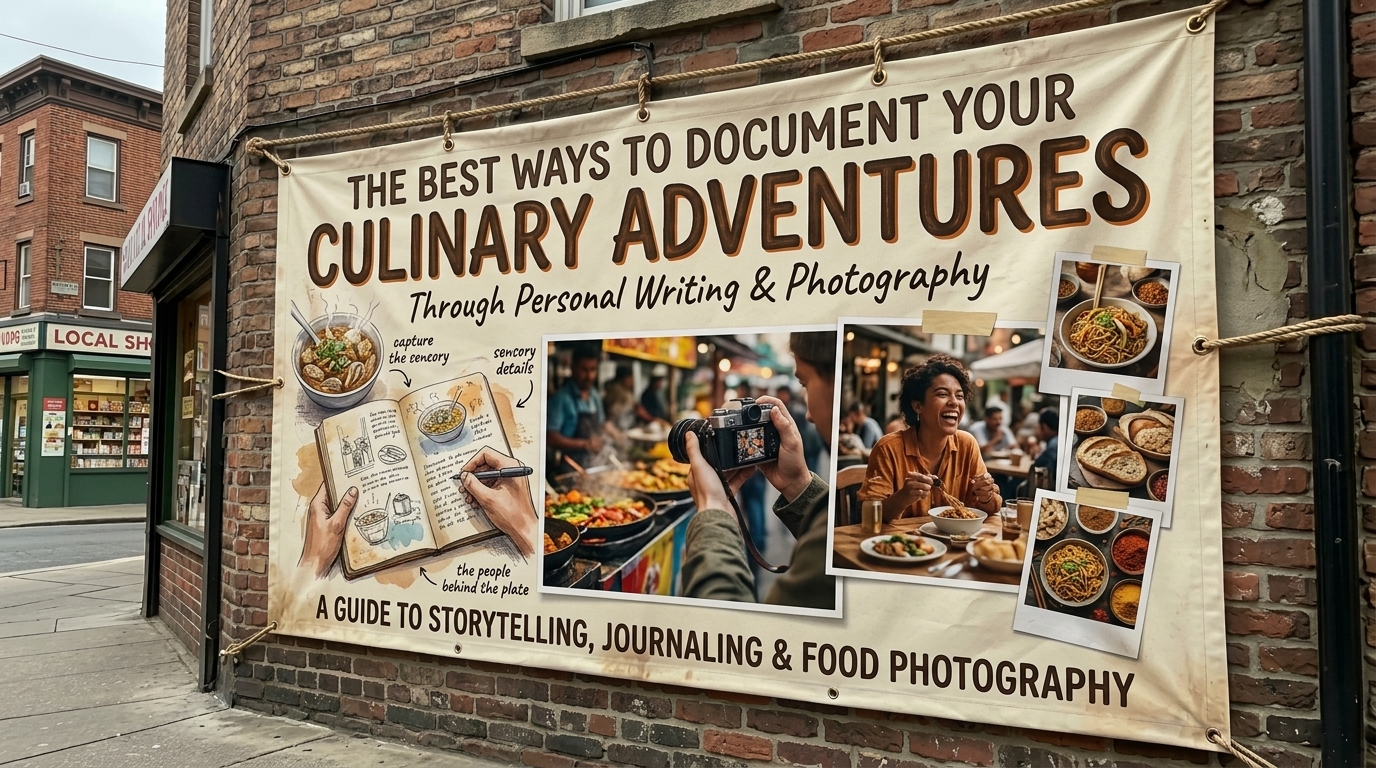
The best ways to document your culinary adventures through personal writing and photography: There is a distinct, beautiful ephemerality to eating. A world-class meal, a steaming bowl of handmade noodles in a bustling night market, or a perfectly buttered pastry enjoyed on a foggy morning in San Francisco exists in its complete perfection for only a matter of minutes. Once consumed, it is gone forever, living on only in memory and feeling.
For passionate food lovers, travel enthusiasts, and modern creators based in cultural hubs like New York, California, Washington, Texas, and San Francisco, capturing these fleeting moments is an art form in itself. Documenting your culinary adventures through personal writing and photography transforms a simple meal into an enduring story. It deepens your engagement with what’s on your plate, sharpens your sensory awareness, and creates a rich, personal archive of your travels and home cooking experiments.
This comprehensive guide explores professional techniques, storytelling frameworks, equipment essentials, and actionable strategies to help you master the craft of documenting your food experiences like a seasoned pro.
Part 1: The Art of Culinary Writing—Finding Your Voice
Great food writing is never just a list of ingredients or a clinical review of whether a dish was “good” or “bad.” True culinary storytelling is about atmosphere, emotion, memory, and culture. When you sit down to write about a meal, your goal is to transport the reader directly to your seat at the table.
1. Engaging the Five Senses
When beginners write about food, they often rely heavily on visual descriptors. To elevate your writing, you must engage all five senses:
- Taste and Flavor Profile: Move beyond “sweet” or “salty.” Describe the bright pop of acid, the lingering umami warmth, or the subtle bitterness of charred crust.
- Texture and Mouthfeel: How does the food interact with your palate? Is it velvet-smooth, shatteringly crisp, gelatinously rich, or delightfully chewy?
- Aroma and Sound: Mention the scent of wood smoke or toasted sesame oil before the dish even arrives. Describe the auditory crunch of a crackling pastry or the gentle hiss of a sizzling iron skillet.
2. Weaving Storytelling with Place and Culture
Food never exists in a vacuum. A taco in Austin, Texas, carries a different narrative weight than a bowl of chowder in Seattle, Washington, or a slice of pizza in New York.
- Connect the Food to the Environment: Describe the hum of conversation in the dining room, the neon street signs blurring outside the window, or the weather conditions that made a steaming cup of cider or soup feel essential.
- Talk to the Makers: Include quotes or background stories shared by the chef, baker, or market vendor. Learning that a family recipe has been passed down through three generations instantly adds depth and historical resonance to your writing.
Part 2: Mastering Culinary Photography—Capturing the Vibe
You do not need a bulky professional DSLR setup to take stunning food photos, though modern smartphones are more than capable of capturing breathtaking images if you understand core photographic principles.
1. Lighting is Everything
Bad lighting can ruin even the most meticulously prepared dish, turning vibrant colors muddy and unappealing.
- Seek Natural Light: Whenever possible, sit near a window or take your plate outside into soft, indirect daylight. Avoid harsh, direct overhead restaurant lights or yellow incandescent bulbs that cast an unnatural color tint.
- Never Use the Flash: Direct on-camera flash flattens textures, creates harsh shadows, and strips away the warm, inviting ambiance of a dining space. If lighting is dim, steady your hands or rest your phone on the table to keep the shot sharp.
2. Angles and Composition
Different foods demand different perspectives to look their absolute best:
- The 45-Degree Angle (The “Eater’s View”): This is the gold standard for most plated dishes, burgers, bowls, and stacked items. It mimics the natural perspective of sitting down at the table and looking at your food.
- The Flat Lay (Top-Down): Ideal for intricate table spreads, overhead shots of market stalls, charcuterie boards, or multiple dishes arranged across a rustic wooden table. Ensure your camera is completely parallel to the table.
- Macro Shots (Close-ups): Get in close to highlight glistening textures—the glossy sheen of a glaze, the delicate layers of a flaky croissant, or the sparkling grains of coarse sea salt on dark chocolate.
3. Styling Without Staging
While commercial food photography involves artificial styling tricks (like using glue or motor oil), personal culinary documentation should feel authentic and lived-in.
- Embrace the Mess: A crumb dropped on a rustic napkin, a smear of chili oil on a ceramic plate, or half a bite taken out of a pastry often makes an image feel much more intimate, real, and inviting.
- Include the Human Element: A hand holding a steaming mug, chopsticks lifting noodles, or friends clinking glasses adds life, scale, and emotional warmth to your frames.
Part 3: Structuring Your Culinary Journal or Blog
Whether you maintain a private digital journal, share your adventures on social media, or publish on a dedicated platform like nyattitude.com, structuring your narrative keeps your audience engaged.
- The Hook: Start with a vivid sensory detail or a compelling moment rather than a boring chronological summary (“On Tuesday at 6 PM, I went to a restaurant…”).
- The Setting: Set the scene by describing the neighborhood, the weather, and the atmosphere of the venue.
- The Highlight: Focus deeply on one or two standout dishes, breaking down their flavors, presentation, and preparation.
- Practical Takeaways: Always include actionable tips for readers who might want to visit the location themselves—such as the best time to arrive, must-order items, or parking advice.
Part 4: Regional Inspiration—Documenting Food Across the US
Different regions offer wildly distinct visual and narrative landscapes for food storytellers:
- New York: Focus on the urban energy—steam rising from street vendor carts, the frantic motion of crowded delis, and historic neon signs framing late-night slice shops.
- San Francisco & Northern California: Capture the rustic elegance of farm-to-table aesthetics—vibrant farmers’ market produce, natural wood tables, morning fog rolling past vineyard or coastal café windows.
- Washington: Highlight the moody, atmospheric Pacific Northwest aesthetic—rain-slicked streets, rich evergreen tones, and steam pouring from seafood stalls and artisanal coffee roasteries.
- Texas: Lean into bold textures—cast-iron skillets, heavy butcher paper lined with smoked brisket, rustic mesquite wood grain, and bright, colorful salsas under wide-open skies.
- Southern California: Document the sun-drenched vibrancy—outdoor patio dining, coastal food trucks, bright tropical ingredients, and casual, lifestyle-driven culinary culture.
10 Frequently Asked Questions (FAQs)
1. What is the best camera equipment for beginners to start food photography?
Your smartphone is more than enough to start! Modern phones feature advanced portrait modes and high-resolution sensors. If you want to upgrade later, an entry-level mirrorless camera with a fast 35mm or 50mm prime lens is ideal for low-light restaurant environments.
2. How do I take good food photos in dimly lit restaurants without using flash?
Sit near windows or candlelight if available, steady your device by resting your elbows on the table, and slightly lower your exposure slider on your phone screen to preserve the rich shadows and highlights without adding digital noise.
3. How do I balance enjoying my meal with documenting it?
Set a rule: take 2 to 3 quick photos and jot down brief notes or voice memos on your phone within the first minute of the dish arriving, then put your devices away and be fully present for the rest of the meal.
4. What should I write about when a dish doesn’t taste good?
Be honest yet constructive. Focus on texture, balance, or expectation versus reality without being mean-spirited. Explain why certain flavor combinations didn’t work (e.g., an overwhelming saltiness that masked the subtle fish flavor).
5. How can I organize my food photos and writing effectively?
Use digital folders categorized by city or neighborhood (e.g., San Francisco, New York, Texas), or maintain a dedicated travel journal app that lets you pair geotagged photos directly with written journal entries.
6. Is it rude to take photos of food in high-end restaurants?
In most modern restaurants, taking discreet photos without using a blinding flash or standing up on chairs is completely acceptable and common. If it is an ultra-exclusive, silent tasting-menu venue, a quick, polite check with your server is always wise.
7. How do I make my food writing sound less like a boring menu description?
Focus on the emotions, memories, and stories connected to the food. Ask yourself: What does this flavor remind me of? Who grew this ingredient? What is the history of this traditional dish?
8. What are the best editing apps for food photography?
Apps like Lightroom Mobile, VSCO, and Snapseed offer incredible control over lighting, color temperature, and contrast, allowing you to make your food photos look vibrant and true-to-life.
9. How can I start a food diary or blog for my culinary travels?
Choose a clean, content-focused platform, establish a consistent writing voice, and focus on deep, immersive storytelling rather than just superficial restaurant reviews. Quality and authenticity always stand out.
10. Why is personal storytelling so important in culinary documentation?
Anyone can look up a restaurant menu online, but your personal perspective, emotional reaction, and unique lens on an experience are entirely one-of-a-kind. Personal storytelling gives your documentation soul.
Conclusion
Documenting your culinary adventures is much more than creating content for the internet—it is an exercise in mindfulness, gratitude, and creative expression. By sharpening your sensory writing and refining your approach to natural light and composition, you preserve memories that transcend the plate. Whether you are capturing the foggy ambiance of a San Francisco bakery, the neon buzz of New York, or the rustic warmth of Texas, pick up your camera, open your notebook, and start telling the story of your next great meal.