Why Visiting Local Community-Run Theaters Supports Grassroots Artistic Expression Effectively
Community-run theaters form the beating heart of local culture. Across vibrant states like Texas, New York, California, and Washington, and bustling innovation hubs like San Francisco, grassroots performance spaces offer a vital counterweight to commercialized entertainment. When you purchase a ticket to a local community play, a neighborhood improv night, or an independent fringe festival, you are doing much more than enjoying a night out. You are actively sustaining the ecosystem of independent art, empowering diverse local voices, and preserving the raw authenticity of human storytelling.
This comprehensive guide explores why visiting local community-run theaters matters, how grassroots art transforms neighborhoods, and what you can do to support these essential cultural anchors.
The Vital Role of Grassroots Artistic Expression
Grassroots artistic expression represents culture created by the people, for the people. Unlike massive commercial productions designed primarily for box office returns, community theater is driven by passion, shared community identity, and artistic freedom.
What Makes Community Theater Unique?
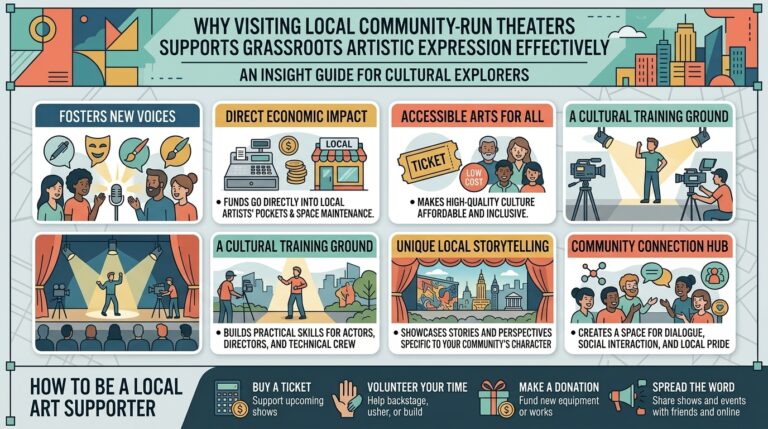
- Unfiltered Creativity: Artists in community-run spaces are rarely bound by strict corporate guidelines, allowing them to experiment with bold themes, avant-garde staging, and daring scripts.
- Direct Community Reflection: Local stages often tackle hyper-local issues, regional history, and diverse cultural narratives that mainstream media frequently overlooks.
- Inclusivity by Design: These spaces welcome participants of all ages, backgrounds, and skill levels—turning accountants, teachers, and students into playwrights, actors, and directors.
Regional Spotlight: Thriving Grassroots Hubs Across the US
From the historic avenues of New York to the sun-soaked stages of California, regional community theaters reflect the distinct cultural flavors of their home states.
1. New York
While Broadway commands global attention, New York’s true artistic resilience lives in its outer-borough community spaces and independent fringe venues. These stages provide affordable, experimental platforms where emerging playwrights can debut boundary-pushing work without the crushing financial pressure of commercial theater districts.
2. California & San Francisco
California boasts a rich tradition of socially conscious performance art. In San Francisco and surrounding creative enclaves, community theaters often serve as platforms for activism, addressing pressing urban, environmental, and cultural dialogues through immersive, community-devised drama.
3. Texas
Texas community theaters—spanning historic small towns to massive metropolitan areas like Austin, Dallas, and Houston—celebrate regional heritage while embracing modern diversity. They serve as crucial community gathering spots where neighbors connect over shared storytelling traditions.
4. Washington
In Washington State, local theaters blend the Pacific Northwest’s deep appreciation for nature, independent thought, and progressive dialogue. These grassroots venues frequently collaborate with local schools and community organizers to foster youth arts education.
Key Benefits of Supporting Local Community Theaters
Attending performances at your neighborhood playhouse yields profound benefits for both the individual patron and the broader community.
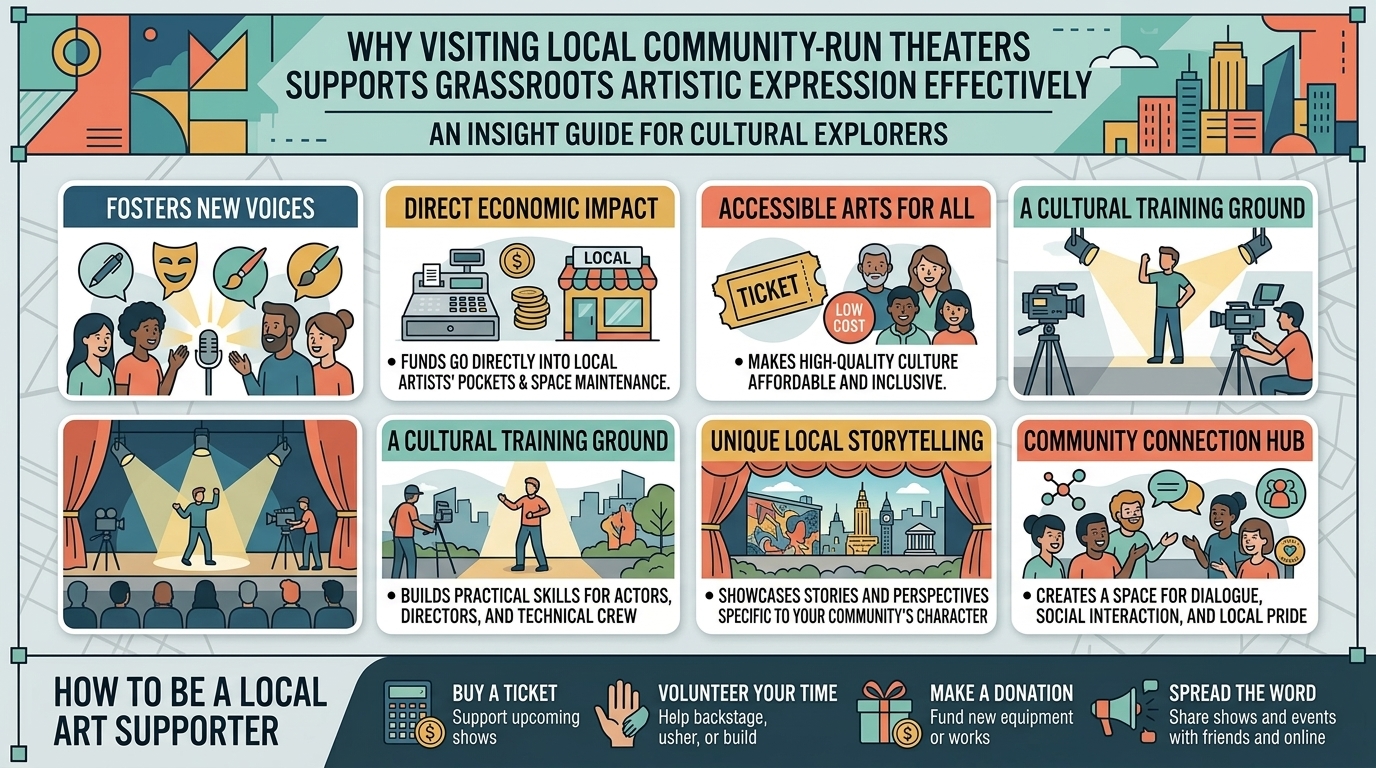
- Economic Vitality: Local theaters drive foot traffic to nearby restaurants, cafes, and small businesses, boosting neighborhood micro-economies.
- Mental Well-Being: Live, intimate performances foster empathy, reduce stress, and build social cohesion by bringing people together in a shared physical space.
- Affordable Access: Unlike high-priced commercial touring shows, community theater keeps the arts accessible to families and individuals across all income brackets.
- Nurturing Future Talent: Many legendary actors, directors, and designers trace their humble beginnings back to local community stages.
Actionable Tips: How to Engage With and Support Grassroots Theaters
Supporting local art extends far beyond buying a single ticket. Here is how you can become an active champion of grassroots theater in your community:
- Attend Season Openers and Indie Nights: Make it a habit to check out smaller, lesser-known productions rather than just blockbuster shows.
- Volunteer Your Time: Most community theaters operate on razor-thin budgets and rely heavily on volunteers for set building, costuming, front-of-house management, and marketing.
- Become a Member or Season Subscriber: Subscriptions provide theaters with predictable cash flow, helping them plan ambitious upcoming seasons with confidence.
- Spread the Word on Social Media: Write reviews, share local theater posts, and encourage your friends and family to attend upcoming neighborhood performances.
- Make Financial Contributions: Even small donations help cover skyrocketing venue rental fees, insurance, and script licensing costs.
Frequently Asked Questions (FAQ)
1. What is a community-run theater?
A community-run theater is a non-profit or grassroots performance space operated primarily by local volunteers, enthusiasts, and local artists rather than corporate commercial producers.
2. How does visiting local theaters support grassroots art?
Your ticket sales, concession purchases, and attendance numbers provide essential revenue that keeps these independent venues open and artists paid.
3. Are tickets to community theater affordable?
Yes, one of the primary missions of community-run theaters is to keep ticket prices low so that the arts remain accessible to everyone in the neighborhood.
4. Can anyone participate in community theater productions?
Absolutely! Most community theaters hold open auditions and welcome volunteers of all experience levels for both on-stage and behind-the-scenes roles.
5. Why are local theaters struggling financially?
Rising real estate costs, post-pandemic attendance shifts, and increased operational expenses make financial sustainability a constant hurdle for grassroots arts organizations.
6. Do community theaters help launch professional careers?
Many professional actors, writers, and technicians got their start on community stages, gaining invaluable hands-on experience before transitioning to professional or commercial work.
7. How can I find community theaters near me?
You can search online directories, check local community bulletin boards, or look up regional arts councils in states like Texas, New York, California, and Washington.
8. What types of shows are typically performed at grassroots theaters?
You will find a diverse mix of classic plays, contemporary dramas, original local scripts, musical revues, youth showcases, and experimental improv.
9. Can businesses support community theaters?
Yes, local businesses often sponsor specific productions or theater seasons in exchange for community goodwill and local marketing exposure.
10. What is the difference between commercial theater and community theater?
Commercial theater is profit-driven and often targets mass audiences with high-budget spectacles, whereas community theater is mission-driven, focusing on local engagement, artistic expression, and community building.
Conclusion
Grassroots artistic expression is not a luxury; it is an essential pillar of a healthy, empathetic, and culturally rich society. Whether you live in the dynamic neighborhoods of New York and San Francisco or the vibrant communities of Texas and Washington, your local theater is waiting for you. By stepping through their doors, purchasing a ticket, and spreading the word, you ensure that authentic human storytelling continues to thrive for generations to come. Support your local stage today and be a catalyst for creative freedom!