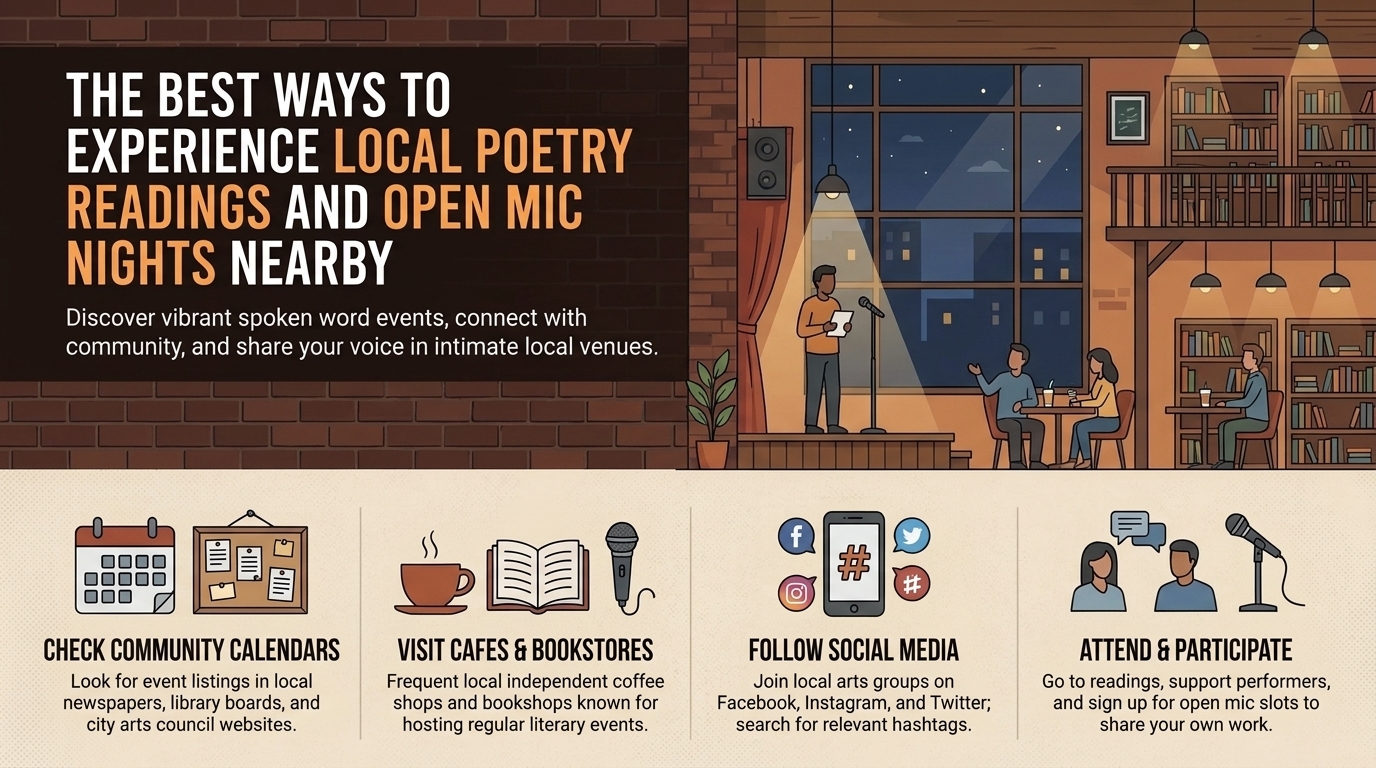
There is a distinct, irreplaceable magic that happens when a spoken word artist steps up to a microphone, inhales deeply, and delivers a line that makes an entire room collectively hold its breath. In an era dominated by screens, algorithms, and digital noise, poetry readings and open mic nights offer a rare, grounding sanctuary. They are spaces of radical vulnerability, raw human connection, and unbridled creative expression.
Whether you reside in the fast-paced cultural hubs of New York, the sun-drenched coastal creativity of California or San Francisco, the lush and rainy indie poetry incubators of Washington, or the sprawling, diverse artistic landscapes of Texas, your local literary ecosystem is thriving.
This comprehensive guide is designed to help you discover, navigate, and deeply immerse yourself in the vibrant world of local poetry readings and open mic nights nearby. From landing your first slot on stage to mastering crowd etiquette, this is your ultimate blueprint for experiencing live verse.
Why Live Poetry Matters More Than Ever
Poetry on the page is an intimate, solitary dialogue between writer and reader. But poetry performed live is a communal event—a shared heartbeat.
The Multi-Sensory Experience of Spoken Word
When you attend a live reading, you experience dimensions of a poem that text alone cannot capture:
- Cadence and Rhythm: Hearing the poet pause, rush, drop to a whisper, or project with theatrical power.
- The Energy Exchange: The palpable reaction of the room—snaps, murmurs of agreement, laughter, or stunned silence.
- Context and Storytelling: Many poets share the personal anecdotes, political backdrops, or emotional catalysts behind their pieces, giving you a deeper window into their art.
Building Community and Combating Isolation
In major cultural centers across Texas, New York, California, Washington, and San Francisco, modern life can feel remarkably isolating. Open mic nights function as modern-day town squares. They bring together people from every socioeconomic background, age group, and walk of life. For one evening, everyone in the room shares a singular focus: listening and being heard.
Mapping Your Local Scene: Poetry Hotspots Across Key Regions
No matter where you are based, vibrant literary communities are flourishing right in your backyard. Let’s explore what makes the poetry scenes unique across these major regions.
1. New York: The Historic Epicenter of Verse
New York City has long served as the crucible of American poetry, from the Beat Generation cafes of Greenwich Village to the legendary Nuyorican Poets Cafe in the East Village.
- The Vibe: Fast-paced, fiercely competitive, highly diverse, and deeply historical. You will find everything from avant-garde conceptual poetry in Brooklyn warehouses to high-energy slam poetry in Manhattan.
- Where to Look: Look beyond Manhattan into Brooklyn, Queens, and the Bronx, where neighborhood-specific indie bookstores, community gardens, and bars host weekly lyrical gatherings.
2. San Francisco & California: The Countercultural Vanguard
From the San Francisco Renaissance and the Beats in North Beach to the modern multimedia spoken word showcases in Los Angeles and Oakland, California’s poetry scene is rooted in social justice, environmentalism, and boundary-pushing experimentation.
- The Vibe: Experimental, inclusive, politically conscious, and deeply atmospheric.
- Where to Look: Historic bookstores (like City Lights in SF), coastal cafes, outdoor amphitheaters, and underground arts collectives throughout the Bay Area and SoCal.
3. Washington: The Pacific Northwest Indie Haven
Washington state—spanning Seattle’s rainy, coffee-fueled literary nooks to the vibrant arts communities of Tacoma and Spokane—cultivates an introspective, lyrical poetry culture.
- The Vibe: Cozy, narrative-driven, deeply intertwined with indie music culture, and fiercely supportive of emerging local voices.
- Where to Look: Independent neighborhood coffee shops, local public libraries, and cooperative art spaces that open their doors after hours.
4. Texas: The Bold, Eclectic Frontier
Texas poetry is as vast and varied as the state itself. From the cutting-edge slam scenes in Austin and Houston to the rich literary traditions of Dallas and San Antonio, Texas open mics blend Southern storytelling with modern urban perspectives.
- The Vibe: Warm, hospitable, bold, structurally diverse, and deeply collaborative.
- Where to Look: Dive bars with back patios, university-adjacent bookstores, cultural centers, and specialized arts venues.
How to Find Poetry Events Near You (A Step-by-Step Discovery Guide)
Finding authentic local poetry events requires looking past mainstream event aggregators. Use these proven strategies to find hidden gems in your neighborhood:
- Audit Independent Bookstores: Local, non-corporate bookstores are the heartbeat of the poetry community. Walk in, check their physical bulletin boards, grab their event flyers, or subscribe to their weekly newsletters.
- Leverage Hyper-Local Social Media Tags: Search Instagram and Facebook using geotags for your city combined with hashtags like
#LocalPoetry,#OpenMicNight,#SpokenWordPoetry, or#[YourCity]Poets. Follow local indie literary magazines and poetry collectives—they constantly repost grassroots show flyers. - Explore Community Centers and Libraries: Public libraries frequently host poetry slams, workshop series, and visiting author readings that are free and open to the public.
- Use Specialized Event Platforms: Keep an eye on Eventbrite, Meetup, and local Substack newsletters dedicated to regional arts and culture.
- Ask Your Local Baristas and Bartenders: Creative communities overlap heavily. The people working in neighborhood independent cafes, record shops, and artsy bars are almost always plugged into the local underground scene.
Preparing to Attend Your First Open Mic Night as an Audience Member
Walking into your first live poetry event can feel intimidating if you don’t know what to expect. Here is how to navigate the space like a seasoned regular:
- Arrive Early: Arriving 15 to 20 minutes before start time allows you to secure a good seat, grab a beverage, look over any literature tables, and get comfortable with the room’s energy.
- Understand Audience Etiquette:
- Snaps over Claps: In many poetry spaces, instead of traditional applause (which can interrupt the intimate flow of a show), audience members snap their fingers to show appreciation.
- Silence During Performance: Out of respect for the vulnerability required on stage, keep side conversations to an absolute minimum while someone is performing.
- Support the Venue: Most open mic venues host events for free or a nominal cover charge. Buy a drink, purchase a book from the featured poet, or drop a few dollars in the donation tip jar to help keep these spaces alive.
Stepping Up to the Mic: How to Perform Your Poetry with Confidence
If you are ready to move from the audience to the stage, open mic nights are the ultimate low-stakes, high-reward proving ground. Here is your roadmap to a successful first performance:
1. Choose Your Piece Wisely
- Time Limits: Most open mics enforce a strict 3-to-5-minute time limit per performer. Pick a piece that fits comfortably within that window without rushing.
- Punchy Openings: Grab the room’s attention within the first two lines. Start with a vivid image, a striking statement, or an intriguing question.
2. Master Stage Presence
- Project, Don’t Yell: Speak clearly into the microphone, keeping it about an inch or two from your mouth. Let your diaphragm drive your voice.
- Lift Your Eyes: Practice your poem enough that you don’t need to stare rigidly at your paper or phone screen the entire time. Look up, make eye contact with different sections of the audience, and connect.
- Pacing is Power: Nerves naturally make us speak twice as fast. Consciously slow down. Let your dramatic pauses breathe; silence on stage can be just as powerful as words.
3. Handle Stage Fright Gracefully
Every single person who steps up to that microphone—even veterans with decades of experience—feels nervous. Accept the adrenaline rush as excitement rather than fear. Remember: open mic crowds are inherently rooting for you to succeed.
Essential Tips for Organizers and Community Builders
Are you looking to start your own open mic or poetry series in New York, California, Washington, Texas, or San Francisco? Building a sustainable poetry community requires care and consistency:
- Secure a Consistent Venue: Partner with a venue owner who understands that foot traffic from poetry nights translates into food and beverage sales.
- Establish Clear Sign-Up Rules: Use a physical sign-up sheet at the door or a fair digital lottery system. State time limits clearly.
- Cultivate a Safe and Inclusive Environment: Enforce a zero-tolerance policy for hate speech, harassment, or disrespect. A safe room is a thriving room.
- Feature Headliners: Bring in an established local or touring feature poet to anchor the evening and draw a reliable baseline crowd.
10 Frequently Asked Questions (FAQs)
1. What is the difference between a poetry reading and an open mic night?
A poetry reading typically features one or more curated, established authors who read selections from their published works or chapbooks. An open mic night is an inclusive event where anyone from the public can sign up to perform a short piece, whether they are a seasoned writer or stepping onto a stage for the very first time.
2. Do I need to register in advance to perform at an open mic?
Most open mics operate on a first-come, first-served basis via a sign-up sheet placed near the entrance right before the event starts. However, some larger venues or competitive slams require online registration. Always check the venue’s social media guidelines beforehand.
3. How long is my performance time usually allowed to be?
The industry standard for open mic time slots is 3 to 5 minutes per performer (roughly one to two poems, depending on length). This ensures everyone on the sign-up list gets an opportunity to share the stage.
4. What should I do if I get too nervous and forget my lines on stage?
Take a deep breath, pause, and smile. The crowd is on your side. You can simply look down at your notes or phone, find your place, and resume. Complete transparency and vulnerability are celebrated in poetry spaces.
5. Are poetry events free to attend?
Many open mic nights are entirely free to attend, though venues often encourage purchasing a drink or food item to support the business hosting them. Some curated showcase readings with touring headliners charge a modest cover fee ($5 to $15) to pay the featured artists.
6. Do I have to perform original work, or can I read classic poems?
While original work is standard and encouraged at open mics, reading a beloved poem by a classic or contemporary author is generally welcomed, provided you clearly credit the original poet before you begin.
7. What is “snapping” and why do poetry crowds do it?
Audience members snap their fingers instead of clapping to show appreciation for lines or performances. This tradition started in beatnik and coffeehouse scenes as a way to express support without making loud, disruptive clapping noises that might interrupt the intimate ambiance of a spoken word reading.
8. Are these events family-friendly?
It depends entirely on the venue and the specific event. Some daytime or library-sponsored open mics are explicitly all-ages and family-friendly, while late-night bar showcases may contain mature themes, strong language, and adult content. Check event descriptions for age restrictions.
9. How can I find poetry events in sprawling states like Texas or California?
Due to geographic size, look for city-specific hubs (e.g., Austin or Houston in Texas; Los Angeles, Oakland, or San Francisco in California) by searching regional literary arts councils, local independent bookstores, and community calendar websites like Do512 or local Substack newsletters.
10. Can I sell my poetry books or chapbooks at these events?
Many open mic venues welcome independent artists to bring copies of their self-published chapbooks, zines, or merch to sell on a back table. Always check in with the host or venue coordinator before setting up items.
Conclusion
Immersing yourself in the local poetry and open mic scene is one of the most rewarding ways to connect with the cultural heartbeat of your community. Whether you are seeking inspiration in the dynamic streets of New York, exploring coastal countercultures in California and San Francisco, tapping into the indie spirit of Washington, or experiencing the rich storytelling traditions of Texas, a vibrant world of spoken word is waiting for you just around the corner.
Step out, grab a notebook, support your local artists, and dare to listen—or take the mic and let your own voice be heard.
What is your favorite local venue or open mic night memory in your city? Drop a comment below to share your local recommendations with fellow poetry lovers!